Fougasse (Flatbread)
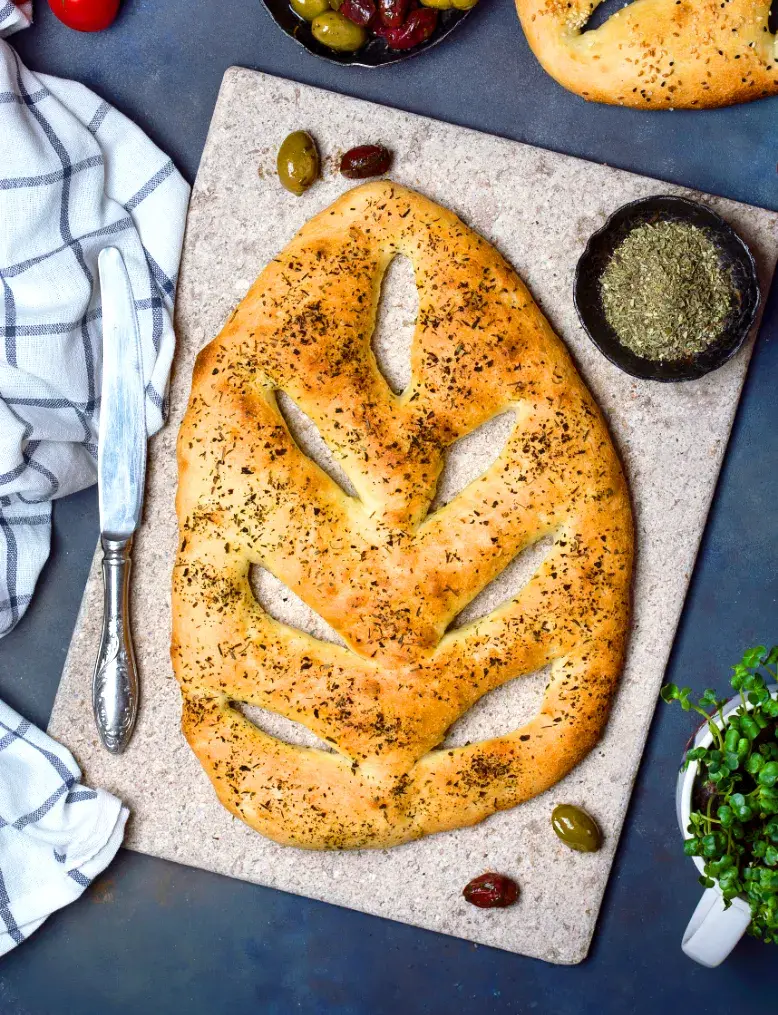
Crispy edges, soft middle, pockets of salty olives, and that beautiful smell of olive oil and herbs. This is Provençal fougasse, the flatbread that you tear apart with your hands at apéros and the one that disappears before the wine's even poured.
Ingredients
For the dough
- 500 gr plain flour
- 325 ml water lukewarm
- 7 gr instant dry yeast or 15g fresh yeast
- 9 gr salt
- 25 ml olive oil extra virgin
For the filling
- 100 gr black olives pitted and roughly chopped
- 2 tsp Herbes de Provence
For finishing
- olive oil extra virgin, for brushing
- flaky salt
Instructions
1. Make the dough
- Mix the flour and salt in a large bowl. If using dried yeast, add it directly to the flour. If using fresh yeast, dissolve it in the lukewarm water first and let it sit for 5 minutes until it starts to foam.Make a well in the centre, pour in the water and olive oil. Mix with your hands until it comes together into a shaggy dough. Turn out onto your work surface and knead for 10 minutes until smooth and elastic. The dough should be soft and slightly sticky. If it's too dry, add a tiny splash more water, if it's too wet, add a bit more flour.
2. First rise
- Shape the dough into a ball, place it in a lightly oiled bowl, cover with a damp tea towel, and leave somewhere warm for about 1-1,5 hours until doubled in size.
3. Add the olives and herbs
- Turn the risen dough out onto a lightly floured surface. Flatten it gently with your hands, scatter over the chopped olives and herbs, then fold the dough over itself a few times to distribute them through the dough. Don't overwork it, you want pockets of olives, not a uniform mix.
4. Shape the fougasse
- Divide the dough in half (each piece makes one fougasse). Roll or press each piece into an oval shape about 25-30cm long and 1,5-2cm thick. Transfer to a baking sheet lined with parchment.
5. Slash and spread
- Using a sharp knife or bench scraper, make diagonal slashes through the dough. You want 3 cuts on each side, angled like a leaf or wheat ear pattern. The slashes should go right through the dough to your work surface, but stop before you reach the edges.Here's what to do next: once you've cut the slashes, use your fingers to pull and spread each opening apart by about 2-3cm. Really open them up. If you don't do this, they'll seal shut as the dough rises and bakes, and you'll lose that characteristic fougasse look.
6. Second rise
- Cover the shaped fougasses with a damp tea towel and leave for 30-45 minutes until puffy (not doubled, just noticeably risen).
7. Bake
- Heat your oven to 220°C (200°C fan). Brush the fougasses generously with olive oil and sprinkle with flaked sea salt. Bake for 20-25 minutes until deep golden brown. The edges of those openings should be crispy and slightly caramelised. The base should sound hollow when you tap it.
8. Cool and serve
- Let the fougasse cool on a wire rack for at least 10 minutes. It's brilliant warm, but also good at room temperature. Tear it apart with your hands rather than slicing it at apero!
Notes
- You can skip the olives and herbs for a simple fougasse. Brush with olive oil and sprinkle with fleur de sel before baking.
- Or you can go wild and add other ingredients like vegetarian lardons, anchovies, sun-dried tomatoes, or crumbled goat cheese, they all work wonderfully. Add them the same way as the olives.
- Opening those cuts by slashing the bread creates more crust, which means more crispy bits and better texture contrast with the soft middle.
- The fougasse is best eaten the day it's made. If you have leftovers, warm them in a 180°C oven for 5-7 minutes to crisp up the crust again.