Brioche
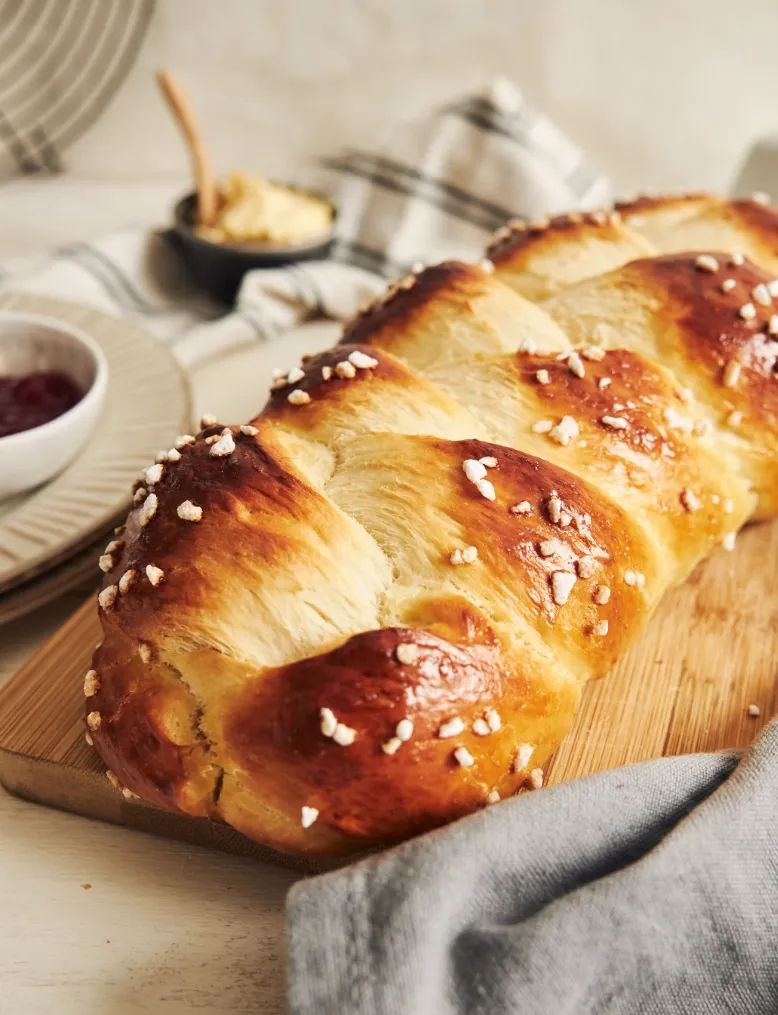
A rich, buttery French bread that sits somewhere between a loaf and a pastry. The inside is buttery, soft and pillowy and the crust is golden and slightly crisp. Eat it fresh, toast it the next day, or use day-old slices for the best French toast you'll ever make!
Ingredients
- 500 gr plain flour
- 3 gr instant yeast
- 100 ml whole milk lukewarm
- 50 gr caster sugar
- 1 tsp salt
- 4 egg room temperature
- 150 gr unsalted butter softened, cut into small cubes
- 1 egg yolk, for glazing
Equipment
- 1 stand mixer with dough hook attachment
- 1 Loaf pan 23cm
Instructions
1. Activate the yeast
- Warm the milk until just lukewarm (around 37°C). Stir in the yeast until dissolved and leave for 5–10 minutes until foamy.
2. Mix the dough
- In the stand mixer bowl, combine the flour, sugar and salt. Attach the dough hook. Add the foamy yeast-milk mixture and the eggs, and mix on low speed to bring the dough together.
3. Incorporate the butter
- Gradually add the softened butter, a few cubes at a time, while mixing. Continue for at least 15 minutes on medium speed. The dough should become smooth, elastic and glossy, slightly sticky but pulling away from the bowl.
4. First rise
- Cover the bowl and leave to rise somewhere warm (24–28°C) for 1–2 hours, until doubled in size.
5. Chill and shape
- Gently knock back the dough. Refrigerate for at least 1 hour, or preferably overnight, to firm up the butter and make shaping possible. Divide into 8–10 equal portions and shape each into a smooth ball.
6. Second rise in tin
- Place the balls into a greased loaf pan. Cover and leave to rise for 1–1.5 hours, until doubled and puffy.
7. Prepare for baking
- Preheat the oven to 180°C (160°C fan). Brush the risen brioche gently with beaten egg yolk for a shiny, golden crust.
8. Bake
- Bake in the centre of the oven for 25 minutes, until deep golden and hollow-sounding when tapped underneath. Tent with foil if it colours too quickly.
9. Cool
- Cool completely on a wire rack before slicing.
Notes
- For best results, ensure all ingredients are at room temperature to help the yeast activate smoothly.
- The chilling step after the first rise is key to achieving the brioche's delicate, buttery flakiness and ease of handling.
- Brioche dough is sticky but resist adding too much flour!
- Patience during rising is essential for light texture.