Confiture de Sucrine
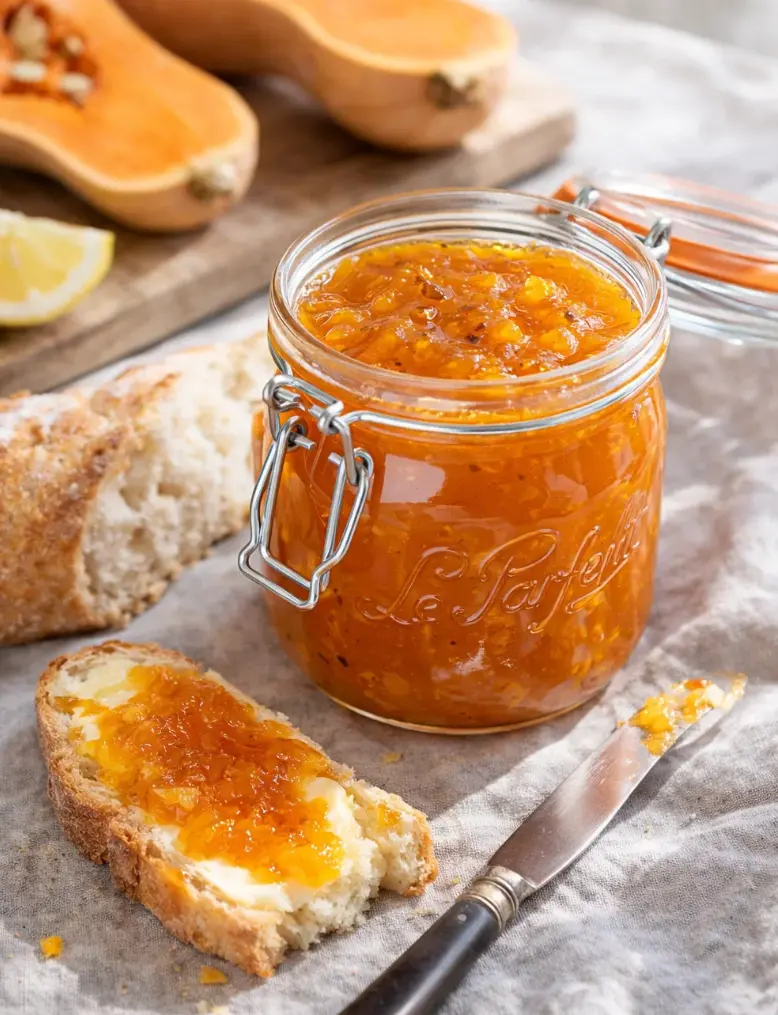
Golden squash jam, silky and spoonable, with a gentle mellow sweetness, a light citrus note from the lemon and a fragrant warmth from the vanilla. This recipe turns a humble vegetable into a delicious spread for toast!
Ingredients
- 2 kg butternut squash traditionally Sucrine
- 1.4 kg sugar
- 2 mandarins optional, for extra zest and flavour
- 1 lemon juice and zest
- 1 vanilla pod or 1 tsp vanilla extract
- 2 gr agar-agar optional, for a firmer set
Equipment
Instructions
1. Sterilise the jars and lids
- Wash the jars, glass lids and rubber seals in hot soapy water and rinse well. Set the rubber seals aside. Place a heatproof plate or trivet in the bottom of an 11l stockpot, arrange the jars and glass lids inside so they don't touch each other or the sides, and cover with cold water by at least 2.5cm. Bring to the boil and hold at a rolling boil for 10 minutes. Turn off the heat and leave everything in the hot water until needed. Simmer the rubber seals separately for 2–3 minutes and leave them in the hot water.
2. Prepare the squash
- Halve the squash and remove the seeds and fibrous centre. Peel with a sharp knife and cut the flesh into regular medium chunks. Rinse and drain.
3. Macerate the fruit (optional but recommended)
- Place the chunks in a large bowl, sprinkle with some of the sugar, and leave for a few hours or overnight to draw out the juices.
4. Cook the jam
- Put the squash in a jam pan with the sugar, lemon juice and zest. If using mandarins, peel, segment and add them along with any zest. Split the vanilla pod lengthwise, scrape out the seeds, and add both seeds and pod. Stir well. Bring to a gentle boil over medium heat and cook for 30–40 minutes, stirring often, until soft and thickened. For a smoother jam, blend part of it with a stick blender or pass it through a food mill halfway through. If using agar-agar, sprinkle it in halfway and stir to dissolve.
5. Test the set
- Put a spoonful of jam on a plate chilled in the freezer. If it wrinkles when pushed with a finger, it's set. If not, cook a few minutes longer and test again.
6. Fill the jars
- Remove the jars from the hot water with a jar lifter and stand them on a clean cloth. Fit a rubber seal onto each glass lid. Ladle the hot jam into the hot jars, leaving about 1cm of headspace. Wipe the rims with a clean damp cloth to remove any drips.
7. Seal
- Centre the glass lid with its rubber seal on the jar and clip the metal bail arms down on both sides. They should feel firm without being forced.
8. Process in the water bath
- Lower the jars into the simmering water with the jar lifter, keeping them apart from each other and the sides. Add hot water if needed to cover them by 2–3cm. Put the lid on, bring to a rolling boil, and process for 10 minutes.
9. Remove and cool
- Turn off the heat and leave the jars in the water for 10 minutes to reduce the temperature shock. Lift them out onto a tea towel with 2–3cm between each. Don't place them on a cold surface. Leave them completely undisturbed for 12–24 hours.
9. Check the seals, label and store
- Release the bail arms and gently try to lift each glass lid. If it stays firm, the vacuum seal has formed. If it lifts off, refrigerate that jar and use within a week. Store sealed jars somewhere cool and dark. Properly sealed, they'll keep 12–18 months.
Notes
- Outside France you're unlikely to find Sucrine du Berry, so substitute another sweet, firm-fleshed squash such as butternut.
- Mandarins add a lovely citrus note, but the jam is delicious without them.
- Agar-agar is optional and helps the jam set without overcooking the squash.
- Weigh the squash after peeling and seeding, since the sugar ratio is based on prepared weight.