 May 6, 2025
Disclosure: This post may contain affiliate links which provide us a small commission when used for purchase. Please read my disclosure policy for more information. I am grateful for your support!
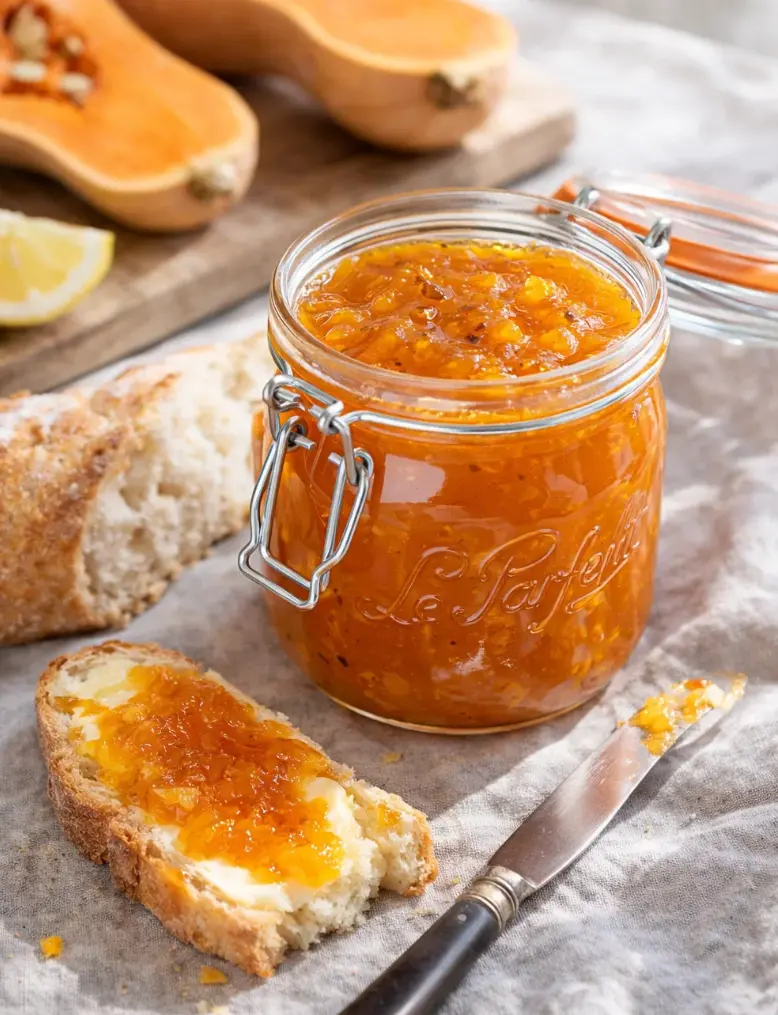
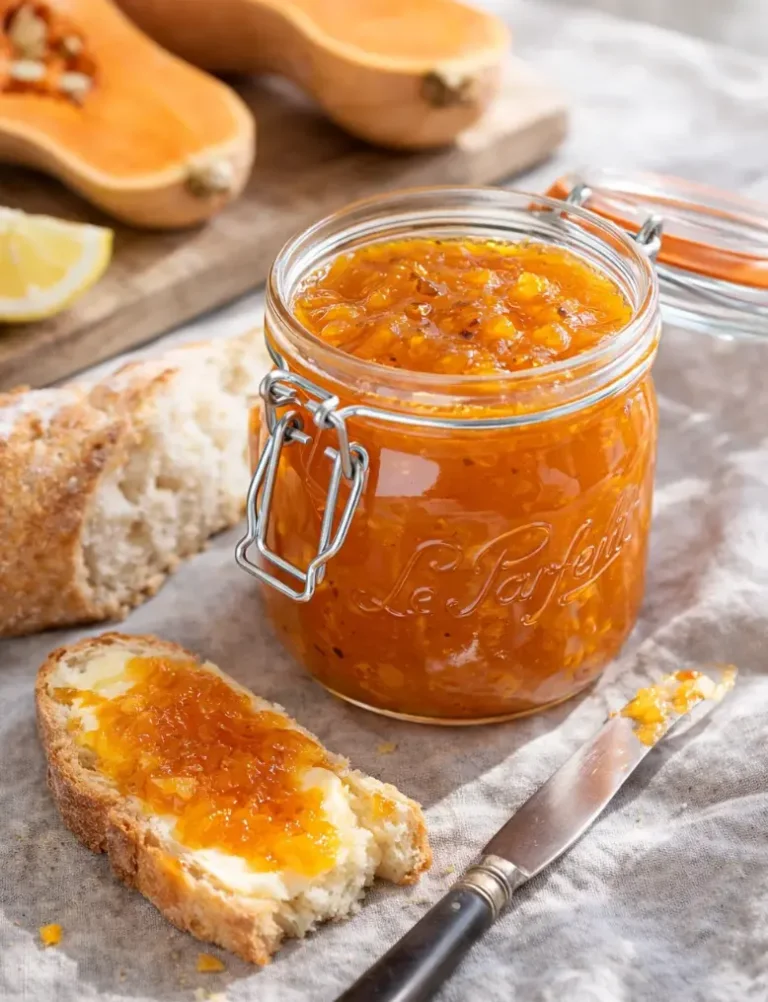
This confiture de Sucrine belongs to our neighbour Nathalie. Every October she and her husband harvest the Sucrine squash they grow themselves and spend an afternoon turning it into jars of this gorgeous amber butternut jam. She gave us a jar the first autumn we moved in next door, and by the following October we were making it ourselves.
My favourite way is simply on a fresh baguette with good French butter at breakfast with my coffee. It’s also lovely on a slice of brioche at teatime, or alongside a cheese board, especially with an aged goat’s cheese or a firm tomme.
Table of Contents
Where confiture de Sucrine comes from
The Sucrine du Berry is a pear-shaped squash from central France, with dense orange flesh tasting somewhere between butternut and sweet potato. It nearly disappeared. It was never a commercial variety, just a gardeners’ one with seeds passed between neighbours, and it faded through the 1950s when growers wanted uniform, hardy squashes instead.
Then in 1987 a gardener from the Indre brought one to the first Foire aux Potirons at Tranzault. Someone noticed it, small seed producers took it up, and it spread across the region. It’s now protected as one of the Centre-Val de Loire’s Trésors Vivants. Which I think is a lovely story for a jar of jam.
Preserving in France is built on using what the season gives you in abundance and putting it away for the lean months, and this is simply the Berry’s way of dealing with more squash than anyone can eat before winter. Jam made from squash might put you off if you haven’t tried it, but squash is naturally sweet, and cooked down with sugar it concentrates into something thick and almost creamy.
Outside Berry the Sucrine is hard to find, so butternut is what I’d use for this confiture de Sucrine. It’s the same species, and it makes a butternut squash jam with much the same texture and a very similar flavour.
Ingredients
- Squash — Sucrine du Berry traditionally, butternut otherwise. You want firm, dense, sweet flesh, not a watery variety.
- Sugar — doing three jobs: sweetening, setting and preserving. It’s what makes the jam keep, so it isn’t a quantity to reduce casually.
- Lemon, juice and zest — essential, and not just for flavour. The acid balances the sweetness and helps the jam set, so don’t skip or reduce it.
- Vanilla pod — use a whole pod rather than extract if you can. The seeds disperse through the jam as it cooks and you can see them in the finished jar, which looks far better than plain amber.
- Mandarins (optional) — extra citrus lift and a slightly floral note. Lovely, but the jam is good without them.
- Agar-agar (optional) — for a firmer set without having to overcook the squash and lose the fresh flavour.
How to make confiture de Sucrine
1. Sterilise the jars first
Wash jars, glass lids and rubber seals in hot soapy water. Boil the jars and glass lids for 10 minutes with a trivet in the bottom of the pot so they don’t crack, and simmer the rubber seals separately for 2 to 3 minutes. Leave everything in the hot water until you need it. Jars must be hot when the hot jam goes in, or the glass can shatter.
2. Prepare the squash and macerate if you have time
Halve the squash, scoop out the seeds and fibres, peel it and cut the flesh into even medium chunks. If you can, layer it with the sugar in a bowl and leave it a few hours or overnight. This draws out the juices and genuinely improves the finished flavour, though the jam works without it.
3. Cook it down
Squash into the pan with the sugar, lemon juice and zest, the mandarin segments if using, and the split vanilla pod with its scraped seeds. Bring to a gentle boil and cook 30 to 40 minutes, stirring often. Squash releases less liquid than fruit, so it thickens faster than you expect and catches easily.
4. Blend or leave it chunky, and add the agar if using
Halfway through, decide your texture. A stick blender or a food mill gives you the silky spoonable version; leave it and you get something more rustic. If you’re using agar-agar, sprinkle it in now and stir well to dissolve it completely.
5. Test the set on a cold plate
Spoon a little onto a plate straight from the freezer and push it with a finger. If it wrinkles, it’s ready. If it runs, give it a few more minutes and test again. This is more reliable than any timing, since squashes vary in how much water they hold.
6. Fill the hot jars and seal
Lift the jars out with a jar lifter, fit a rubber seal to each glass lid, and ladle in the hot jam leaving 1cm of headspace. Wipe the rims properly with a damp cloth, because a single drip of jam on the rim will stop the seal forming. Centre the lids and clip the bail arms down.
7. Process in a water bath, then leave them alone
Lower the jars into simmering water so they’re covered by 2–3cm, bring to a rolling boil, and process for 10 minutes. Turn off the heat, wait 10 minutes before lifting them out, and set them on a tea towel with space between. Then don’t touch them for 12 to 24 hours. No moving, no testing, no prodding.
8. Check the seals before storing
Release the bail arms and try to lift each glass lid with your fingers. If it holds firm, the vacuum has formed. If it comes straight off, that jar hasn’t sealed, so put it in the fridge and eat the confiture de Sucrine within a week.
Tools for this recipe
Check out my favorite kitchen essentials and cookware!
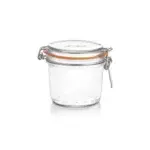
- Use good preserving jars with rubber seals and bail arms, since the seal matters as much as the recipe for how long the jam keeps. The 350ml size is generous enough to give away without an open jar lingering in the fridge.
- Use a jar lifter to move hot jars in and out of boiling water safely, which tongs do badly and hands do not do at all.
- Use a wide stockpot with a heavy base, so the confiture de Sucrine boils evenly without scorching on the bottom.
Tips for success
- Stir often: squash holds less water than fruit, so the jam thickens fast and catches on the base, and scorched jam taints the whole batch.
- Wipe the rims properly: the commonest reason a jar fails to seal is a smear of jam between the glass and the rubber. Use a clean damp cloth on every rim.
- Don’t reduce the sugar: it isn’t only sweetness here, it’s what makes the jam keep. A lower-sugar version needs to be treated as a fridge jam and eaten within weeks.
- Weigh the squash after peeling and seeding: a 2kg squash gives you considerably less than 2kg of flesh, and the sugar ratio is calculated on prepared weight.
- Label with the date: you’ll think you’ll remember but you won’t!
- Any jar that doesn’t seal is not a failure: it’s simply this week’s jam. Fridge, and use it within a week.
How to store it
- In the cupboard: Properly sealed and processed, the jars keep 12 to 18 months somewhere cool and dark. A cupboard is ideal, not above the cooker and never in direct sunlight.
- In the fridge: Once opened, keep refrigerated and use within about a month. Any jar that failed to seal goes straight in the fridge and gets eaten within a week.
- In the freezer: Unnecessary, since properly processed jars keep for a year or more at room temperature. If you want to skip the water bath entirely, you can freeze the jam in tubs instead and it’ll keep several months.
More dessert recipes to try
Variations
- With ginger: a thumb of fresh ginger, finely grated, cooked in with the squash. Warm and slightly spicy against the sweetness.
- With cinnamon and star anise: whole spices added during cooking and fished out before jarring, which makes it taste distinctly of Christmas.
- With dark rum: a tablespoon stirred in at the end. Very good on brioche and it makes the jam feel like a proper treat.
- Orange instead of mandarin: a whole orange, juice and zest, giving a sharper citrus note than mandarins do.
- Chunkier: skip the blending entirely and leave the squash in pieces, which gives you something closer to a preserve than a jam and is lovely with cheese.
- Less sugar: sugar is structural here, since it’s what preserves the jam, so it can’t be cut without consequence.
FAQ
Can you make jam from butternut squash?
Yes. Squash is naturally sweet and cooks down with sugar into a thick, almost creamy jam. Butternut is the best substitute for the traditional Sucrine du Berry, since it’s the same species.
What is Sucrine du Berry?
A pear-shaped heritage squash from central France with dense, sweet orange flesh. It nearly died out and was rediscovered at a pumpkin fair in 1987, and it’s now protected as a regional heritage variety.
Why does squash jam need lemon?
The acid balances the sweetness and helps the jam set. Squash is low in the natural pectin and acid that fruit provides, so the lemon does real work here rather than just adding flavour.
How long does homemade squash jam keep?
Properly sterilised, sealed and processed in a water bath, 12 to 18 months in a cool dark cupboard. Once opened, about a month in the fridge.
Why didn’t my jars seal?
Usually jam on the rim, a worn rubber seal, or jars that weren’t hot when filled. Wipe every rim with a damp cloth before sealing, and refrigerate any jar that hasn’t sealed.


 Prep Time 30 minutes
  Cook Time 50 minutes
  Total Time 1 hour 20 minutes
  Servings 4 jars
Description
Ingredients
- 2 kg butternut squash traditionally Sucrine
- 1.4 kg sugar
- 2 mandarins optional, for extra zest and flavour
- 1 lemon juice and zest
- 1 vanilla pod or 1 tsp vanilla extract
- 2 gr agar-agar optional, for a firmer set
Equipment


Instructions
1. Sterilise the jars and lids
- Wash the jars, glass lids and rubber seals in hot soapy water and rinse well. Set the rubber seals aside. Place a heatproof plate or trivet in the bottom of an 11l stockpot, arrange the jars and glass lids inside so they don't touch each other or the sides, and cover with cold water by at least 2.5cm. Bring to the boil and hold at a rolling boil for 10 minutes. Turn off the heat and leave everything in the hot water until needed. Simmer the rubber seals separately for 2–3 minutes and leave them in the hot water.
2. Prepare the squash
- Halve the squash and remove the seeds and fibrous centre. Peel with a sharp knife and cut the flesh into regular medium chunks. Rinse and drain.
3. Macerate the fruit (optional but recommended)
- Place the chunks in a large bowl, sprinkle with some of the sugar, and leave for a few hours or overnight to draw out the juices.
4. Cook the jam
- Put the squash in a jam pan with the sugar, lemon juice and zest. If using mandarins, peel, segment and add them along with any zest. Split the vanilla pod lengthwise, scrape out the seeds, and add both seeds and pod. Stir well. Bring to a gentle boil over medium heat and cook for 30–40 minutes, stirring often, until soft and thickened. For a smoother jam, blend part of it with a stick blender or pass it through a food mill halfway through. If using agar-agar, sprinkle it in halfway and stir to dissolve.
5. Test the set
- Put a spoonful of jam on a plate chilled in the freezer. If it wrinkles when pushed with a finger, it's set. If not, cook a few minutes longer and test again.
6. Fill the jars
- Remove the jars from the hot water with a jar lifter and stand them on a clean cloth. Fit a rubber seal onto each glass lid. Ladle the hot jam into the hot jars, leaving about 1cm of headspace. Wipe the rims with a clean damp cloth to remove any drips.
7. Seal
- Centre the glass lid with its rubber seal on the jar and clip the metal bail arms down on both sides. They should feel firm without being forced.
8. Process in the water bath
- Lower the jars into the simmering water with the jar lifter, keeping them apart from each other and the sides. Add hot water if needed to cover them by 2–3cm. Put the lid on, bring to a rolling boil, and process for 10 minutes.
9. Remove and cool
- Turn off the heat and leave the jars in the water for 10 minutes to reduce the temperature shock. Lift them out onto a tea towel with 2–3cm between each. Don't place them on a cold surface. Leave them completely undisturbed for 12–24 hours.
9. Check the seals, label and store
- Release the bail arms and gently try to lift each glass lid. If it stays firm, the vacuum seal has formed. If it lifts off, refrigerate that jar and use within a week. Store sealed jars somewhere cool and dark. Properly sealed, they'll keep 12–18 months.
Notes
- Outside France you’re unlikely to find Sucrine du Berry, so substitute another sweet, firm-fleshed squash such as butternut.
- Mandarins add a lovely citrus note, but the jam is delicious without them.
- Agar-agar is optional and helps the jam set without overcooking the squash.
- Weigh the squash after peeling and seeding, since the sugar ratio is based on prepared weight.
Share your feedback and spread the love!
If you try this recipe, I’d love to hear how it turns out! Leave a ★★★★★ rating and your thoughts in the comments, it helps fellow French foodies discover this recipe too. Snap a photo and tag @obviously.french on Instagram. Come talk about it in our Facebook group. And don’t forget to save this recipe to Pinterest so you’ll always have it handy for your next French-inspired meal!