Crottin de Chavignol: Loire Valley Goat Cheese Collection
When you think of the Loire Valley, you probably think of wine and châteaux, but the region also makes some of the best goat cheese in France. Five Loire goat cheeses are protected by an AOP, all made with raw goat’s milk on farms and in small dairies between Touraine, Sologne, the Berry and the hills of Sancerre, and each one has a shape you’d recognise across a market.
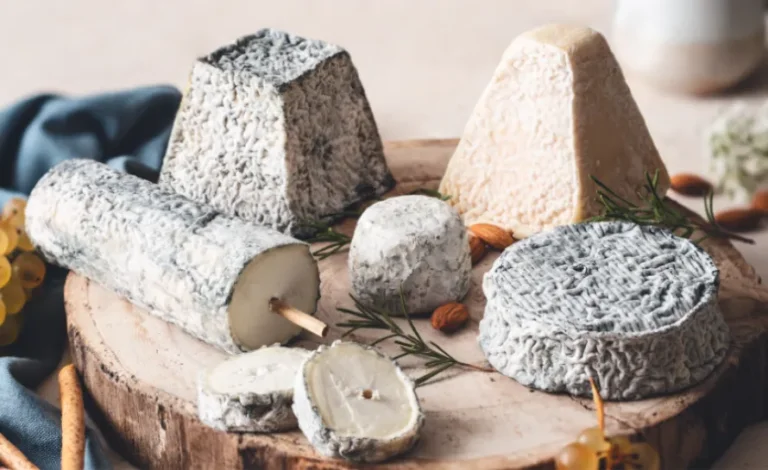
Crottin de Chavignol is the most famous, a little drum of a cheese from the Sancerre hills that’s made to go with the local white wine. Then there’s Sainte-Maure de Touraine, the log with a straw running through the middle, Selles-sur-Cher, the ash-coated disc, and the two pyramids of the Indre, Valençay with its flat top and Pouligny-Saint-Pierre, tall and pointed. If you’d like to know more about how goat cheese is made and how it changes as it ages, my goat cheese guide explains it all.
Table of Contents
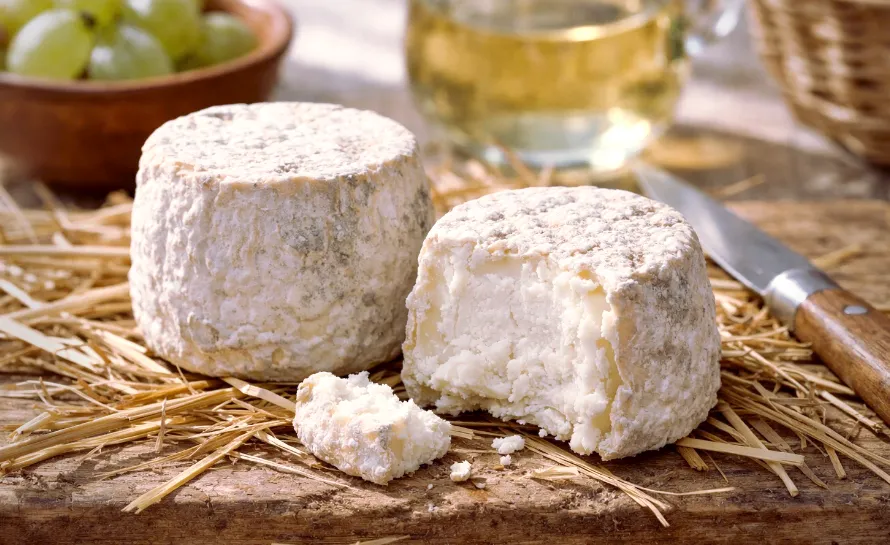
Crottin de Chavignol
Made in
The Sancerre hills (Pays-Fort sancerrois) and nearby areas of the Cher, Loiret and Nièvre, in the eastern Loire Valley
Milk
Raw whole goat’s milk from Alpine goats
Aged
At least 10 days, often much longer
AOP/PDO Status
Yes (AOC since 1976)
Fat content
At least 45% fat in the dry matter
Best Time
Spring to autumn, when the goats are out grazing
Where it comes from
Crottin de Chavignol takes its name from Chavignol, a small wine village just below Sancerre, where goat cheese has been made since at least the 16th century. According to its appellation file, the word crottin most likely comes from crot, a Berrichon word for a hole or hollow in a riverbank where women did their washing. The clay dug there was used to make pottery, first small oil lamps and then little moulds for draining cheese, and the cheese took its name from those moulds, not from any resemblance to animal droppings, whatever people may tell you.
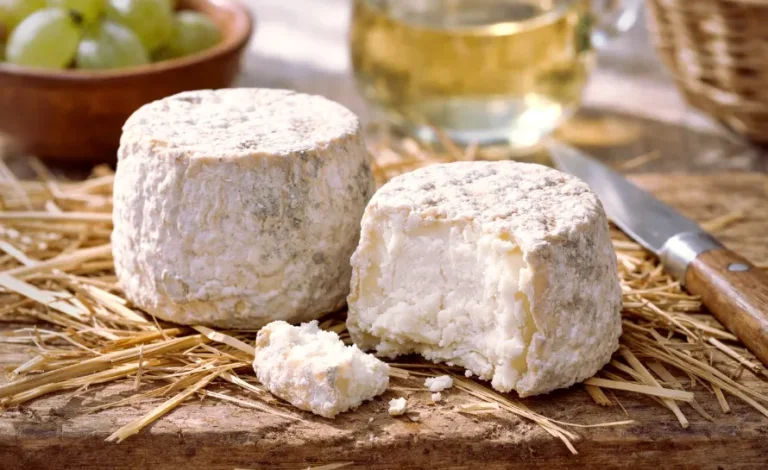
It’s a small, flat drum, slightly rounded in the middle, weighing 60 to 90 g when it leaves the farm, and it’s one of the few cheeses you can buy at very different ages.
What it tastes like
A young crottin has a thin, white to ivory rind and a moist, smooth paste that tastes milky, lemony and gently goaty. After a few weeks, the rind turns bluish-grey, the cheese shrinks and firms up, and the flavour becomes nuttier and more savoury. Fully aged, it’s small, hard and dry enough to grate, with a strong, earthy taste that isn’t for the faint-hearted.
How to eat it
The classic is warm, in a salade de chèvre chaud: a young crottin cut in half, placed on toast, grilled until soft and golden, and served on dressed leaves. On a cheese board, pair it with a glass of Sancerre, as the wine’s freshness and the cheese’s tang come from the same chalky hills. Very aged crottins can be grated over pasta or salads.
All five cheeses in this list must be made with raw milk and are usually eaten well before 60 days, so the AOP versions aren’t sold in the US, where you’ll find pasteurised Loire-style goat cheeses instead. In the UK, good cheese shops stock most of them.
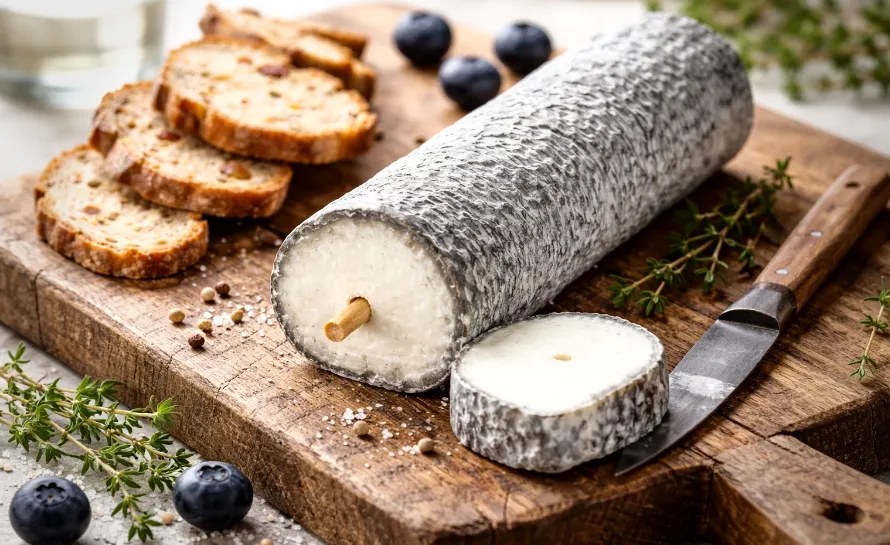
Sainte-Maure de Touraine
Made in
Indre-et-Loire and neighbouring parts of the Indre, Loir-et-Cher and Vienne, in Touraine
Milk
Raw whole goat’s milk (Alpine, Saanen and Poitevine goats)
Aged
At least 10 days
AOP/PDO Status
Yes (AOC since 1990)
Fat content
At least 45% fat in the dry matter
Best Time
Spring to autumn
Where it comes from
Sainte-Maure de Touraine is named after the small town of Sainte-Maure-de-Touraine, south of Tours. A traditional story credits goat cheesemaking in the area to Saracens who stayed behind after the battle of 732, though that’s a legend more than history, and Balzac already mentions the cheese in the 19th century.
You’ll recognise it straight away: a long log, slightly wider at one end, dusted with ash, with a straw running right through the middle. The straw was originally there to hold the fragile cheese together, and today each one must be engraved with the name of the appellation and the code of the dairy or farm that made it. A log usually weighs around 250 g.
What it tastes like
Under its thin, grey-blue rind, a young Sainte-Maure is soft and moist, with a fresh, lemony taste. As it ages, the paste becomes denser and more chalky in the middle while staying creamy under the rind, and the flavour turns nutty, with hints of hazelnut and a gentle goaty tang. It’s one of the milder and more delicate Loire goat cheeses.
How to eat it
Slice it into rounds (pull the straw out first) for a cheese board, or lay slices on toast and grill them for a warm salad. Wines from the same corner of the Loire suit it well, either a Vouvray or a light red Chinon.
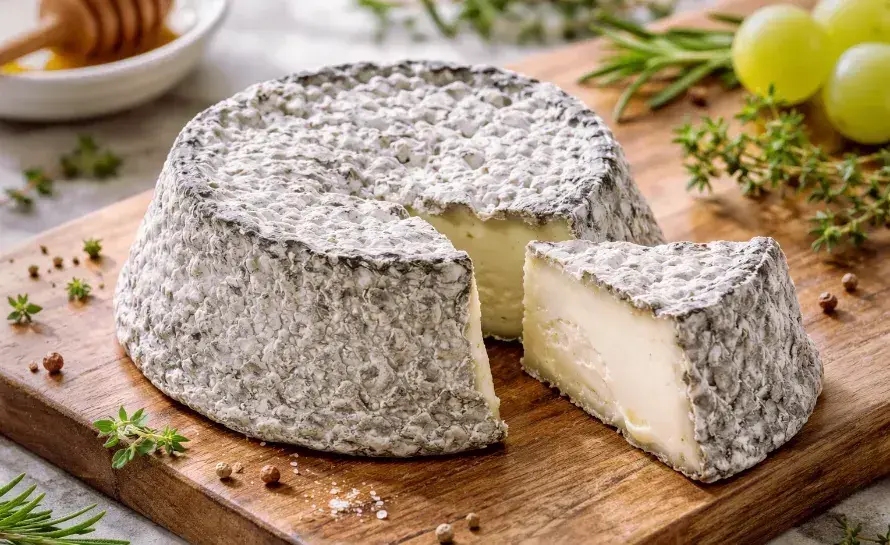
Selles-sur-Cher
Made in
The Cher valley, across the south of the Loir-et-Cher, the north of the Indre and the west of the Cher
Milk
Raw whole goat’s milk
Aged
At least 10 days
AOP/PDO Status
Yes (AOC since 1975)
Fat content
Not specified
Best Time
Spring to autumn
Where it comes from
Selles-sur-Cher takes its name from the small town of Selles-sur-Cher, on the river Cher between Sologne and the Berry. It began as a farmhouse cheese, made for the family and ripened in the cellar next to the farm, where a coating of ash, and later charcoal powder mixed with salt, helped protect it as it aged.
It’s a small, flat disc of about 9 cm (3½ in) across and 3 cm thick, with slightly bevelled edges, and usually weighs around 150 g. The dark grey to blue-black rind makes it one of the easiest Loire cheeses to spot.
What it tastes like
Cut into it and you get a striking contrast: a bright white paste inside the dark rind. The paste is fine, dense and smooth, melting in the mouth, with a mild, slightly sweet goat’s milk flavour and a light nuttiness. The flavour grows more pronounced and earthier as it ages, but it stays balanced, which makes it a good place to start if you’re new to ripened goat cheese.
How to eat it
The French usually eat it with the rind, which has a faint salty, mineral note from the ash. Cut it into wedges for a cheese board, with crusty bread and a white wine such as Reuilly or Quincy from the nearby Berry vineyards, or a light red.

Valençay
Made in
The Indre, Cher, Loir-et-Cher and Indre-et-Loire, in the Berry and Touraine
Milk
Raw whole goat’s milk (Alpine and Saanen goats)
Aged
At least 11 days before sale
AOP/PDO Status
Yes (AOC since 1998)
Fat content
Not specified
Best Time
Spring to autumn
Where it comes from
Valençay takes its name from the town of Valençay in the Indre, famous for its Renaissance château. The best-known story about its shape is that Napoleon, back from his Egyptian campaign, drew his sword and sliced the top off the pyramid, which is why it has a flat top today. It makes a good tale, but it’s almost certainly apocryphal. Its appellation file credits Talleyrand, who owned the château, with changing the mould to its truncated pyramid shape and bringing the cheese to the tables of Parisian high society.
It comes as a large truncated pyramid of around 200 to 250 g and a smaller one, both coated in charcoal ash.
What it tastes like
Under its ash coating, the rind develops a fine, bluish-grey mould, and the paste inside is pure white, smooth and dense when young. It tastes fresh and lightly acidic at first, then becomes nuttier and more rounded as it ages, with a creamy layer under the rind and a mineral note from the ash.
How to eat it
Serve it whole on a cheese board, where its shape always gets noticed, and cut it into wedges from the top down so everyone gets some rind and some of the centre. It goes well with walnuts, a little honey or fig jam, and a white Valençay wine from the same area, or a Sancerre.
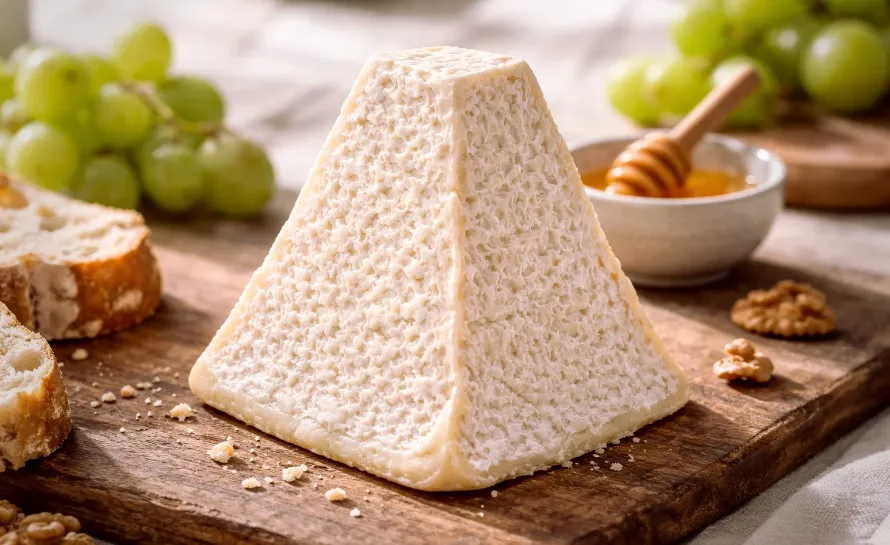
Pouligny-Saint-Pierre
Made in
A small area around Le Blanc, in the Brenne regional park, Indre
Milk
Raw whole goat’s milk
Aged
At least 10 days
AOP/PDO Status
Yes (AOC since 1972, the first goat cheese AOC in France)
Fat content
At least 45% fat in the dry matter
Best Time
Spring to autumn
Where it comes from
Pouligny-Saint-Pierre comes from a small corner of the Brenne, an area of ponds, heath and woodland in the Indre, and its production area lies entirely inside the Brenne regional park. It was originally a family cheese sold at local markets such as the one in Le Blanc, it won a silver medal at a Paris exhibition at the start of the 20th century, and in 1972 it became the first goat cheese in France to be given an AOC.
Its tall, slender pyramid with a square base has earned it nicknames like the “Eiffel Tower”. The standard size weighs at least 250 g and the small one at least 150 g. Look at the label: green means fermier, made on the farm, and red means laitier, made in a dairy.
What it tastes like
Unlike Valençay, Pouligny isn’t coated in ash. Its rind is natural, creamy white at first and then turning bluish-grey as moulds develop. The paste is fine and white, soft and creamy just under the rind and a little more chalky in the centre when young. The flavour is clearly goaty but balanced, with a slight tang, a hint of salt and nutty, sometimes mushroomy notes as it ripens.
How to eat it
Put it on the cheese board whole, so everyone can admire the shape, then cut it from the point downwards into thin wedges. Walnuts, a little honey or fresh fruit go well with it, and so does a white Reuilly or a light red from Touraine.
Conclusion
Crottin de Chavignol may be the name everyone knows, but taste all five side by side and you’ll see how much variety there is in Loire goat cheese: a drum, a log, a disc and two very different pyramids, all made from the same raw goat’s milk but each with its own texture and its own way of ageing. If you’re starting out, try a Selles-sur-Cher or a young Sainte-Maure first, as they’re the mildest, then work up to a well-aged crottin or a ripe Pouligny.
Let them come to room temperature, cut a slice of good bread and pour a glass of Loire white wine, and you’ll understand why this stretch of the river is so proud of its goats.
Which of these five have you tried, and is there another French goat cheese you’d like to see in a future list? Tell me in the comments!
A Complete Hosting Guide
This complete guide takes the intimidation out of French cheese and wine hosting, so you can create an impressive, memorable evening that feels effortless.
This post may contain affiliate links. If you buy through them I earn a small commission at no extra cost to you, and it helps keep this blog running. Please read my disclosure policy for more information. I am grateful for your support.