Introduction
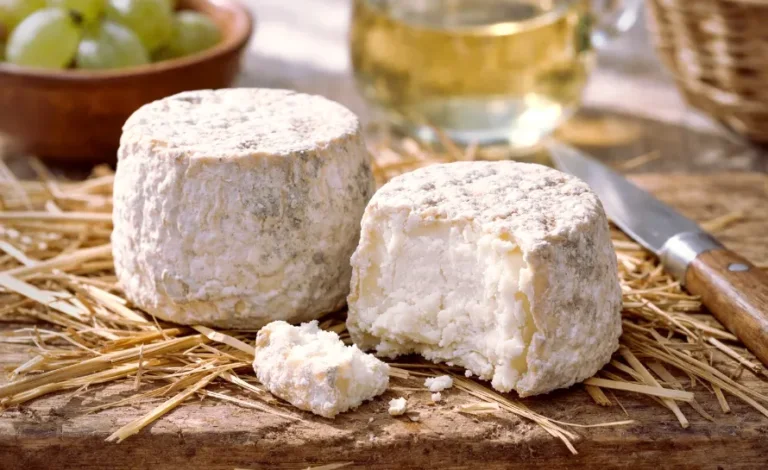
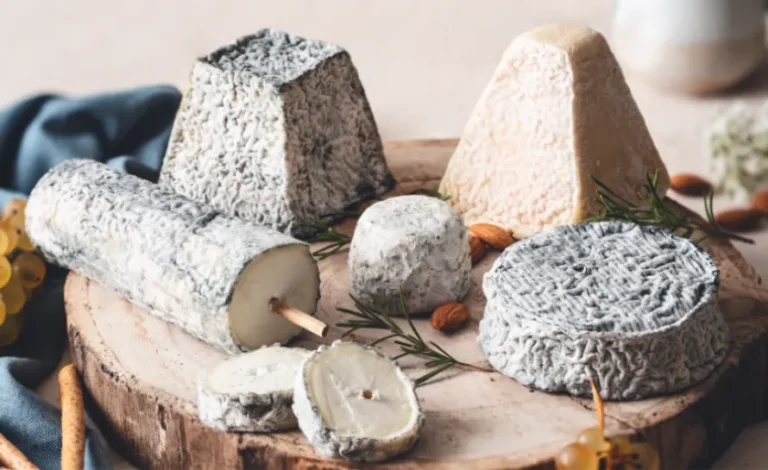
Walk into any French cheese shop and you will spot them straight away. The little logs, the pyramids, the small round buttons of white cheese, some dusted with ash, some with a delicate wrinkled rind. That is goat cheese, and France does it better than anywhere else.
What most people know as goat cheese is that tangy, crumbly thing from the supermarket. Traditional French goat cheese is something else entirely. It is subtle, complex, and when it is good, it is very good. The Loire Valley alone produces five protected AOP varieties, each with its own shape and character. But you will also find exceptional goat cheeses across Burgundy, Poitou-Charentes, the Rhône-Alpes, and on small farms scattered all over the countryside.
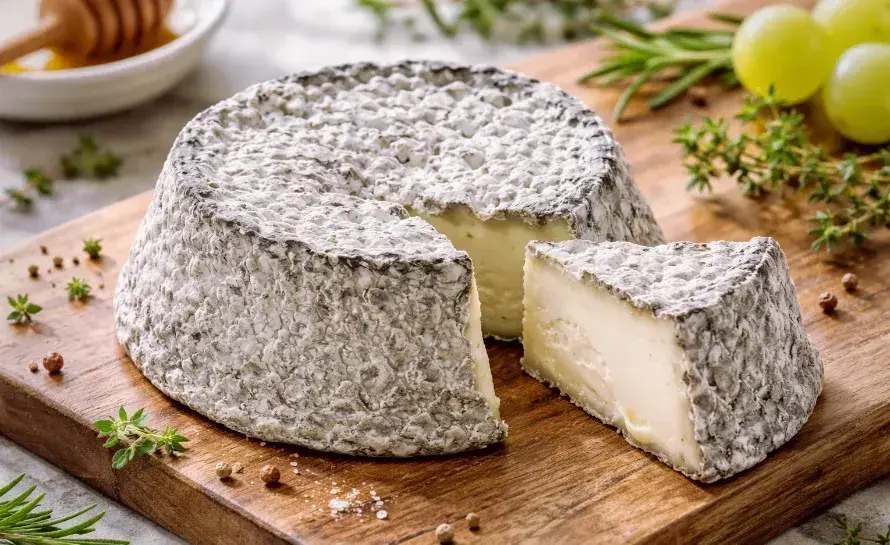
The ash coating you see on many of them is not just for looks. It helps the cheese ripen properly, and it is part of what gives each variety its personality. The slow way the curds are made, the wrinkled rind that develops over time, the hazelnut and mushroom notes that come with age, all of it comes from technique and tradition that goes back centuries.
Whether you are spreading a fresh one on bread, grilling a crottin for a salad, or putting an aged pyramid on a board with a glass of Sancerre, French goat cheese is worth getting to know properly.
What are goat cheeses?
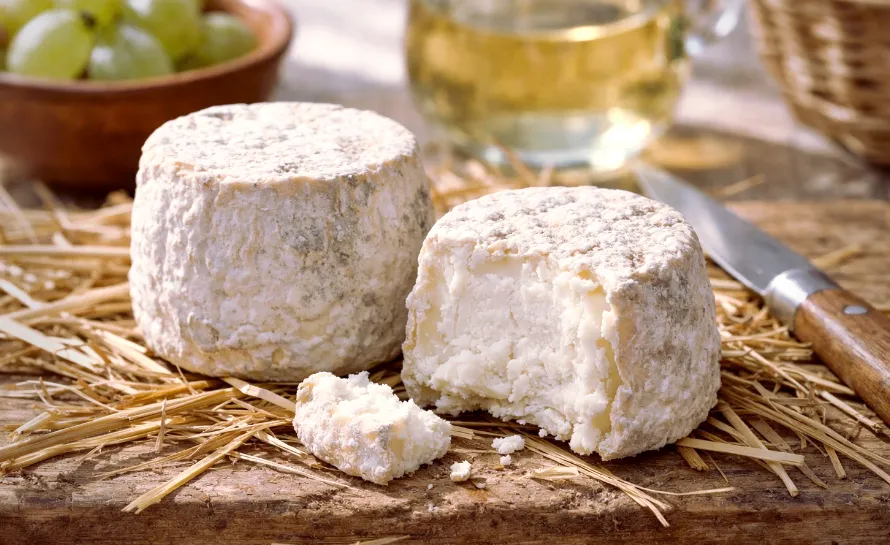
In French, goat cheese is simply called “fromage de chèvre”, cheese made from goat’s milk. Goat cheese exists all over the world of course, but the French version follows centuries-old techniques that give it flavours, textures and appearances you won’t easily find elsewhere.
The heart of it is the Loire Valley, where 650 farms produce five protected AOP varieties. But it doesn’t stop there. Burgundy has its own varieties, denser in texture. Poitou-Charentes is home to the Chabichou. The Rhône-Alpes produces the Chevrotin. And there are countless small farms dotted across the country doing their own thing quietly and brilliantly. In total, French goat cheeses account for 16 of France’s 47 AOP designations, more than any milk type except cow’s milk, which tells you something about how seriously the French take this.
Three things define how these cheeses are made. The slow lactic coagulation that creates delicate, high-moisture curds. The wrinkled rind that develops over time and brings out complex, nutty flavours. And the ash coating that transforms a fresh white cheese into something striking and helps it ripen the way it should.
Explore the goat cheeses collection
If you want to learn more, each variety of goat cheese has its own story. I’ve written individual articles on the main types, with five varieties for each one worth knowing.
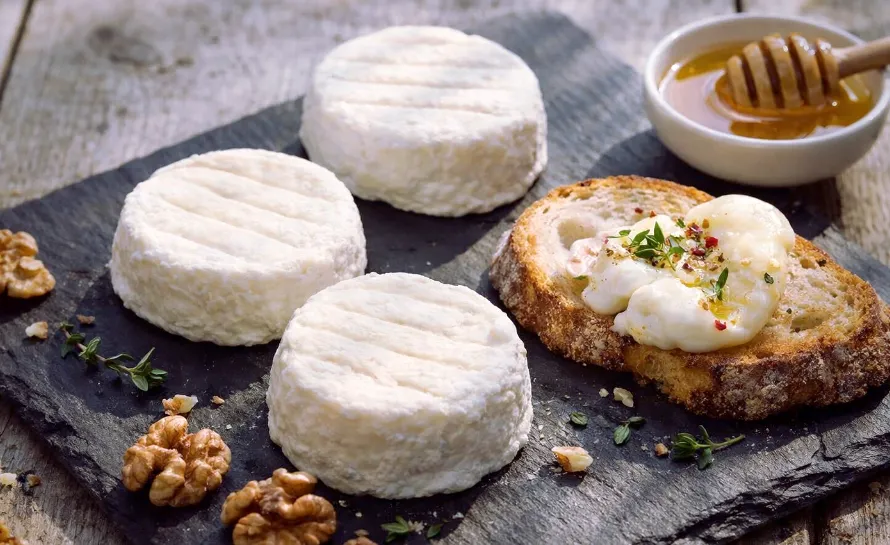
The defining characteristics
What makes goat cheese distinct?
- Lactic coagulation method
Slow acidification over 16-24 hours creates the curd, not quick rennet action. Mesophilic cultures convert lactose to lactic acid until the milk coagulates naturally. - Soft, delicate curds
The lactic coagulation creates fragile, high-moisture curds that drain naturally without pressing. Bright, lemony acidity throughout. - Small formats only
Logs, pyramids, buttons, and small rounds. The weak curd structure cannot support large wheel sizes. - Geotrichum candidum rinds
Wrinkled, brain-like appearance from this yeast-like fungus colonising the surface. Develops hazelnut, mushroom, and earthy flavours. - Ash coating tradition
Vegetable charcoal mixed with salt neutralises surface acidity and creates ideal conditions for beneficial moulds. Striking grey-black appearance. - Pure white colour
Goats convert all carotene to vitamin A, so their milk contains no beta-carotene. Cheese stays brilliantly white. - Versatility across ages
Fresh (1 week) is soft and lemony. Young ripened (2-3 weeks) develops hazelnut notes. Medium-aged (4-5 weeks) becomes chalky and earthy. Fully aged (6+ weeks) turns hard, crumbly, and pungent.
These cheeses don’t stay still. What you bring home today will taste noticeably different in three days, and different again in a week. They’re living things, moving from fresh to ripe to fully aged, and knowing roughly where yours sits on that journey changes everything.
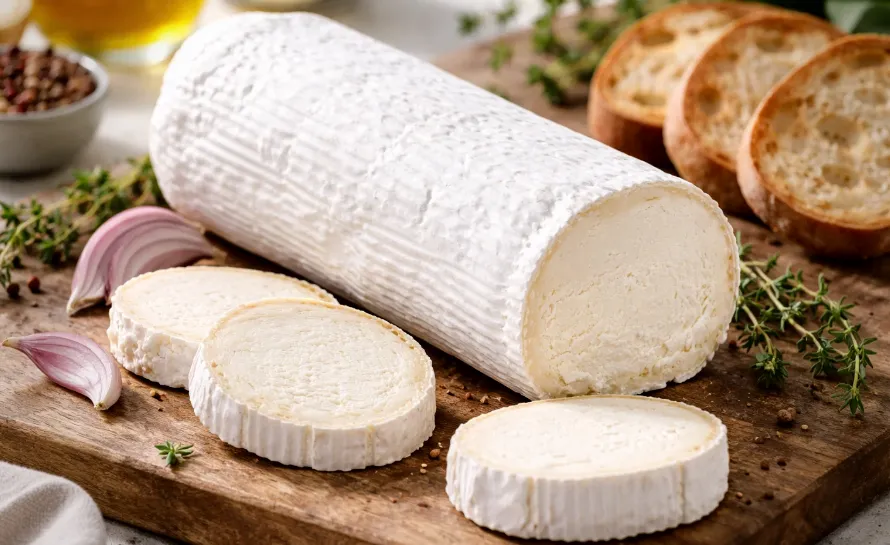
How French goat cheeses are made
Traditional French goat cheese relies on lactic coagulation, a slow, gentle process that sets it apart from most other cheeses you’ll encounter.
1. Milk Preparation
Goat’s milk is used exclusively, typically pasteurised for commercial production though traditional farmhouse varieties may use raw milk. The milk is gently warmed to around 18-22°C, much cooler than for rennet-coagulated cheeses. This lower temperature is crucial for lactic coagulation to work properly.
2. Culturing and Slow Coagulation
Mesophilic lactic acid bacteria are added, cultures that work at moderate temperatures to acidify the milk slowly. This is the heart of goat cheese making. Over 16-24 hours, the cultures convert lactose into lactic acid. As the pH drops from 6.7 to about 4.8-5.0, the milk proteins naturally clump together and form soft, fragile curds. Some makers add 2-3 drops of rennet per gallon (barely any) to speed the process slightly and create a firmer curd, but the acid does the real work.
3. Ladling and Draining
Once the curd forms, it’s gently ladled (never cut) into moulds. The ladling is done carefully to preserve the delicate structure. The curds drain naturally for 24-48 hours with no pressing whatsoever. They’re flipped regularly during draining to ensure even moisture removal. The whey simply drips away slowly whilst the cheese develops its shape. The goal is removing enough whey for the cheese to hold its form whilst retaining sufficient moisture for that characteristic creamy texture.
4. Salting and Ash Application
After draining, the cheeses are salted. Most are dry-salted, with salt rubbed directly on the exterior. The salt controls moisture, provides flavour, and moderates mould growth during aging. For ash-coated varieties, this is when vegetable charcoal mixed with salt gets dusted or rolled onto the surface. The alkaline ash neutralises surface acidity, creating ideal conditions for beneficial moulds to establish.
5. Aging and Rind Development
Fresh goat cheese can be eaten immediately, but most age for 10 days to 6 weeks. The cheeses move to aging rooms maintained at cool temperatures (10-14°C) with high humidity (85-95%). Here’s where Geotrichum candidum colonises the surface. Within days, this yeast-like fungus begins growing, forming those characteristic wrinkled, brain-like rinds. The cheeses are flipped regularly to ensure even mould coverage. As Geotrichum breaks down proteins and fats, it reduces acidity and develops complex flavours of mushroom, nuts, and earth. Some varieties also develop Penicillium candidum (white bloomy mould) over the Geotrichum. After 2-3 weeks, young ripened cheeses are ready. Aged varieties continue for 4-6 weeks or longer, becoming progressively firmer, drier, and more intense in flavour.
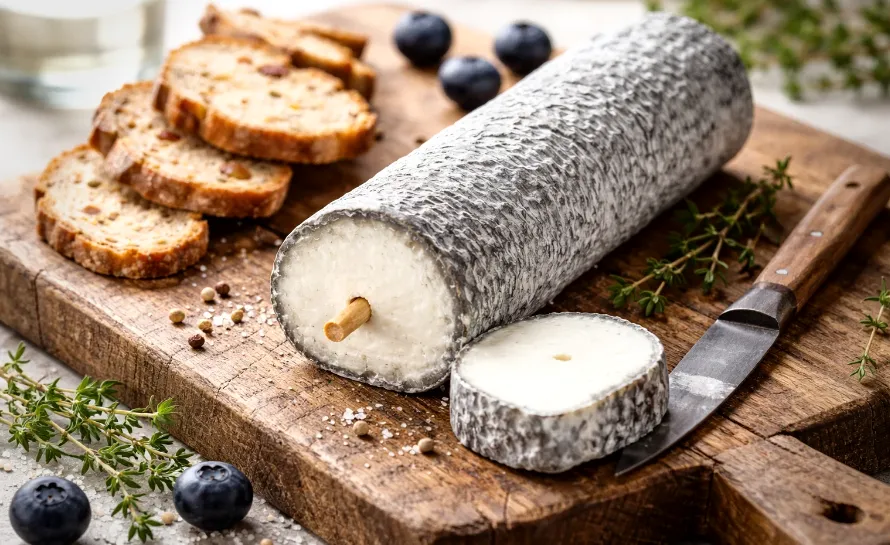
The spectrum of French goat cheese
Despite sharing similarities, goat cheeses offer surprising variety.
By Shape
Logs
Logs are long cylinders like Sainte-Maure, typically 15-25cm in length. The extended shape allows even drainage and creates consistent texture throughout. Many have a straw through the centre for structural support.
Small rounds
Small rounds (crottins) appear as flattened cylinders about 4-5cm across. The compact size means faster aging and more concentrated flavours. Crottin de Chavignol sets the standard for this style.
Pyramids
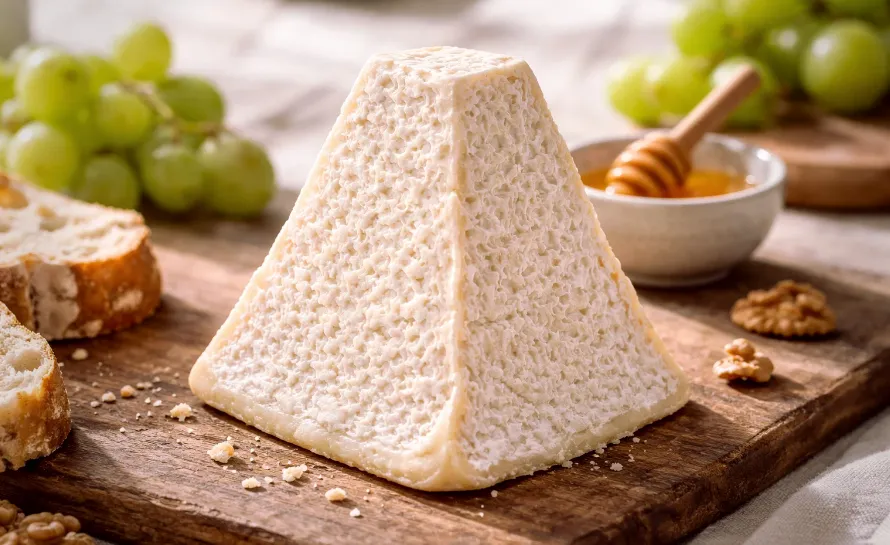
They can be truncated or full-height like Valençay and Pouligny-Saint-Pierre. Legend ties their shapes to church steeples, Napoleon’s sword, or simply practical drainage geometry. Whatever the origin, the pyramid shape is now iconic.
Discs
Discs like Selles-sur-Cher spread flat and round, typically 8-10cm across. The broad, flat surface maximises ash coating coverage and rind development.
Domes and buttons
They form small hemispheres and button shapes. These age quickly and stay relatively mild throughout their life.
By Texture and Age
Fresh
(0-10 days) appears pure white, soft, and spreadable. The texture resembles cream cheese with bright lemony tang. Mild “goaty” flavour. Moisture content sits around 60-70%.
Young ripened
(10-21 days) shows Geotrichum rind developing, creating that wrinkled appearance. Texture stays soft but becomes more cohesive. Flavours include fresh milk, lemon, and subtle hazelnut. This is the “classic” stage for most French goat cheeses.
Medium-aged
(3-5 weeks) displays fully developed rind, often turning grey-blue. Texture becomes chalky near the centre while staying creamy just under the rind. Flavours intensify into hazelnuts, mushrooms, and wet earth. More assertive “goaty” character emerges.
Fully aged
(6+ weeks) turns hard, dry, and crumbly throughout. The rind becomes dark grey to blue-grey. Intense, pungent flavours develop: walnuts, barnyard, even truffle notes. These can be grated over dishes like Parmesan. Aged crottins lose about half their original weight through moisture loss.
Domes and buttons
They form small hemispheres and button shapes. These age quickly and stay relatively mild throughout their life.
By Rind Treatment
Natural
Natural rinds receive just salt, allowing native yeasts and moulds to colonise naturally. This creates the most varied, terroir-driven flavours but produces less predictable appearance.
Geotrichum
These rinds are inoculated with Geotrichum candidum cultures to ensure consistent wrinkled rind development. This creates that characteristic “brain-like” texture. Most Loire varieties use this method.
Ash-coated
Some varieties get dusted with vegetable charcoal and salt after draining (detailed in the next section). This creates distinctive grey to black rinds and is traditional throughout the Loire and Burgundy.
Bloomy
Bloomy rinds develop when white Penicillium candidum mould grows over or alongside Geotrichum, creating velvety white surfaces. Less common but beautiful when it occurs naturally.
Herb-coated
Some goat cheeses are rolled in herbs, flower petals, or spices immediately after salting. Lavender, thyme, and cracked black pepper are popular choices for this treatment.
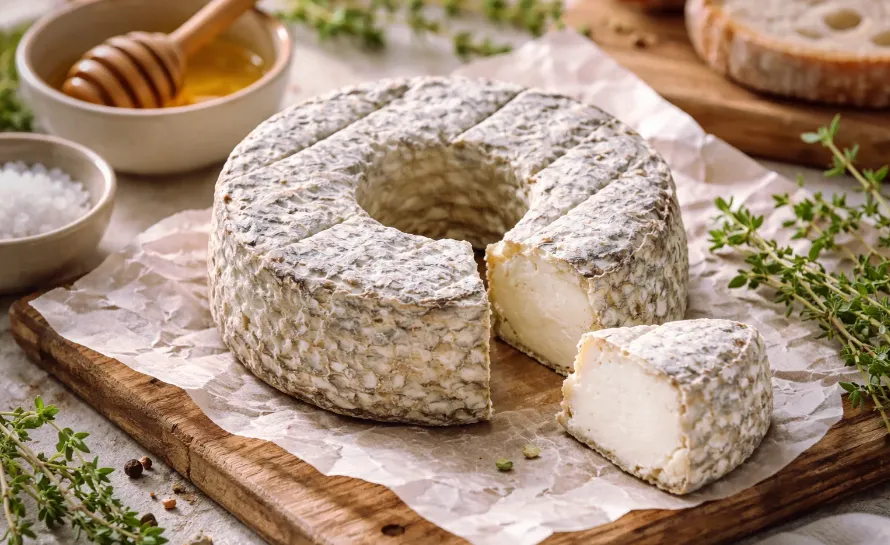
How to buy French goat cheeses
The five classic Loire varieties all carry AOC/AOP protection, so the name on the label already tells you a lot. You’re not guessing at quality if you see that label.
There are also two words worth knowing before you shop: “fermier” (farmhouse) and “lait cru” (raw milk). Farmhouse cheeses come from small producers using milk from their own goats. And the raw milk versions have more depth and flavour. Neither is essential, but if you spot them, they’re usually worth it.
If you can touch the cheese before buying it, it will give you hints of what the cheese is like. You only need a gentle press. If it’s soft and yielding, it’s young and fresh. If you feel a little resistance with some give, it’s nicely ripened. And if it’s hard all the way through, it’s fully aged and intense.
How to store French goat cheeses
The fridge is fine for all goat cheeses. The vegetable drawer is actually the best spot, the temperature is stable and it’s slightly more humid than the rest of the fridge. Aim for somewhere between 4 and 7°C if you can.
One thing to know: younger cheeses keep ripening even in the cold, just slowly. So if you buy a nicely ripened cheese and leave it for another week, it will be more aged by the time you eat it. Not a problem, just worth keeping in mind.
Packaging and Containers
Cling film is the enemy of good cheese. It traps moisture and speeds up spoilage. Use cheese paper or sheets of parchment paper instead, and if you don’t have any, a loose wrap rather than a tight seal is better than nothing.
Fresh, soft goat cheese needs to be wrapped fairly tightly once opened, then kept in a loose container or bag. Younger to medium-aged cheeses with a rind need a bit of air, so wrap loosely and change the paper if it gets damp. Fully aged, dry goat cheeses are the least fussy of the lot and will forgive slightly imperfect wrapping.
If you have an ash-coated cheese, don’t be alarmed when the ash transfers onto the paper, that is totally normal, just use a fresh piece if it gets messy.
How long will it keep?
Fresh soft goat cheese keeps about 2 to 3 weeks unopened, and around a week once you’ve cut into it. Young ripened varieties are similar. Medium to fully aged cheeses are more stable and will last 3 to 4 weeks in the fridge even after cutting.
Can you freeze it?
Honestly, it’s not worth it. Freezing breaks down the texture and you end up with something grainy and watery when it thaws. The rind doesn’t survive either.
If you have fresh goat cheese you absolutely need to use up, you can freeze it for up to two months, but only for cooking, stirred into pasta, mixed into a quiche filling, that kind of thing. The texture won’t be right for anything else. And don’t bother to freeze ripened goat cheese with a developed rind, the results are genuinely unpleasant.
Serving French goat cheese
The single most important thing you can do for a goat cheese is take it out of the fridge in time. At least 45 minutes before serving, longer for a dense aged cheese. Cold goat cheese tastes flat and almost textureless. Give it time to come to room temperature and the flavours will shifts: the tanginess mellows, the hazelnut notes come through, the texture becomes what it’s supposed to be. It really makes all the difference.
Presentation
I think goat cheeses are naturally beautiful to look at. The logs, the pyramids, the little rounds, they don’t need much dressing up. A wooden board, a good cheese knife, and a crusty baguette is really all you need. For very crumbly aged varieties, don’t fight it with a knife. Just break them into rustic pieces and let them be what they are.
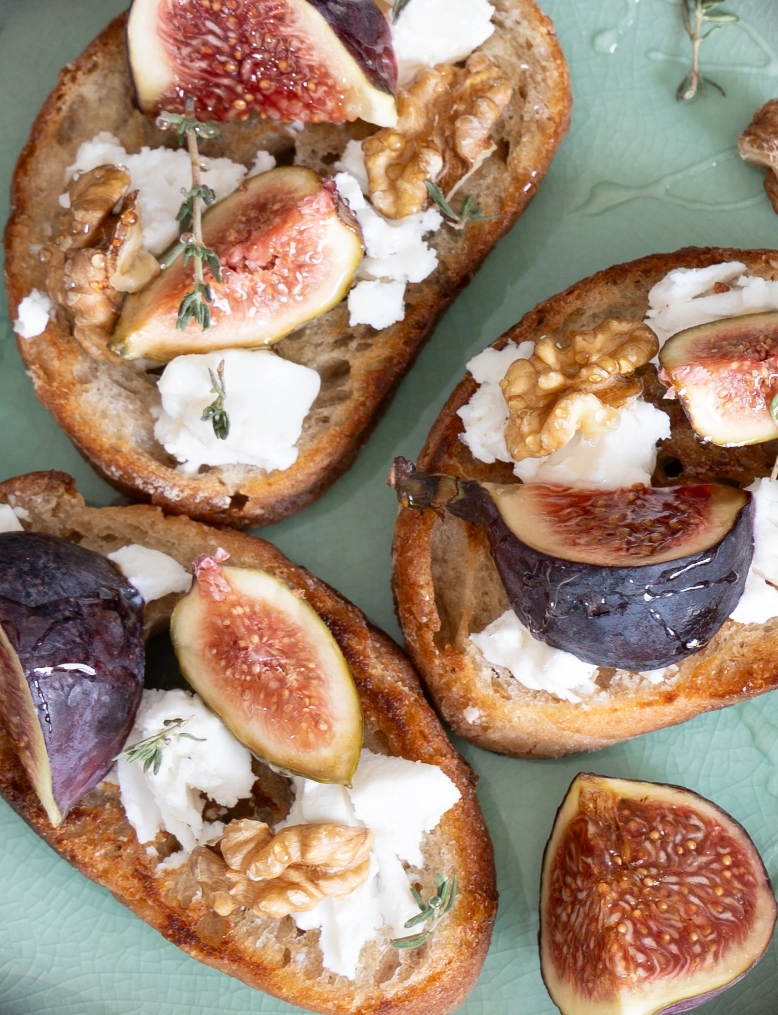
Fruit, nuts, and a little honey all work well alongside. Just keep it simple enough that the cheese stays the main event.
The Rind Question
The rind is meant to be eaten on a goat cheese. Whether it’s the wrinkled Geotrichum rind, a bloomy white one, or an ash coating, it’s all part of the cheese. The rind is actually where a lot of that earthy, mushroomy, hazelnut flavour lives. You can eat the ash coating too! It adds a subtle mineral note to the cheese.

Cooking with French goat cheese
This cheese is so versatile in the kitchen. It’s creamy, tangy, and fresh, and it works in more dishes than you’d expect for something so delicate.
Starting with the classic: goat cheese salad. I’ve been making this since forever and never get tired of it. The traditional one as well as the fried goat cheese salad are a staples in our house.
We also use it a lot in quiches and tarts. We put goat cheese on top of the leek tart tatin for example. It pairs really well with caramelised onions, roasted courgettes or peppers, sautéed mushrooms, or just fresh thyme. Either crumble or slice the log and distribute it through the filling, or dot larger pieces on top before baking. It melts into the custard and creates little pockets of creamy richness throughout.
For pasta, toss fresh goat cheese into hot pasta with a splash of the cooking water. It melts into a creamy sauce with no butter or cream needed. Add peas, asparagus, sun-dried tomatoes, or whatever vegetable or herbs you have around, and that’s a wrap!
And if you have an aged goat cheese, crumble it over finished pasta the way you would Parmesan. You don’t need much as the flavours are strong, a little goes a long way.

Health benefits of French goat cheeses
Good news: goat cheese is actually pretty good for you. It’s a solid source of protein and calcium, and it has fewer calories than most cow’s milk cheeses. Fresh varieties come in around 270-320 calories per 100g, which is less than brie, mozzarella, or cheddar.
The fat in goat cheese is also a bit different. It contains medium-chain fatty acids, which the body digests more efficiently than the fats in cow’s milk. That’s partly why a lot of people who find cow’s milk cheese heavy or hard to digest do much better with goat cheese.
The other reason is the protein. Goat’s milk contains only A2 casein, while cow’s milk has both A1 and A2. A1 casein is what causes digestive discomfort for a lot of people, so switching to goat cheese can genuinely make a difference.
So good protein, good calcium, easier to digest, and gentler on sensitive stomachs. Not bad for something that tastes this good.

Final thoughts
French goat cheeses are some of the oldest cheeses in the world, and there’s a reason they’ve been made the same way for centuries. They don’t need years of aging to be special, the magic happens fast, and it’s subtle and delicious.
They’re also a great starting point if you’re new to French cheese. They are less intimidating than a strong blue or a washed rind. Yes, there’s that tangy, goaty flavour, but it builds gradually, and you can easily find a ripeness level that suits your taste buds.
If you’re just getting into it, start with a young cheese. A Sainte-Maure or a young Crottin with a developing rind and just a hint of hazelnut is a good place to begin. Try it on bread first, then warm some up for a salad. You’ll quickly see how versatile it is.
Then, when you’re ready, go a bit further. An aged Crottin that’s starting to crumble, smelling earthy and a little funky to understand the full picture of the potential of the cheese.
Just pick one good cheese, eat and savour it slowly at room temperature and that’s really all it takes to understand these beautiful cheeses.

A Complete Hosting Guide
This complete guide takes the intimidation out of French cheese and wine hosting, so you can create an impressive, memorable evening that feels effortless.
Just so you know, a few links here earn us a commission. Doesn’t cost you anything extra, and we only link to things that are actually worth your time.