Let’s start with the obvious: blue cheese contains mold. Try not to let that put you off. This is “good” mold, carefully chosen and tamed over centuries, and it is exactly what makes the cheese so tasty. If you can get past the idea of eating mold, you will discover a cheese you really enjoy, I can promise you that.
Roquefort is the best‑known French example, aged in natural limestone caves, but there are plenty of others from the Auvergne, the Jura, and the south of France. If you have ever stared at a blue cheese in a shop and hesitated, this is what you are looking at: controlled fermentation, not food gone wrong.
What are French blue cheeses?
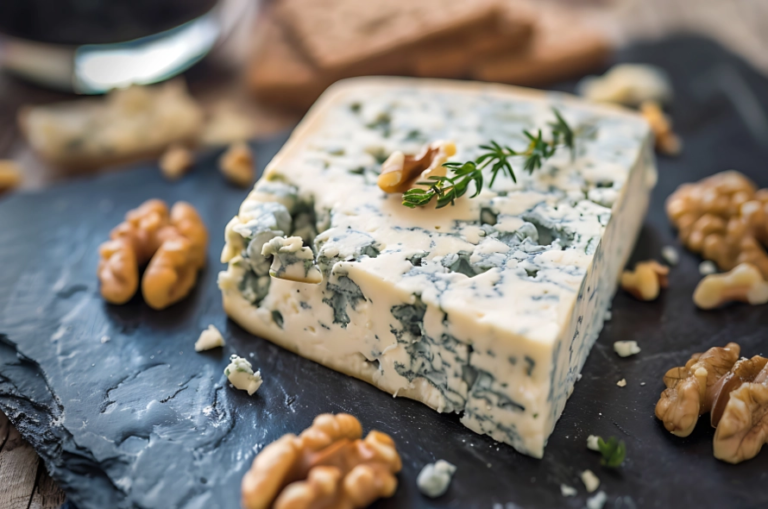
Blue cheeses look a bit dramatic, but the idea behind them is simple. In French they are called “fromages à pâte persillée”, literally “parsley‑veined cheeses,” because the blue-green mold runs through the inside of the cheese rather than sitting on the rind. Those veins are not a mistake. They are the whole point.
The main actor is a mold called Penicillium roqueforti, used in France for generations. It first appeared naturally in caves where cheeses were left to mature, and there is a local story about a shepherd who forgot his cheese in a cave and came back to find it streaked with blue. Whether or not that tale is true, cheesemakers eventually learned to grow this mold on purpose and add it to their cheeses in a controlled way.
Once a young cheese is formed, it is pierced with long needles. Those holes act like little air shafts. The mold inside needs oxygen, so these channels let it breathe and spread through the cheese, tracing out the familiar blue-green lines you see when you cut it open.
Explore our blue cheese collection
If you want to learn more, each variety of blue cheese has its own story. I’ve written individual articles on the main types, with five varieties for each one worth knowing.
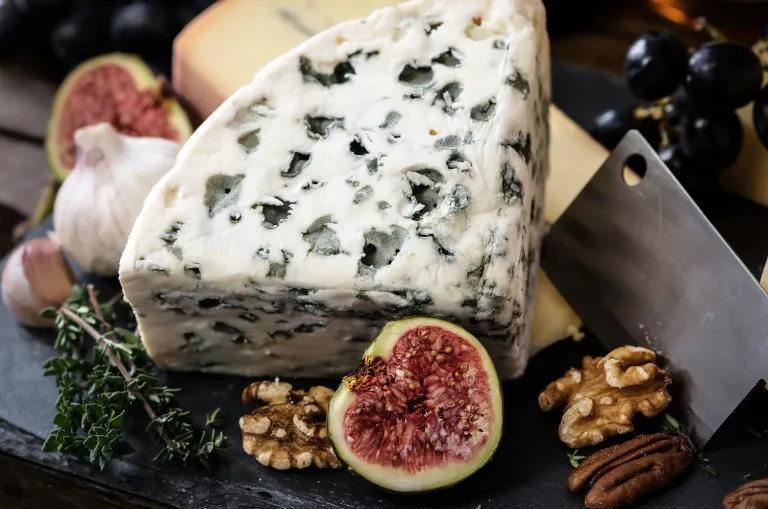
What makes a blue cheese a blue cheese?
Internal blue-green veining
The mold grows inside the cheese, creating marbled patterns throughout the paste
Distinctive flavour profile
Sharp, tangy, often salty, with complex savoury notes that can range from mild to powerfully pungent
Piercing during production
All blue cheeses are deliberately pierced to create air channels for mold growth
Crumbly to creamy texture
The texture varies considerably, from firm and crumbly to soft and almost spreadable
Strong aroma
Blue cheeses typically smell quite pronounced, though intensity varies by variety
What makes blue cheese so interesting is what the mold then does to the cheese over time. As it grows, it slowly breaks down the fats and proteins inside, which is what creates the strong, savoury flavours and often turns a firm cheese into something softer and creamier. A wheel tasted young and then again a few weeks later can feel like two completely different cheeses.
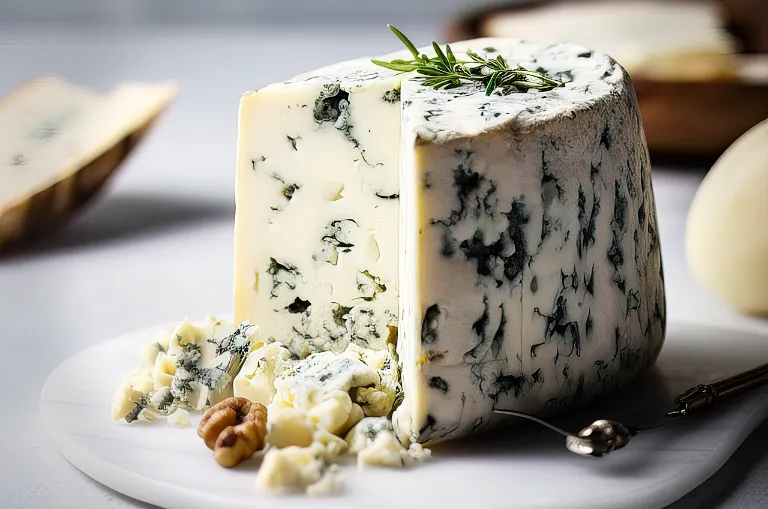
How French blue cheeses are made
The bones of the process are the same as for most cheeses. The interesting bits are where the mold and the air come in.
1. Inoculation
The process starts with milk, either cow’s, sheep’s, or occasionally goat’s. The critical difference appears early: Penicillium roqueforti spores are added directly to the milk or mixed into the curds. Originally, cheesemakers cultivated these spores on rye bread left in caves, harvesting the mold that grew naturally. Today, most producers use commercially cultivated strains, though traditional methods still exist.
2. Coagulation and cutting
The milk is cultured and coagulated with rennet, then cut into curds. The curds are cut larger than for many other cheeses, helping create the more open texture that allows mold to spread through the interior.
3. Draining and molding
The curds are gently drained and placed into molds. Unlike pressed cheeses, blue cheeses aren’t heavily pressed, which maintains a more open structure, the spaces between curds become the pathways where blue veining develops.
4. Salting
The cheeses are salted, either by rubbing salt on the exterior or sometimes by adding salt to the curds. This controls moisture, inhibits unwanted bacteria, and enhances flavour.
5. Piercing
This is the defining step. After a few days to weeks, when the cheese has formed but is still relatively young, cheesemakers pierce each wheel with long stainless steel needles or skewers. These create channels from the exterior into the interior, allowing oxygen to reach the mold spores waiting inside. The pattern and frequency of piercing affects how the blue veining develops.
6. Cave aging
The cheeses are aged in cellars or caves where temperature and humidity are carefully controlled. The environment needs to be cool (typically 8-12°C) and quite humid (85-95% relative humidity). In these conditions, Penicillium roqueforti thrives, growing along the air channels created by piercing and spreading through the cheese’s interior.
7. Continued ageing
As the mold grows, it produces enzymes that break down fats (lipolysis) and proteins (proteolysis), creating the complex flavours blue cheeses are known for. The paste often becomes creamier and softer as aging progresses. Different varieties age for different periods, from just a few weeks to several months, depending on the desired intensity and character.
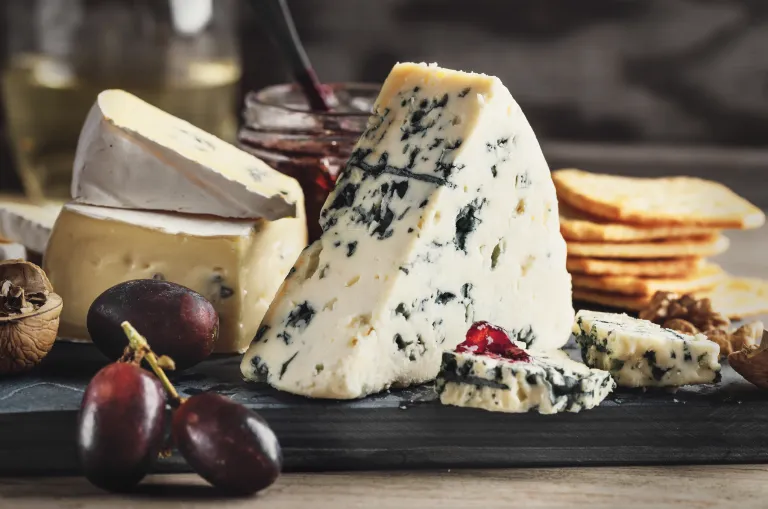
The spectrum of French blue cheeses
Even though the technique is similar, the cheeses themselves can feel completely different on the board.
By Texture
Creamy and Soft
These almost spread on their own when ripe. They coat your tongue with rich, salty, tangy flavour and usually have generous blue veining all through the paste.
Firm and Crumbly
These break into chunks rather than spreading. The drier texture concentrates the salt and tang, so the flavour can feel sharper and more direct.
Semi-Firm with Balanced Texture
Many French blues sit comfortably between the two: sliceable, smooth enough to feel creamy, but not runny. They tend to be the easiest to share with people who think they “do not like blue cheese” yet.
By Region
Auvergne
South and Causses
Aveyron and the surrounding limestone plateaus produce strong characters, often from sheep’s milk and often cave‑aged. Expect salt, power, and a flavour that lingers.
Jura and the east
Cows again, but with a more restrained style. These cheeses tend to be elegant, with neat veining and flavours that feel complex without shouting.
Cave Aged Blue Cheese
Many of the famous French blues have a real cave behind them, not just a story on a label. Natural limestone caves keep a steady cool temperature and a very high humidity, which is exactly what blue cheese needs.
Roquefort is the classic example. By law it has to age in the Combalou caves at Roquefort-sur-Soulzon, where natural fissures in the rock keep the air moving while the temperature stays around 10–12 °C and the humidity close to 90–95 percent. That particular cave environment, and its resident strain of Penicillium roqueforti, give Roquefort its intense flavour and texture.
Modern affineurs who do not have caves build cellars that copy those conditions as closely as they can.
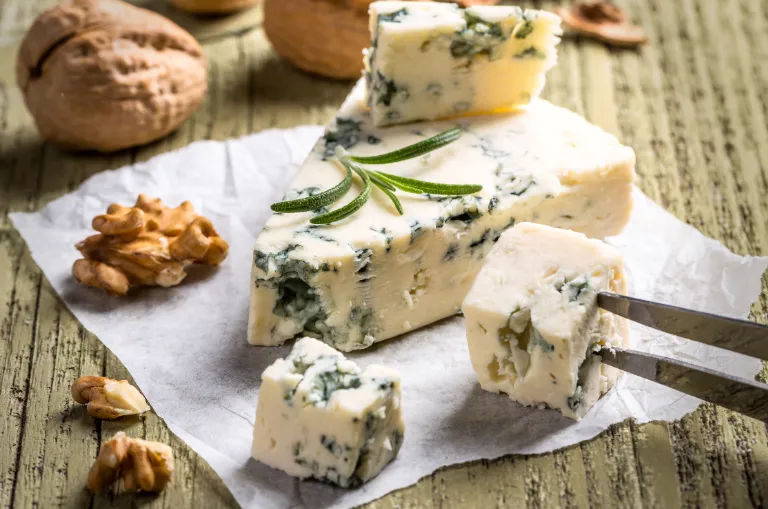
How to buy French blue cheeses
Blue cheeses are a bit less mysterious once you know what to look for on the label and in the cheese itself.
First, the labels. If you see AOC or AOP, you know you are looking at a protected, traditional cheese, made in a specific region under strict rules. It does not guarantee you will love the flavour, but it does guarantee you are getting the real thing.
Two other words are worth spotting: “fermier” (farmhouse) and “lait cru” (raw milk). A fermier blue comes from a farm using its own milk and usually has more personality. Raw-milk blues tend to be more complex and expressive than pasteurised ones. You do not have to choose them, but if you already enjoy blue cheese, they are often the most interesting pieces on the counter.
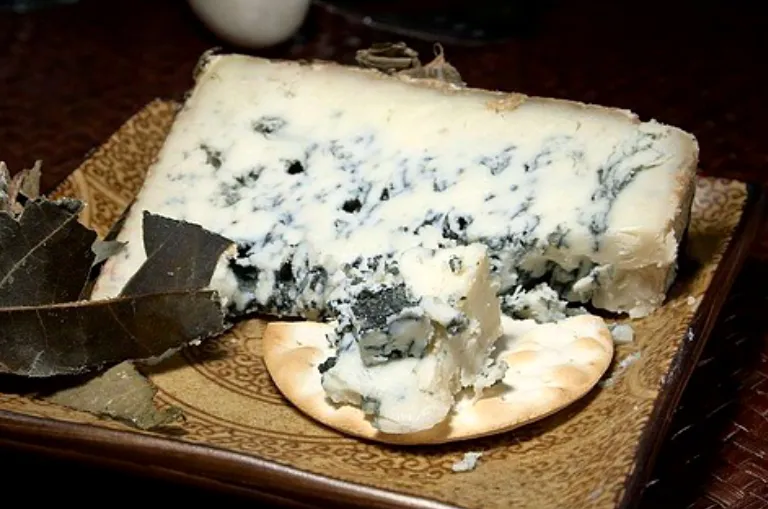
If you can see the cut surface, let your eyes do the work. The blue should look alive and clean, blue-green rather than brown or black, and the paste should be ivory to cream without odd colours creeping in. A few darker halos around the veins are normal.
And if you are allowed to press gently, the texture will tell you the rest. A soft, yielding paste means a younger, creamier, milder blue. A firmer, slightly springy feel suggests a balanced, ready-to-eat cheese. Very firm and crumbly means something more intense and salty. Pick the stage that matches how brave you feel that day.
How to Store Blue Cheeses
The fridge is fine for all blue cheeses. The vegetable drawer is usually the best place, slightly cooler and more humid than the rest of the fridge, and blues like that. Aim for somewhere around 3 to 7 °C.
Blue cheeses need a bit of air but not too much. Left uncovered they dry out, crack, and the veins can turn dull and brown. Wrapped too tightly, they get sweaty and can develop the wrong kinds of mold. The sweet spot is gently wrapped and loosely contained.
Packaging and Containers
If your blue cheese comes wrapped in foil, you are already halfway there. You can rewrap the cut piece in fresh foil and put it back in the fridge. If there is no foil, use cheese paper or sheets of parchment paper first, then slip the cheese into a loose box or partly open bag. Avoid straight cling film pressed tight to the surface, it traps moisture and the cheese turns slimy instead of staying creamy.
Blue cheeses do release moisture as they sit, so it is worth rewrapping every few days if the paper gets very damp. If you keep other cheeses nearby, consider giving blues their own little container so the blue mold does not slowly colonise everything else.
How long will it keep?
Blue cheese will perfume your fridge and that is normal. To keep the smell under control, keep it wrapped and away from very mild foods like butter and fresh milk that pick up odours easily.
As a rough guide, creamy blues are happiest within 1 to 2 weeks of opening. Firmer, drier blues can last 3 to 4 weeks if you store them sensibly and keep rewrapping them.
Can you freeze it?
You can, but only if you plan to cook with it. Freezing changes the texture, so a piece that was once creamy becomes grainy and crumbly after thawing. If you want to save leftovers, crumble the cheese, freeze it well wrapped, and use it later in sauces, dressings, or gratins. For a cheese board, it is worth buying fresh.
Serving French Blue Cheeses
Temperature makes a huge difference. Take blue cheese out of the fridge 30–45 minutes before serving so it can come to room temperature. Cold, it tastes muted and feels wrong in the mouth. Once it softens, all the flavour comes out.
Presentation
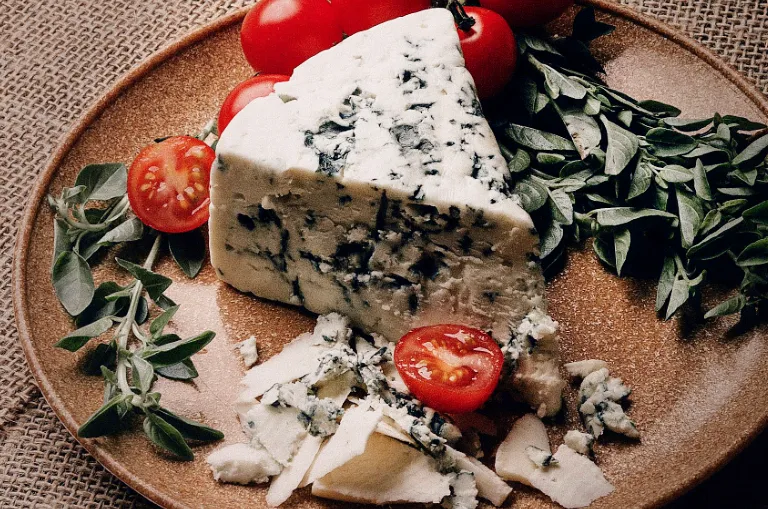
Give each blue cheese its own cheese knife if you are serving a board with several cheeses, and offer simple things alongside it: bread or plain crackers, slices of pear or apple, walnuts, maybe a little honey. They all help balance the salt and tang rather than competing with it.
The Rind Question
Rinds on blue cheeses, where they exist, are usually edible. Taste a small piece and decide if you like it. There is no rule that says you have to eat the rind if it does not appeal.
Cooking with French blue cheeses
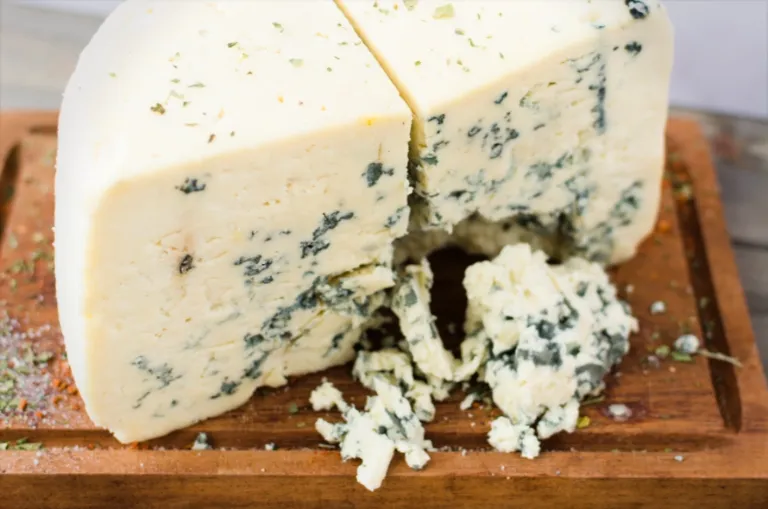
Blue cheese is an ingredients that makes everything around it taste better. It is salty, creamy, a little wild, and you need only a small amount for it to leave its mark on a dish.
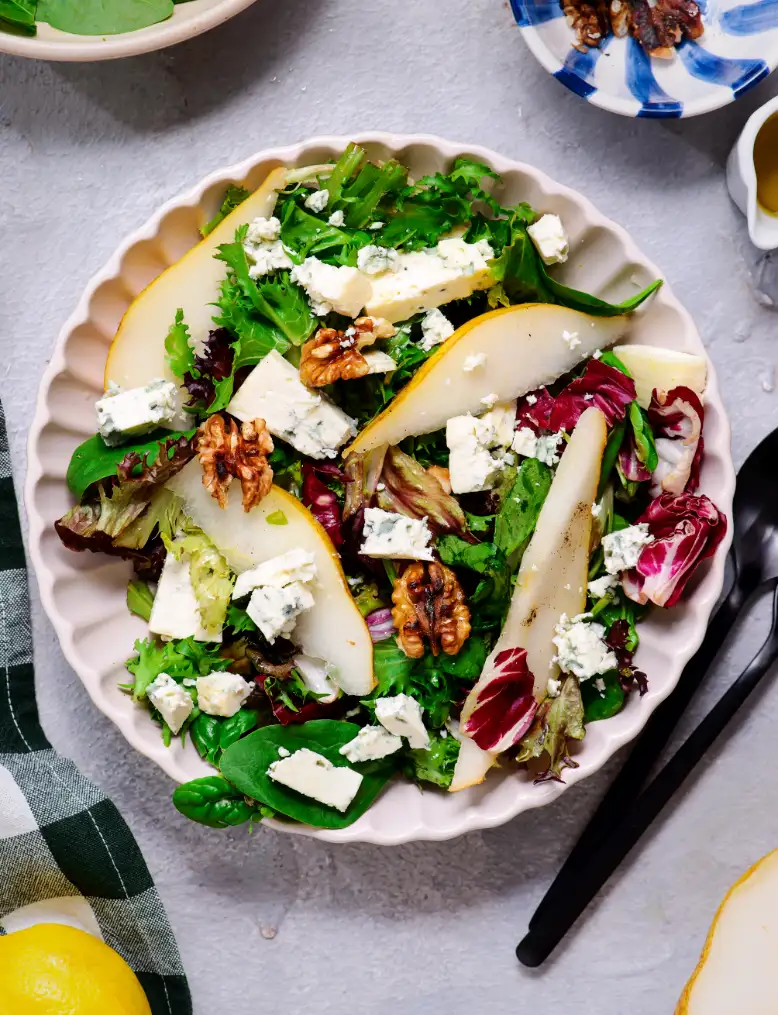
I reach for it most often in salads, like this pear and blue cheese salad, it’s just divine. A simple dressing of olive or walnut oil and vinegar is enough, the cheese does the rest. If you have any leftover roast beetroot or caramelised onions, they are very happy in that bowl too.
It is also lovely in warm dishes. For pasta, I like to keep it simple: toss hot pasta with a spoonful of blue cheese, a splash of cooking water, and maybe a little cream if you want it richer. The cheese melts into a loose, glossy sauce. Add steamed broccoli, mushrooms, or peas and dinner is done. A few crumbs of blue over a steak, dropped onto the hot meat just as it rests, is another small luxury.
Quiches and tarts are where blue cheese also shines. Scatter small pieces into a leek or onion tart, or over roasted squash or beetroot in a pastry shell, then pour the custard around it. The cheese softens in the oven and you end up with pockets of savoury sharpness against the sweet vegetables. A blue cheese and pear tart with a drizzle of honey makes a very good lunch with a green salad.
One small note: go gently at first. Blue cheese is strong, and a little really does go a long way. And when you are melting it into sauces, add it off the heat or right at the end. Too much heat and it can turn oily instead of creamy, which would be a shame for something this good.
Final thoughts
Blue cheese looks intimidating if you did not grow up with it, but once you understand that the mold is intentional and carefully managed, it becomes less mysterious. Start with a milder, creamy cow’s milk blue and give it time at room temperature before you try it. Then work your way to firmer, older, sheep’s milk cheeses if you feel like exploring.
The appeal, once it clicks, is that combination of salt, tang, creaminess, and something almost savoury and meaty underneath. It is a lot of goodness in the best possible way.
A Complete Hosting Guide
This complete guide takes the intimidation out of French cheese and wine hosting, so you can create an impressive, memorable evening that feels effortless.
Just so you know, a few links here earn us a commission. Doesn’t cost you anything extra, and we only link to things that are actually worth your time.