Roquefort: The King of French Blue Cheese (+ 4 More)
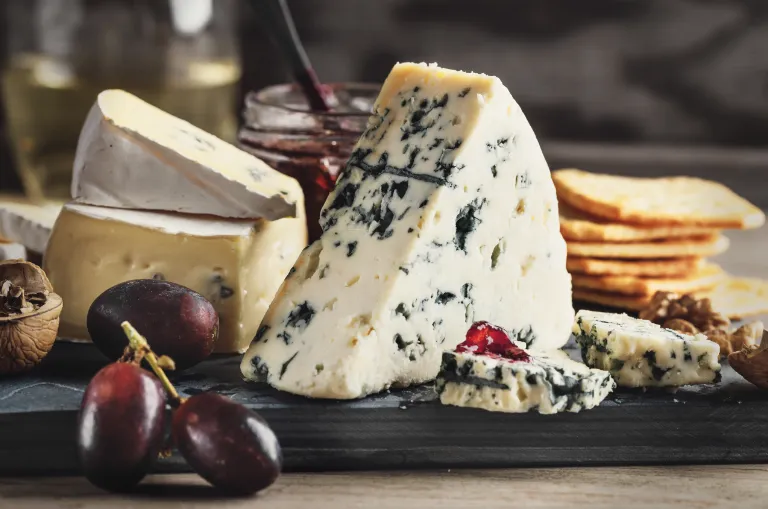
Roquefort is the blue cheese that made the rest of the world take blue veins seriously. It’s been ripened in the caves of Roquefort-sur-Soulzon for centuries, with a first written mention in 1070, and in 1925 it became the first French cheese to be protected by an appellation of origin, long before the word AOP existed.
France makes plenty of other blues, though, each with its own milk, landscape and character, and I’ve picked four that show how different they can be. Bleu des Causses is Roquefort’s cow’s milk neighbour, ripened in natural caves just like it, and Bleu de Laqueuille comes from the Auvergne village where cow’s milk blue cheese is said to have started. Bleu des Basques takes blue cheesemaking to the sheep of the Pays basque, and Bleu de Termignon is the odd one out, a rare Alpine cheese where the blue turns up on its own, if it turns up at all. For the basics of how blue cheese is made and why it’s blue, have a look at my blue cheese guide.
Table of Contents
Roquefort
Made in
Ripened in Roquefort-sur-Soulzon, Aveyron, with milk from parts of the Aveyron, Aude, Gard, Hérault, Lozère and Tarn
Milk
Raw whole sheep’s milk from Lacaune ewes
Aged
At least 90 days, starting in the caves of the Combalou
AOP/PDO Status
Yes (appellation of origin since 1925, the first in France)
Fat content
At least 52% fat in the dry matter
Best Time
All year
Where it comes from
Every French child knows the legend: a young shepherd left his lunch of bread and sheep’s cheese in a cave near Roquefort to go after a girl, and came back weeks later to find the cheese streaked with blue. The written history is a little drier but just as old, with a first mention in 1070 in the records of the Abbey of Conques, royal privileges going back to Charles VI, and a 1666 ruling of the Parliament of Toulouse that gave the people of Roquefort-sur-Soulzon the sole right to ripen it.
What makes Roquefort Roquefort is the caves. They’re dug into a huge rockfall at the foot of the Combalou plateau and ventilated by fleurines, natural chimneys in the rock that keep the air cool and damp all year. Only cheese ripened there can carry the name. Each one is a cylinder of 19 to 20 cm (about 8 in) across, weighing 2.5 to 3 kg, and is sold wrapped in foil.
What it tastes like
The paste is ivory to creamy white, moist and slightly crumbly, with plenty of blue-green veins. It tastes salty, tangy and sharp, with a peppery bite from the blue, while the sheep’s milk gives it a buttery, almost sweet richness that keeps it in balance. The finish is long, and a little goes a long way.
How to eat it
The classic French pairing is a glass of Sauternes, whose sweetness softens the salt. Serve it with walnut bread, pears, figs or a little honey, or do what many French people do and spread a thin layer of butter on the bread first to soften its strength. In the kitchen, it melts into creamy sauces for pasta or gnocchi, and it’s the heart of the blue cheese salad of chicory and walnuts.
Roquefort is aged for at least 90 days, so even though it’s made with raw milk, it can be sold in the US, and it’s easy to find in the UK too.

Bleu des Causses
Made in
Almost all of the Aveyron, plus parts of the Lot, Lozère, Gard and Hérault
Milk
Whole cow’s milk, raw or heat-treated
Aged
At least 70 days, including at least 12 days in natural caves
AOP/PDO Status
Yes (AOC since 1979)
Fat content
At least 50% fat in the dry matter
Best Time
All year
Where it comes from
Bleu des Causses comes from the limestone plateaus, the causses, around Roquefort, and it’s often described as Roquefort’s cow’s milk cousin. Cow’s milk blues were made in the area for a long time, and production grew after the 1925 law kept the name Roquefort for sheep’s milk cheese. It was first known as Bleu de l’Aveyron, then became Bleu des Causses and an AOC in 1979.
Like Roquefort, it must begin its ageing in natural caves in the limestone, with their own fleurines, such as the Caves de Peyrelade near the Tarn gorges. Each cheese is a cylinder of about 20 cm (8 in) across, weighing 2.2 to 3.3 kg.
What it tastes like
The paste is ivory to pale yellow, firm but creamy, with plenty of blue-green veins. It tastes full and savoury, with a clear blue bite and a slightly spicy finish, sharper than many cow’s milk blues but rounder and less salty than Roquefort.
How to eat it
Serve it on a cheese board with walnut bread, or with a red wine from the Aveyron, such as a Marcillac, or a Cahors. It also crumbles well over salads and melts into sauces, and, following the Roquefort tradition, it’s lovely with a sweet white wine.

Bleu de Laqueuille
Made in
Laqueuille, Puy-de-Dôme, in the Auvergne volcanoes
Milk
Cow’s milk
Aged
Not specified (around six weeks at its main producer)
AOP/PDO Status
No
Fat content
Not specified
Best Time
All year
Where it comes from
Laqueuille is a small village in the Auvergne volcanoes, and it’s where Antoine Roussel (1820 to 1886) is said to have started making cow’s milk blue cheese in the mid-19th century. According to the local story, he noticed that the blue mould growing on rye bread kept in the same cupboard as his cheeses also spread to them, and he began experimenting, even inventing a machine to pierce the cheeses. The first cheeses were ripened in caves on the slopes of the Puy de Côme, and Roussel is remembered as the father of Bleu d’Auvergne.
Today, Bleu de Laqueuille is made by a local dairy cooperative in the village, with milk from farms within about 20 km, and it isn’t covered by an AOP.
What it tastes like
It sits somewhere between a strong Bleu d’Auvergne and a gentle Fourme d’Ambert: creamy and smooth, with a mild, buttery taste, a light tang and an even blue that’s present without being harsh. It’s a good blue for people who are still a little wary of them.
How to eat it
Put it on a cheese board with bread and a red Côtes d’Auvergne, crumble it over a salad, or melt it into a potato gratin or a savoury tart. It’s easier to find in France than abroad, though some specialist shops in the US and the UK stock it.

Bleu des Basques
Made in
The French Basque Country, Pyrénées-Atlantiques
Milk
Thermised sheep’s milk
Aged
Around 65 to 90 days
AOP/PDO Status
No
Fat content
Not specified
Best Time
All year
Where it comes from
The Pays basque is famous for its sheep’s milk tommes, and Bleu des Basques is a much more recent cheese. It was created around 2001 by Onetik, the brand of a cheesemakers’ cooperative founded in the 1980s, to bring blue cheese into a region of sheep and mountain pastures. It’s made in wheels of about 3 kg and 5 kg.
What it tastes like
It has the sweetness of sheep’s milk, a creamy, semi-firm and slightly crumbly paste, and a blue that’s milder and less salty than Roquefort’s. The flavour is rich and nutty, with a gentle tang rather than a sharp bite, which makes it one of the easiest sheep’s milk blues to like.
How to eat it
In the Basque way, serve it with black cherry jam, the classic local partner for sheep’s cheese, or with quince paste. A glass of Jurançon, dry or sweet, from the neighbouring Béarn suits it perfectly. Because the milk is thermised rather than raw, it can be exported, and you’ll find it in some cheese shops in the US and the UK.

Bleu de Termignon
Made in
Termignon and the high pastures of the Haute-Maurienne, Savoie, in the Vanoise
Milk
Raw cow’s milk from Tarine and Abondance cows
Aged
Not specified
AOP/PDO Status
No
Fat content
Not specified
Best Time
Made from June to September, on the summer pastures
Where it comes from
Bleu de Termignon is one of the rarest cheeses in France. It’s made in summer on high pastures at around 2,000 m, on the edge of the Vanoise national park, by only a handful of farmers, each making a few hundred wheels a season. The wheels weigh 7 to 10 kg, more like a mountain tomme than a typical blue.
What makes it unique is that nobody adds blue mould and nobody pierces the cheese. The blue comes from moulds that are naturally present in the raw milk and the cellars, so it appears in some wheels and not others, unevenly and at its own pace, and a wheel with no blue at all is still a genuine Bleu de Termignon.
What it tastes like
The paste is firm but creamy, ivory to pale yellow, with irregular patches of blue rather than neat veins. It tastes of mountain milk, flowers and herbs, with a gentle tang and a delicate blue note where the mould has developed, and it’s much subtler than the other cheeses in this list.
How to eat it
It’s so rare that it’s best eaten on its own, with good bread and a glass of white wine from Savoie. If you’re in the Haute-Maurienne in late summer or autumn, look for it at the farms and markets around Termignon. A few specialist cheese shops in the UK sometimes have it too.
Conclusion
Roquefort may be the one everyone knows, but these five show how far French blue cheese can stretch, from the salty, cave-aged sheep’s milk of the Aveyron to a mountain cheese where the blue appears by itself. If you’re just starting, try the Bleu de Laqueuille or the Bleu des Basques first, as they’re the gentlest, then move on to Bleu des Causses and Roquefort, and keep an eye out for a Bleu de Termignon if you ever get the chance.
Let them sit out until they reach room temperature, cut some good bread and pour a glass of sweet wine, and you’ll see why a cheese lover like me could happily write about blues all day.
Which of these five have you tried, and is there another French blue you’d like to see in a future list? Tell me in the comments!
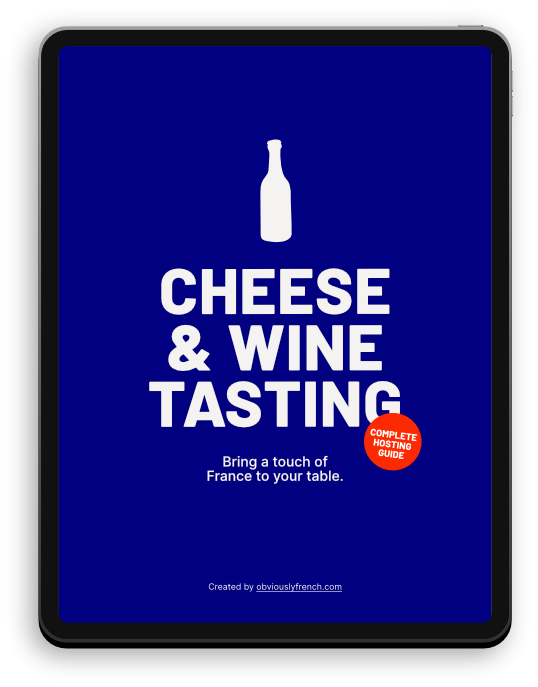
A Complete Hosting Guide
This complete guide takes the intimidation out of French cheese and wine hosting, so you can create an impressive, memorable evening that feels effortless.
Just so you know, a few links here earn us a commission. Doesn’t cost you anything extra, and we only link to things that are actually worth your time.