 February 24, 2026
Disclosure: This post may contain affiliate links which provide us a small commission when used for purchase. Please read my disclosure policy for more information. I am grateful for your support!
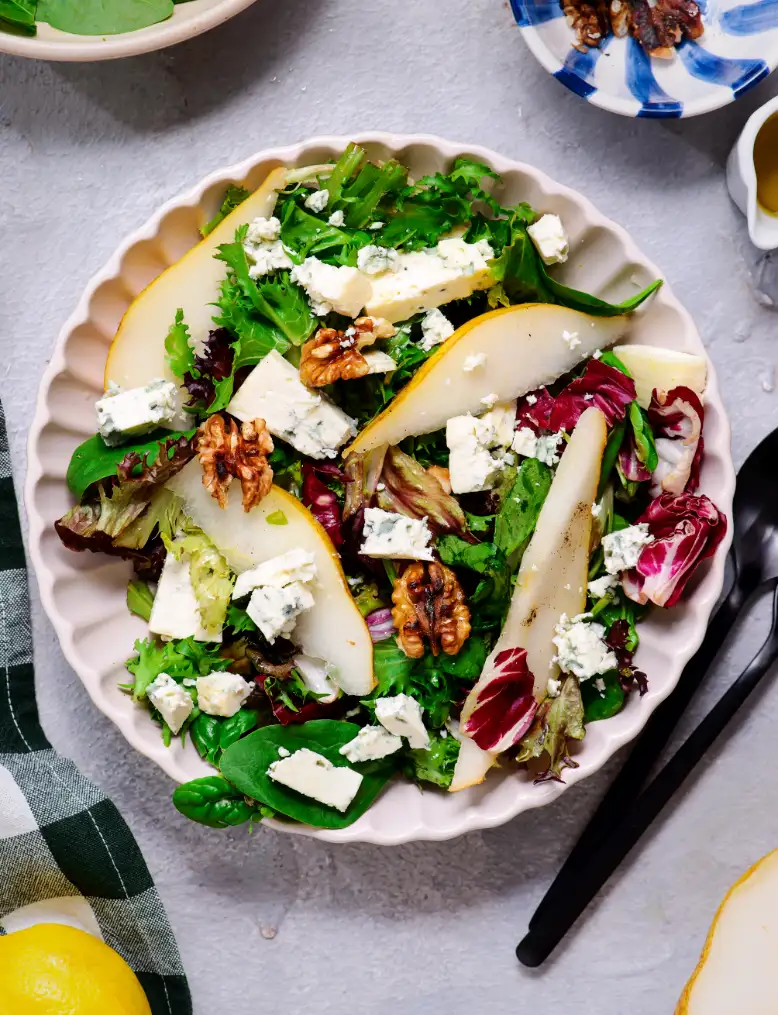
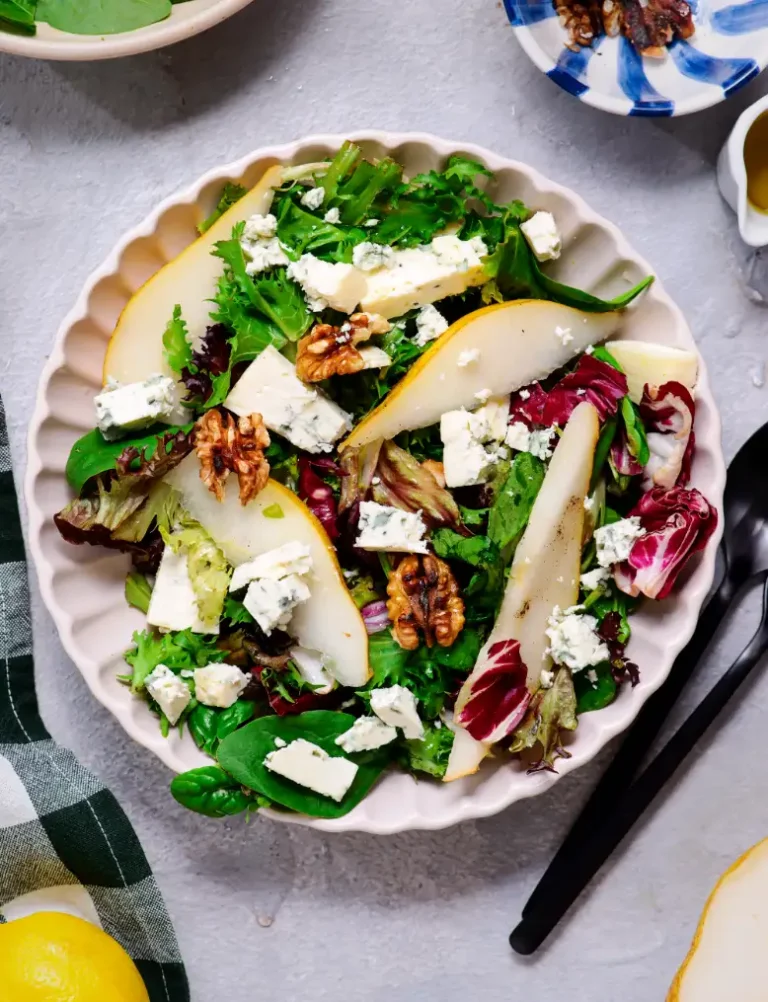
I’ve always loved blue cheese, Roquefort especially. Pairing it with pears and walnuts is just common sense, really. The thing I love the most about this pear and blue cheese salad is the vinaigrette dressing made with walnut oil. It’s that little extra that makes the whole thing just come together beautifully!
Table of Contents
Where pear and blue cheese salad comes from
There’s no single origin story for this blue cheese & pear salad, but I can tell you it’s a classic combination that’s been on menus forever, because sweet fruit and sharp blue cheese happen to be brilliant together! For this recipe, most of what’s on the plate has proper French pedigree, which is half the fun and tastes like nothing else.
The pear is usually a Comice, bred for eating near Angers in 1849. The cheese, traditionally, is Roquefort: the first French cheese to get protected-origin status, back in 1925, made only from raw Lacaune ewe’s milk and aged in the Combalou caves in the Aveyron. Diderot called it the king of cheeses. And the walnuts come from Périgord walnut country, where production goes back to the 13th century and the Noix du Périgord has had its own AOP since 2002. Sweet pear, sharp cheese, bitter walnut, that’s three regions on one plate!
Ingredients
- Pears – Ripe but firm. Comice is ideal, Anjou or Williams work too. Ripe is sweet obviously.
- Roquefort – Bold, salty and creamy. You can also pick Fourme d’Ambert or Bleu d’Auvergne if you want something milder.
- Walnuts – Pick fresh ones, since walnuts go stale and bitter quickly.
- Bitter leaves – Mâche, frisée and radicchio.
- Walnut oil – Non-negotiable for the dressing. It’s what makes this taste French rather than just nice. Keep it in the fridge, since it turns rancid fast once opened.
- Dijon mustard – Emulsifies the vinaigrette and adds a bit of bite.
- Red wine vinegar – The acidity in the dressing.
- Lemon – Just a squeeze, to stop the cut pears browning.
How to make pear and blue cheese salad
1. Toast the walnuts
Put the walnust into a dry pan over medium heat for 3 to 4 minutes, shaking regularly, until they’re golden and smell nutty. Watch them like a hawk, because they go from toasted to burnt in seconds and burnt walnuts are bitter and wasted. Tip them onto a plate to cool, then break them up roughly with your hands. Toasting is what brings the flavours up, so it’s worth the two extra minutes.
2. Make the vinaigrette
In a mixing bowl, whisk the Dijon mustard and red wine vinegar together first, then add the walnut oil and olive oil in a slow stream, whisking as you go, until it’s smooth and emulsified. Season well and taste. It should be sharp and nutty with a bit of backbone from the mustard. If it tastes flat, it usually needs more salt or a touch more vinegar.
3. Dress and build, at the last minute
Core and thinly slice the pears (no need to peel), and toss them briefly in a little lemon juice so they don’t brown. Dress the leaves lightly with about two-thirds of the vinaigrette and toss, then lay the pear over, scatter the Roquefort in rough chunks, and finish with the walnuts and the last of the dressing. Do this just before serving this pear and blue cheese salad , because a dressed salad won’t wait. Five minutes is fine, bu thirty and the leaves have wilted and the pear’s gone soft.

Tools for this recipe
Check out my favorite kitchen essentials and cookware!
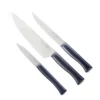
- Use a sharp knife to effortlessly slice your ripe pears.
- I use my trusty, affordable salad spinner to dry my lettuce.
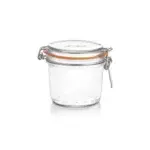
- I use a small Le Parfait glass jar for any remaining vinaigrette.
Tips for success
- Use properly ripe pears: a ripe Comice is the difference between a salad that comes together and one that’s just bits on a plate. It should give slightly at the stem end. Underripe won’t be sweet enough to melt into the cheese.
- Toast the walnuts: two minutes in a dry pan wakes up the oils and deepens the flavour. Raw walnuts taste flatter next to all the flavours in this pear and blue cheese salad. So don’t skip it.
- Don’t swap out the walnut oil: it’s the one ingredient that makes this taste specifically French. Olive oil makes a nice salad, but a different one.
- Dress it at the very last moment: this salad wilts quickly once the dressing’s on. So have everything ready, dress it, and take it straight to the table!
- Season the dressing properly: a bland vinaigrette makes a bland salad. Taste it before it goes on and adjust the salt and vinegar until it’s got a bit of bite.
How to store it
- This isn’t really a make-ahead salad once it’s built, since dressed leaves and sliced pear both go downhill fast. It’s a make-it-and-eat-it dish.
- But you can prep every component ahead, which is the next best thing. Toast the walnuts and keep them in a jar for a few days. Make the vinaigrette and keep it in a sealed jar in the fridge for up to a week, just bring it back to room temperature and shake it before using. Wash and dry the leaves and keep them wrapped in the fridge. Then slice the pear and assemble at the last minute, and the whole thing comes together in about three minutes.
- Leftovers of an already-dressed pear and blue cheese salad won’t keep, so dress only what you’ll eat.
More salads recipes to try
Variations
- Add vegetarian lardons: pan-fried until crisp and scattered over while still warm. A very common French addition, and a good one, the salty warmth against the cool leaves is lovely.
- Swap the cheese: Fourme d’Ambert is milder and creamier if Roquefort’s too much. Bleu d’Auvergne keeps you in AOP French blue territory with a bit less intensity. Even a good Stilton works, though then it’s less French obviously.
- Use apple instead of pear: a crisp, tart apple (a Granny Smith or a Cox) works well when pears aren’t at their best. Slice it thin.
- Add pomegranate: a scatter of seeds for sharp little bursts and colour. Not traditional, but it suits the sweet-sharp thing this salad’s doing.
- Make it a meal: double the portions, add the lardons or some crisp croutons, and it’s lunch (or even dinner!) rather than a starter.
FAQ
What blue cheese is best for a pear salad?
Roquefort is the classic: sharp, salty and creamy enough to stand up to the sweet pear. If it’s too strong for you, Fourme d’Ambert is milder and Bleu d’Auvergne sits in between. Any of them work, as long as the cheese is bold enough not to get lost.
What pears work best in a pear and blue cheese salad?
Ripe but firm dessert pears. Comice is ideal, with Anjou or Williams (Bartlett) close behind. The pear needs to be properly ripe so it’s sweet and soft against the cheese, an underripe one stays hard and tastes separate.
Do I have to use walnut oil?
For the authentic French version, yes. Walnut oil echoes the toasted walnuts and gives the dressing its specific nutty depth. You can use olive oil, but it makes a different, less distinctive salad. Keep walnut oil in the fridge, as it goes rancid fast.
What leaves go in a French bitter-leaf salad?
The classic mix is mâche (lamb’s lettuce), frisée (curly endive) and radicchio. Mâche is the mild base, frisée brings texture and bitterness, and radicchio adds colour and a sharper edge. Most shops sell a mixed “bistro” or “bitter leaf” bag with all three.


 Prep Time 15 minutes
  Cook Time 5 minutes
  Total Time 20 minutes
  Servings 4 As starter
Description
Ingredients
For the salad
- 2 pears ripe but firm
- 120 gr Roquefort
- 80 gr walnuts
- 60 gr lambs lettuce
- 40 gr curly endive
- 40 gr radicchio
- 1 squeeze lemon juice to stop the pear browning
For the walnut vinaigrette
- 3 tbsp walnut oil
- 1 tbsp olive oil or neutral oil
- 1 tbsp red wine vinegar
- 1 tsp Dijon mustard
- salt and black pepper
Equipment
Instructions
1. Toast the walnuts
- Put the walnuts in a dry frying pan over medium heat. Toast for 3 to 4 minutes, shaking regularly, until golden and nutty-smelling. Watch closely, they burn fast. Tip onto a plate to cool, then break up roughly by hand.
2. Make the vinaigrette
- Whisk the Dijon and red wine vinegar together in a small bowl. Add the walnut oil and olive oil in a slow stream, whisking, until smooth and emulsified. Season well with salt and pepper. It should be sharp and nutty with a bit of backbone.
3. Prepare the pear
- Core the pears and slice thinly, about 5mm (no need to peel). Toss briefly in a little lemon juice to stop them browning, just a light coating.
4. Assemble
- Dress the leaves lightly with about two-thirds of the vinaigrette and toss gently. Divide between plates or arrange in a bowl. Lay the pear over the top, scatter the Roquefort in rough chunks, and finish with the walnuts. Drizzle over the remaining vinaigrette just before serving.
5. Serve immediately
- This salad doesn't sit well once dressed, so bring it to the table straight away, before the leaves wilt and the pear softens. Five minutes is fine, thirty is not.
Notes
- Roquefort is traditional, but Fourme d’Ambert (milder) or Bleu d’Auvergne (less intense, still AOP) work well too.
- Walnut oil is for the real French flavour. It goes rancid quickly, so keep it in the fridge.
- The leaves: mâche, frisée and radicchio are classic. A “bistro salad” or “bitter leaves” bag does the job.
- Add vegetarian lardons if you fancy, pan-fried crisp and scattered over while warm. A common French variation, and a good one.
Share your feedback and spread the love!
If you try this recipe, I’d love to hear how it turns out! Leave a ★★★★★ rating and your thoughts in the comments, it helps fellow French foodies discover this recipe too. Snap a photo and tag @obviously.french on Instagram. Come talk about it in our Facebook group. And don’t forget to save this recipe to Pinterest so you’ll always have it handy for your next French-inspired meal!