
 January 17, 2026
Disclosure: This post may contain affiliate links which provide us a small commission when used for purchase. Please read my disclosure policy for more information. I am grateful for your support!
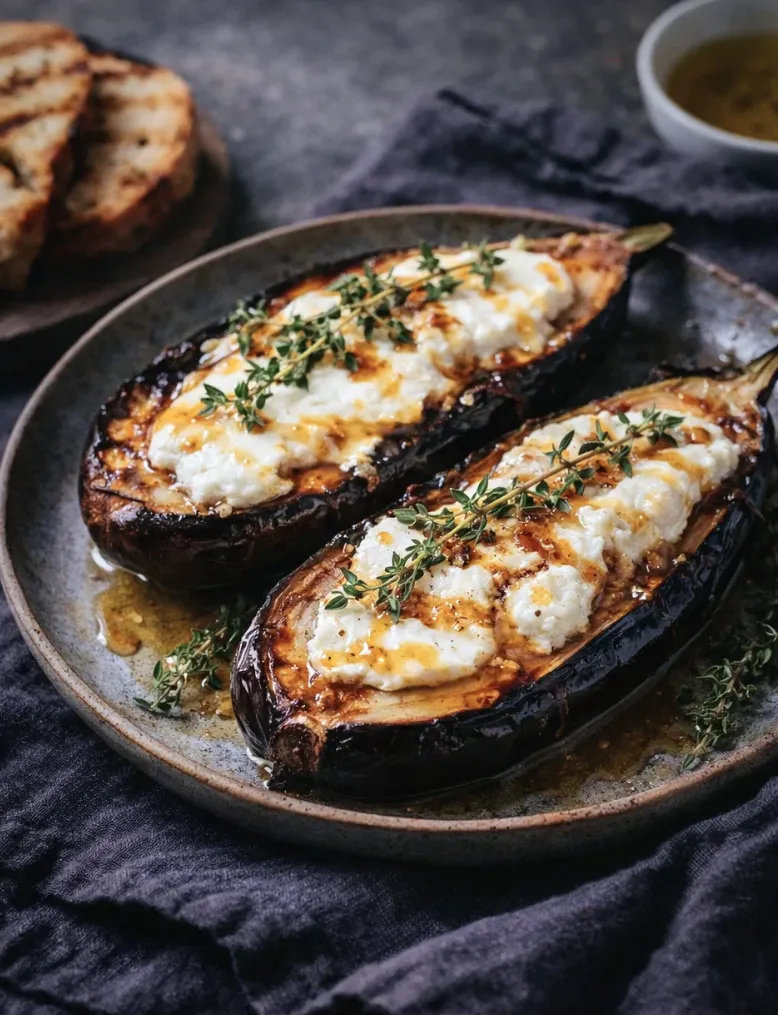
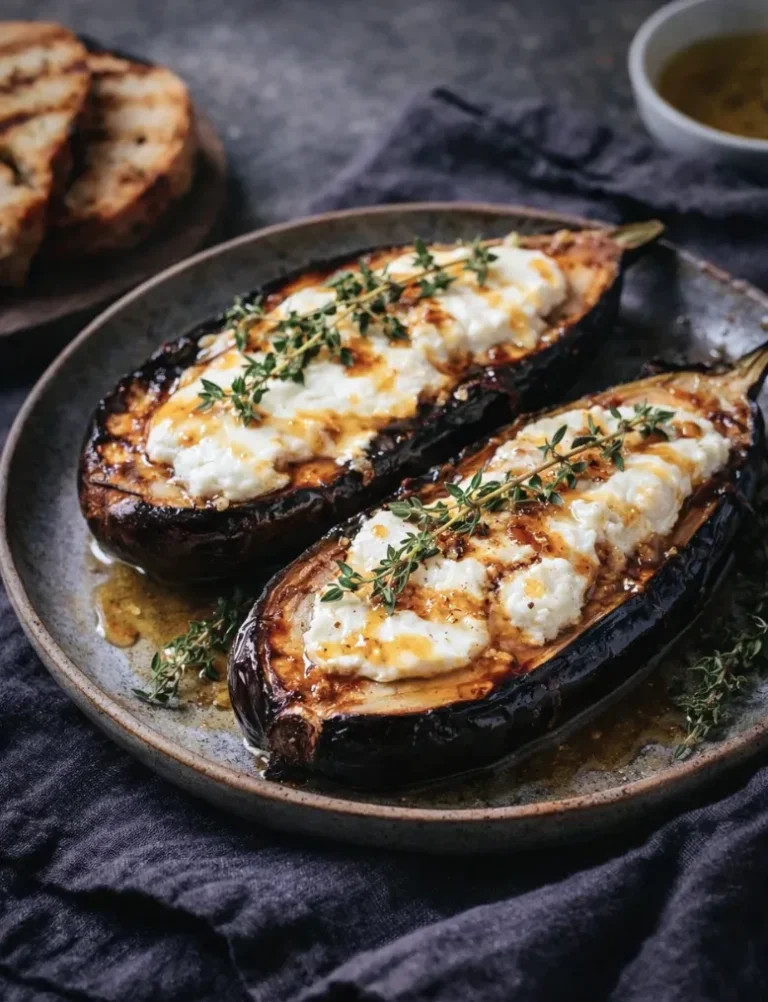
Aubergines are wonderful whatever you do with them, and these stuffed aubergines are what I make for a lunch when I don’t want to stand in the kitchen long but still want something healthy and satisfying.
Unlike thin, charred, grilled aubergines slices, these are meaty and substantial, and the creamy goat’s cheese with the honey makes them completely addictive. There are only three ingredients that really matter here, so pick good ones and you’ll see exactly what I mean!
Table of Contents
Where stuffed aubergines comes from
You’ll find stuffed aubergines all over France, but especially in the South where I grew up, where aubergines are local staples. Aubergines thrive in the heat of Provence and Languedoc, and French cooks have been finding good things to do with them for centuries! Some versions are stuffed with minced meat, others with ratatouille vegetables.
Farci means “stuffed,” though this version is honestly more topped than properly stuffed, and that’s exactly what I like about it. As for that goat’s cheese and honey pairing, it’s about as old as the hills. French goatherds have been drizzling honey over fresh chèvre for generations, long before anyone wrote it down as a recipe. (France produces more varieties of goat’s cheese than any other country, hundreds of them, so there’s rather a lot of practice behind it.) Someone eventually thought to add aubergine to the mix, and there you have it: sweet, tangy and savoury all together. I’m very grateful to whoever that was.
Ingredients
- Aubergines – Firm, glossy and heavy for their size. They’re the whole vessel and the substance of the dish, roasted until creamy and sweet.
- Goat’s cheese – Fresh and soft melts beautifully into the flesh; slightly firmer or aged goat’s cheese holds its shape and gives more texture contrast. Both work, so it’s just preference.
- Honey – Something floral like acacia, wildflower, lavender or thyme honey. It’s there to round out the tangy cheese, not overpower it, so avoid strong ones like chestnut or heather.
- Olive oil – Brushed generously into the scored flesh, so the aubergine roasts to creamy rather than drying out.
- Thyme – Fresh, scattered over. Very southern French, and it cuts the richness.
- Salt and pepper – Season well at the start, aubergine needs it.
How to make stuffed aubergines
1. Score and roast
Halve the aubergines lengthways and score the flesh deeply in a crosshatch, right down to about 5mm from the skin, which gives the heat somewhere to go and lets the oil in. Brush generously with olive oil, season well, and roast cut-side up until the flesh is completely soft, golden and collapsing. Prod them: they should give completely. If they’re still firm, keep going, better too long than not long enough.
2. Add the cheese
Break or slice the goat’s cheese over the roasted halves, sitting it on top of the soft flesh rather than mixing it in. Season again, scatter over thyme, and back into the oven just until the cheese melts, turns creamy and takes a little colour at the edges. You want it soft and warm, not browned all over.
3. Finish with honey
Out of the oven, rest a couple of minutes, then drizzle each half generously with honey and scatter over a little more thyme. Serve the stuffed aubergines warm rather than piping hot, since the flavours settle as they cool a touch and the cheese firms just slightly, which is honestly when it’s at its best.

Tools for this recipe
Check out my favorite kitchen essentials and cookware!
- Use a sturdy baking tray that conducts heat evenly, so the aubergines roast rather than steam.
- Use a baking mat so nothing sticks and they lift off cleanly.
- Use a sharp knife to score the flesh deeply in a crosshatch without cutting through the skin.
- Use a pastry brush to work the olive oil right into the scored flesh.
Tips for success
- Roast them longer than you think: the aubergines should be almost collapsing, creamy and sweet, not spongy. Better too long than not long enough, and if they’re still firm when the cheese goes on, they’ll disappoint.
- Score deeply: cut a crosshatch right down to about 5mm from the skin. It lets the heat and oil in, so the flesh cooks through to creamy rather than staying dense.
- Be generous with the olive oil: aubergine drinks it up, and it’s what turns the flesh silky. Brush it right into the cuts.
- Choose a floral honey: acacia, wildflower, lavender or thyme honey complements the goat’s cheese. Strong honeys like chestnut or heather bulldoze the delicate cheese.
- Serve warm, not scalding: let them settle for a few minutes out of the oven. The flavours come together and the cheese firms slightly, which is when they’re at their best.
How to store it
- Stuffed aubergines are best warm from the oven, but they hold up well and make good leftovers.
- Keep them covered in a glass container the fridge for up to 3 days. They’re genuinely nice at room temperature the next day, though the honey loses its gloss. To reheat, cover with foil and warm through in a 180°C oven for 10 to 15 minutes, rather than the microwave, which makes the aubergine watery. A fresh drizzle of honey afterwards perks them back up.
- The best way to get ahead is to roast the aubergines up to a day in advance and keep them in the fridge. Then bring them to room temperature, add the cheese, and bake when you need them (add 5 minutes if they’re cold from the fridge). I wouldn’t freeze them, as aubergine goes watery on thawing.
Variations
- Add nuts: a scatter of pine nuts or chopped walnuts with the cheese, for crunch against all that softness.
- Herbes de Provence: a sprinkle with the thyme, for a more emphatically southern flavour.
- Add breadcrumbs: a few crisp breadcrumbs over the cheese before the final bake, for a golden, crunchy top.
- Make it a proper stuffing: scoop out the roasted flesh, mix it with the goat’s cheese, herbs and a little garlic, pile it back in, and bake, closer to a true farci.
- Swap the cheese: feta or a soft blue instead of chèvre, both work with honey, though chèvre is the classic southern French choice.
- Make it vegan: use a vegan cream cheese or cashew cheese and maple syrup instead of honey. Not traditional, but the sweet-tangy-rich logic still works.
FAQ
How do I know when the aubergines are properly roasted?
The flesh should be completely soft, golden, and almost collapsing, giving entirely when you prod it with a spoon. If there’s any springiness or sponginess left, keep roasting. Under-roasted aubergine is spongy and bitter, and no amount of cheese and honey will rescue it.
What goat’s cheese should I use?
Whatever you like. Fresh, soft goat’s cheese melts beautifully into the aubergine flesh; a firmer, more aged chèvre holds its shape and gives more texture contrast. Both are lovely, so it’s purely preference. France makes hundreds of varieties, so use a good one you enjoy.
Do I need to salt the aubergines first?
Not with modern aubergines, which are bred to be far less bitter than they used to be. Scoring, oiling generously and roasting them properly does all the work. Salting is largely a hangover from older, more bitter varieties.
What do you serve with stuffed aubergines?
In France stuffed aubergines are often a starter, one half per person with good bread and a small salad. At home we eat two halves each as a vegetarian main, with plenty of bread, a big green salad and roasted tomatoes. They’re rich, so keep whatever follows light.


 Prep Time 15 minutes
  Cook Time 50 minutes
  Total Time 1 hour 5 minutes
  Servings 4
Description
Ingredients
- 3 aubergines about 900g total
- 200 gr goat cheese
- 4 tsp honey
- 3 tbsp olive oil
- 4 sprigs thyme
- salt and black pepper
Equipment
Instructions
1. Roast the aubergines
- Heat the oven to 200°C (180°C fan). Halve the aubergines lengthways and score the flesh in a deep crosshatch, down to about 5mm from the skin. Brush generously with olive oil and season well. Roast cut-side up for 35 to 40 minutes, until completely soft, golden and collapsing.
2. Add the goat cheese
- Break the cheese into rough pieces (or slice a log into rounds) and distribute over the aubergine halves, sitting on top of the flesh rather than mixed in. Season again and scatter over thyme leaves.
3. Bake until golden
- Return to the oven for 10 to 15 minutes, until the cheese has melted, turned creamy and is golden in places. Soft and warm, not browned all over.
4. Finish with honey
- Rest for 2 to 3 minutes. Drizzle each half generously with honey and scatter over a little more thyme.
5. Serve
- Serve warm with crusty bread and a green salad. The flesh should scoop easily with a spoon, the cheese melty, the honey glossy.
Notes
- Use a good honey, something floral like acacia or wildflower works brilliantly. Lavender or thyme honey adds a Provençal touch. Avoid strong-flavoured honeys like chestnut or heather; they’ll overpower the delicate goat cheese.
- The aubergines must be completely soft and sweet after the first roasting – almost collapsing. If they’re still firm, they won’t be good. Better to roast them too long than not long enough. The flesh should be creamy, not spongy.
- Make ahead: You can roast the aubergines up to a day ahead. Keep them refrigerated, then bring to room temperature, add the cheese, and bake when needed. Add 5 minutes to the baking time if the aubergines are cold.
- Variations: Some people add a few pine nuts or walnuts on top with the cheese. A sprinkle of dried herbes de Provence works nicely too.
- Leftovers are good at room temperature the next day, though the honey won’t be as glossy. If you want to reheat them, cover with foil and warm through in a 180°C oven for 10-15 minutes.
Share your feedback and spread the love!
If you try this recipe, I’d love to hear how it turns out! Leave a ★★★★★ rating and your thoughts in the comments, it helps fellow French foodies discover this recipe too. Snap a photo and tag @obviously.french on Instagram. Come talk about it in our Facebook group. And don’t forget to save this recipe to Pinterest so you’ll always have it handy for your next French-inspired meal!
Definitely bookmarking this to make! It’s exactly the kind of simple cooking I’m always looking for. Thank you for sharing!
Let us know how it went 🙂