 September 16, 2025
Disclosure: This post may contain affiliate links which provide us a small commission when used for purchase. Please read my disclosure policy for more information. I am grateful for your support!
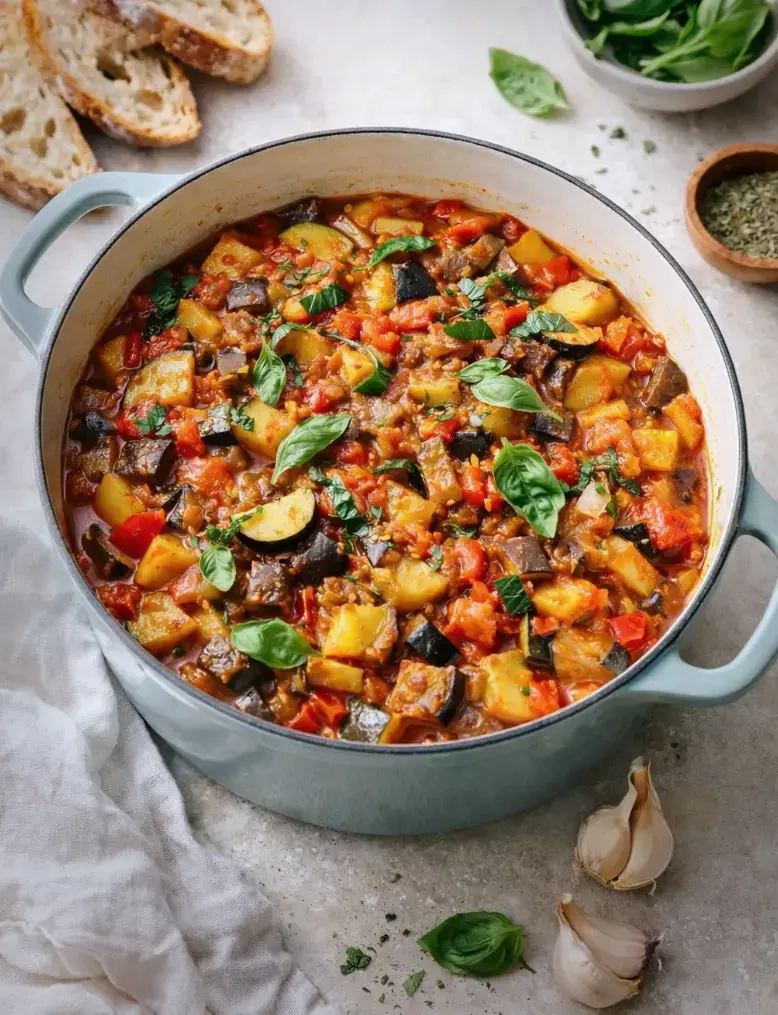
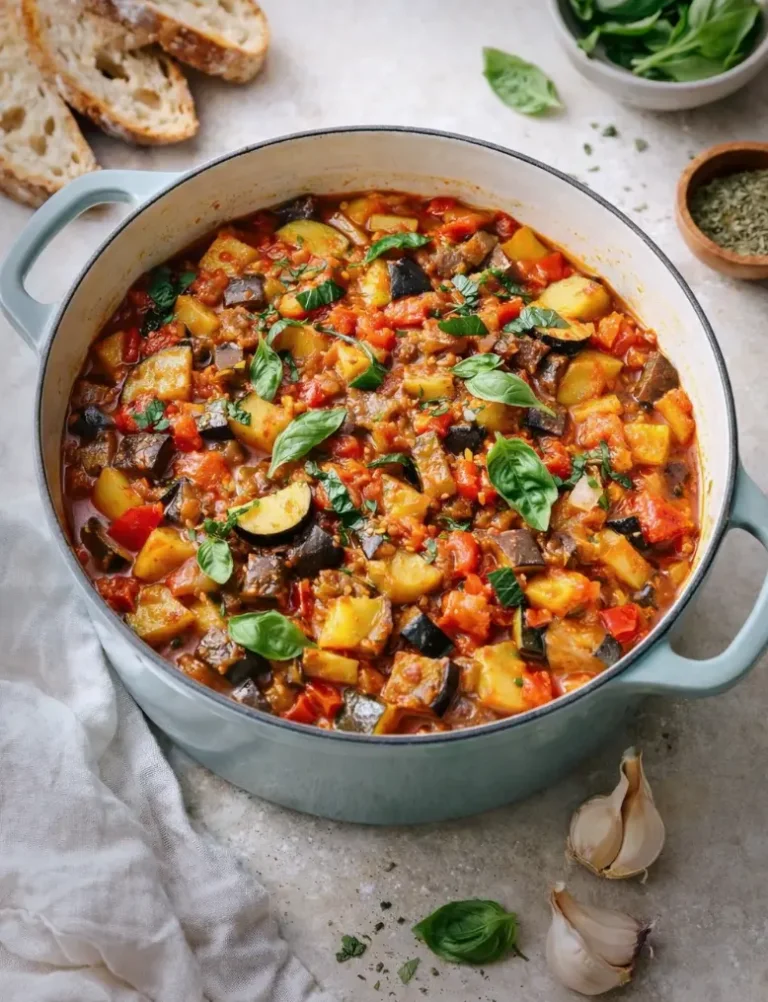
Ratatouille is Provençal soul food, and it was the best summer food when I was a kid. I grew up in Nice, and when the markets filled with courgettes, aubergines, peppers and tomatoes, it was time to make that delicious vegetable stew. My mother cooked it low and slow and it would fill the kitchen with that smell of olive oil and French herbs that I still find completely irresistible today!
Table of Contents
Where ratatouille comes from
The ratatouille is born in the kitchen gardens of Nice and Provence out of pure abundance: summer vegetables growing faster than any family could eat them. What surprises people is how recently it was written down. The first recognisable recipe for ratatouille as we know it appeared in 1952, in a French railway magazine described as a Niçois dish full of local vegetables. So the vegetables are ancient and the dish is old, but the standardised version is younger than my mother.
You probably already know about the 2007 Pixar film. If you haven’t seen it though, I command you to watch it on Amazon Prime. The film did more to spread the name ratatouille around the world than centuries of Provençal cooking had managed on its own!
Ingredients
- Aubergines — the body of the dish, going meltingly soft and silky.
- Courgettes — softer and quicker to cook than the aubergine, adding freshness so it doesn’t get heavy.
- Red and yellow peppers — sweetness and colour. Red and yellow rather than green, which stay bitter and don’t sweeten the same way.
- Tomatoes — the sauce that holds everything together. Ripe, in season, and the better they are the better the dish.
- Onion and garlic — the aromatic base, softened slowly.
- Olive oil — not a cooking medium here so much as an ingredient. Ratatouille needs a generous hand with it, and a good one you’d taste on bread.
- Herbes de Provence — a mix of Southern French herbs and the signature scent of the ratatouille.
How to make ratatouille
1. Salt and brown the aubergines
Cut the aubergines into chunks, tip them into a colander with a generous sprinkle of salt, and leave them for 20 minutes. Then pat them properly dry with a clean tea towel, firmly, until the towel comes away without much moisture. This step decides whether your ratatouille is silky or greasy. The salt draws out the bitterness and the excess water, and a dry aubergine browns instead of steaming. A wet one just drinks every drop of oil in the pan and gives you something oily and heavy.
2. Brown the vegetables
Heat half the olive oil in your cocotte over medium heat and give the aubergine the pan to itself until it’s golden on the outside. Don’t crowd it and don’t rush it, it takes longer than everything else and it’s the one vegetable that genuinely suffers if you hurry it. Lift it out into a bowl. Then a splash more oil, in go the courgettes and peppers, and cook them just until they soften at the edges. Out they come too. Be generous with the oil throughout.
3. Everything back in, low and slow
Return all the vegetables to the pan, scatter over the herbes de Provence, season with salt and pepper, and fold it together gently. Lid on, lowest heat, 20 to 25 minutes, or into a 160°C oven if you’d rather leave it alone entirely. Then stop stirring as every stir breaks the vegetables down a little further, and you want them keeping their shape, not dissolving into a purée. A gentle fold once or twice is plenty.
4. Taste and reduce
Have a taste and adjust the salt. If it looks loose or watery, take the lid off and give it another ten minutes to concentrate, that’s the fix and it works every time. Basil goes over at the end if you have it. And make a big batch, because this is genuinely better tomorrow once everything has settled overnight in the fridge!
Tools for this recipe
Check out my favorite kitchen essentials and cookware!
- Use a cast iron cocotte that spreads heat evenly and holds a gentle simmer without catching, with a heavy lid to trap moisture during the slow cook and come off at the end to reduce.
- Use a colander to salt and drain the aubergines, which is the step that keeps them silky rather than oily.
- Use a sharp knife and a chopping board, since this is a dish with a lot of even dicing to do.
Tips for success
- Cut everything roughly the same size: wildly different sizes mean the small pieces disintegrate while the large ones stay raw in the middle.
- Be generous with the olive oil: ratatouille is not a low-fat dish and trying to make it one gives you a watery vegetable stew. The oil carries the flavour and creates the silky texture.
- Salt the aubergine, then dry it properly: wet aubergine steams rather than browns, so pat it firmly with a towel before it hits the pan.
- Cook the tomatoes down before the long simmer: raw tomato acidity doesn’t mellow much during a covered stew, so break them down first.
- Resist stirring: every stir breaks the vegetables down a little more. A gentle fold now and then is plenty.
- Take the lid off at the end if it looks watery: ten minutes uncovered concentrates the sauce into something jammy rather than soupy. This is the fix for a loose ratatouille.
- Make it a day ahead: ratatouille is a better dish on day two. If you’re cooking for people, cook it the day before and reheat gently.
How to store it
- n the fridge: Keeps 4 to 5 days in a covered container and improves for the first two. Excellent cold, piled on toast with soft cheese, or as the base for baked eggs. Reheats very well over a low heat.
- In the freezer: Freezes beautifully for up to 3 months, which is the best thing about making a big batch. Freeze in portions and thaw in the fridge overnight. The texture softens slightly, which honestly suits it.
- In jars: If you want a mouthful of summer in January, ratatouille can be properly preserved in sterilised jars. Follow a tested preserving method for low-acid vegetables rather than improvising, since this isn’t a high-acid food.

More Southern recipes to try
Variations
- With a baked egg: make dimples in the finished ratatouille, crack eggs in, cover and cook until the whites set. A complete meal in one pan!
- Confit byaldi: the thinly sliced, spiral-arranged version from the film, which is a real dish created by Michel Guérard. Slower and prettier, and it’s a genuinely different eating experience.
- Bohémienne: the Comtat Venaissin cousin, made without courgette or pepper. Just aubergine and tomato, and it’s a much more focused dish.
- With olives and capers: a handful of black olives and a spoon of capers takes it towards Sicilian caponata, sharper and saltier.
- As a base, not a dish: spoon it under grilled fish, fold it through pasta, pile it into an omelette, or spread it on toast with goat’s cheese.
FAQ
Should you cook ratatouille vegetables separately or together?
Purists, and Larousse Gastronomique, say separately, then combined and stewed slowly, so each vegetable keeps its own flavour and texture. Cooking everything together is faster and gives more of a stew. Both are legitimate.
Do you have to salt the aubergine for ratatouille?
It’s worth doing. Salting draws out bitterness and excess water, and stops the aubergine absorbing all the oil in the pan, which keeps the finished dish silky rather than greasy.
Why is my ratatouille watery?
Usually undercooked tomatoes or too much liquid trapped under a lid. Cook the tomatoes down before the long simmer, and finish with the lid off for ten minutes to concentrate the sauce.
Can you make this ratatouille dish ahead of time?
Yes, and you should. It’s noticeably better on the second day once the flavours have settled, and it keeps 4 to 5 days in the fridge or 3 months in the freezer.
What do you serve with ratatouille?
Good bread and an egg on top makes it a meal. It’s also excellent alongside grilled fish, folded through pasta, in an omelette, or spread on toast with goat’s cheese.


 Prep Time 25 minutes
  Cook Time 45 minutes
  Total Time 1 hour 10 minutes
  Servings 4
Description
Ingredients
- 2 aubergines
- 2 courgette
- 1 onion
- 1 bell pepper red
- 1 bell pepper yellow
- 5 tomatoes
- 3 cloves garlic
- 4 tbsp olive oil
- 1 tbsp Herbes de Provence
- salt and black pepper
Equipment

Instructions
1. Prepare the aubergines
- Sweat the aubergine chunks in a colander with a generous sprinkle of salt for 20 minutes, then pat dry with a clean tea towel. This keeps them meltingly tender and never bitter.
2. Sauté the vegetables
- Heat half the olive oil in your pan over medium heat. Sauté the aubergine until golden, then remove to a bowl. Add a splash more oil, add the courgette and peppers, and cook just until softened. Lift each into the bowl as it's done. This lets each vegetable keep its character and avoids a muddy stew.
3. Make the aromatic base
- Add the onion to the pan and sweat until translucent, then add the garlic and stir until fragrant. Add the tomatoes and simmer for 5 minutes to break them down.
4. Combine and stew gently
- Return the cooked vegetables to the pan, scatter over the herbes de Provence, and season with salt and pepper. Stir gently, cover, and cook on a low heat for 20–25 minutes, or transfer to a 160°C oven for a slower cook. Don't stir too roughly, the vegetables should keep their shape.
5. Finishing flourish
- Taste and adjust the seasoning. Garnish with fresh basil. Serve warm with crusty bread, or cold the next day.
Notes
- Ratatouille gets even better a day later, after the magic happens overnight in the fridge.
- It’s even excellent cold, piled on toast with soft cheese or as a base for eggs.
- Serving ratatouille with a freshly cracked egg (either fried, poached, or baked right on top) is absolutely traditional across much of southern France and is beloved as a rustic, protein-rich upgrade, especially when the dish doubles as breakfast or a light supper. It adds an irresistible richness and feels like a tapas-style nod to Provençal home cooking.
Share your feedback and spread the love!
If you try this recipe, I’d love to hear how it turns out! Leave a ★★★★★ rating and your thoughts in the comments, it helps fellow French foodies discover this recipe too. Snap a photo and tag @obviously.french on Instagram. Come talk about it in our Facebook group. And don’t forget to save this recipe to Pinterest so you’ll always have it handy for your next French-inspired meal!