 March 29, 2026
Disclosure: This post may contain affiliate links which provide us a small commission when used for purchase. Please read my disclosure policy for more information. I am grateful for your support!
My neighbour told me about the sorrel soup her grandmother used to make, and asked if it might be a good recipe to share. Of course it is, thank you Francoise for this addition!
The name made me chuckle straight away. Sorrel is oseille in French, and oseille is also a slang word for money. This soup won’t make you financially rich, but it’ll enrich your taste buds, I can promise you that.
Table of Contents
Where sorrel soup comes from
Sorrel has grown in French kitchen gardens for centuries, valued long before anyone wrote recipes around it. Before citrus was widely available, especially in northern France, it was one of the only reliable sources of sharp acidity a cook had. It did the job lemon juice does today.
So this soup came from the potager (vegetable garden), not grand kitchens. It’s also tied to spring, since sorrel is one of the first things up in the garden, which is why it makes such a good Easter starter or dinner instead the traditional roast lamb.
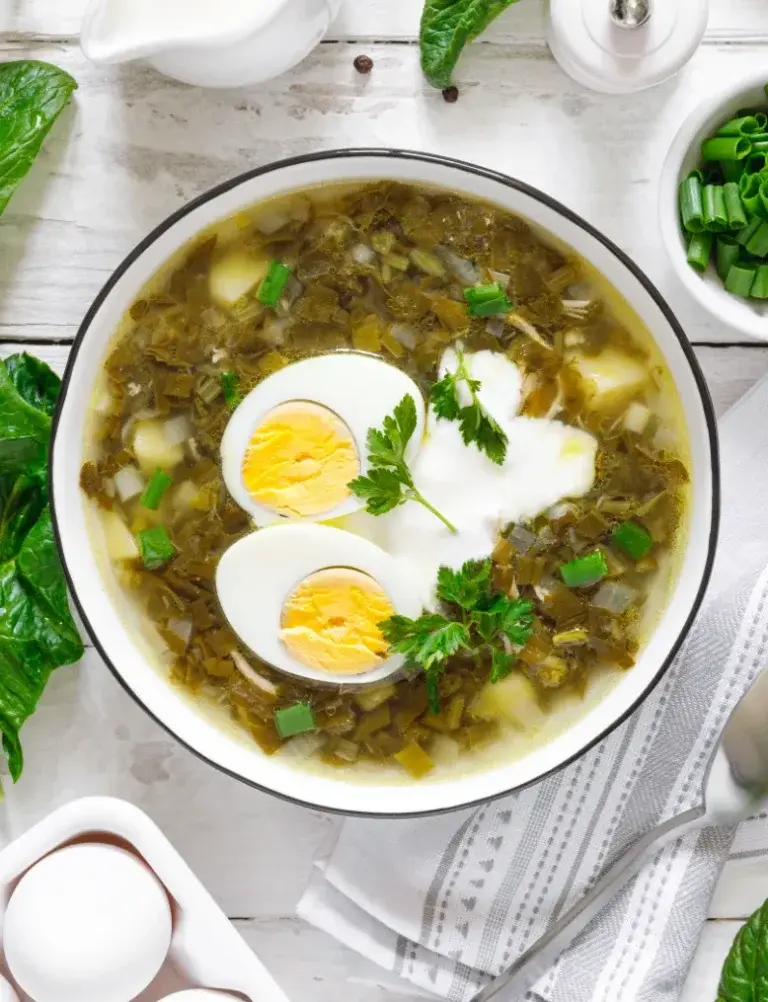
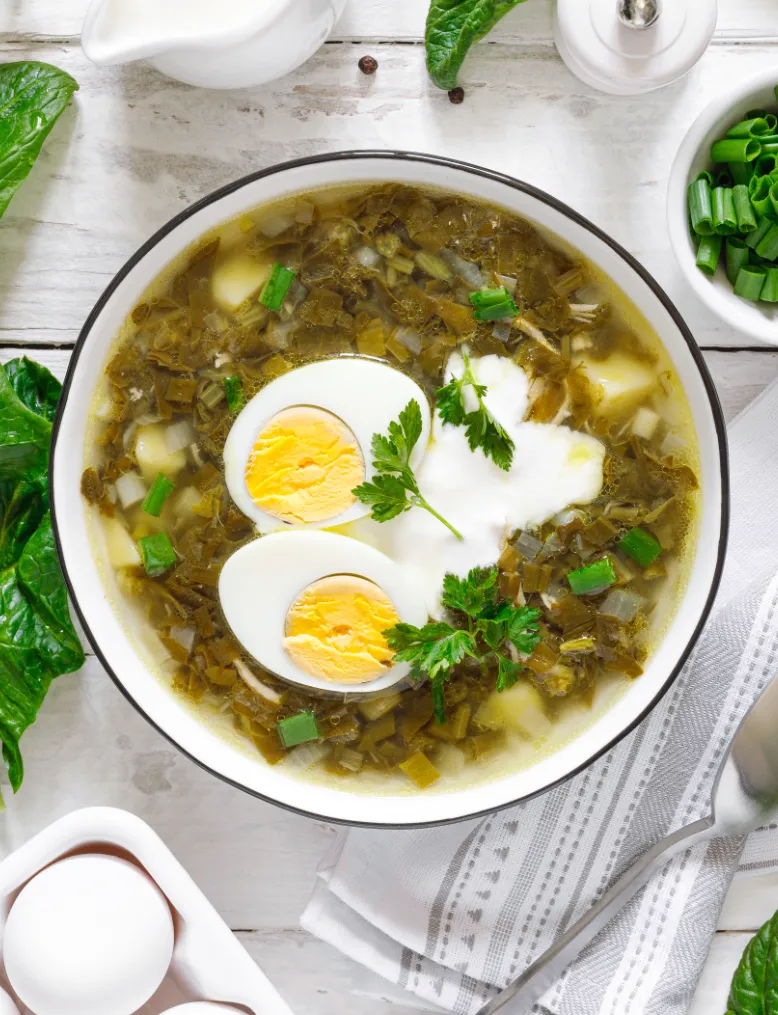
One last traditional touch: the hard-boiled egg in the bowl. In Bordeaux and the Limousin, adding a boiled or poached egg to sorrel soup has been standard for generations. It softens the sharpness, turns a light starter into something more satisfying, and also happens to look lovely for the celebration!
Ingredients
- Sorrel – Fresh, and the sharper the better. Spring sorrel from young plants has the most vivid, lemony flavour; later leaves are coarser. Strip out the tough central stalks before using. It collapses dramatically on heat, so a big pile becomes almost nothing.
- Floury potatoes – They break down as they cook, giving the soup its body and softening the sorrel’s sharpness. No cream or blending needed for a silky result.
- Shallots – Sweated slowly in butter as the gentle, sweet base of the soup. Milder than onion.
- Butter – To sweat the shallots and melt the sorrel. It rounds the whole thing out.
- Vegetable stock – The body of the soup. A good one matters in something this simple or you can make your own stock.
- Crème fraîche – Stirred in at the end for richness and silk, and to temper the acidity. Don’t let it boil once it’s in.
- Eggs – Hard-boiled, halved, and set in the bowl at the end.
How to make sorrel soup
1. Sweat the shallots and wilt the sorrel
Melt the butter and sweat the shallots gently until soft and translucent, no colour, just slow and sweet. Then add the stripped, chopped sorrel and stir. Here’s the moment to expect: it collapses almost instantly, and turns from bright green to a drab olive-khaki within seconds. Don’t panic, this is completely normal, it’s the oxalic acid in sorrel reacting with heat, and it happens in every kitchen to every cook. The flavour is entirely unaffected, and what you lose in looks you gain in that tangy, lemony taste.
2. Add the potatoes and simmer
Add the diced potato, stir to coat, then pour in the stock and season. Bring to a boil, then simmer gently until the potato is completely tender and breaking apart, about 20 to 25 minutes. As it cooks the potato softens into the broth and gives the soup body without any need to blend it (though you can, for a smoother soup).
3. Finish with crème fraîche
Off the heat, taste for seasoning, sorrel is acidic, so you’ll likely need more salt than you expect. Stir in the crème fraîche and warm through gently, but don’t let it boil once the cream’s in, or it can split. Meanwhile hard-boil the eggs, peel and halve them, and set them in the bowls to serve.

Tools for this recipe
Check out my favorite kitchen essentials and cookware!
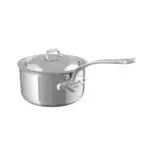
- Use a wide, heavy saucepan so the sorrel wilts evenly and the potato cooks at a steady rate without catching.
- Use a sharp knife to strip the sorrel stalks and dice the potato.
- Use a hand blender if you’d like a smoother soup (optional; it’s lovely left rustic too).
Tips for success
- Don’t panic when it turns khaki: the moment sorrel hits heat it goes from bright green to olive-brown. It’s the oxalic acid reacting, it’s unavoidable, and it happens to everyone. The flavour is perfect regardless; it just tastes better than it looks.
- Strip the stalks out: the central stalks of sorrel leaves are tough and stringy. Pull them out before chopping, the same way you would with spinach or chard.
- Expect to need more salt: sorrel is very acidic, and acidity needs salt to balance it. Season more generously than you think, and always taste at the end.
- Don’t boil the crème fraîche: stir it in off the heat or over a low heat and warm gently. Boiling it once it’s in the acidic soup risks it splitting.
- Use young spring sorrel if you can: the flavour is brightest and most lemony in the first weeks after the plants come up. Later-season leaves work but taste coarser and more aggressive.
How to store it
- Sorrel soup keeps well, and the flavour holds up nicely, so it’s a good make-ahead.
- Keep it covered in a glass container in the fridge for up to 3 days. Reheat it gently over a low heat, and try not to let it boil hard, particularly once the crème fraîche is in, since it can split. If you’re making it ahead, you could hold the crème fraîche back and stir it in fresh when you reheat, which keeps it at its silkiest. Boil the eggs fresh on the day rather than storing them in the soup.
- It freezes reasonably for up to 2 months, though the texture is best fresh. Freeze it before adding the crème fraîche if you can, then thaw, reheat and finish with the cream and eggs. Don’t freeze the hard-boiled eggs, they go rubbery.

More soup recipes to try
Variations
- Blend it smooth: for a more refined, velvety soup, blitz it with a hand blender before adding the crème fraîche. Rustic or smooth, both are delicious!
- Add other spring greens: stir in a handful of spinach, watercress or young nettles with the sorrel for a milder, greener soup, useful if your sorrel is very sharp.
- Make it richer: a swirl of extra crème fraîche or a little cream, or an egg yolk beaten in off the heat, for a more luxurious version.
- Serve it cold: like a vichyssoise, sorrel soup is lovely chilled in high summer. Blend it smooth, chill well, and serve cold with a spoon of crème fraîche.
FAQ
What does sorrel soup taste like?
Sharp, bright and intensely lemony, with a fresh, almost citrus-like acidity that comes from the sorrel. The potato and crème fraîche round it out and make it silky, so it’s tangy but not harsh. It tastes unlike any other green soup, more like a soup with a built-in squeeze of lemon.
Why did my sorrel soup turn brown?
Because sorrel always does. The oxalic acid in sorrel reacts with heat and the leaves turn from bright green to a drab olive-khaki within seconds of hitting the pan. It’s completely normal, happens to every cook, and doesn’t affect the flavour at all. It simply tastes better than it looks.
Can I make sorrel soup ahead of time?
Yes. It keeps 3 days in the fridge and reheats gently (don’t boil it once the crème fraîche is in, or it may split). For the silkiest result, hold the crème fraîche back and stir it in when you reheat, and boil the eggs fresh on the day.
Where do I find sorrel?
Fresh sorrel turns up at farmers’ markets and some greengrocers from spring through early summer, but it’s rarely in supermarkets. It’s very easy to grow, though, a hardy perennial that comes back every year, so many people grow their own. Frozen sorrel works too, if a little less vivid.
Is sorrel soup served hot or cold?
Traditionally hot, often with a hard-boiled egg in the bowl. But it’s also lovely chilled in summer, like a vichyssoise, blended smooth and served cold with a spoon of crème fraîche. Both work beautifully.



 Prep Time 15 minutes
  Cook Time 30 minutes
  Total Time 45 minutes
  Servings 4
Description
Ingredients
- 300 gr sorrel stalks removed
- 500 gr floury potatoes peeled and diced
- 2 shallots finely sliced
- 40 gr unsalted butter
- 1 l vegetable stock
- 150 ml crème fraîche plus extra to serve
- 4 eggs
- salt and black pepper
- small bunch flat-leaf parsley or chervil, to garnish
Equipment




Instructions
1. Prepare the sorrel
- Wash the sorrel, strip out the central stalks (hold each leaf and pull the stalk down, as with spinach), and roughly chop. Don't be alarmed by the quantity; it collapses to almost nothing on heat.
2. Sweat the shallots
- Melt the butter in a large saucepan over low-medium heat. Add the shallots and cook gently for about 5 minutes, until soft and translucent with no colour.
3. Wilt the sorrel
- Add the sorrel and stir. It collapses almost immediately and turns olive-brown within 2 to 3 minutes. This is normal (the oxalic acid reacting with heat) and doesn't affect the flavour.
4. Add the potatoes and stock
- Add the diced potato and stir to coat. Pour in the stock, season generously, and bring to a boil. Reduce to a simmer and cook for 20 to 25 minutes, until the potato is completely tender and breaking apart.
5. Hard-boil the eggs
- While the soup simmers, boil the eggs for 10 minutes, then cool in cold water for 5 minutes, peel and halve lengthways.
6. Finish the soup
- Off the heat, taste for seasoning (you'll likely need more salt than expected). Over low heat, stir in the crème fraîche and warm through. Don't let it boil once the crème fraîche is in.
7. Serve
- Ladle into deep bowls. Set two egg halves cut-side up in each, add a spoonful of crème fraîche, and scatter over parsley or chervil. Finish with black pepper and serve with crusty bread.
Notes
- 300g of sorrel is the right amount for a well-balanced soup, enough acidity to be the point of the dish without being overwhelming. In early spring, when freshly cut sorrel is at its most pungent, you might even start with 250g and taste as you go.
- Fresh sorrel is available from farmers’ markets and some greengrocers from April through early summer. It’s also straightforward to grow, it’s a hardy perennial that returns every year with minimal effort.
- If you can only find frozen sorrel, it works reasonably well. Defrost fully before use and proceed as normal; expect the flavour to be a little less vivid than fresh.
- The hard-boiled egg is genuinely traditional in several French regions, particularly in Bordeaux and the Limousin. It adds substance and makes this a proper light meal rather than just a starter.
- Chervil is the more classically French garnish here, with its delicate anise flavour complementing the soup well. Flat-leaf parsley is a perfectly good substitute.
Share your feedback and spread the love!
If you try this recipe, I’d love to hear how it turns out! Leave a ★★★★★ rating and your thoughts in the comments, it helps fellow French foodies discover this recipe too. Snap a photo and tag @obviously.french on Instagram. Come talk about it in our Facebook group. And don’t forget to save this recipe to Pinterest so you’ll always have it handy for your next French-inspired meal!