Homemade Stock: French Bouillon From Kitchen Scraps
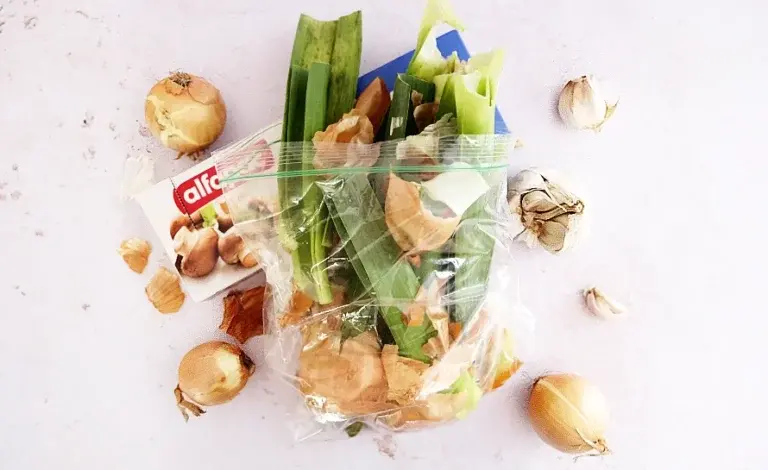
There’s a bag in my freezer that looks quite frankly pretty unappetizing. Onion skins, carrot peels, the dark green tops of leeks, mushroom stalks, a handful sad parsley stems. Anyone who opened it without warning would probably bin lot, and I couldn’t entirely blame them.
But that bag is one of the most useful things in my kitchen. When it’s full, it goes into a pot with cold water and a glass of wine, and about an hour later I’ve got a litre or two of proper homemade stock that cost me nothing and tastes better than anything that ever came out of a cube.
The French make their own stock. Throwing food away is treated as something close to a moral failing here, and bouillon is the answer to every scrap: the bottom of the leek, the peel, the bits you’d otherwise put in the bin without a second thought. There’s nothing complicated about it. It’s just a habit, plus knowing what goes in and what stays out.
Table of Contents
Bouillon, fond and fumet
Quick bit of vocabulary, because these words turn up constantly in French recipes and the differences are important to know.
Name
Meaning
Bouillon
The everyday word and the one you’ll use most. It’s a homemade stock, simple flavoured liquid, light, and it’s what most of this article is about.
Fond
This means “foundation”, which tells you what it’s for. It’s a more concentrated stock, made to be reduced into a sauce rather than drunk or used as a base. A fond blanc is made from raw ingredients, a fond brun from ingredients roasted first.
Fumet
This is specifically fish stock, and it’s short and sharp, twenty minutes rather than an hour.
Court-bouillon
This isn’t a stock at all, which trips everyone up. It’s a quick aromatic liquid made in order to poach something in it, usually fish. Water, wine, aromatics, twenty minutes, then the fish goes in. You make it and use it immediately.
Consommé
This is stock that’s been clarified until it’s completely clear. Beautiful, but it takes extra work.
What actually goes in a homemade vegetable stock
The first thing to understand is that not all vegetable scraps are equal. Some make your stock rich and golden. Others will ruin the whole pot.
The good stuff
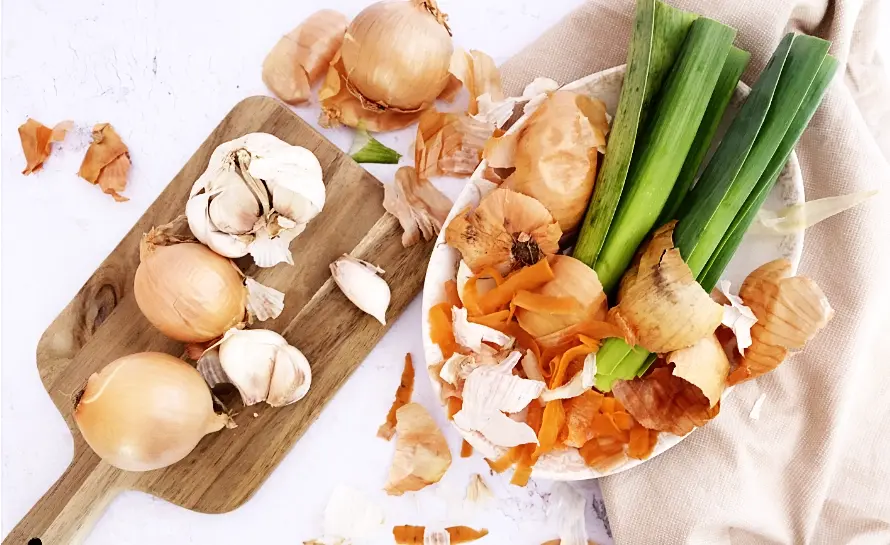
Onion skins
Add both colour and a deep savoury note
Carrot peel and tops
Add a gentle sweetness and body
Dark green leek tops
Add a mild, oniony depth
Celery leaves and stalks
Add that classic aromatic flavour that makes a stock taste like a stock
Parsley stalks
Carry more flavour than the leaves and add a fresh, herby note
Mushroom stalks
Add an earthy, savoury depth
Fennel fronds and stalks
Add a subtle anise note, particularly good in fish-based bouillon
Tomato skins and seeds
Add a slight acidity and sweetness, best in summer when tomatoes are actually good
Garlic skins
Add a gentle warmth. A few go a long way
What to keep out
- Brassicas (broccoli, cabbage, cauliflower, Brussels sprouts)
Turn your stock sulphurous and bitter - Potato peel
Makes things starchy and cloudy - Aubergine
Can make things taste strange and slightly acrid - Beetroot
Will turn everything deep purple - Courgette
Mostly water, adds very little
The good news is that once you know the rules, it becomes automatic. You start prepping your onions and peel your carrot and put the skins without thinking straight into your container, or freezer bag.

Store your vegetables scraps
Keep a dedicated container, a 3 liters freezer bag or a silicone reusable bag, in the fridge or freezer and fill it as you cook.
In the fridge, scraps keep for three or four days. In the freezer you can take your time, fill the bag over weeks, and make your homemade stock from scratch whenever you’re ready. This is the way I do it, it’s less stressful than the fridge.
One thing worth doing first though: scrub your root vegetables before peeling them. Carrot peel with soil still on it makes muddy-tasting bouillon, and nobody wants that.
And the same goes for fish bones if you’re planning to make the fumet. Keep those in a separate bag in the freezer, rinse them before they go in, and use them within three months. Fish scraps lose flavour faster than vegetable scraps, so don’t leave them too long.
The 4 rules for homemade stock
1. Start cold
Always cold water, never hot. Cold water draws flavour out slowly as it comes up to temperature. Hot water seals things and you extract less.
2. Never let it boil
A gentle simmer, where the surface just barely moves. A rolling boil churns fat and tiny particles into the liquid and emulsifies them, and that’s what makes stock cloudy and slightly greasy. Once it’s cloudy you can’t get it clear again. This is the mistake almost everyone makes.
3. Don’t cook it too long
Vegetable stock is done in 45 minutes to an hour. Push past that and it goes bitter, because you’re now extracting things you didn’t want. This is the opposite of meat stock, which improves over hours, and it’s why people who apply meat-stock logic to vegetables end up disappointed.
4. Never salt it
Season the dish, not the stock. If you salt your bouillon and then reduce it later for a sauce, you concentrate the salt and it becomes inedible. Leave it unseasoned and it stays useful for absolutely everything.

5 Homemade stock recipes to get started
Basic homemade vegetable stock
This is the workhorse in French cooking. You’ll make this homemade bouillon the most often and use it for everything from risotto to lentils to soup.
Makes: approximately 1.5 litres Time: 1 hour
Scraps
- Onion skins
- Carrot peel and tops
- Dark green leek tops
- Celery leaves and stalks
- Parsley stalks
- Mushroom stalks
- Fennel fronds and stalks
- Tomato skins and seeds
- Garlic skins
Use whatever combination you have. You don’t need all of them, but the more variety the better. Aim to fill roughly a 2-litre container before you make a batch.
Ingredients
- 3 to 4 garlic cloves, unpeeled
- 2 bay leaves
- 1 tsp whole black peppercorns
- 2 sprigs of fresh thyme
- 2.5 litres cold water
- 200ml dry white wine (optional but worth it)
Method
- Put everything into a large pot with the cold water and wine. Start cold, not hot.
- Bring slowly to a gentle simmer, skimming any grey foam that rises in the first few minutes.
- Simmer partially covered for 45 minutes to an hour. No longer or it will turn bitter.
- Strain through a fine sieve without pressing the vegetables. Season only when you know what you’re using it for.
Brown vegetable stock (fond brun de légumes)
Same scraps as the basic homemade vegetable stock, but completely different result.
Instead of putting everything straight into water, spread the sturdier scraps on a baking tray, onion skins, carrot, celery, leek, mushroom, with a spoonful of oil, and roast at 200°C for 30 to 40 minutes until they’ve properly caramelised at the edges.
Deglaze the roasting tray with a splash of the wine and scrape everything into the pot, because the sticky brown bits stuck to the tray are the most flavourful. Then carry on exactly as above.
What you get is darker, deeper and much more savoury, and it’s what you want under mushroom dishes, lentils, onion soup, or any sauce that needs to taste of something. Add half an hour to your total time and it’s the best thirty minutes you’ll spend on a stock.
Makes: approximately 1.5 litres Time: 1,5 hour


Tomato Bouillon
This homemade stock is best made in summer when tomatoes are actually good. Lovely for cooking rice or polenta, or as the base of a summer soup.
Makes: approximately 700ml Time: 50 minutes
Scraps
- Skins and seeds from roughly 1kg of tomatoes
- Onion skins and trimmings
- Celery leaves and stalks
- Garlic skins
Ingredients
- 1 bay leaf
- A handful of fresh basil stalks
- 1 tsp whole black peppercorns
- 1 litre cold water
Method
- Put everything in a pot, give the tomato scraps a rough squeeze to release the juices, and cover with cold water.
- Bring to a gentle simmer and cook for 30 to 40 minutes until the liquid is pale pink and smells of ripe tomatoes.
- Strain, pressing the pulp gently to capture the liquid. Season lightly.
Mushroom bouillon
Dark, earthy, and intense. This is the one to reach for when you’re making lentils, a pasta sauce, or a risotto that wants real depth. One thing worth knowing: this is considerably stronger than your basic homemade vegetable stock. Use it diluted or at half strength in anything delicate, or it will overpower everything else in the dish.
Makes: approximately 800ml Time: 45 minutes
Scraps
- Mushroom stalks and trimmings (aim for roughly 300g worth saved up)
- Onion skins
- Garlic skins
Ingredients
- 2 bay leaves
- 2 sprigs of fresh thyme
- 1 tsp whole black peppercorns
- 1.2 litres cold water
- A splash of dry white wine (optional)
Method
- Put everything into a pot with the cold water and bring slowly to a gentle simmer.
- Cook for 30 to 40 minutes. No longer or it will turn bitter.
- Strain through a fine sieve lined with a clean cloth without pressing.
Fish Stock (Fumet de Poisson)
Fumet de poisson is a classic French fish stock. It’s delicate and clean-tasting. Use it for fish soups, a simple cream sauce, or anywhere a vegetable stock would feel out of place.
Note
This only works with white fish. Bones from sea bass, cod, sole, turbot, or bream are ideal. Avoid oily fish like mackerel or sardines entirely, and go easy on salmon bones, which make the stock too strong and fatty.
Makes: approximately 800ml Time: 35 minutes
Scraps
- Fish bones, heads, and trimmings from white fish (roughly 500g to 700g)
- Parsley stalks
Ingredients
- 1 shallot or small onion, thinly sliced
- 1 celery stick, sliced
- A small knob of butter
- 1 bay leaf
- 1 tsp white peppercorns
- 200ml dry white wine
- 1 litre cold water
Method
- Rinse the fish bones and trimmings under cold water and remove any bloody bits you can see. These make the stock bitter.
- Melt the butter in a large pot over low heat and sweat the shallot and celery gently for a few minutes until soft but not coloured.
- Add the fish bones, trimmings, and white wine. Let it bubble for two minutes. Add the cold water, parsley stalks, bay leaf, and peppercorns.
- Bring to a gentle simmer and cook for 20 to 25 minutes. Not longer as the fish bones will turn bitter and chalky if you push past this.
- Strain through a fine sieve lined with a clean cloth without pressing.

Adding wine: the most French thing you can do
As you know from my article about cooking with wine, I love adding that additional acidity and depth to a lot of my cooking. And adding it to a homemade veggie stock is a no brainer for me.
Just make sure you add it at the start with the cold water, not at the end. The alcohol needs time to cook off as the pot slowly comes up to temperature, around 15 to 20 minutes, and what you’re left with is the fruit and the acidity without any raw sharpness. Add it at the end and you’ll taste exactly that sharpness.
Muscadet, Sauvignon Blanc, or an unoaked Chardonnay all work well. Just use something you’d actually drink, avoid anything very oaky or sweet, and roughly 200ml to 250ml is plenty for a 2.5-litre pot.
And if you have a bottle of dry vermouth open, Noilly Prat in particular, use that instead. It has a lovely herbal quality that works really well in bouillon. I reach for it more often than the wine if I’m honest.
Cooling it safely
A big pot of stock is exactly the conditions bacteria like: warm, wet, nutritious, no oxygen at the bottom. And the classic move, leaving the pot on the hob overnight because you’re tired and it’s late, is genuinely the wrong thing to do.
The rule is to get it from hot to fridge-cold within about six hours, and through the warm middle range fast. In practice, get it out of the pot and cold quickly rather than letting a big deep pot sit there insulating itself.
How to do it properly:
- Strain it straight away: don’t let it sit in the pot with all the vegetables in.
- Ice bath: put the container in a sink of cold water and ice, and stir it every few minutes. This takes a litre of stock from hot to cool in about fifteen minutes.
- Don’t put the lid on until it’s cool: the lid traps the heat in.
- Then fridge or freeze!
And if you did leave it out overnight, be honest with yourself and throw it away. Reboiling kills bacteria but doesn’t reliably destroy the toxins some of them leave behind. It’s a pot of vegetable peelings and it isn’t worth the gamble.
How to store homemade stock
Fridge
Keeps for 3 to 4 days in a sealed container.
Freezer
Keeps for up to 6 months in a sealed container.
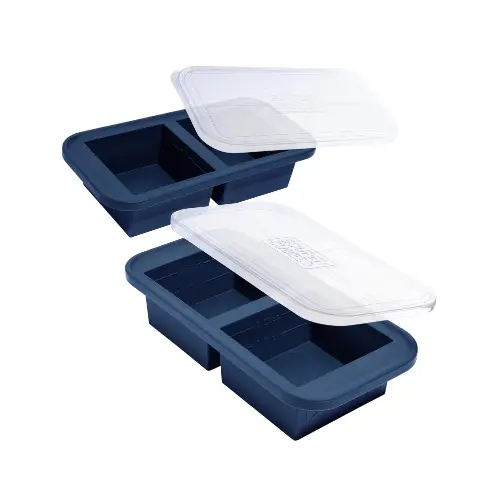
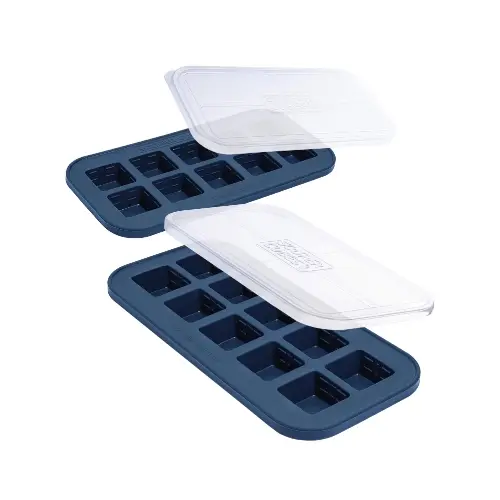
Ice cube tray with lids or Souper Cubes trays are the most practical way to store your homemade veggie stock. Fill them, freeze solid, then transfer the blocks to a clearly labelled freezer bag. Each cube is small enough so you can grab exactly what you need rather than defrosting a whole litre when you only wanted a splash to deglaze a pan. The larger 473ml Souper Cubes trays with lids work brilliantly for bigger portions.
Reduce before you freeze: reduce your bouillon first before your freeze it. Put it back on the heat after straining and let it bubble until it’s halved. Concentrated stock takes half the freezer space and you just add water when you use it. And if you keep going until it’s syrupy and coats a spoon, you’ve made a glace de légumes, which sets almost solid when cold and is essentially a homemade stock cube with none of the salt.

The second extraction
Once you’ve strained your stock, the spent scraps still have something left in them. The French answer to this is a remouillage, meaning “re-wetting”.
Put the strained solids back in the pot, cover with fresh cold water, simmer for another 30 minutes and strain again. What you get is much weaker than the first batch, so don’t expect miracles, but it’s perfect for cooking rice or lentils, or for reducing down and adding to the next batch.
Two batches from one bag of peelings. After that, you can compost the lot as you made great use of it!
How to use your homemade vegetable broth
The obvious uses are soups and sauces. But homemade stock earns its place in other ways too, and this is where it really pays off to create this new habit.
Cook rice, lentils, risotto, couscous, and other grains
Rice cooked in homemade stock instead of water tastes completely different, and the same goes for lentils, couscous, and other grains. They absorb whatever liquid they cook in, so every mouthful carries that flavour. For risotto, using water instead of stock is really not an option.
Deglazing
When you’ve been sautéing onions or leeks and want to lift the sticky caramelised bits from the pan, a splash of homemade stock works just as well as wine and adds body to whatever you’re making.
Braising vegetables
Fennel braised slowly in homemade vegetable broth with a little butter and a bay leaf is a completely different dish from fennel steamed in plain water. It’s a small extra step that creates whole new tasty flavours.
Finishing pasta
A ladle of homemade bouillon added to pasta you’re finishing in a pan with olive oil and garlic makes something special out of very little. The stock adds body and flavour to your pasta.
Making a butter sauce
Take a ladleful of your homemade vegetable stock and reduce it in a small pan over medium heat until it’s syrupy and concentrated. Whisk in a knob of cold butter off the heat and you have a simple, elegant sauce that works over vegetables, fish, or eggs.
FAQ
What vegetable scraps can you use for homemade stock?
Onion skins, carrot peel and tops, dark green leek tops, celery leaves and stalks, parsley and other herb stems, mushroom stalks, fennel fronds, garlic skins, corn cobs, pea pods and asparagus ends. Tomato skins and seeds work well in summer. Avoid anything that has started to spoil.
What vegetables should you not put in stock?
Brassicas (broccoli, cabbage, cauliflower, sprouts) turn it sulphurous and bitter. Potato peel makes it starchy and cloudy. Beetroot turns everything purple. Aubergine goes acrid and courgette contributes almost nothing. And nothing that has gone soft or musty, since a scrap bag is not a compost bin.
How long do you simmer homemade vegetable stock?
45 minutes to an hour, at a gentle simmer. Longer than that and it turns bitter, which is the opposite of meat stock. Mushroom stock needs 30 to 40 minutes and fish stock only 20 to 25.
Why is my homemade stock cloudy?
Either you let it boil rather than simmer, or you pressed the vegetables when straining. Both push fine particles into the liquid where they stay. It will still taste fine, so use it in soup, and next time keep the heat low and let it drain through the sieve on its own.
Should you salt homemade stock?
No. Season the finished dish instead. If you salt the stock and later reduce it for a sauce, the salt concentrates and becomes overwhelming. Unsalted stock stays useful for everything.
How long does homemade stock keep?
Three to four days in the fridge, up to six months in the freezer. Reducing it by half before freezing saves space and you just add water when you use it.
Can you freeze homemade vegetable stock?
Yes! Ice cube trays with lids or Souper Cubes trays work best. Freeze solid, transfer to a labelled bag, and take out only what you need rather than defrosting a whole litre.
What is the difference between bouillon, fond and fumet?
Bouillon is everyday stock. Fond is a more concentrated stock made as a foundation for sauces, either blanc from raw ingredients or brun from roasted ones. Fumet is fish stock specifically. Court-bouillon is different again: a quick aromatic liquid made in order to poach fish in it, used immediately rather than stored.
Is homemade stock better than stock cubes?
It tastes considerably better and it has no added salt, which means you control the seasoning of the finished dish rather than the cube controlling it. It also costs nothing, since it’s made from things you were about to throw away.
Over to you
If all this feels like a lot, just start with the basic vegetable stock. Fill a bag over a week or two, tip it into a pot with some wine and a few aromatics, and see what happens. That’s all there is to it. Once it’s a habit the rest will follows on its own.
Try the fish stock once you’re comfortable with the vegetable one, especially if you cook fish often. Make it after a fish dinner, use the stock for soup the next day, and you’ll understand immediately why French cooks bother to go the extra mile.
So tell me: are you already keeping a scrap bag too? And if there’s something you throw in yours that isn’t on my list, I’d love to know about it in the comments!
This post may contain affiliate links. If you buy through them I earn a small commission at no extra cost to you, and it helps keep this blog running. Please read my disclosure policy for more information. I am grateful for your support.