How long to boil eggs? How to boil a chicken egg just the way I like it is memorised in my system at this point: six minutes, starting in water that’s already at a rolling boil. But the second someone hands me duck eggs, or goose eggs, which happens a lot when you live in rural France, I’m straight back to googling the egg boiling time across three different websites, like I’ve never boiled an egg in my life.
So because I already have a blog, and because I use it as my own reference constantly, I finally sat down and worked out how long to boil eggs from every bird I actually get them from, so I never have to look it up again. That’s really who this is for, me, mostly. But if you’ve ever stood in your kitchen holding a goose egg with absolutely no idea how long to boil it, this one’s for you too.
There isn’t one answer here, there are about four of them, and they’re different enough that using the wrong one gets you either a yolk that’s barely warm or a white that’s more rubbery.
When I eat a boiled egg on its own, I like it jammy inside with only a bit of flaky Camargue salt on top. I put my kitchen timer on for six minutes and wait patiently. My husband on the other hand needs his hard boiled so he can keep a few in the fridge through the week and sneak one onto his plate at lunch. And then there’s my neighbour Nathalie, who loves hers with a runny yolk so she can dunk her beloved “mouillettes” in until there’s nothing left to dunk.
Table of Contents
Hot or cold start: the two methods
There are two ways to actually get an egg into the water, and they get talked about online as if they’re interchangeable. They’re not quite.
Method 1: Into boiling water
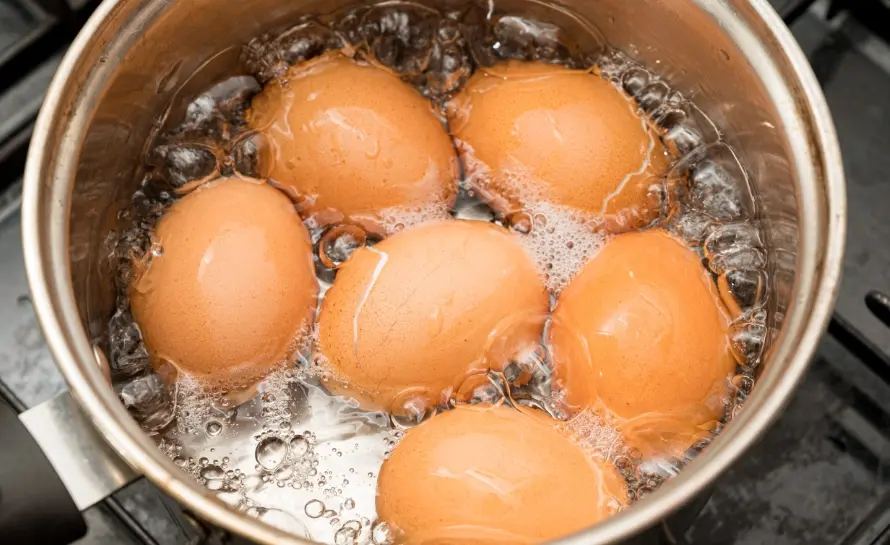
Bring a saucepan of water to a full, properly rolling boil, lower the egg in gently with a skimmer spoon, and start your timer the instant it touches the water. That’s the method behind every table further down this page, and it’s the one I personally use all the time.
Method 2: Into cold water
Put the egg in the saucepan first, cover it completely with cold water, then bring the whole thing up to a boil together. No precise moment to time from, nothing to be nervous about.
The difference
Here’s the real difference between the two, and it comes down to peeling, not cooking. Eggs cooked slowly from a Method 2 start bond more tightly to the membrane on the inside of the shell, which is exactly what makes an egg a nightmare to peel afterwards. Eggs dropped straight into water that’s already boiling, Method 1, never get the chance to form that bond, and they come away from the shell far more cleanly.
As for the actual cooking time, once the water’s at a full boil, the two methods land close to each other, chicken, duck and goose alike, usually within a minute either way. So the times in the charts below work as a starting point whichever way you go in, though they’re written with Method 1 in mind, since that’s what I’d recommend by default. Quail eggs are the one bird where I’d skip Method 2 altogether, full stop, and I’ll get to why further down.
Egg sizes
I don’t know about other countries, but in France, eggs aren’t just vaguely “small, medium, large”, they’re legally classified by weight, and the classification is stamped right there on the box:
- S (petit): under 53g
- M (moyen): 53 to 63g
- L (gros): 63 to 73g
- XL (très gros): 73g and over
Every chicken egg timing below assumes an M to L egg, which is what you’ll get in a standard box more often than not. If you’ve ended up with something tiny from a friend’s bantam hens, shave thirty seconds off. If it’s a proper XL, add that thirty seconds back. It’s not going to make or break your breakfast either way, but it does explain why your egg sometimes comes out a touch different even when you followed the clock exactly.


Chicken eggs
This is the one most people are actually searching for, so let’s be precise, because hard boiled eggs time and soft boiled egg time both depend entirely on which stage you’re after.
French cooks have a rule for this that’s stuck around for generations, mostly because it’s stupidly easy to remember: three, six, nine.
Chicken eggs boiling times
Style
Time from a full boil
Soft boiled, still runny (À la coque)
3 minutes
Medium, jammy (Mollet)
6 minutes
Hard-boiled (Dur)
9 minutes
Soft boiled, still runny- À la coque
Three minutes gets you what the French actually mean by “à la coque”: a white that’s only just set, almost trembling, sitting over a yolk that’s still completely liquid. It’s the one you eat warm, straight from the egg cup, breaking the top off with the back of a teaspoon. This is more or less Nathalie’s egg.
Medium, jammy – Mollet
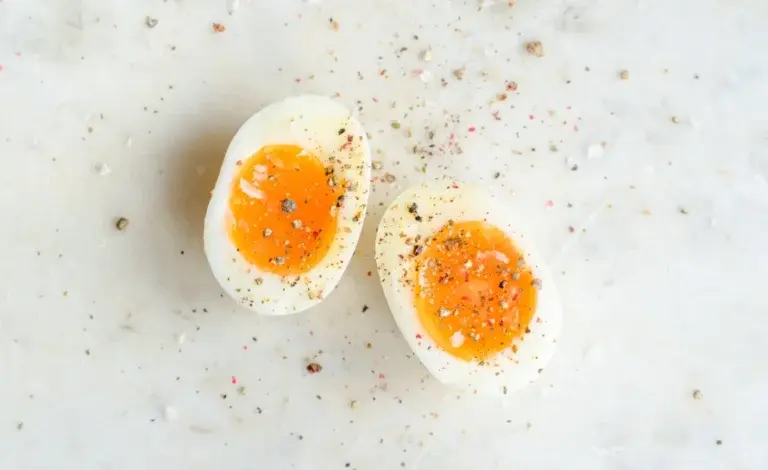
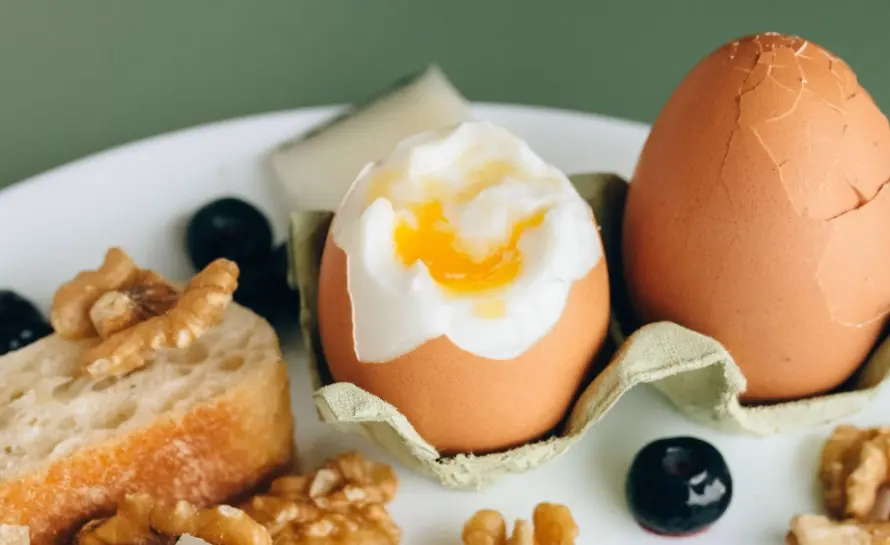
Six minutes is “mollet”, properly jammy, white fully set, yolk somewhere between liquid and soft. When people search how to boil eggs medium, this is the stage they mean, and it’s what most picture when they say “soft boiled” too. This is the one I make constantly without thinking.
Hard-boiled – Dur
Nine to ten minutes gets you “dur”, fully hard, no grey ring around the yolk, as long as it goes into an ice bath the second the timer goes off. If they’re heading into a salad or onto toast, an egg slicer gives you neat even rounds in one press!
Duck eggs
Duck eggs are simply bigger, usually somewhere between 70 and 90g, with a noticeably thicker shell and a yolk that’s richer and more orange than a chicken egg’s. That extra richness is exactly why people who bake reach for them, a cake made with duck eggs comes out denser and more golden than the same recipe made with chicken eggs would. I swap chicken to duck eggs in my salmon courgette cake, if you ever fancy trying it.
Duck eggs boiling times
Style
Time from a full boil
Soft boiled, still runny
7 minutes
Medium, jammy
10 minutes
Hard-boiled
13 minutes
I’m lucky enough to have neighbours who, if I look at them nicely enough, will give me one or two to enjoy. But you won’t find duck eggs in a standard French supermarket the way you will chicken eggs, they’re much more of a market or farm-stall thing here. So look for them at a market, or ask at any farm already selling duck for confit or magret, since the same producers often have a few laying on the side.
A good one should feel properly heavy for its size, with a shell that’s clean without looking scrubbed. If you can ask the seller how recent they are, do, farm eggs rarely come with a date stamped on them the way a supermarket box would.
Goose eggs
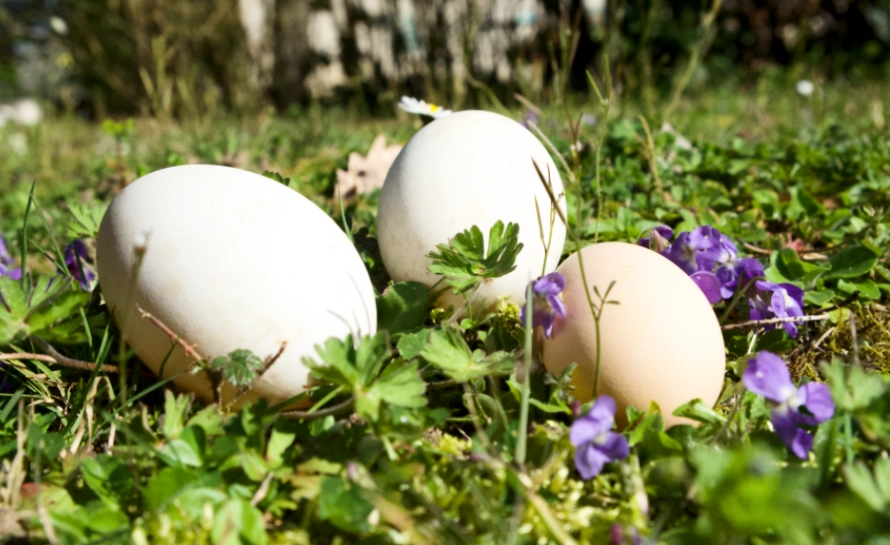
Goose eggs aren’t a weekly thing, not for most of us. Around here they tend to show up seasonally. Geese only lay for a few months in spring, so a proper fresh goose egg from a farm stall or market is a spring thing, not a Christmas one. Christmas is when the bird itself turns up, roasted, alongside the foie gras, that’s goose meat season here, not goose egg season. One goose egg is roughly the equivalent of two or three chicken eggs, so a single boiled one is a proper meal rather than a snack.
Goose eggs boiling times
Style
Time from a full boil
Soft boiled, still runny
10 minutes
Medium, jammy
12 minutes
Hard-boiled
15 minutes
Given the size, “soft” still means a generous, fully set white around a runny centre rather than anything especially delicate. If you’ve somehow ended up with an exceptionally large one, add another two or three minutes and check before you assume it’s done. Most people I know who cook these actually prefer them hard boiled and sliced into a salad rather than soft. The yolk is rich enough on its own that it doesn’t really need the drama of a runny centre to make an impression.
Quail eggs
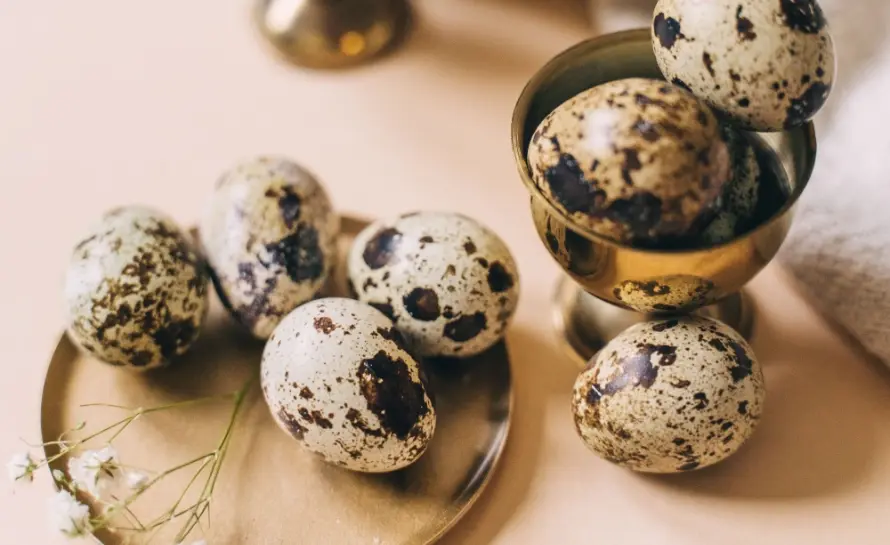
Quail eggs are the ones you’ll see piled into little punnets at French markets, usually right next to the charcuterie, because they’re proper apéro food here. Hard boiled and dipped in celery salt, or pickled in a jar left out on the counter.
Quail eggs boiling times
Style
Time from a full boil
Soft boiled, still runny
2 minutes
Medium, jammy
3 minutes
Hard-boiled
4 minutes
This is the one bird where I’d skip the cold start entirely, and here’s why. They’re so small, only around 9 to 12g each, that by the time a small pan of water with eggs already sitting in it comes up to a proper boil, you’ve genuinely lost track of how long they’ve effectively been cooking already. The gap between a 2-minute egg and a 4-minute egg is too tight to risk that kind of uncertainty. I recommend starting with boiling water and with no distractions.
Peeling them is tricky. The shells are thin, but the membrane underneath holds on stubbornly regardless. A splash of vinegar in the cooking water helps. So does giving the cooked eggs a firm roll on the worktop to crack the whole shell at once, rather than picking at it bit by bit, then peeling under a thin stream of cold water. Buy more eggs than you think you’ll need if you’re presenting them for appetizers. A few will always come out looking worse, no matter how careful you are about it.
Guinea fowl, and whatever else turns up
Worth a quick word, since they do show up here from time to time. Guinea fowls lay eggs that are smaller and harder-shelled than a chicken’s, with a slightly more concentrated flavour. They cook quicker than a chicken egg given the smaller size, roughly 3 to 4 minutes for soft and 8 to 9 minutes for hard, though I’d test your own batch since recipes vary on this one more than most. Pigeon and partridge eggs exist too, technically, but they’re rare enough, even here, that you’re unlikely to ever actually need to know.
Fridge or counter? Why it’s not the same answer everywhere
This one I learned myself so I wanted to share it with you. Have you ever noticed that French supermarkets keep their eggs on a normal shelf, not refrigerated, and American ones keep theirs in the dairy case? There’s a reason for that, they’re actually dealing with two different eggs.
In France and most of the EU, eggs aren’t washed before they reach the shop, so they keep their natural protective cuticle intact, and that’s why they’re happy sitting on a counter for a couple of weeks. That’s genuinely why I’ve never refrigerated an egg in my own kitchen, it’s just how eggs are handled here.
In the US, and a handful of other countries, commercial eggs are washed and sanitised before sale, which strips that cuticle off completely. Once it’s gone, official USDA guidance is that the eggs need to go straight into the fridge and stay there.
One rule holds regardless of which camp you’re in: once an egg’s been refrigerated, keep it that way. Pulling it back out for hours lets condensation form on the shell, and bacteria like that. So it’s safer to pick a lane and stay in it.
It also explains the cracking. A fridge-cold egg meeting a properly rolling boil is more likely to split from the shock. Let it sit out for ten minutes before it goes near the pan, and lower it in gently with a skimmer spoon rather than dropping it, and that stops being a problem. If you’re someone whose eggs crack no matter what, an egg piercer (a little spring-loaded pin that makes a pinhole in the wide end before boiling) is another option. I’ll admit I mostly rely on the room-temperature trick, but plenty of people swear by the pin, and it does make peeling a touch easier too.
How to store your boiled eggs
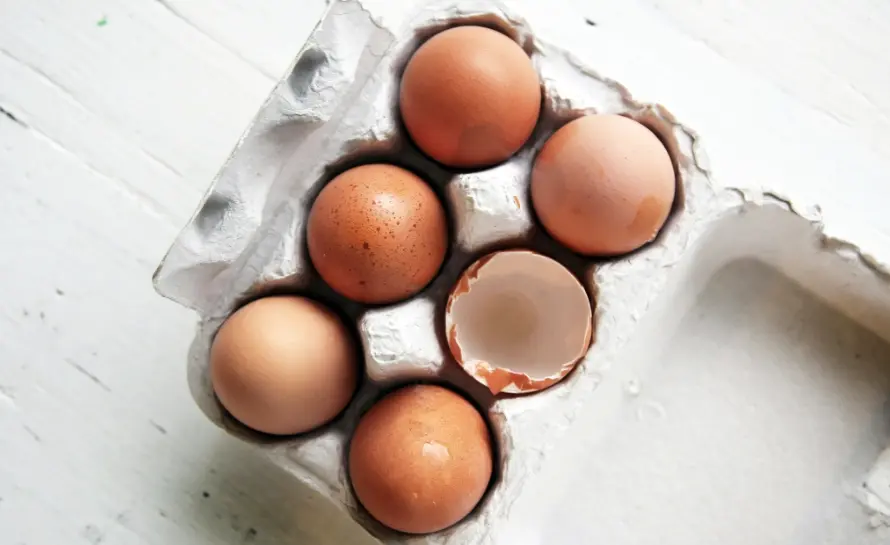
First of all, uncooked eggs can be stored in the fridge or out, depending on which part of the world you’re in, simply left in the original box or a simple reusable egg box.
A batch of boiled eggs is worth making, but only if you actually store them properly afterwards, rather than leaving them loose in the fridge door. Here is how to do it:
Unpeeled boiled eggs
You can keep unpeeled boiled eggs in the fridge, and they’ll keep for up to a week in their shells. Even though they can be stored without any protection because the shell helps, it is still better to store them in a glass storage container. You can leave the shell on until you’re actually ready to eat them.
Peeled boiled eggs
Peeled eggs are the fussier ones: they dry out and pick up every fridge smell within a day. I keep mine in a Mepal Cirqula glass bowl, which comes in three round sizes that are handy for matching the box to the batch:
I’d steer you towards glass over plastic for two reasons. One, a lidded glass box keeps the eggs from taking on smells the way plastic does over time. And reason two, it will last you for years rather than clouding up and getting chucked, which is the more sustainable choice in the long run.
Goose and duck eggs follow the same rules once they’re boiled.
Quail eggs, hard boiled and peeled, last about a week in the fridge, which is exactly why they’re so good for pickling. The vinegar brine stretches that out considerably, often a month or more, sealed in a pickling jar and kept cold.
Can you freeze eggs?
No, don’t freeze eggs. The white turns rubbery in a way that never properly comes back, no matter how gently you thaw it out afterwards.
Boil Eggs Chart
Egg
Soft boiled, runny
Medium, jammy
Hard-boiled
Quail
2 min
3 min
4 min
Chicken
3 min
6 min
9 min
Duck
7 min
10 min
13 min
Goose
10 min
12 min
15 min
Over to you
That’s everything you need to know about egg boiling time, by bird, by size, by however you actually like your yolk in the end. Get a timer, get your ice bath ready before the eggs come out rather than scrambling for it after, and the rest takes care of itself.
Six minutes for me. Nine for my husband, three minutes for Nathalie with her mouillettes. And hopefully, somewhere in all of this, the right number for whatever’s sitting in your own fridge too.
If boiled eggs ever start to feel a bit plain, it’s worth knowing the French don’t stop there. A soft yolk poached in red wine with lardons and croutons, in the wonderfully named Oeufs à la Couille d’Âne, is proof enough of that on its own. So are hard boiled eggs turned into something as dramatic as Mimosa Eggs. But on a normal Tuesday, with soldiers and a bit of butter, a good egg and the right number of minutes is really all you need.
So tell me: hot start or cold start, and is it actually a choice you made, or just what your mum always did and you never thought to question it? Where do your eggs actually live, fridge or counter? I have a feeling this one’s going to split readers down a very specific line depending on which side of the Atlantic you’re on. Tell me in the comments. I’m nosy about this stuff.
This post may contain affiliate links. If you buy through them I earn a small commission at no extra cost to you, and it helps keep this blog running. Please read my disclosure policy for more information. I am grateful for your support.