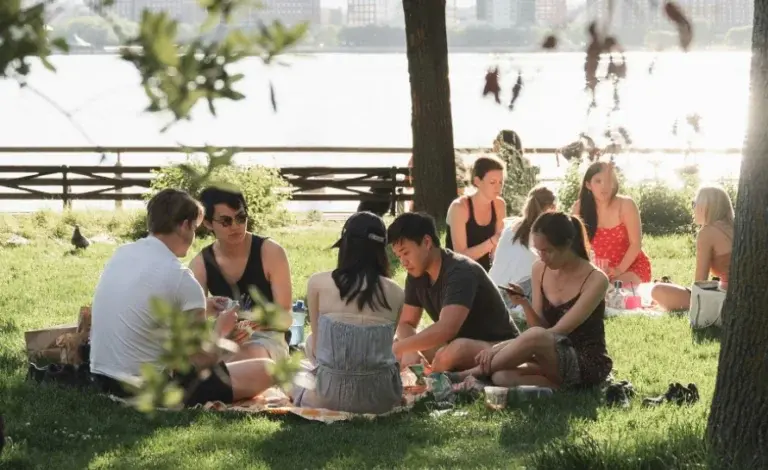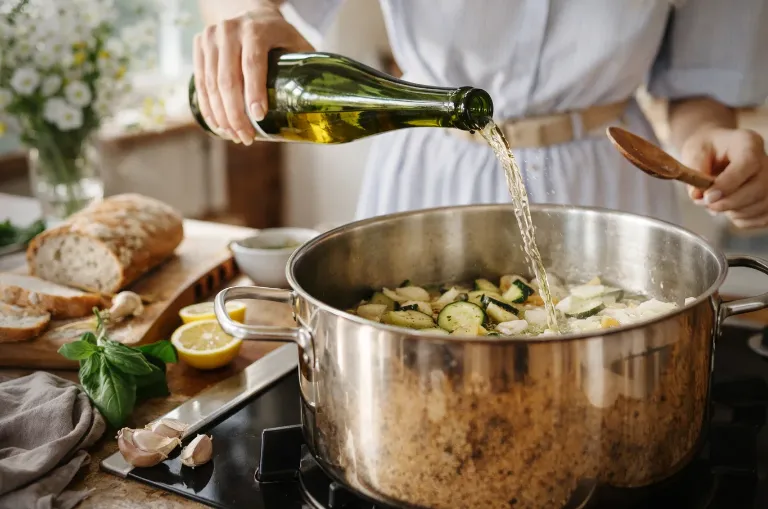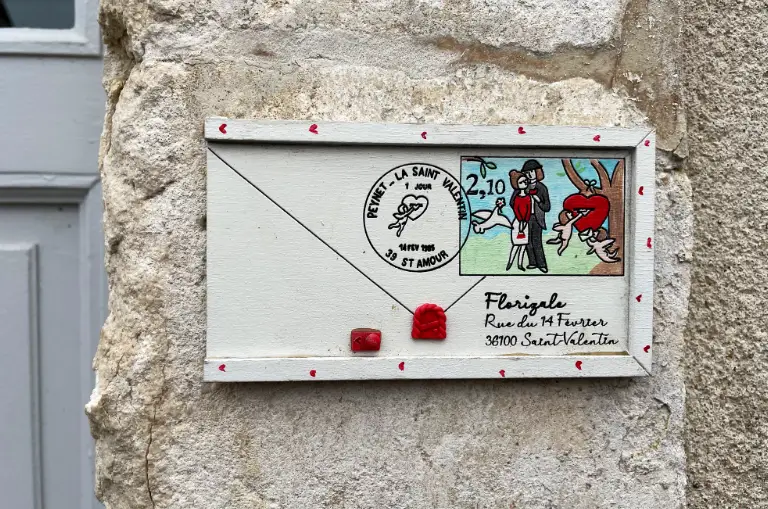
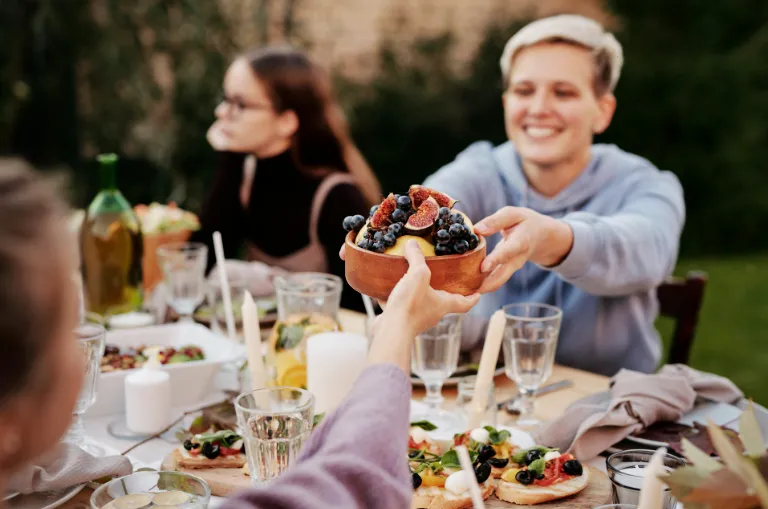
The French apéro is one of my favourite inventions. It lives in that soft space between the rush of the day and the start of the evening, when nobody is in a hurry yet and everyone is a little bit hungry. Ask French people and they’ll tell you it’s the perfect excuse to bring a few friends or neighbours together, lay out something simple to nibble, open a bottle, and let the conversation wander.
It’s a small moment, but it carries a lot of our culture and who we are.
Our neighbour Nathalie was the undisputed queen of the apéro. Her father had been a chef, and she treated those early evenings as her testing ground. One night it would be tiny puff pastry bites with salmon, the next a verrines with courgette and feta or new tart. She’d ring our bell, wave us in, and suddenly her living room was full of neighbours and friends of friends. Through her apéros we got to know half the street and more new flavours than I can count. She had a gift for turning an ordinary Thursday into something you remembered.
This whole article is in honor to her and to thank her for all those unforgettable moments. It covers what an apéro actually is, what goes on the table, what to drink, the unwritten rules nobody explains to foreigners, and, most usefully, exactly what to bring if you get invited to one.
Short on time? Jump to what to bring if you’re invited, what to serve, or the FAQ.
Table of Contents
A word that opens everything
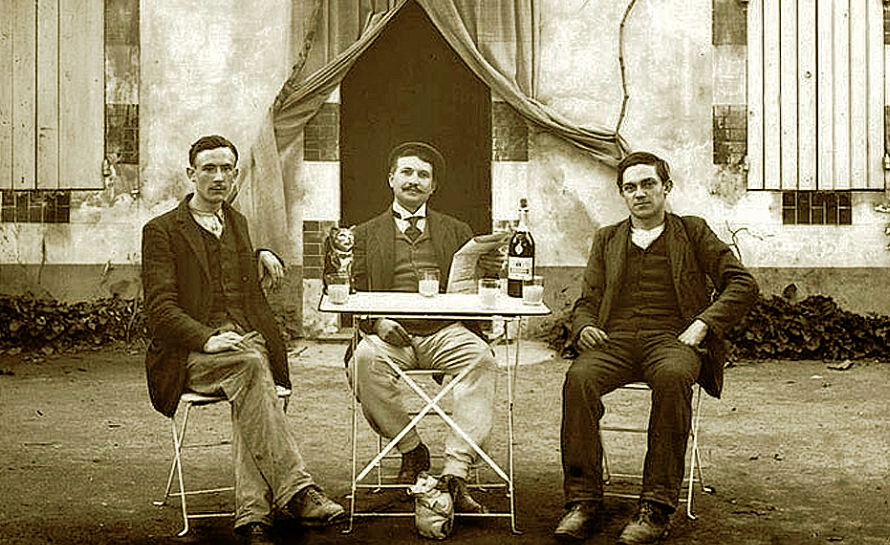
Even the word tells you what it’s about. Apéro is short for apéritif, from the Latin aperire, to open. Originally it was literally about opening the appetite. Medieval monks brewed bitter herbal mixtures meant to prepare the stomach for what was coming.
By the 19th century, pharmacists and inventors like Joseph Dubonnet had turned those potions into wines laced with botanicals and quinine, sold as tonics that supposedly helped with things like malaria. The medical fig leaf didn’t last. The French quickly worked out that these drinks tasted far too good to stay in the pharmacy, and the legend has it that Dubonnet’s wife was the first to serve the stuff to friends as a drink rather than a remedy.
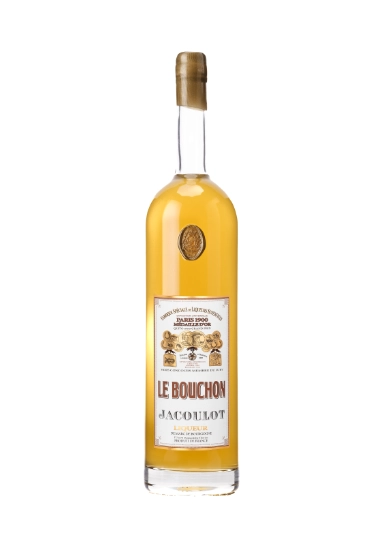
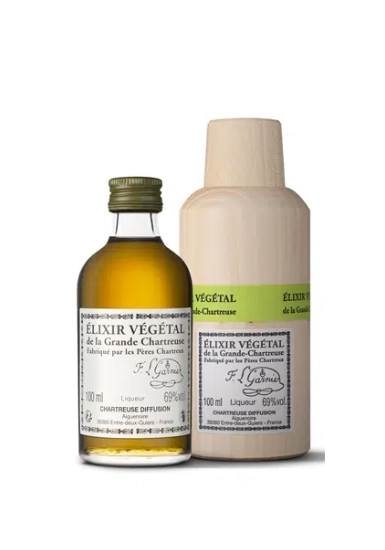
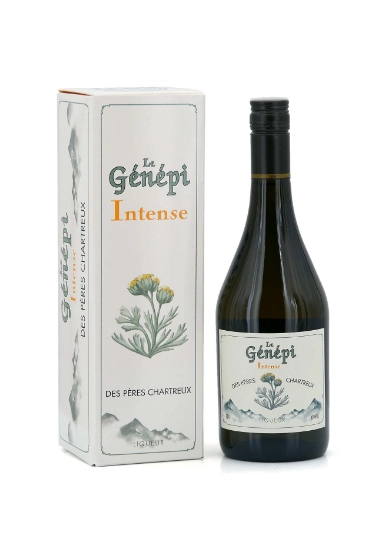
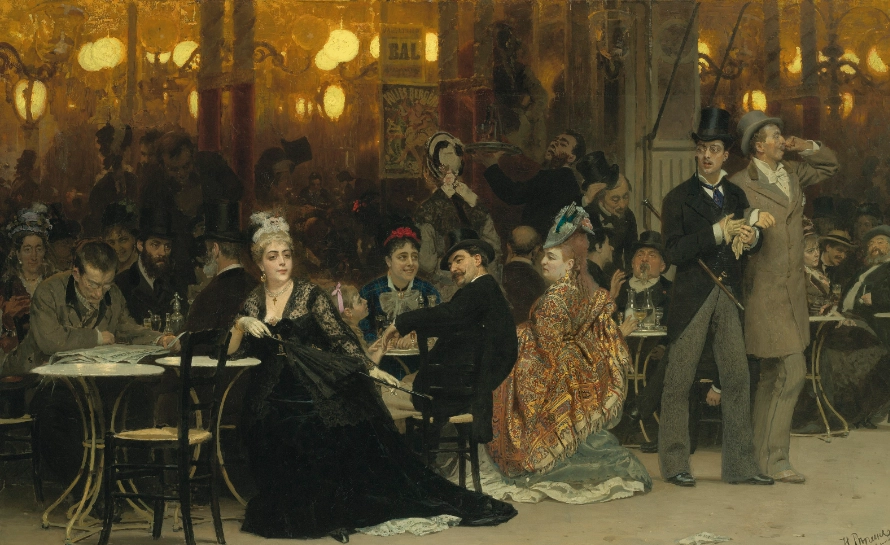
By the Belle Époque the apéritif had become an urban ritual. Café terraces filled with people reading newspapers, arguing about politics and clinking glasses of vermouth, anisette or Lillet. It’s the same era that gave us literary salons and the first true flâneurs. The apéro has always belonged as much to conversation as to appetite.
Apéro is not happy hour
Worth clearing up early, because English speakers reach for happy hour as the translation and it sends people wrong.
Happy hour is a commercial device really. It’s bar discounts drinks in a window of time to fill seats and get more customers. The point is the price, the venue is a business, and the food, if there is any, is incidental.
An apéro is a social form. It usually happens at home, nobody is selling anything, and the food is not incidental at all: the drink and the nibbles arrive together and neither works without the other.
They overlap in one way only, which is that both happen in the early evening. Beyond that, the closest English equivalent is probably “drinks and nibbles at ours”, which is unglamorous but accurate!
A small ritual
Timing is flexible, but apéro usually starts an hour or two before dinner, somewhere around 6 or 7 pm. In the south it tends to drift earlier and stretch longer. In Provence you can easily find yourself still at the table as the sky turns pink and the cicadas start up. In Paris it’s often a sharper pause, a drink and a few bites before heading out or home.
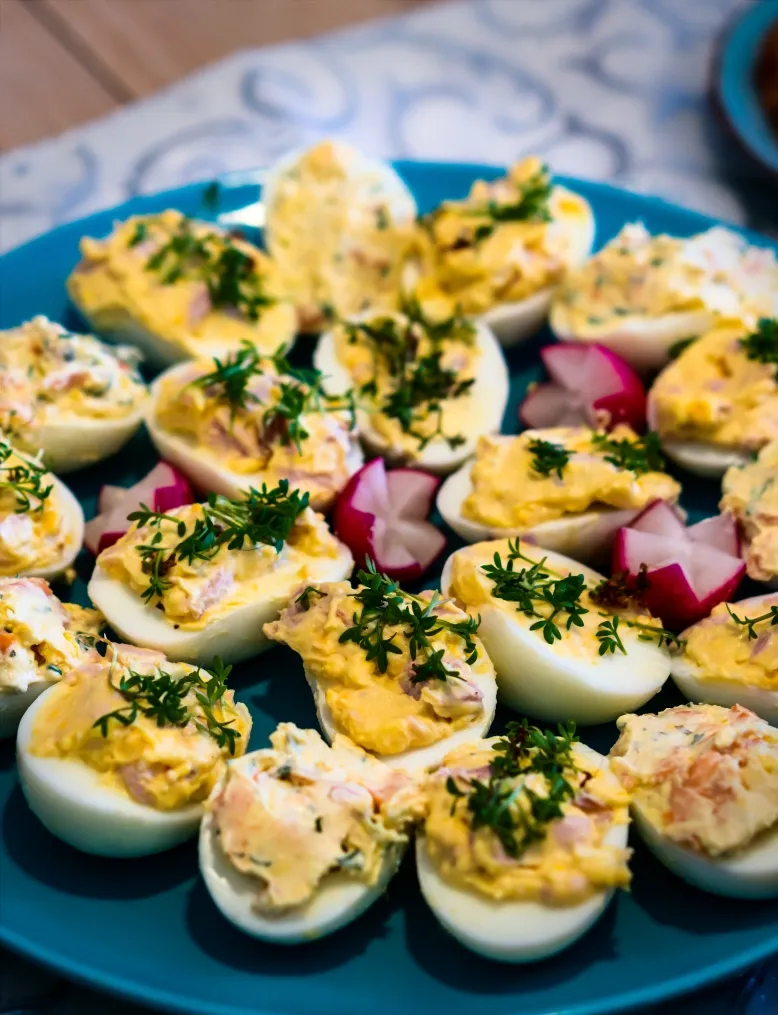
Whatever the clock says, the basics are the same: something to drink, something to nibble, and people you actually want to see. You don’t need an elaborate spread. A bowl of crisps, some olives, nuts, some mimosa eggs, and cubes of Comté, already counts.
Turning up ten or fifteen minutes “late” is completely normal and gives the host time to breathe and light a candle or two.
The unwritten rules
Nobody explains these because to French people they’re obvious, which is exactly why they trip up everyone else.
Apéro and apéro dînatoire
If you’re invited à l’apéro, there will be nibbles but not a dinner, and the evening is expected to end when it ends. If your host means to feed you, they’ll say apéro dînatoire, and that changes everything. If you genuinely can’t tell, ask when you accept. Nobody minds the question and everybody minds a guest who arrives starving.
Bring something
You’re not obligated in the strict sense, but it is strongly expected, and the more so if it’s a first visit. More on exactly what below.
Don’t expect your bottle to be opened
If you bring wine, the host may well put it aside. They’ve usually planned what they’re pouring. This is not a snub and taking it as one is a mistake.
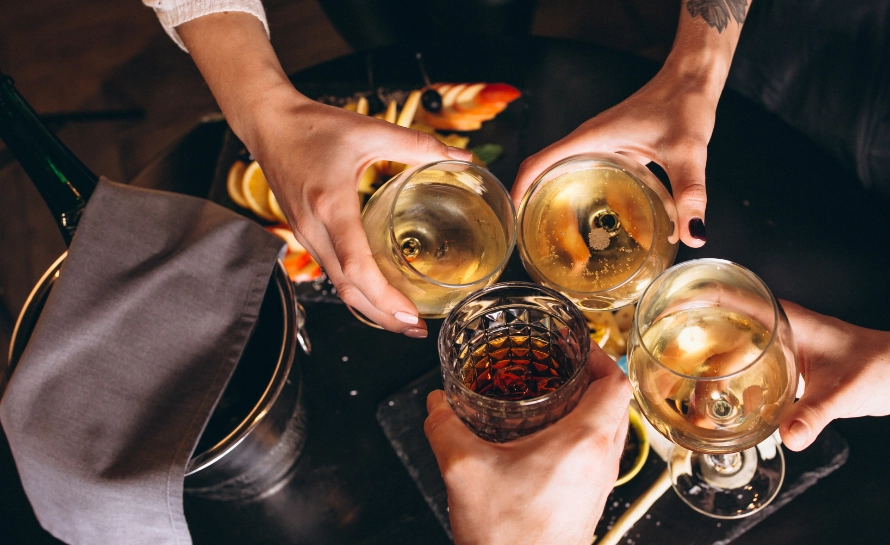
Wait for the toast
Nobody drinks until everyone has a glass and someone raises theirs. Starting early is noticed, so wait until everyone is seated and is ready.
Make eye contact when you clink
With each person individually if the group is small. Looking away is considered rude, and there’s a jokey superstition attached to it involving seven years of bad luck.
Ten minutes late is on time
Arriving exactly on the hour can catch a host mid-preparation. Half an hour late is too late, but ten minutes is totally fine and sometimes better.
Know when to leave
If it’s an apéro rather than an apéro dînatoire, an hour and a half to two hours is right. When the host stops refilling glasses, that’s the signal!
What to bring if you’re invited to an apéro
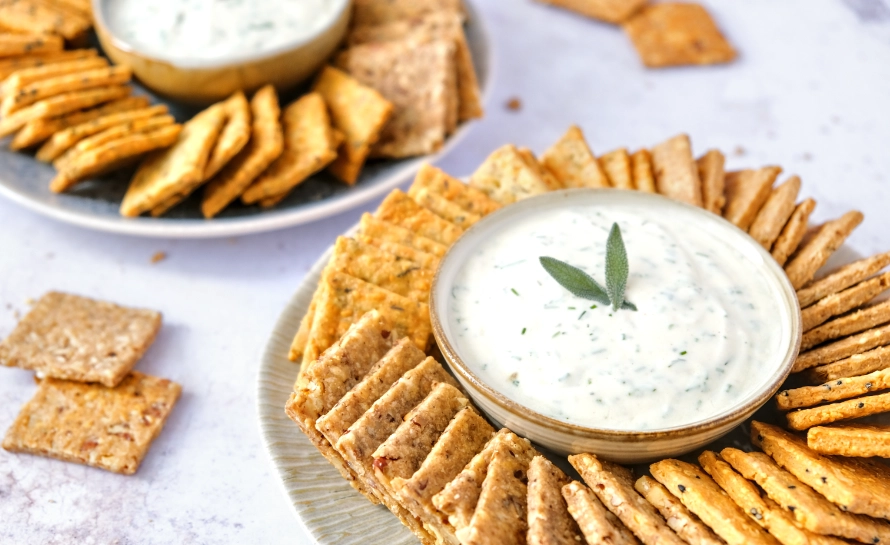
This is the question I get asked most, and the honest answer is that the French rule is simple even though the choices are wide: don’t arrive empty-handed, and don’t bring anything that needs work.
Your host has a kitchen which she/he used to prepare this evening and a room full of people. Anything that needs heating, plating, slicing, dressing or a serving dish creates a job for them at the worst possible moment. The best contribution opens, gets put on the table, and requires nothing else.
A bottle
The default and just in case of a unexpected apero, I always have one or two nice bottles of wine in my pantry. A decent wine in the 10 to 20 euro range is exactly right. Match it loosely to the season and the region if you can: a chilled white or rosé in summer, a light red or a Crémant any time. Champagne is lovely but reads as slightly too much for an ordinary apéro. Save it for a birthday, a new house or actual news.
Something from a special shop
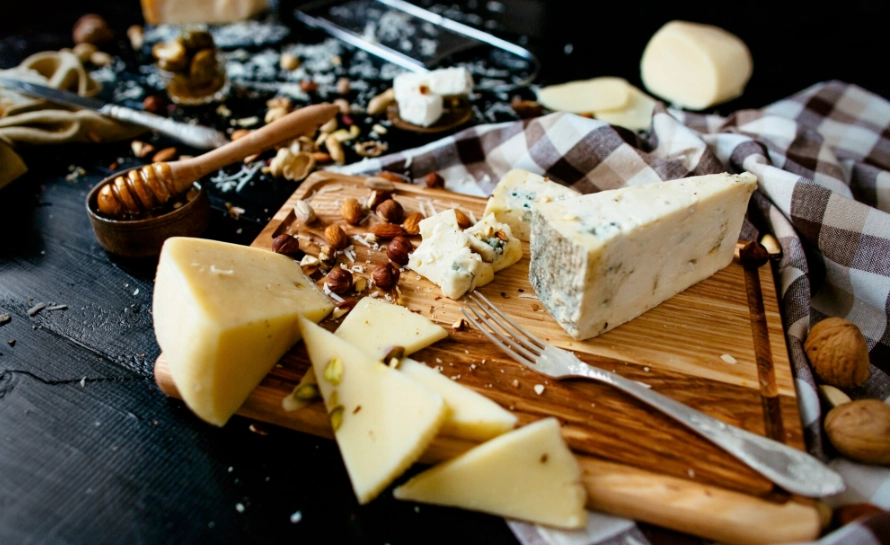
A good wedge of Comté or Beaufort that can be sliced straight onto a board, a jar of tapenade or rillettes, olives from a market rather than a supermarket tub, salted almonds, breadsticks. The trick is that these need no preparation whatsoever.
Something you made
You can also make something yourself and bring it. A cake salé, a jar of tapenade, a batch of savoury biscuits or the one I make most often, cheesy gougères. This is the version that lands best, because effort reads clearly and it’s the one thing nobody else will have brought.
A plant rather than cut flowers
Cut flowers oblige your host to go hunting for a vase in the middle of welcoming everyone. A small pot, or flowers already arranged, avoids that. And avoid chrysanthemums and white lilies entirely, which in France belong to funerals.
What to bring for the specific occasion
Situation
What to bring
Casual, spontaneous, close friends
A bottle, a good special cheese, decent crisps
First time at someone’s house
A bottle plus something edible, or a small plant
Apéro dînatoire
Something substantial: cake salé, a tart, a cheese board, gougères
Meeting the neighbours
Something regional, ideally with a story attached
You’ve been asked to bring dessert
Confirm how many people before you buy or bake the dessert(s).
What not to bring
- Anything needing an oven: your host’s oven is busy or their kitchen is full.
- Anything needing assembly: skewers to thread, dips to decant, salads to dress.
- Supermarket own-brand crisps: uncharitable but true. Spend the extra euro.
- Cut flowers: unless already in a vase.
- A dish that competes: if you know they’ve made something, don’t turn up with your own version of it, obviously.
- Anything you expect back: bring it in something you can leave behind, or take your dish home washed and without ceremony.
Dietary requirements or allergies
Tell your host in advance if you’re vegetarian, avoid pork or alcohol, or have an allergy. Do it when you accept, not when you arrive. A French host takes feeding you seriously and would far rather know on Tuesday than find out on Friday with a plate of saucisson in their hand.
What to put on the apéro table
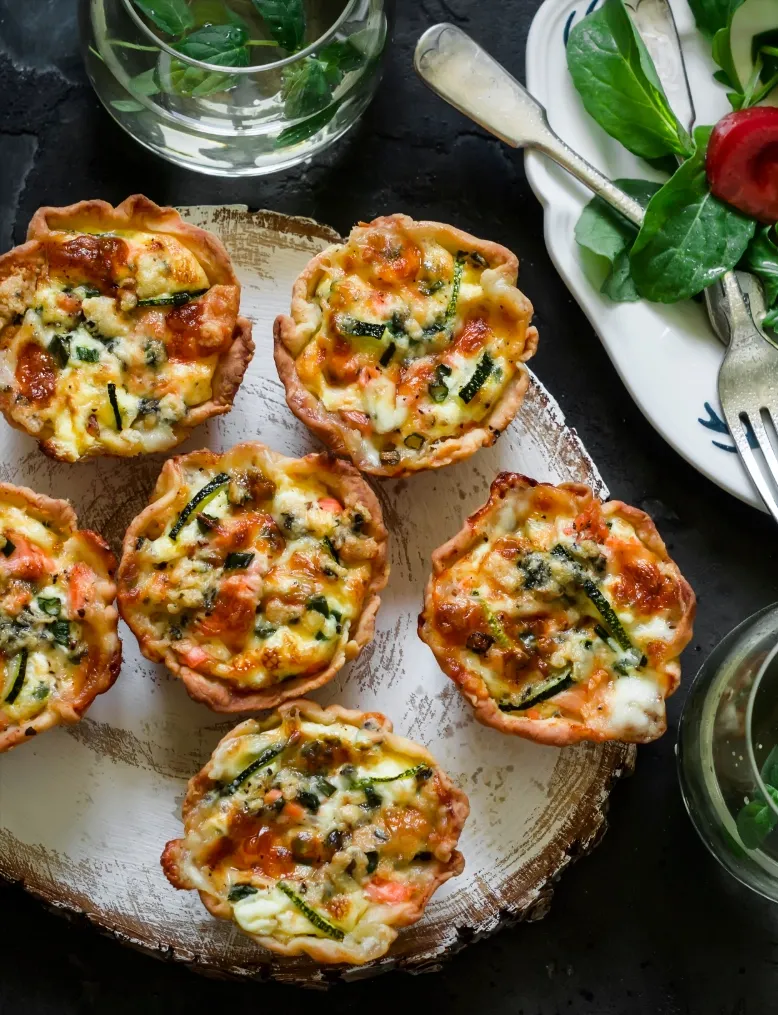
If you’re the one hosting, the rule is variety over volume. The French ideal apéro spread runs to around eight different things, at least three of which you eat with your fingers straight from the bowl.
The bare minimum
Olives, salted nuts or almonds, crisps, cubes of hard cheese. That’s a genuine apéro and nobody will think less of you for it. This is the version that happens on a Tuesday when someone drops in.
The proper spread
Nibbles from the cupboard
Olives, cornichons, salted almonds, pistachios, cashews, breadsticks, crisps, savoury biscuits.
Cheese
Cubes of Comté or Beaufort, which need no knife and no plate. A small chèvre with honey. A round of baked Camembert with torn bread around it.
Spreads
Tapenade, cervelle de canut, hummus, caviar d’aubergine, rillettes de thon. With sliced pain de campagne or toasts.
Vegetables
Vegetable, or crudités with a dip. Whole radishes with French salted or unsalted butter with flaky salt from Camargue. Cherry tomatoes with olive oil and herbs.
Something you made
Mimosa eggs, mini quiches, smoked salmon puff pastry bites, fig and goat cheese toasts, a cake salé cut into cubes. This is where the apéro becomes yours rather than generic.
The evolution worth noticing is that crisps and peanuts haven’t gone anywhere, but more tables now have hummus, a farm cheese with a name, vegetables from a neighbour’s garden. It’s still casual, but with more thought about where things came from.
What to drink
Pastis
This is the default in the south. Anise spirit poured short and topped with cold water until it turns cloudy, roughly one part pastis to five of water. Ricard and 51 are the two you will see everywhere, and Ricard is the slightly rounder and sweeter of the two, the one I prefer personally. It smells instantly of summer!
Kir
Kir is the easiest thing on this list and the one I make most. White wine with a splash of blackcurrant liqueur (crème de cassis), which turns it a deep rose colour and takes the edge off a sharp wine. The classic base is Aligoté, or a Muscadet (which is what I use). Roughly one part cassis to five of wine, and adjust from there, because the cassis is sweet and it is easy to overdo.
Use Crémant instead of still wine and you have a kir royal, which is the cheapest trick I know for making an ordinary Tuesday feel like an occasion.
Crémant
Crémant deserves its own paragraph because it is the best value on any French shelf and most people outside France have never heard of it. It is sparkling wine made by exactly the same method as Champagne, just grown somewhere else, so it cannot use the name. Crémant de Bourgogne, d’Alsace, de Loire, de Limoux. You are looking at a third of the price for something that will make most people at your table very happy.
Alsace tends to be crisp and appley, Loire lighter and more floral, Bourgogne the closest to Champagne in body. Widely available abroad and increasingly stocked by supermarkets.
Vermouth and quinquina
Vermouth and quinquina are the originals, the Belle Époque drinks that started the whole ritual, and they are having a revival. Lillet is the gentlest way in: a Bordeaux-based aperitif wine, citrusy and honeyed, served very cold over ice with a slice of orange. Dubonnet is darker and more bitter, with the quinine still detectable underneath the fruit. Byrrh sits between the two. Noilly Prat is drier and more herbal, and the French drink it neat as an apéritif rather than treating it as something you only put in a martini.
All of these are easy to find abroad, they keep for weeks in the fridge once opened, and they are the most forgiving thing you can offer a table with mixed tastes.
Wine
Wine needs no explanation, but the one rule worth knowing is that apéro wine should be light. You are eating salty things in small quantities, so a big oaky red will bulldoze everything. A chilled rosé, a crisp white, or a light red served cool at around 16 degrees. That last one surprises visitors, but a Beaujolais or a Loire Pinot Noir out of the fridge for twenty minutes is completely normal here and much better on a warm evening.
Cider
Cider is Normandy and Brittany’s answer, and it is a good one. Proper French cidre is lower in alcohol than most beer, comes in brut or doux, and the brut is my personal favourite. Dry, appley, faintly funky, and it goes beautifully with anything. It also means you can pour something for people who do not want spirits without making a thing of it.
Non-alcoholic
The alcohol-free part of the apéro has grown enormously, and the good news is that it works, because the whole point of an apéritif is the social aspect to it first and foremost, not the alcohol. A cold verveine infusion, elderflower cordial with sparkling water, a syrup à l’eau with mint or grenadine, a good tonic with plenty of citrus, or one of the alcohol-free sprakling wines.
About the “Tchin Tchin”
If you have ever raised a glass in France you have said tchin tchin. Almost everyone assumes it comes from the sound of glass hitting glass. It does not. The the story is far more interesting.
The expression seems to have been brought back by French soldiers and sailors stationed in China in the 19th and early 20th century, who picked up a local phrase sounding like “tsing tsing” or “qǐng qǐng,” meaning something like “please, I invite you to drink.”
Once home, they kept using it, and over time it settled into the standard French way of toasting. The fact that it also sounds like the noise of glass on glass probably helped it stick.
The clinking itself is a much older custom with a much better-known story. You will have heard it: back when poisoning was a real occupational hazard, you knocked your cup against your neighbour’s hard enough for the liquid to slosh from one into the other, so anyone trying to kill you would be killing themselves too. Holding eye contact was part of the same insurance.
One practical note. Tchin tchin is friendly and a bit casual. If you are somewhere formal or with your boss, santé or à votre santé is the safer choice.
Informal vs formal
One practical note: Tchin tchin is friendly and a bit casual. If you are somewhere formal or with your boss, santé or à votre santé is the safer choice.
Apéro dînatoire: when the nibbles become supper
The apéro dînatoire is France’s answer to wanting to see people without cooking a three-course meal, and I love it slightly more than I should.
Instead of a starter, a main and a dessert, the table just fills up with small things and stays full. Crudités with a good dip. Savoury biscuits. Fig and goat cheese toasts. Mini quiches. A whole Camembert baked with torn bread around it, which has never once been left uneaten in this house.
People stand, sit, swap seats, refill their glass, go back for “just one more” of something. The conversation goes from politics to football to somebody’s new haircut and back again within ten minutes. Nobody is waiting to be served and nobody is stuck in the kitchen missing it.
During the pandemic this format exploded: people improvised apéros on balconies, in gardens, over video calls. Even as life has gone back to something more normal, many of those habits have stayed. Studies in France show that a growing share of people now prefer hosting an apéro dînatoire to a formal dinner when they invite friends.
If you are hosting one, the only arithmetic I use is this: about eight to ten small things per person across the whole evening, and at least half of them made in advance and served cold. Put roughly two thirds out at the start and hold the rest back. It keeps the table looking alive!
Numbers that tell the story
If apéro were a religion, France would be full of enthusiastic believers, and there are figures to prove it.
A 2024 study by L’ObSoCo for the Syndicat des Apéritifs à Croquer, which surveyed a thousand people, found that 95 percent of French people have an apéro at least once a year. That is five points up on 2022, which I find quietly cheering. Around 61 percent do it at least once a month, and 82 percent consider the apéritif part of French national heritage, which is a slightly grand way of saying that we would fight you about it.
What I like most is that younger people are not abandoning it. The 25 to 34 bracket are among the most frequent hosts, along with couples and people in work, which is precisely the group you would expect to be too busy.
Inflation did not kill the habit either. It just moved it indoors. Seventy-four percent now prefer to have their apéro at home, and for 41 percent that is a conscious trade against going out. Fewer bar terraces, more balconies and living rooms, and honestly the living rooms are better.
One last number that says everything: the average French household gets through 7.5 kilos of apéro nibbles a year, spending around 75 euros on them. Seven and a half kilos of crisps, olives and salted almonds. That is not a snack habit, that is infrastructure.



The secret ingredient
If I had to say what actually makes a French apéro work, it is not the pastis and it is certainly not the right brand of crisps. It is the decision to stop, sit down, and give that hour your full attention.
We are social creatures, and every long-term study on happiness says more or less the same thing: regular, easy contact with other people is one of the strongest predictors of well-being. The apéro is basically a built‑in excuse for that. You are not trying to impress anyone with a complicated main course. You are not rushing children to bed. You are not answering an email with a glass in your other hand. You are just there, with other people, for an hour.
That is why the idea lands so hard with travellers and expats. Sit on a café terrace anywhere in France around six in the evening and you get that particular hum: voices, laughter, somebody gesticulating about politics, garlic drifting out of a kitchen, glasses landing on tabletops. It is not that the drinks are better. It is that everyone has agreed, collectively and without discussing it, to stop for a bit.
I also love the verb we use: “prendre l’apéro” which means to “take” the apéro. You take time and it implies intention, not just an accident. You don’t just gulp a drink because you’re thirsty, you decide to step out of the stream of hectic life for a moment.
FAQ
What is a French apéro?
An apéro is a drink with something to nibble, taken in the early evening before dinner, usually at home with friends or neighbours. The word is short for apéritif, from the Latin aperire, to open, because it was originally meant to open the appetite. It isn’t a meal and it isn’t a party. It’s an organised hour of sitting down with people.
What time is apéro in France?
Usually between 6 and 7pm, an hour or two before dinner. It runs earlier and longer in the south and tends to be a shorter pause in Paris. Arriving ten or fifteen minutes after the stated time is normal and slightly polite.
What should I bring to an apéro?
Never arrive empty-handed, and never bring something that needs work. A bottle in the 10 to 20 euro range, a good saucisson, a wedge of hard cheese, a jar of tapenade, quality olives or salted almonds all work. Something homemade lands best of all. Avoid anything needing an oven, assembly or a serving dish, and avoid cut flowers unless they’re already in a vase.
Is apéro the same as happy hour?
No. Happy hour is a bar discounting drinks to fill seats, so the point is the price. An apéro is a social occasion, usually at home, where nothing is being sold and the food arrives with the drink rather than as an afterthought. They share only the time of day.
Will there be dinner at an apéro?
Not unless your host says apéro dînatoire, which means the nibbles replace the meal. A plain apéro is drinks and small bites, and you’re expected to eat afterwards. If you’re not sure, ask when you accept.
What nibbles do the French serve at apéro?
Olives, salted almonds and nuts, crisps, cornichons, saucisson sec, cubes of Comté, tapenade and rillettes with bread, radishes with butter, crudités with a dip. Beyond that, homemade things like mimosa eggs, mini quiches and cake salé. The French ideal spread runs to around eight different items.
What do the French drink at apéro?
Pastis in the south, kir or kir royal, Crémant, a chilled rosé or a light red served cool, cider in Normandy and Brittany, and vermouth or quinquina like Lillet and Dubonnet. Non-alcoholic options are increasingly normal rather than an apology.
How long does an apéro last?
An hour and a half to two hours for a standard apéro. An apéro dînatoire replaces dinner and can run all evening. When the host stops refilling glasses, that’s the signal.
What is an apéro dînatoire?
An apéro that replaces dinner. Instead of a seated meal you get a long, generous spread of small dishes that people graze on all evening. Plan roughly eight to ten small items per person, half of them cold and made in advance.
How to have a French apéro, wherever you are
You don’t need a Parisian terrace or Provence sunsets to have an apéro. You can build your apero in your own kitchen on a wet Wednesday, and I would encourage you to wherever in the world you are.
Start simple. Pick something to drink, a chilled rosé, a bottle of cider, a light red, or even something non‑alcoholic like elderflower fizz or a nice sparkling water with a slice of lemon. Put out a few things to nibble: maybe mimosa eggs, smoked salmon puff pastry bites, a small plate of cheese, some mini quiches, olives, or Parmesan and olive biscuits. Nothing has to be perfect and nothing has to be French.
Then comes the important part, the part where you stop, you sit down and put your phone somewhere out of reach, turn off the TV, and let the conversation do whatever it wants. serious or ridiculous, catching up properly or telling the same story for the third time because someone new has not heard it yet. All of it belongs. Outside it might be raining instead of cicadas chirping, but that just means you have a good excuse to stay inside and pour another glass.
I’d love to know: have you ever joined a French apéro, either in France or recreated at home? Was there a particular drink or snack that made the evening for you? And if you’ve hosted your own version, what did you put on the table? Those little details and stories are exactly what keep the spirit of the apéro alive, wherever we happen to be.
This post may contain affiliate links. If you buy through them I earn a small commission at no extra cost to you, and it helps keep this blog running. Please read my disclosure policy for more information. I am grateful for your support.