 October 8, 2025
Disclosure: This post may contain affiliate links which provide us a small commission when used for purchase. Please read my disclosure policy for more information. I am grateful for your support!
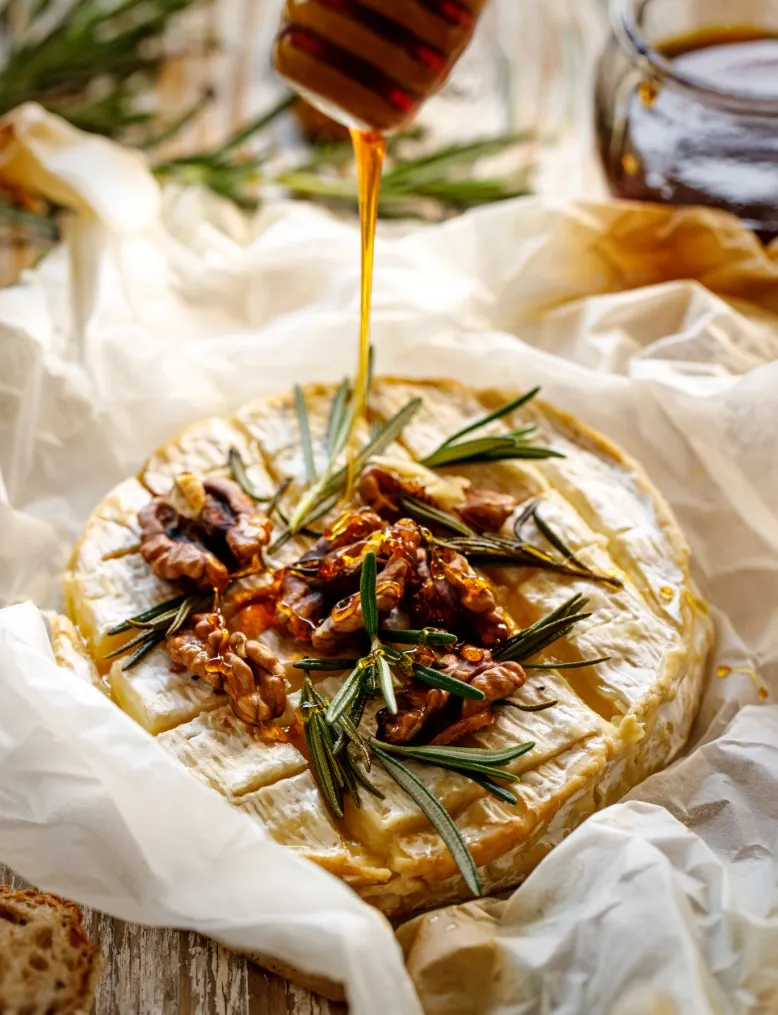
Being French, there’s literally always a Camembert in my fridge. It’s the most iconic cheese here, and I’ve yet to meet anyone who doesn’t like it. I have mine firm and young. My husband likes his with a bit more pizzazz, running towards oozy and smelly. One thing we agree on, though: a baked Camembert, hot from the oven with the inside gone completely runny and a crisp baguette to dunk, is hard to beat!
And if you’re short on time but want to impress people, this is the one. Baked Camembert is one of the easiest things you can pull off in a kitchen, and one of the most satisfying to put down in the middle of a table.
Table of Contents
Where baked Camembert comes from
Camembert has just the right balance of fat and moisture for the oven. The rind holds everything together whilst the inside relaxes into a smooth, oozing pool. The cheese basically brings its own container, but if you feel more fancy, you can bake it in a proper Camembert baking dish!
In Normandy, baking Camembert at home has been normal for years. If there’s good cheese and an oven, someone will eventually feel like oozing cheese. And now a warm wheel of it turns up on apéro tables and relaxed dinner spreads far beyond France.
Ingredients
- Camembert – Obviously. So buy a proper one, ideally a Camembert de Normandie made with raw milk. Check the box is oven-safe (stapled wood, not glued or card) if you want to bake it in there.
- Thyme and rosemary – Fresh, pressed into the scored top. They perfume the cheese as it melts. Rosemary’s strong, so go easy on it.
- Honey – A drizzle, for sweetness against the savoury, salty cheese. Runny honey, so it spreads.
- Walnuts – A handful, for crunch against all that softness. Toast them first if you have a minute, they will be more fragrant.
- Black pepper – A good grind. That’s really all the seasoning it needs, since the cheese is already salty.
How to make baked Camembert
1. Prep and score
Heat the oven to 190°C (170°C fan). Take off any plastic wrapping, and keep the cheese in its wooden box only if it’s oven-safe. You need the stapled wooden one to be able to go into the oven, not glued or cardboard. If in doubt, pop it in a small ovenproof dish or a ceramic Camembert dish instead. Then score a shallow criss-cross grid into the top rind with a sharp knife, cutting through the rind but not lifting it off. Those cuts are what let the flavours sink in and give the steam somewhere to go.
2. Top it
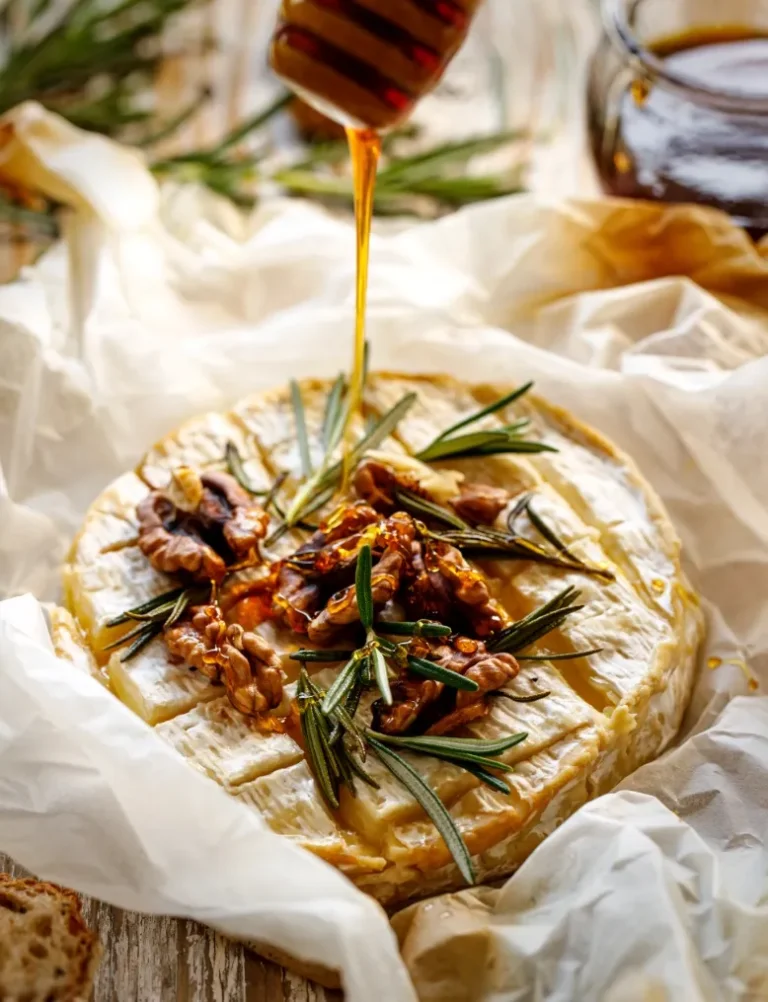
Press small sprigs of thyme and rosemary into the cuts, so they flavour the cheese from within rather than just sitting on top. Scatter over the walnuts, drizzle the honey across the surface, and add a good grind of pepper. Keep it restrained, though, Camembert has a strong flavour and a proper aroma of its own, so the extras should sit alongside it, not fight it. This is not the moment to empty the fridge onto a cheese.
3. Bake and serve fast
Bake in the centre of the oven for 15 to 20 minutes, until the middle’s molten and wobbling but the rind’s still intact and holding it all in. Give it a gentle prod: if the centre gives easily under the rind, it’s there. Then get it to the table immediately, because baked Camembert waits for no one! It starts firming up again the moment it leaves the oven, so this is a dish where diving straight is encouraged.

Tools for this recipe
Check out my favorite kitchen essentials and cookware!
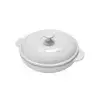
- Use a ceramic Camembert dish to bake the cheese without the mess.
- I use my ceramic Le Creuset honey dipper for this recipe.
- I use my DeBuyer piping bag and nozzles for perfect shapes
Tips for success
- Check the box is oven-safe first: stapled wooden boxes are fine. Glued ones or cardboard ones aren’t. If in any doubt, use a Camembert baking dish. Nobody wants glue fumes in their cheese.
- Buy a good ripe Camembert: a cheap, underripe one won’t melt to that lovely runny center. Pick a ripe Camembert de Normandie for the best ooze.
- Don’t overcomplicate the toppings: the cheese is the star and it’s got a big flavour. A couple of herbs, a bit of honey, some nuts. Piling on too much just muddies it.
- Watch it, don’t walk away: fifteen to twenty minutes, but ovens vary. You want molten inside with the rind still intact. Too long and the rind splits and it all leaks out.
- Have the bread ready before it comes out: this is not a dish that waits while you slice a baguette. Get everything ready before the cheese comes out of the oven.
How to store it
- Baked Camembert is a same-day dish. It’s best eaten the moment it’s molten, and it firms up as it cools, so it doesn’t keep or reheat into anything like its former self. Make it to eat, not to save.
- That said, if you do end up with leftovers, don’t bin them! Cold set baked Camembert is delicious stirred through hot mashed potato, spread on toast under the grill, or melted into a sauce for pasta. It won’t be a gooey wheel again, but the flavour’s all still there. Keep it in a glass container in the fridge and use it within a couple of days.
More cheese recipes to try
Variations
- Garlic: Press a sliced clove into the scored top before baking for a gentle savoury hit.
- A splash of white wine or Calvados: Pour a little into the cuts before baking for extra depth. Calvados is the Norman move, and it suits the cheese down to the ground.
- Swap the nuts: almonds or hazelnuts work just as well as walnuts. Toast whichever you use for more flavour.
- Savoury, no honey: You can skip the honey and go all-savoury with garlic, thyme and a crack of pepper. Just as good, just less sweet.
- Cranberry or fig for the festive version: a spoonful of cranberry sauce or a bit of fig jam on top makes it a proper Christmas centrepiece.
FAQ
What temperature do you bake Camembert at?
190°C (170°C fan) for 15 to 20 minutes. You want the inside molten and runny but the rind still intact and holding it together. Give it a gentle prod near the end, and if the centre gives easily under the rind, it’s ready.
Can you bake Camembert in the box?
Yes, if the box is oven-safe: the stapled wooden kind, with any plastic wrapping removed. Glued boxes or cardboard ones aren’t safe, so use a small ovenproof dish or a ceramic Camembert dish instead. When in doubt, use a Camembert baking dish.
Can I make baked Camembert ahead of time?
Not really. It’s best eaten the moment it comes out, while it’s runny, and it firms up as it cools. You can prep it, scored and topped, an hour ahead and keep it in the fridge, then bake just before serving. But bake it fresh.
What do you eat with baked Camembert?
Crusty bread for dunking above all, plus apple or pear slices, cornichons, or pickled walnuts to cut the richness. A simple green salad works if you’re serving it as a starter. Cider or a dry white to drink.
Can you use Brie instead of Camembert?
Yes, Brie bakes much the same way, though it’s milder and less pungent. Buy a small whole Brie or a wedge in a Brie baking dish. Camembert has the stronger flavour and comes in that handy bakeable box, which is why it’s the usual choice.


 Prep Time 10 minutes
  Cook Time 20 minutes
  Total Time 30 minutes
  Servings 4
Description
Ingredients
Equipment
Instructions
1. Prepare the oven and cheese
- Heat the oven to 190°C (170°C fan). Remove any plastic wrapping from the Camembert. Keep it in its wooden box if it's oven-safe (stapled, not glued or card); otherwise put it in a small ovenproof dish.
2. Score and flavour the cheese
- With a sharp knife, cut a shallow criss-cross grid into the top rind, cutting through but not removing it. Press small sprigs of thyme and rosemary into the cuts.
3. Add nuts, honey and pepper
- Scatter the walnuts over the top. Drizzle the honey evenly across the surface and add a good grind of black pepper.
4. Bake the Camembert
- Place on a baking tray and bake in the centre of the oven for 15 to 20 minutes, until molten and runny inside but with the rind intact.
5. Serve immediately
- Rest for a minute, then serve warm with crusty bread, crackers, or slices of apple or pear for dipping. Don't let it sit, it firms up as it cools.
Notes
- Check the box is oven-safe first. Stapled wooden boxes are fine; glued or cardboard ones aren’t. Use a dish if unsure.
- A ripe Camembert melts best. An underripe one won’t give you that runny centre.
- Swap the nuts: almonds or hazelnuts work as well as walnuts. Toast them for more flavour.
- Herbs are flexible. Thyme and rosemary can be swapped or combined with what you’ve got.
- Leftovers are good stirred into mashed potato or spread on toast the next day.
Share your feedback and spread the love!
If you try this recipe, I’d love to hear how it turns out! Leave a ★★★★★ rating and your thoughts in the comments, it helps fellow French foodies discover this recipe too. Snap a photo and tag @obviously.french on Instagram. Come talk about it in our Facebook group. And don’t forget to save this recipe to Pinterest so you’ll always have it handy for your next French-inspired meal!