 October 8, 2025
Disclosure: This post may contain affiliate links which provide us a small commission when used for purchase. Please read my disclosure policy for more information. I am grateful for your support!
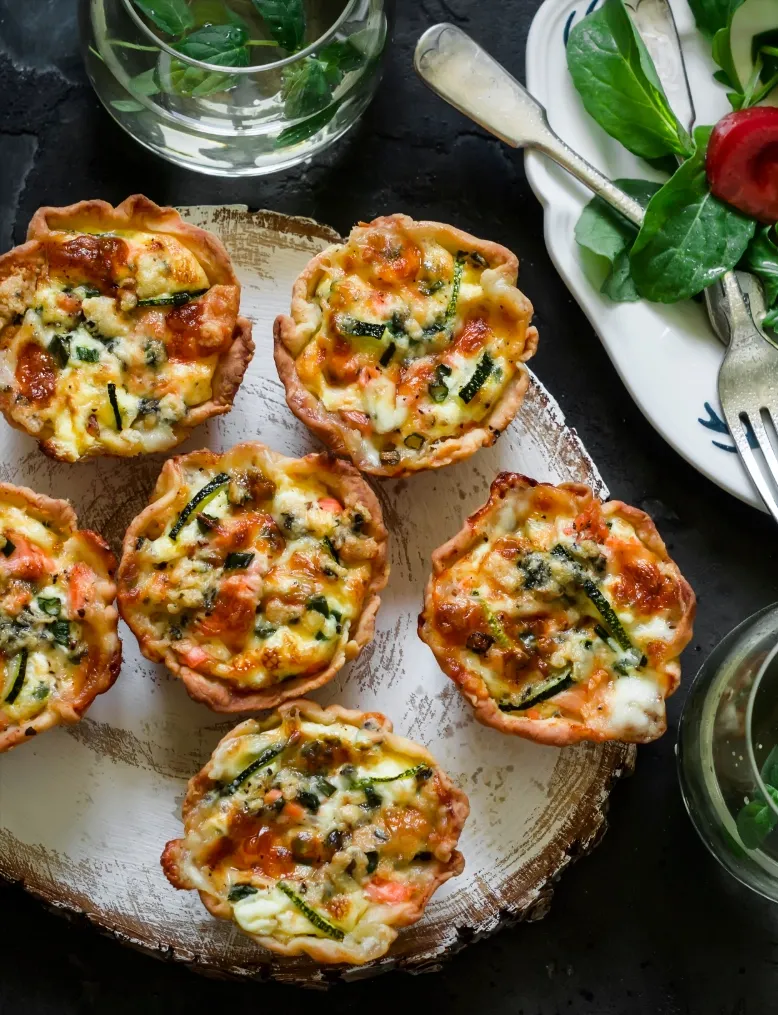
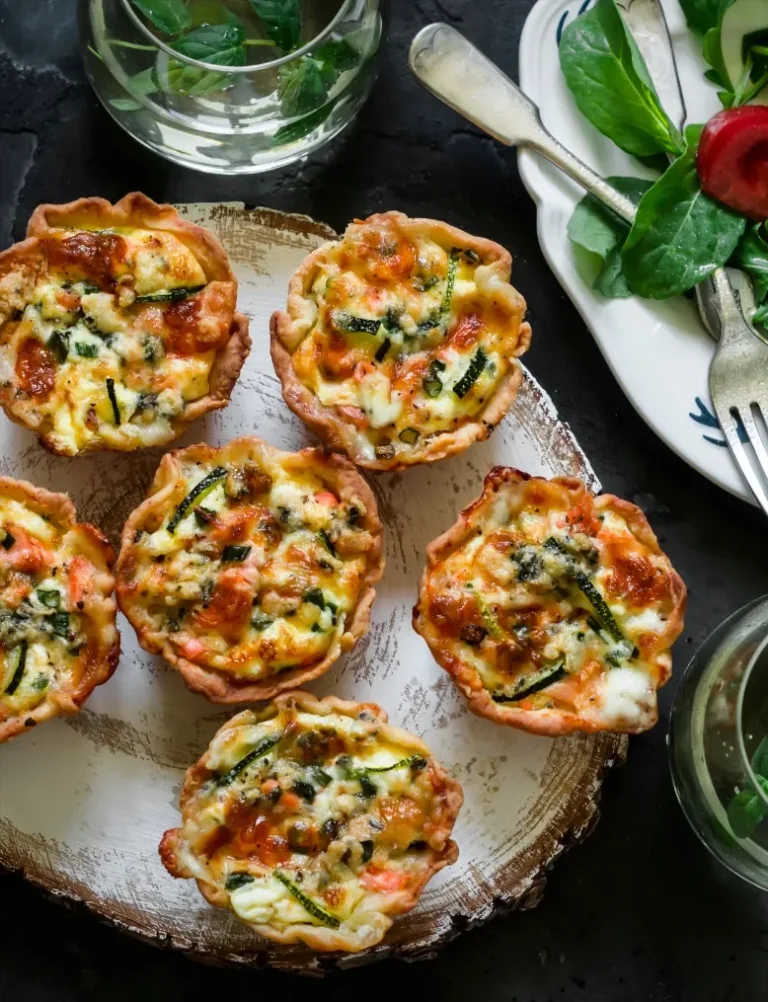
I make these mini quiches whenever we go on a picnic, or when people come over in summer. You don’t need cutlery to eat them, which makes them ideal for both.
And there’s a proper practical reason to go small beyond that. With mini quiches you get far more crisp pastry per bite than you do with one big tart, and in a good shortcrust quiche that’s always a bonus! They’re practical, they look elegant on a board, and they’re exactly right for apéro.
Table of Contents
Where mini quiches comes from
Quiche starts in Lorraine, in eastern France, and it’s got a properly documented history, the first written trace dates to 1 March 1586, at the court of the Duke of Lorraine, though the dish was known before that under Duke Charles III, who was rather fond of it. Originally it was made with leftover bread dough from the communal oven, topped with a mix of eggs and crème fraîche called a migaine. It was rustic farm food, eaten communally after the long hours of breadmaking. The lardons came later, in the 19th century.
That’s the short version. If you want the full story, including the great cheese debate and why my cheesy versions would horrify a Lorraine purist, I’ve gone into it more seriously on the quiche Lorraine recipe page. These salmon and courgette ones are a lighter, summery riff on that classic rather than the real Lorraine one.
Ingredients
- Shortcrust pastry – The base is worth making yourself if you can. I use my homemade shortcrust pastry.
- Courgette – Grated, then salted and squeezed dry. It brings freshness and a touch of sweetness against the rich custard.
- Smoked salmon – Salty, gently smoky richness. Offcuts work perfectly, since you’re flaking it anyway.
- Eggs, crème fraîche and milk – This make up the custard. Crème fraîche makes it rich and silky; the milk keeps it from being too heavy.
- Basil – Torn through for a fresh, summery note. Dill works too, and is the more classic pairing with salmon if you prefer.
- Salt and black pepper – Season the custard well, but go easy on salt, since the salmon brings plenty.
How to make mini quiches salmon courgettes
1. Make and chill the pastry
Make your shortcrust following the pâte brisée method, keeping the butter cold and your hands quick. Then chill it for at least 20 minutes before rolling. This relaxes the gluten so the pastry holds its shape in the moulds rather than slumping down the sides as it bakes. Cold dough also rolls and lines far more neatly.
2. Line the tart rings
Roll the chilled dough to about 3mm and cut circles slightly larger than your tart mould or tart rings, so there’s enough to press up the sides. Ease each one in gently without stretching it (stretched pastry shrinks back when baked), and trim the excess. A fork-prick in each base helps stop them puffing.
3. Drain the courgette, mix the custard
Squeeze the salted courgette dry in a tea towel, really wringing it out, then flake the salmon and tear the basil. Whisk the eggs, crème fraîche and milk into a smooth custard and season well. Getting the courgette properly dry here is the single thing that decides whether your quiches are creamy or watery, so don’t be gentle with it.
4. Fill and bake
Divide the courgette, salmon and basil between the cases, then pour the custard over to about three-quarters full (any more and it overflows as it sets and puffs). Bake at 180°C until the filling is just set with a hint of wobble and the pastry’s golden. Let them cool a few minutes before lifting out, since they firm up as they cool and lift more cleanly.
Tools for this recipe
Check out my favorite kitchen essentials and cookware!
- Use a mini tartlets mould for the simplest option.
- I use 8cm tart rings which cost a little more up front but are stainless steel with no non-stick coating to wear out, so they last forever and give a lovely clean edge. They’re brilliant for other things too, like these lemon tartlets.
- Pair the rings with a baking mat for even heat and clean release underneath.
- Use a rolling pin to get the pastry to an even 3mm.
Tips for success
- Squeeze the courgette properly dry: this step is important, salt it, wait 20 minutes, then wring it out hard in a tea towel. Wet courgette means watery custard and soggy pastry, and there’s no fixing it once it’s baked.
- Keep the pastry cold: cold butter and minimal handling give you a crumbly, sandy shortcrust. Overworked or warm dough turns tough and shrinks in the tart rings. Chill it before rolling and don’t rush it.
- Don’t overfill the cases: three-quarters full is right. The custard puffs as it sets, and a brimming case overflows and welds itself to the tart rings.
- Season the custard well: Be generous with pepper, easier on salt, since the salmon’s already salty.
- Bake until just set: a slight wobble in the centre when you take them out is what you want, it finishes setting as it cools. Overbaked custard goes rubbery and can split.
How to store it
- These are one of the best things to make ahead, which is half why I love them for entertaining. Bake them the day before, keep them in the fridge, and warm them through in a low oven for 8 to 10 minutes before serving. They come back beautifully, pastry crisp again and custard soft.
- They also freeze really well once baked and cooled, so it’s always worth making a double batch. Freeze them in a single layer, then bag them up, and reheat from frozen at 180°C for 12 to 15 minutes. Handy to have a stash for when people drop by.
- They’re good at room temperature too, which is exactly what makes them work for picnics and buffets, they hold for a few hours out of the fridge without any trouble.
More savory tart recipes to try
Variations
- Swap basil for dill: dill is the classic French herb with smoked salmon, so it’s an easy, very traditional switch.
- Add cheese: a little grated Gruyère or Comté in the custard makes them richer.
- Make them vegetarian: drop the salmon and double the courgette with some vegetarian lardons.
- Other summer veg: roasted peppers, cherry tomatoes (halved and deseeded so they don’t weep), or asparagus tips all work in place of, or alongside, the courgette.
FAQ
Can I make mini quiches ahead of time?
Yes, they’re ideal for it. Bake them a day ahead, keep in the fridge, and reheat in a low oven for 8 to 10 minutes before serving. They also freeze well once baked, and reheat from frozen at 180°C for 12 to 15 minutes.
How do I stop mini quiches going soggy?
Get the water out of the courgette first: salt it, leave it 20 minutes, and squeeze it hard in a tea towel before it goes in. Wet courgette is the main cause of a soggy custard and base. Chilling and not overfilling the pastry helps too.
Can I use shop-bought pastry?
You can, and it’s a fine shortcut. But homemade shortcrust makes a real difference in mini quiches, where the pastry is such a big part of each bite. If you’ve got time, make your own.
Do you cook the salmon before adding it to the quiches?
No. The smoked salmon goes in raw and cooks gently in the custard as the quiches bake. It stays tender and won’t dry out, and the flavour spreads through the filling.



 Prep Time 20 minutes
  Cook Time 30 minutes
  Total Time 50 minutes
  Servings 8 Mini Quiches
Description
Ingredients
For the shortcrust pastry
- 250 gr plain flour
- 125 gr unsalted butter cold, cut into small cubes
- 1 pinch salt
- 50 ml water add gradually
- 1 egg yolk =20 g
For the filling
- 1 courgette coarsely grated
- 100 gr smoked salmon
- 3 egg
- 100 ml whole milk
- 200 ml crème fraîche
- salt and black pepper
- 1 handful basil
Equipment

Instructions
1. Make the pâte brisée / shortcrust pastry
- In a bowl or food processor, rub or pulse the flour, salt and cold cubed butter until it looks like fine breadcrumbs. Add the egg yolk and a little of the water, mixing gently until it comes together, adding more water a teaspoon at a time only if needed. Wrap and chill for at least 20 minutes.
2. Line the tart rings
- Roll the chilled dough out to about 3mm on a floured surface. Cut circles slightly larger than your moulds or rings. Ease each into the mould without stretching, press in gently, and trim the excess. Prick the bases with a fork.
3. Prepare the filling
- Salt the grated courgette, leave 20 minutes, then squeeze dry in a clean tea towel. Flake the smoked salmon and tear the basil.
4. Mix the custard
- Whisk the eggs, crème fraîche and milk until smooth. Season with salt and plenty of black pepper (go easy on the salt).
5. Assemble
- Divide the courgette, salmon and basil between the cases. Pour the custard over, filling each about three-quarters full.
6. Bake
- Bake at 180°C (160°C fan) for 25 to 30 minutes, until the filling is just set and the pastry is golden.
7. Cool and serve
- Let them cool a few minutes before lifting out. Serve warm or at room temperature.
Notes
- Squeeze the courgette dry. Salt it, wait 20 minutes, wring it out. This keeps the custard creamy and the pastry crisp.
- Rest the pastry before rolling for crisp, tender cases that hold their shape.
- Don’t overwork the dough, or it turns tough.
- Make ahead: bake a day before and reheat in a low oven for 8 to 10 minutes. Freezes well once baked.
Share your feedback and spread the love!
If you try this recipe, I’d love to hear how it turns out! Leave a ★★★★★ rating and your thoughts in the comments, it helps fellow French foodies discover this recipe too. Snap a photo and tag @obviously.french on Instagram. Come talk about it in our Facebook group. And don’t forget to save this recipe to Pinterest so you’ll always have it handy for your next French-inspired meal!