 February 9, 2026
Disclosure: This post may contain affiliate links which provide us a small commission when used for purchase. Please read my disclosure policy for more information. I am grateful for your support!
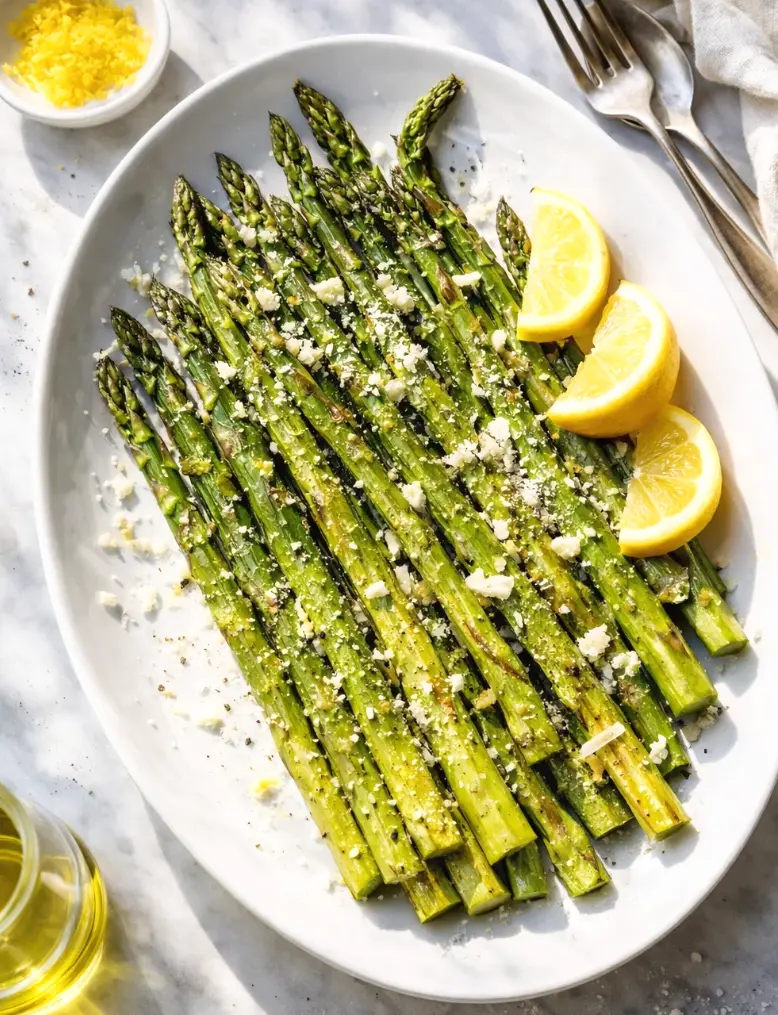
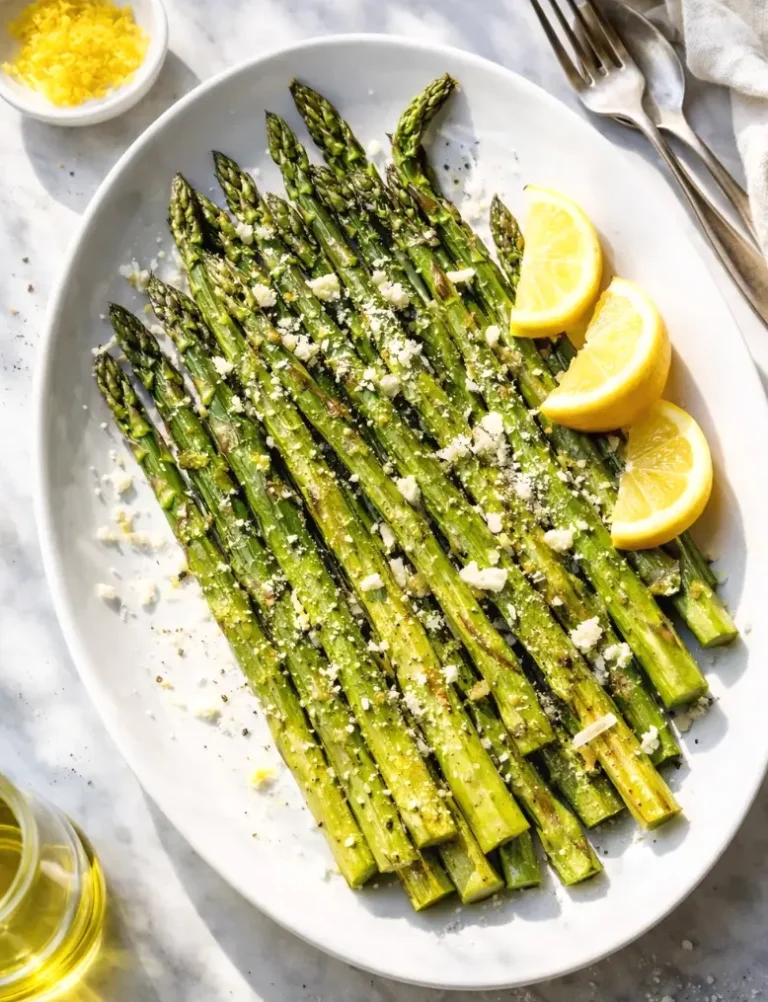
Asparagus season in France is taken seriously. When it arrives, it really arrives, and for about six weeks every market stall, greengrocer and restaurant menu is organised around it. My local market goes from nothing to mountains of the stuff almost overnight, and the moment I see it, I start making this baked asparagus for lunch until it disappears again.
Not because it’s the most impressive thing you can do with asparagus, but because it’s the most honest and tasty. Simplicity brings the best out of this delicate vegetable!
Table of Contents
Where baked asparagus comes from
Asparagus itself has been prized in France for centuries, it was a favourite at Versailles, where Louis XIV had it grown in heated greenhouses so he could eat it almost year-round. But for most of that history, French asparagus meant white asparagus: thick, pale spears grown underground, gently steamed and served with hollandaise or mousseline. That’s the ceremonial version, and it still gets treated with real reverence every spring.
Roasting is the more modern, more everyday approach, and it really belongs to green asparagus. As green varieties became widespread in France over the last few decades, cooks found that high, dry oven heat suited them perfectly: it concentrates their grassier flavour and caramelises the tips in a way steaming never could. This recipe belongs to that simpler, seasonal tradition.
Ingredients
- Green asparagus – Fresh and in season, medium thickness for the best balance of tender inside and crisp tips.
- Garlic – Whole, unpeeled cloves, roasted alongside until sweet and jammy.
- Olive oil (or butter) – To coat and help the spears caramelise. Olive oil is easy and tastes brilliant; butter is the more French choice. But it’s your call.
- Lemon – A squeeze at the end, to lift and brighten the whole dish.
- Salt and pepper – To season. A pinch of flaky salt at the end is lovely, if you have it.
How to make baked asparagus
1. Trim and arrange
Snap the woody ends off the asparagus, then lay the spears on a tray in a single layer, and this matters, not piled up. Crowded asparagus steams in its own moisture and goes limp; spread out, it roasts and caramelises. Toss with olive oil, salt and pepper, and scatter the whole unpeeled garlic cloves among them.
2. Roast hot
Into a properly hot oven until the spears are tender with caramelised, slightly crisp tips and a little wrinkling, about 12 to 15 minutes depending on thickness. If they’re still bright green with no colour, give them a few minutes more. You want colour on them, that’s where the flavour is.
3. Finish and serve
Straight onto a warm plate, a good squeeze of lemon over the top, and a pinch of fleur de sel if you have it. Squeeze the sweet roasted garlic out of its skins to eat alongside, or mash it into the tray juices as a sauce. Serve immediately, since this is at its best straight from the oven.
Tools for this recipe
Check out my favorite kitchen essentials and cookware!
- Use a flat, heavy baking tray that conducts heat evenly, so the asparagus caramelises rather than steams.
- Use a baking mat so nothing sticks and cleanup takes seconds.
- Use a vegetable peeler for the lower third of very thick spears (optional).
Tips for success
- Don’t overcrowd the tray: give the spears room in a single layer. Piled up, they steam and go limp instead of roasting. Use two trays if you need to.
- Roast it properly hot: a hot oven (220°C) is what caramelises the tips and concentrates the flavour. A cool oven just steams them pale.
- Choose medium spears: pencil-thin asparagus overcooks and turns sad; very fat spears take longer. Medium thickness is the sweet spot for tender inside and crisp tips.
- Leave the garlic whole and unpeeled: the skins protect the cloves so they roast sweet and jammy instead of burning. Squeeze them out to serve.
- Serve it straight away: roasted asparagus is at its best hot from the tray. It softens and dulls as it sits, so this isn’t one to make ahead.
How to store it
- Baked asparagus really is a straight-from-the-tray dish, at its best hot, when the tips are crisp and the garlic sweet. It softens as it cools, so I’d make only what you’ll eat.
- That said, leftovers keep covered in a glass container in the fridge for up to 3 days and are genuinely good cold, chopped into a salad, folded through an omelette or a frittata, or on toast with the squeezed-out roasted garlic. I wouldn’t bother reheating it, since it goes limp, cold leftovers are the nicer option. And it doesn’t freeze well; asparagus turns watery and soft on thawing.
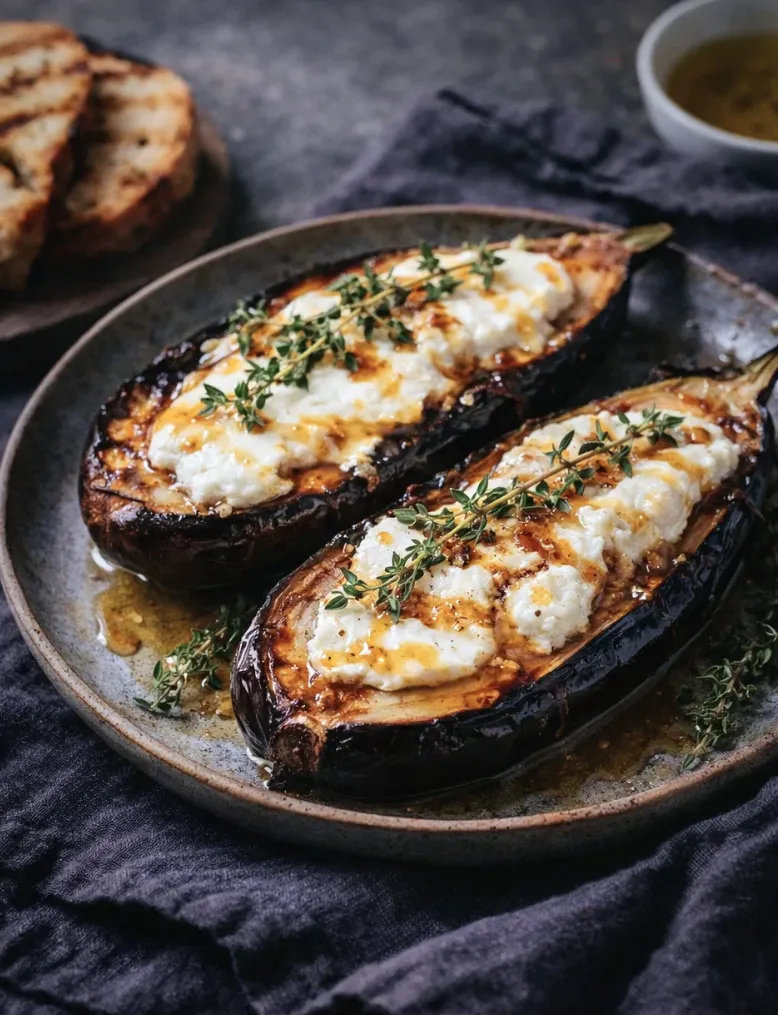
Variations
- Add parmesan (if you don’t mind going a bit Italian): a little grated parmesan in the last couple of minutes, or shaved over after roasting, is lovely.
- Add nuts: a scatter of toasted flaked almonds, pine nuts or hazelnuts over the top, for crunch.
- With a poached or fried egg: an egg on top turns it from a side into a light lunch, the yolk making a sauce with the garlicky oil.
- Balsamic: a drizzle of balsamic reduction at the end, for a sweet-sharp finish.
- Lemon and herbs: add lemon zest, or scatter over fresh herbs (chervil, tarragon, parsley) with the lemon juice.
FAQ
How long do you bake asparagus?
About 12 to 15 minutes at 220°C (200°C fan), depending on thickness. Medium spears take around 12 minutes, fatter ones up to 15. It’s done when the spears are tender with caramelised, slightly crisp tips. If they’re still bright green with no colour, give them a few minutes more.
How do I stop baked asparagus going soggy?
Spread the spears out in a single layer, not piled up, and roast in a properly hot oven. Crowding makes them steam in their own moisture and go limp; space and high heat let them roast and caramelise. Pat them dry before oiling, too.
How do I trim asparagus?
Hold each spear at both ends and bend gently, it snaps naturally where the woody part ends. Discard the woody ends. For very thick spears you can peel the lower third, but for medium ones it isn’t necessary.
When is asparagus in season?
In France roughly April to June. In-season asparagus has tight tips and stems that snap cleanly rather than bend. Out of season it’s usually been shipped a long way and stored a while, so it’s never quite as good. Buy it when the stems snap.


 Prep Time 5 minutes
  Cook Time 15 minutes
  Total Time 20 minutes
  Servings 4 as a side dish
Description
Ingredients
- 500 gr green asparagus fresh green asparagus, medium thickness works best,
- 3 tbsp olive oil or 40g melted butter
- 4 cloves garlic
- 1 lemon
- salt and black pepper
- fleur de sel optional, for finishing
Equipment
Instructions
1. Prepare the asparagus
- Heat the oven to 220°C (200°C fan). Wash and pat the asparagus dry. Hold each spear at both ends and bend until it snaps where the woody part ends; discard the ends. Peel the lower third of very thick spears if you like.
2. Season and arrange
- Lay the asparagus on the tray in a single layer (don't pile them up, or they steam). Drizzle with olive oil (or melted butter), season with salt and pepper, and toss to coat. Scatter the whole garlic cloves among them.
3. Roast
- Bake for 12 to 15 minutes, depending on thickness, until tender with caramelised tips and a little wrinkling. If still bright green with no colour, give them 2 to 3 minutes more.
4. Finish and serve
- Transfer to a warm plate. Squeeze over fresh lemon juice and add a pinch of fleur de sel if using. Squeeze the roasted garlic from its skins to eat alongside. Serve immediately.
Notes
- Don’t overcrowd the tray, or the asparagus steams instead of roasting. Use two trays if needed.
- Medium spears are best; pencil-thin overcook, very fat ones take longer.
- Leave the garlic whole and unpeeled so it roasts sweet and jammy, not burnt.
- Butter or olive oil: butter is more French, olive oil easier. Both work.
- Serve straight away; it doesn’t sit well.
Share your feedback and spread the love!
If you try this recipe, I’d love to hear how it turns out! Leave a ★★★★★ rating and your thoughts in the comments, it helps fellow French foodies discover this recipe too. Snap a photo and tag @obviously.french on Instagram. Come talk about it in our Facebook group. And don’t forget to save this recipe to Pinterest so you’ll always have it handy for your next French-inspired meal!