French Baking Tools Worth Having in Your Kitchen

French baking tools have a way of lasting. Walk into any French kitchen and you’ll often find a madeleine tin that’s older than the person using it, a beech rolling pin worn smooth by years of pastry, and a box of tart rings that has been handed down along with the recipes. Most of them come from a small group of French makers such as de Buyer, Matfer and Gobel, who have been supplying pâtisseries and home kitchens for generations.
You don’t need a professional kitchen to use them, though! This guide covers the French baking supplies that make the biggest difference at home: what each one does, why it’s worth having, and which recipes it’s made for. If you’re only buying a few, start with a tart ring, a good rolling pin, a dough scraper and a heat-resistant spatula, and add the rest as you bake more.
Table of Contents
Where to start: the four essentials
If you’re building your French baking equipment from scratch, these four will cover most recipes:
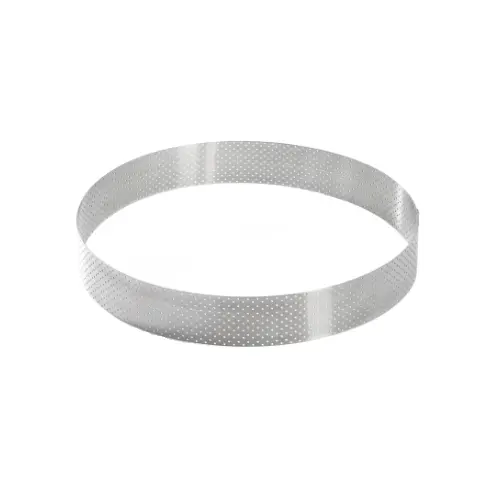

- A tart ring, for crisp, straight-sided tarts the way French pâtisseries make them.
- A long beech rolling pin, for rolling pastry evenly without overworking it.
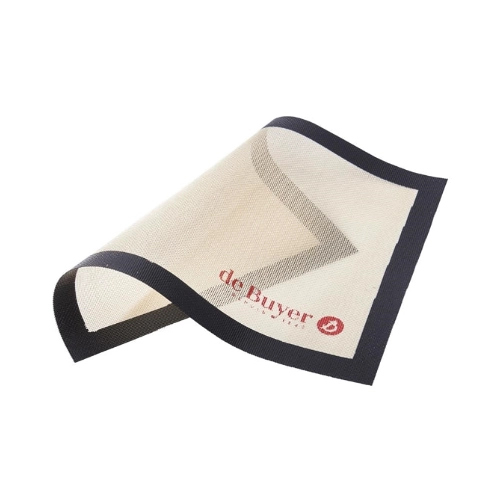
- A perforated baking mat, which goes under your tart ring and gives you crisp bases on tarts, choux and biscuits, batch after batch.
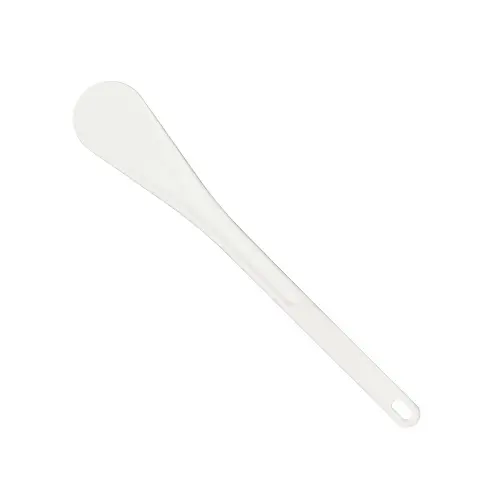
- A heat-resistant spatula, for scraping bowls clean and stirring crème pâtissière on the hob.
Everything else in this list makes French baking easier, more precise or simply more fun!
What makes French baking tools different?
Most French pastry tools are designed for professional kitchens first, which is why they’re built so simply and so solidly. A few things to look for:
- Stainless steel for rings, cutters and nozzles, because it doesn’t rust, stays straight and can go in the dishwasher.
- Perforated tart rings and baking mats, which let steam escape so pastry bakes crisp and evenly, without a soggy base.
- Beech wood for rolling pins, as it’s smooth, light enough to control and doesn’t stick to the dough.
- Exoglass, a composite material developed by Matfer, which is heat-resistant, non-porous and doesn’t absorb smells or stains.
They cost more than supermarket versions, but they’re made to be used every week for years.
French baking pans, moulds and tart rings
Gobel non-stick madeleine pan
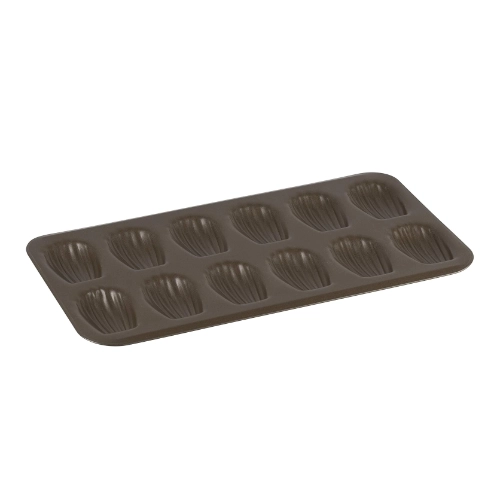
Madeleines need a shell-shaped tin, and the Gobel non-stick madeleine pan makes 12 at a time on a tray of about 40 x 20 cm (15.6 x 7.9 inches). Gobel is a French bakeware maker, and its metal tins conduct heat quickly and evenly, which is what helps the batter set into that golden, ridged shell while the middle rises into the famous hump.
The non-stick coating means the madeleines slip out cleanly, but it’s still worth brushing each shell with a little melted butter and dusting it with flour, as French bakers always do. My madeleines recipe is a good place to start using this tool.
Gobel fluted brioche mould
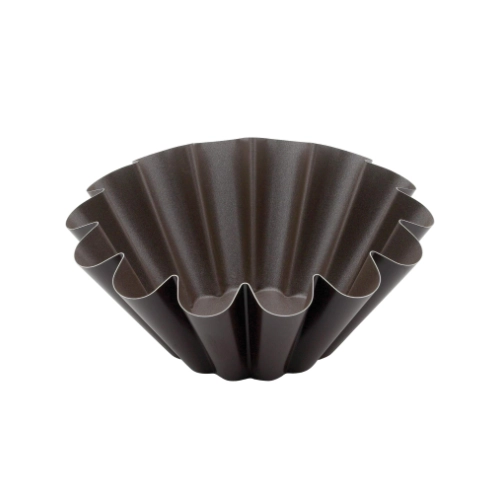
The classic “brioche à tête” is baked in a round, fluted tin with flared sides, and the Gobel fluted brioche mould gives it that unmistakable ridged shape. The flutes aren’t only decorative: they give the dough more surface area, so the crust browns more evenly. It’s made for my brioche!
de Buyer perforated tart ring
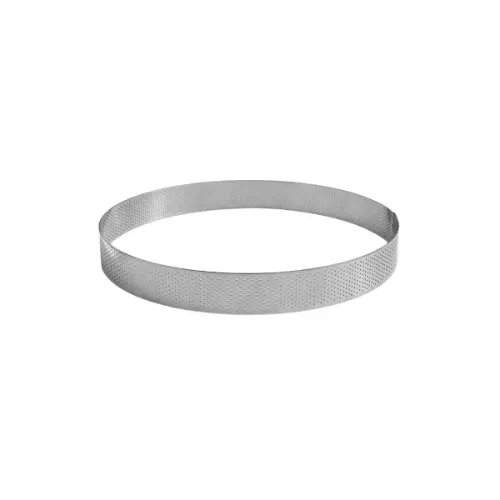
This is the tool that changes your tarts the most. A tart ring has no base: you place it on a baking mat, line it with pastry and bake. The de Buyer perforated tart ring is made of stainless steel and covered in tiny holes, so heat reaches the sides of the pastry and steam escapes. The result is a crisp, evenly golden shell with straight, sharp edges, the way you’d see them in a French pâtisserie window.
A 24cm ring is a good everyday size for 6 to 8 people, and it’s perfect for a tarte au citron, a tomato tart or a blueberry tart.
Gobel perforated tartlet rings
The Gobel perforated tartlet rings work exactly like the big ring, but at individual size. They’re lovely for little lemon tartlets, mini quiches or anything you want to serve one per person at a dinner party. Since they’re stainless steel, they won’t rust and they stack neatly in a drawer.
Tools for rolling, cutting and shaping
de Buyer beech rolling pin
French pastry chefs use long, straight rolling pins without handles, and the de Buyer rolling pin is a classic example: about 50 cm (20 inches) of smooth beech wood. With no handles, your hands sit directly on the pin, so you can feel the thickness of the dough and press evenly across the whole width. They’re nice and heavy too so you don’t need much force to roll.
That’s exactly what you want for French pastry doughs such as pâte brisée and pâte sablée, where overworking the dough is the main thing to avoid. Wash it by hand with a damp cloth, let it dry completely, and it will last for years.
Matfer dough scraper
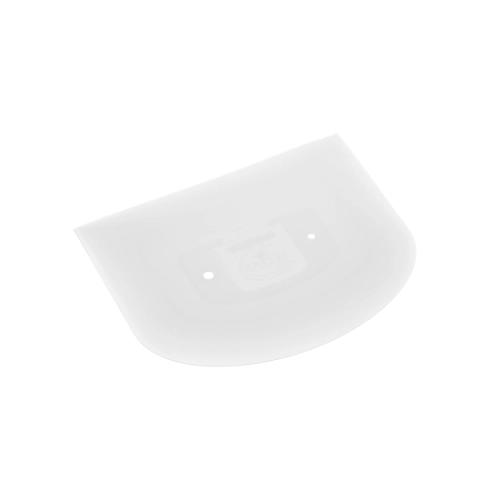
The dough scraper, or “corne” in French, is probably the one item you didn’t know you need. The Matfer dough scraper is made in France from Exoglass, with a thin, tapered edge that slides under sticky dough without tearing it.
Use it to divide brioche dough into equal pieces, lift pastry off the worktop, scrape every last bit of batter out of a bowl, or clean flour off the counter in seconds. Once you have one, you’ll wonder how you ever baked without it.
de Buyer round fluted cutters
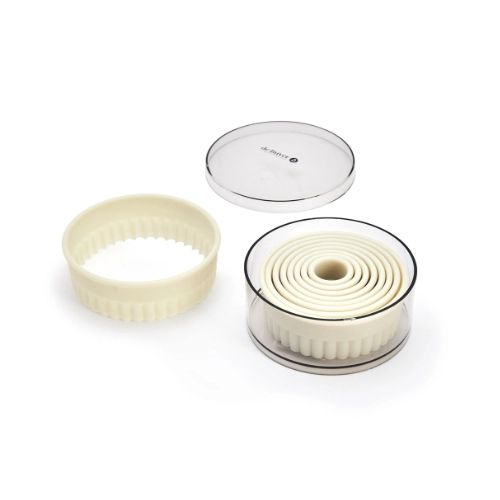
The de Buyer round fluted cutters come as a box of 9 food-grade polyamide cutters from 3 to 11 cm, so you have the right size for everything from tiny petits fours to tartlet bases. The fluted edge gives biscuits a pretty, scalloped finish, perfect for butterbredele, savoury biscuits or the pastry lids of little pies. They’re dishwasher-safe and store neatly in their box.
Mixing and measuring tools

Joseph Joseph mixing bowls
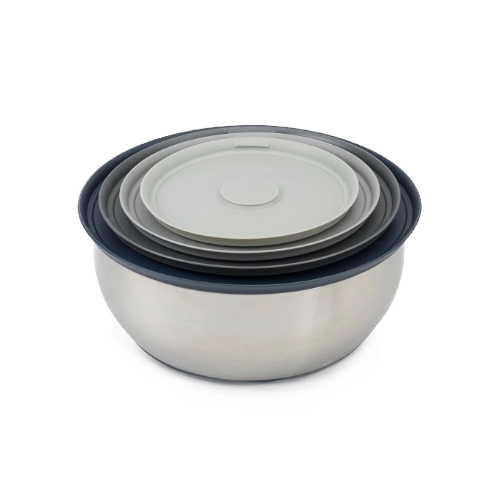
French baking is all about getting your ingredients weighed and ready before you start (the famous “mise en place”), so a good set of bowls makes a real difference. The Joseph Joseph mixing bowls nest inside each other, so a whole set takes up the space of one bowl in the cupboard. They’re not French, but they’re very practical for a busy baking day.
Pyrex glass measuring jugs
The Pyrex set of 3 glass measuring jugs gives you 0.25, 0.5 and 1 litre sizes, so you’re covered whether you’re measuring a splash of lemon juice for a lemon tartlets or a a litre of milk for a oeufs au lait. They’re made of borosilicate glass, which copes with big changes in temperature, and they can go in the microwave, fridge, freezer and dishwasher.

Le Creuset stoneware mixing jug
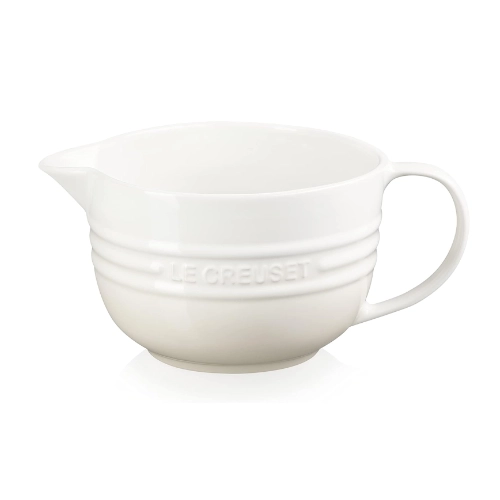
For batters, the Le Creuset stoneware mixing jug is a lovely thing to have. It holds 2 litres, and its tall sides keep splashes under control while you whisk. The pouring spout sends batter for galettes bretonnes or a clafoutis straight into the pan without dripping down the side. It looks pretty sitting out on the counter too.
Matfer whisk
If you’ve ever had a whisk go floppy halfway through a recipe, you’ll appreciate the Matfer whisk. Its stainless steel wires have shape memory, so they flex and spring back, and they’re welded into a steel core rather than just crimped in place. The Exoglass handle is waterproof and heat-resistant, so it’s basically baking proof!
It comes in several sizes, and it’s the one to reach for when you’re making a chocolate mousse, religieuses or anything that needs proper aeration.
Matfer heat-resistant spatula
The Matfer heat-resistant spatula is also made from Exoglass, which is heat-resistant up to about 220°C (430°F), so you can stir crème pâtissière, caramel or melted chocolate on the hob without it softening or warping. The flexible edge scrapes bowls clean, and it’s firm enough for folding egg whites into a mousse without knocking the air out.
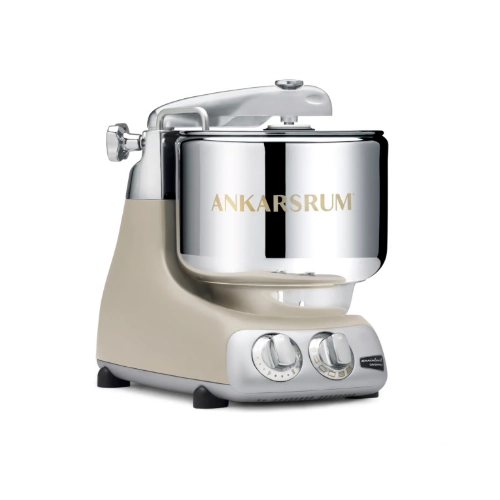
Ankarsrum Assistent Original stand mixer
The Ankarsrum Assistent Original is not a French tool, but it’s a serious machine French bakers use. Made in Sweden, it has a 1500W motor and a 7 litre stainless steel bowl that can handle up to about 5 kg of dough, which makes light work of kneading brioche or beating eggwhites for meringues.
It works quite differently from most stand mixers, as the bowl turns while the dough roller and knife stay still, and it comes with a whole set of attachments, including balloon whisks and cookie beaters. It’s a big investment, so it’s best for people who bake bread or brioche weekly.
Piping and finishing tools


de Buyer piping bag
A reusable piping bag is far nicer to work with than a flimsy disposable one in my opinion. The de Buyer piping bag is 40 cm long, which is a comfortable size for piping choux pastry, filling mimosa eggs or shaping pommes dauphines. Rinse it in warm, soapy water after use and hang it to dry.
de Buyer box of 35 nozzles
If you’d like to try everything from éclairs to rosettes, the de Buyer nozzle kit has you covered. The stainless steel nozzles include plain, fluted, rose and petit four shapes, plus adaptors so you can swap nozzles without emptying the bag. It all comes in one box, so nothing gets lost at the back of the drawer.
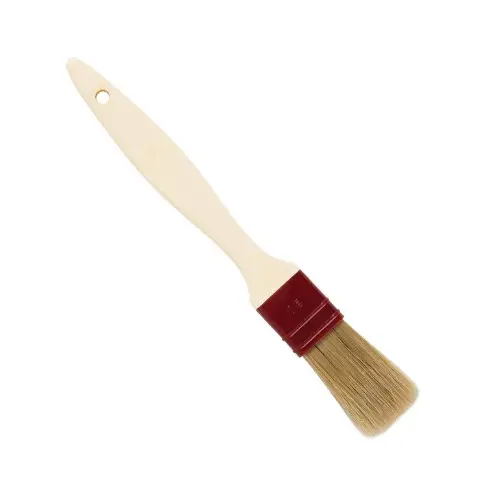
Matfer pastry brush
A good pastry brush holds just the right amount of egg wash and spreads it in a thin, even layer, which is what gives croissants, galette des rois and brioche their shiny, golden finish. The Matfer pastry brush is soft enough not to tear delicate pastry, and it’s just as useful for glazing fruit tarts or buttering a madeleine tin.
Baking and cooling
de Buyer perforated baking mat
The de Buyer baking mat is made of silicone-coated fibreglass mesh, so air circulates under your bake and moisture can escape. That’s what gives you crisp bases on tarts, choux pastry and biscuits. It’s non-stick, heat-resistant up to 280°C (536°F), and you can use it hundreds of times instead of throwing away a sheet of baking paper after every batch.
It’s the perfect partner for a perforated tart ring. Put the ring straight on the mat, line it with pastry and bake!
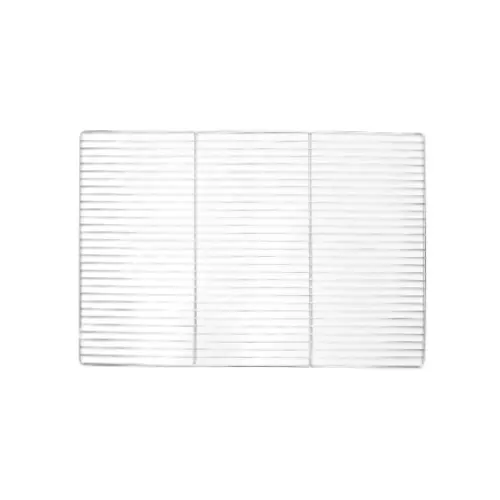
de Buyer cooling rack
Cooling is part of baking, and a rack stops steam from getting trapped under your cake or tart and turning the base soft. The de Buyer cooling rack is stainless steel, sturdy enough not to bend under a heavy loaf or a tray of madeleines, and dishwasher-safe.

A little bit of France in your inbox
Once a month, I’ll write to you with recipes, French cheeses, a few tips and little stories from the neighbourhood. And you’ll get my Mother Sauces e-book free, straight away!

Are French baking tools worth the investment?
The common thread through all of these French baking tools is that they’re made to last. A perforated baking mat costs more than a roll of baking paper, but over hundreds of trays of massepain, profiteroles and galette des rois, the cost per bake becomes tiny, and you’re not throwing something away every time you turn on the oven.
There’s also the question of consistency. Thin tins warp, flimsy whisks bend and cheap spatulas melt. Solid tools remove a lot of that guesswork, so if something goes wrong, you know it’s the recipe or the technique rather than the tin.
And you don’t need to buy everything at once. Start with the essentials, then add a madeleine pan or a brioche mould when you find yourself making those recipes again and again.
FAQ
What baking tools do French bakers use?
French bakers rely on a fairly short list of tools: tart rings, a long handleless rolling pin, a dough scraper, heat-resistant spatulas, a solid whisk, piping bags with stainless steel nozzles, and perforated baking mats. Many of them come from French makers such as de Buyer, Matfer and Gobel, which supply both professional pâtisseries and home kitchens.
What is the difference between a tart ring and a tart tin?
A tart tin has a base, often removable, while a tart ring is just a band of metal with no bottom. You place the ring on a baking mat, line it with pastry and bake. Because heat reaches the pastry directly, a tart ring gives you a crisper base and straighter, sharper sides, which is why French pâtisseries use them.
Why are some tart rings perforated?
The tiny holes in a perforated tart ring let heat reach the sides of the pastry and let steam escape while it bakes. That gives you an evenly golden, crisp crust all the way round, with less shrinking and no soggy edges. They work best on a perforated baking mat, which lets moisture escape from the base too.
What is a “corne” in French baking?
A corne is a dough scraper, a small, flexible tool with one curved edge and one straight edge. French bakers use it to divide dough, lift pastry off the worktop, fold ingredients, scrape bowls clean and tidy the counter. It’s one of the cheapest French pastry tools, and one of the most useful.
Do I need a stand mixer for French baking?
No. Most French pastry, from pâte sucrée to madeleines, is made by hand with a bowl, a whisk and a spatula. A stand mixer becomes really useful for enriched doughs such as brioche, which need a long, intense knead, and for big batches of choux pastry or meringue. If you only bake now and then, start with good hand tools first.
Where can I buy French baking supplies in the US and UK?
De Buyer, Matfer, Gobel, Pyrex and Le Creuset are all available online in the US and the UK, through big marketplaces and specialist kitchen shops. Prices vary quite a lot between sellers and with sales, so it’s worth comparing before you buy, especially for bigger pieces like nozzle sets or a stand mixer.
Over to you
The right tools won’t bake for you, but they make the whole process calmer, more enjoyable and the results more reliable, so your tarts and madeleines come out a little closer to what you’d queue for at a French pâtisserie on a Sunday morning!
Which French baking tool do you reach for most, or which one is next on your list? Tell me in the comments, I’d love to know!
This post may contain affiliate links. If you buy through them I earn a small commission at no extra cost to you, and it helps keep this blog running. Please read my disclosure policy for more information. I am grateful for your support.