Sweet Shortcrust Pastry (Pate Sablée)
 June 29, 2026
Disclosure: This post may contain affiliate links which provide us a small commission when used for purchase. Please read my disclosure policy for more information. I am grateful for your support!
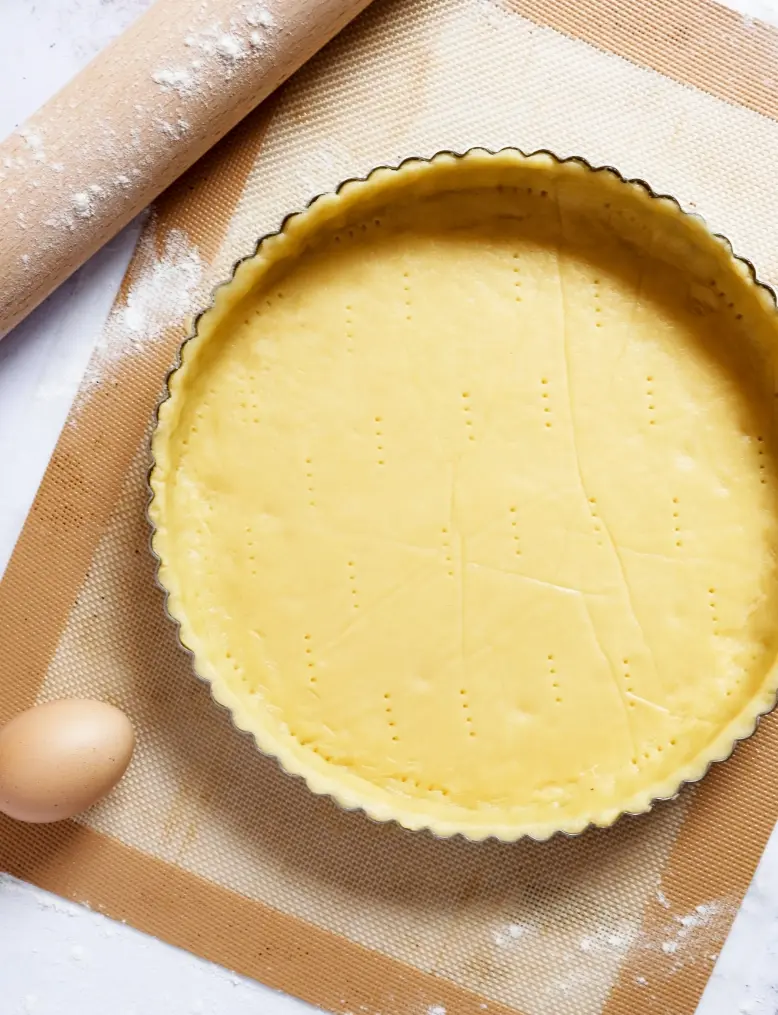
If you love baking tarts like I do, this sweet shortcrust pastry belongs in your arsenal. I use it for the pear frangipane tart and for most of the fruit tarts I make all summer. I reduce the sugar a bit as most of the time, the fillings are already sweet so there’s no need to add too much in the crust, but feel free to use more if your filling is light of course. All the French pastry doughs are listed here if you need to know which one to use for what. And I wrote down the standalone recipe for the sweet shortcrust pastry here, so you can come back to it whenever your tart needs a shell!
Table of Contents
Where sweet shortcrust pastry comes from
The name comes from “sable,” the French word for sand, and it describes exactly what the dough looks like at one stage of making it. True pâte sablée is made using the sablage technique, rubbing cold butter into flour with your fingertips until you get a fine, sandy texture, almost like breadcrumbs. It’s where this sweet pastry gets both its name and its characteristic crumbly texture.
This is important because plenty of recipes online use a different method called crémage, where you cream the butter and sugar together first before adding the flour. The two methods get used interchangeably in everyday French baking, which causes real confusion. Technically, the crémage method belongs to a different pastry called pâte sucrée. If you want a genuinely sweet shortcrust pastry, the sandy stage with cold butter is what gets you there.
Ingredients
- Plain flour – The structure of the pastry. Sifted, so it blends cleanly with the butter and you don’t get lumps.
- Cold butter – Unsalted, straight from the fridge, cut into small cubes. Temperature is everything here, and there’s a whole section below on why. Don’t let it soften.
- Icing sugar – Dissolves into the dough far more smoothly than granulated, so you get an even, fine crumb rather than a slightly gritty one. This is the sugar to use.
- Egg – Binds the sandy mixture into a dough. One is usually plenty.
- Salt – Just a pinch, but it stops the whole thing tasting flat and sweet-and-nothing-else.
How to make sweet shortcrust pastry
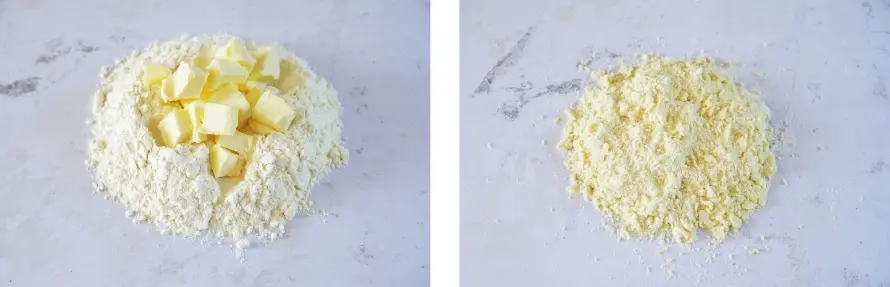
1. Sable the butter and flour
Put the sifted flour, icing sugar and salt in a bowl with the cubed butter, and rub it all in with your fingertips, lifting and letting it fall. You’re after fine sand or breadcrumbs, with no lumps of butter left. The icing sugar goes in now, right at the start, so it’s evenly through the mix before any egg turns up. Work quickly and use fingertips only, because your palms melt the butter, and melted butter gives you a greasy dough instead of a sandy one. If it starts looking oily rather than powdery, chill the bowl for ten minutes before carrying on.
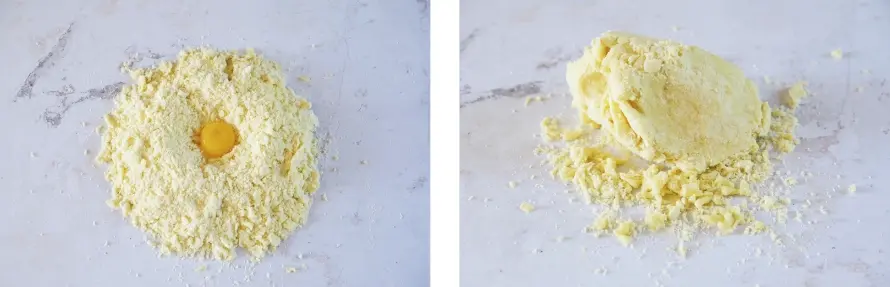
2. Add the egg
Make a well in the sandy mixture and add the egg. Mix briefly with your fingertips, just until it starts clumping into a dough. It’ll look rough and shaggy with a few dry bits, and that’s exactly right. Stop the second there’s no loose flour left. This is a high-butter, sweet dough, and fragile with it, so the more you work it now, the tougher and less crumbly it bakes.
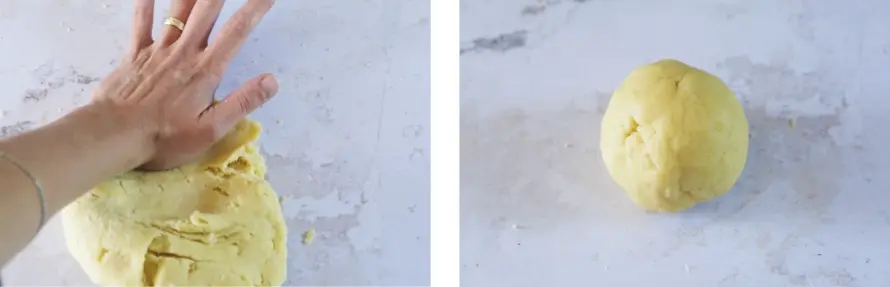
3. Fraisage
Tip it onto a lightly floured surface and push the dough away from you with the heel of your hand, one or two short firm strokes, then gather it back. You’ll feel it go from cracked and patchy to smooth in a couple of seconds. That’s the butter and sugar spreading evenly through the dough, which is what stops little pockets of butter melting unevenly and leaving holes in your baked shell. Don’t overdo it, only do two strokes or so.
4. Shape, chill, roll and line
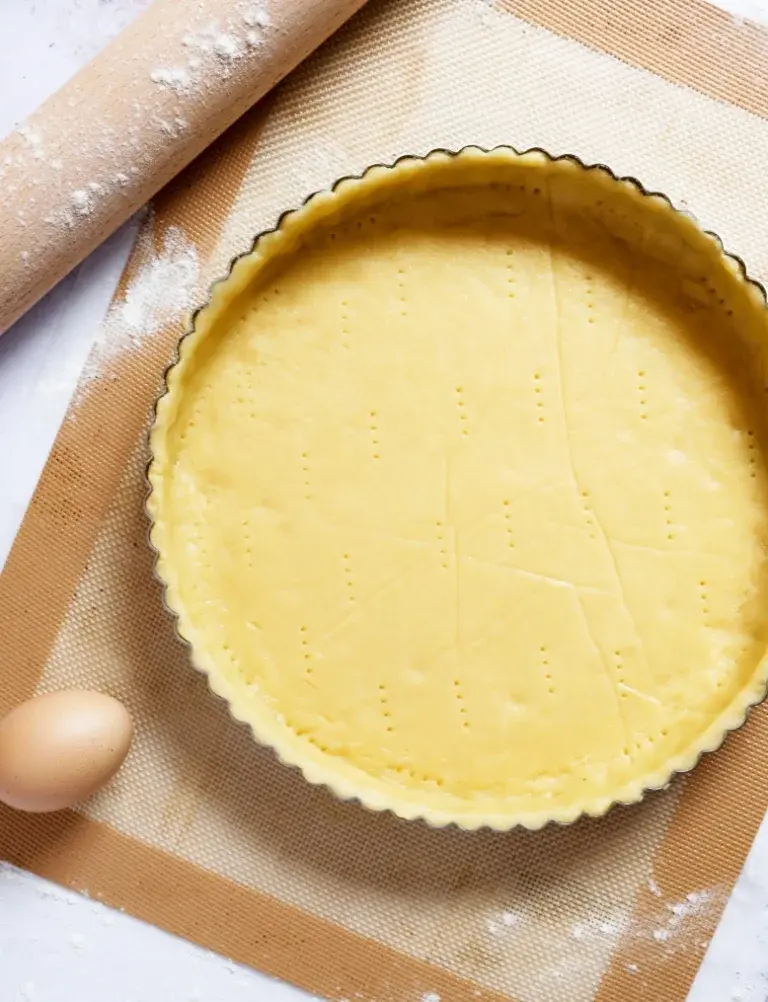
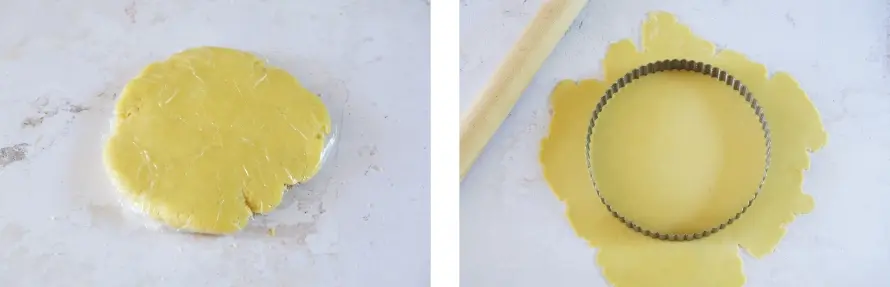
Press it into a flat disc, not a ball, because a disc rolls out more evenly and cracks less at the edges. Wrap it and chill for at least an hour. Then roll it out to about 3mm on a floured surface and line your tin. Work fairly fast: if the dough turns soft or sticky, get it back in the fridge for twenty minutes, because warm sweet shortcrust pastry tears and slumps. The sugar makes this dough softer and more fragile than a plain shortcrust, so cracks when lining are completely normal. Just press a scrap over any gaps. Then chill the lined tart ring again before baking, and that second chill is what keeps the sides from slumping in the oven.
Tools for this recipe
Check out my favorite kitchen essentials and cookware!
- Use a rolling pin to effortlessly flatten the dough.
- Use the perforated fluted tart ring, smooth tart ring or small tartlets rings to make tarts with the pastry.
Tips for success
- Keep everything cold. Cold butter, cold hands and cold dough. If it starts to feel greasy at any point, stop and chill it. This is the single biggest thing between crumbly and tough.
- Don’t overwork it. The more you handle the dough, the more gluten develops, and gluten is what you don’t want here. Bring it together and stop.
- Chill twice. Once after making the dough, once after lining the tin. Skipping the second chill is the usual reason tart sides collapse in the oven.
- Roll from a disc, not a ball. A flat disc rolls out evenly. A ball cracks at the edges and fights you the whole way.
- If it cracks, patch it. Pâte sablée (sweet shortcrust pastry) is fragile by nature, more butter, more crumble, so a few cracks when lining are completely normal. Just press a scrap of dough over the gap. Nobody will ever know.
How to store it
- The raw sweet shortcrust pastry keeps well, which is half the reason it’s worth making. Wrapped tightly, it’ll sit in the fridge for up to three days, so you can make it well ahead of when you need it.
- It also freezes brilliantly. Wrap the disc well and freeze for up to two months, then thaw overnight in the fridge before rolling. You can also freeze it already rolled and lined in the tin, ready to bake more or less straight from frozen.
- Baked and unfilled, a tart shell keeps in an airtight tin for a couple of days. Fill it as close to serving as you can, especially with anything wet, or the base of your sweet shortcrust pastry will softens.
More recipes to try
Variations
- Chocolate version: Swap a spoonful of the flour for cocoa powder for a chocolate crust. Brilliant under a chocolate ganache or a raspberry filling.
- Almond version: Add a little ground almond in place of some of the flour for a richer, more fragrant shell. This is the classic move for a tarte bourdaloue.
- Vanilla or citrus: Scrape in a little vanilla, or add some lemon or orange zest to the flour, for an additiona flavour in your tart shell.
- Sablé biscuits: Skip the rolling and lining altogether. Cut the chilled dough into shapes and bake as biscuits. Same dough, and honestly some of the best shortbread you’ll make.
FAQ
What’s the difference between pâte sablée and pâte sucrée?
It’s the butter, not the method. Pâte sablée has a higher proportion of fat, so it’s richer and crumblier and more fragile once baked. Pâte sucrée is drier, finer and firmer, usually made with icing sugar and sometimes almond powder. Both are sweet tart pastries.
Can I make pâte sablée ahead of time?
Yes, and you should. The raw dough keeps in the fridge for up to three days wrapped tightly, and freezes for up to two months. Thaw overnight in the fridge before rolling.
Why is my pâte sablée cracking when I roll it?
Usually it’s too cold straight from the fridge, or it was rolled from a ball rather than a flat disc. Let it sit a couple of minutes to lose the worst of the chill, roll from a disc, and just patch any cracks with a scrap of dough. It’s a fragile pastry by nature.
Do I need to blind bake it?
For most French tarts, yes. A pâte sablée shell is usually baked blind (with baking beans) before it’s filled, especially for fillings that don’t bake, like lemon cream, ganache or fresh fruit on crème pâtissière.
What’s the difference between pâte sablée and shortcrust pastry?
English shortcrust is closer to pâte brisée: less butter, less sugar, used for savoury pies and quiches. Pâte sablée is richer, sweeter and more delicate, which is why there’s no neat English translation.


 Prep Time 15 minutes
  Cook Time 20 minutes
  Total Time 1 hour 55 minutes
  Servings 1
Description
Ingredients
- 250 gr plain flour sifted
- 150 gr unsalted butter room temperature
- 80 gr icing sugar sifted
- 50 gr egg room temperature
- 1 pinch salt
Equipment

Instructions
1. Make the sablage
- Put the sifted flour, sugar and salt into a bowl with the cold cubed butter. Rub the butter into the flour with your fingertips, lifting and letting it fall, until the mixture looks like fine sand or breadcrumbs. Work quickly to keep the butter cold.
2. Add the egg and bring together
- Make a well in the centre of the sandy mixture. Add the egg and mix briefly with a fork or your fingertips until the dough just comes together into a ball. Do not overwork it, stop the moment no dry flour is visible.
3. Fraisage
- Tip the dough onto a lightly floured surface. Using the palm of your hand, push the dough away from you in one or two short, firm strokes (the fraisage).
4. Shape and chill
- Press the dough into a flat disc, wrap in cling film, and chill for at least 1 hour.
4. Roll and line
- On a lightly floured surface, roll the dough out to 3mm thickness. Work quickly, if the dough becomes soft or sticky, return it to the fridge for 20 minutes . Line your 24cm tart ring or 8cm tartlet rings. Trim the excess flush with the rim. Prick the base all over with a fork. Chill for 20 minutes.
5. Blind bake
- Preheat the oven to 165°C fan / 185°C conventional. Place the frozen tart on a perforated baking sheet. Bake for 18 to 20 minutes for a full tart, or 15 minutes for tartlets, until deep golden and completely dry to the touch. Cool in the ring before unmoulding.
Notes
- Yield: One 24cm tart or 8 individual tartlets (8cm)
- Cold butter for the sablage: Unlike the crémage method, sablage uses cold butter. The cold butter coats the flour particles in fat before the liquid goes in, which is what gives the pastry its characteristic crumbly, sandy texture. Don’t let it soften.
- Reduce the sugar for sweet fillings: 90g gives a properly sweet crust. If your filling is already sweet, drop to 60 to 70g. For a light filling, use the full amount.
- Keep everything cold: Cold butter, cold hands, cold dough. If it turns greasy, chill it before carrying on.
- Chill twice: Once as a disc, once after lining the tin. The second chill stops the sides slumping in the oven.
- Patch, don’t panic: This is a fragile, high-butter dough. Cracks when lining are normal, just press a scrap of dough over them.
- Make ahead: Keeps 3 days wrapped in the fridge, or 2 months frozen. Thaw overnight in the fridge before rolling.
Share your feedback and spread the love!
If you try this recipe, I’d love to hear how it turns out! Leave a ★★★★★ rating and your thoughts in the comments, it helps fellow French foodies discover this recipe too. Snap a photo and tag @obviously.french on Instagram. Come talk about it in our Facebook group. And don’t forget to save this recipe to Pinterest so you’ll always have it handy for your next French-inspired meal!