 June 27, 2026
Disclosure: This post may contain affiliate links which provide us a small commission when used for purchase. Please read my disclosure policy for more information. I am grateful for your support!
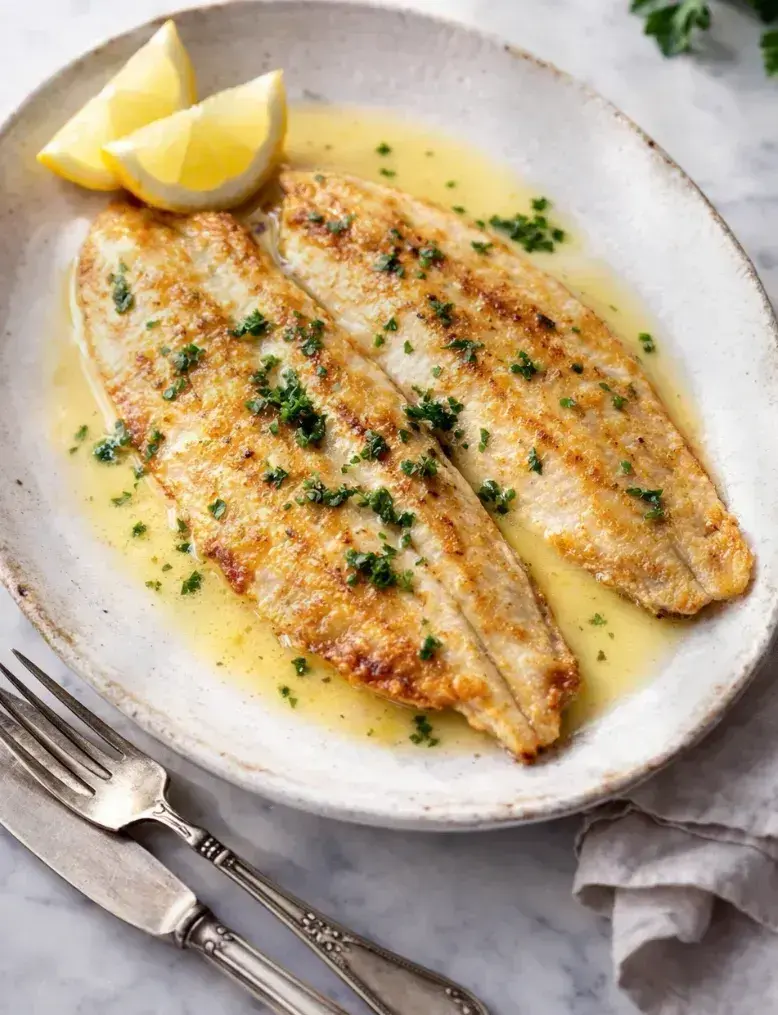
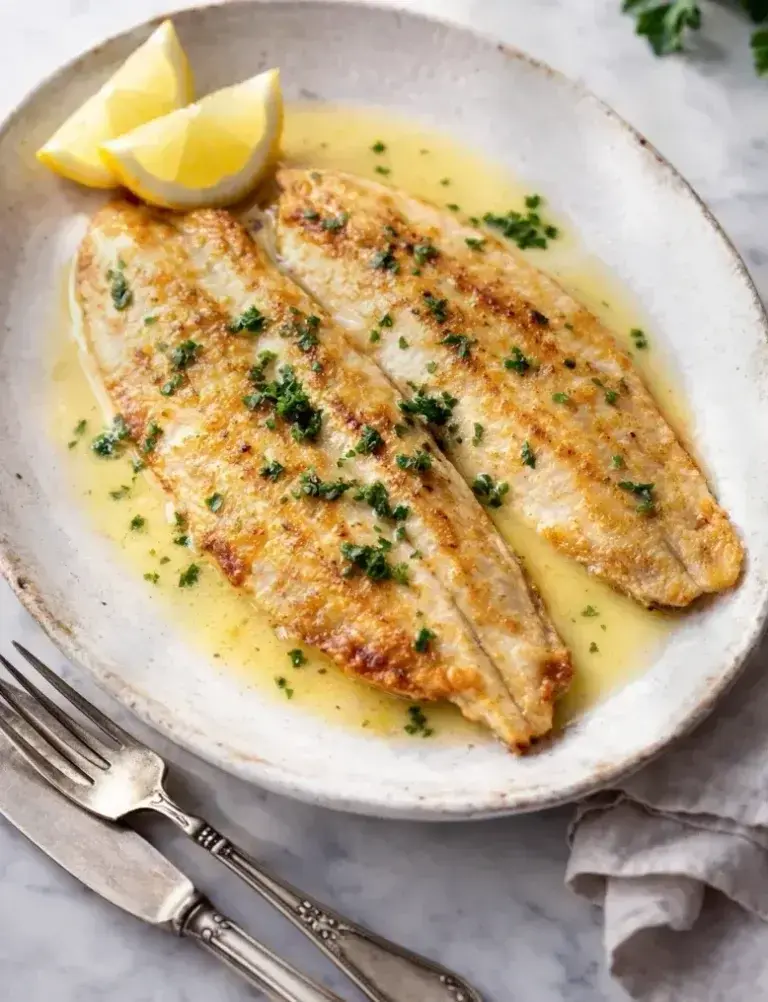
After moules frites, sole meunière is probably the second seafood dish I’d order in a restaurant. It’s stood the test of time, and it’s a real emblem of French cooking. Sole is a delicate fish, so I find the simplest treatment is also the best. Since sole is such a delicate fish, I find that the simplest preparation is also the best, and the meunière style does exactly that. It respects the fish and shows off its flavour instead of burying it.
I love making dover sole meunière with baked asparagus. The two go together brilliantly, and the slight bitterness of the asparagus cuts through all that butter.
Table of Contents
Where sole meunière comes from
The word meunière means “the miller’s wife,” and it refers to the light dusting of flour the fish gets before it hits the pan. Flour, miller, miller’s wife. That’s the whole story behind the name.
Now, the fish itself has a genuinely grand history. Sole was one of the most prized fish at the court of Louis XIV in the 17th century, and it kept that noble reputation for centuries.
But the dish, sole à la meunière, is a 19th-century creation. It comes out of the cuisine bourgeoise of the 1800s and became a fixture of the smart Parisian brasseries and bistros of that era. So it’s not medieval court food, whatever some blogs will tell you. It’s elegant everyday cooking from the great age of the French bistro, and it never really went out of fashion because it’s that good.
The most famous story attached to sole meunière is Julia Child‘s. In November 1948, on her very first day in France, she sat down at Restaurant La Couronne in Rouen and ordered sole meunière. “It was my first French food and I never got over it,” she said later. That one meal changed the course of her life, and through her, the way an entire generation of Americans thought about French cooking. Not bad for a simple piece of fish in butter.
Ingredients
- Whole dover sole – The star, so buy the best and freshest you can. Dover sole has firm, sweet flesh that holds together in the pan without flaking apart, and it’s mild enough to let the butter shine. Ask your fishmonger to skin and trim it. Most will, without a second thought.
- Plain flour – The barest dusting, not a batter and not a crust. It protects the delicate flesh from the direct heat and helps it colour evenly. That’s all it does.
- Unsalted butter – The heart of the whole thing. Unsalted, so you control the seasoning and it browns cleanly without catching. You’ll use it to cook the fish and to make the little nutty sauce (beurre noisette) at the end.
- Vegetable oil – Just a spoonful, in with the butter. It lets you get the pan properly hot without the butter burning.
- Lemon – Juice to finish, wedges to serve. The acidity cuts through the richness and wakes the whole plate up.
- Flat-leaf parsley – Fresh and chopped, scattered at the end. A bit of colour and freshness against all that gold.
How to make sole meunière
1. Flour the fish
This is where the dish is won or lost, and it happens before the pan even gets hot. Pat the sole properly dry first, both sides, until the kitchen paper comes away clean. Wet fish steams and goes grey instead of gold.
Then, and only when your pan’s nearly ready, press each fish into the seasoned flour and shake off everything you possibly can. You want a whisper of flour, not a coating you can see. The reason you leave the flouring to the last second is that flour on damp fish turns to paste within a couple of minutes, and paste fries claggy, not crisp. My rule: don’t flour a single fish until the butter’s already foaming.
2. Fry it, and leave it alone
Oil first, then the butter, and wait for it to foam and settle to a light gold before the fish goes anywhere near it. Lay the sole in presentation side down (the side that was skin-on) and then step back. I know it’s tempting but don’t poke it, lift it to peek or move it. It needs 3 to 4 minutes of uninterrupted contact to build that deep golden surface, and every time you lift it you break the crust that’s forming.
You’ll know it’s ready to turn when the edges have coloured and it releases without sticking. If it’s glued to your frying pan, it isn’t ready, so give it another thirty seconds. Turn once, baste with the pan butter, and it’s done when the flesh at the thick end near the head pulls cleanly off the bone.
3. The beurre noisette (brown butter)
Place the fish onto warm plates first, because this next bit moves fast. Put more butter into the pan, and now watch it properly. It’ll foam, then quieten, then the milk solids on the bottom start turning golden-brown and it will suddenly smells of hazelnuts and toast! That’s beurre noisette (brown butter).
The gap between nutty and acrid-black is about ten seconds, so the second it smells right and turns amber, squeeze in the lemon juice to stop it. It’ll splutter, which is exactly what you want, the acid stops the butter cooking dead. Scatter the parsley in, make one swirl and then it goes straight over the fish.
Tools for this recipe
Check out my favorite kitchen essentials and cookware!
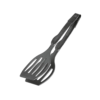
- Use a double spatula to flip the fish without breaking it.
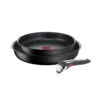
- I use my affordable 28cm non-stick frying pan for this recipe.
- And I use bamboo kitchen paper because it’s better for the planet!
Tips for success
- Pat the fish properly dry. Wet fish steams instead of colouring. Use kitchen paper, both sides, until it’s really dry, before you flour it.
- Flour at the very last moment. If it sits even a couple of minutes the coating goes claggy. Flour, then straight into the pan.
- Don’t crowd the pan. If your pan won’t hold both fish flat, cook them one at a time. A crowded pan drops the temperature and you will lose the colour.
- Watch the butter like a hawk at the end. A beurre noisette (brown butter) can burn in about ten seconds. The moment it smells of hazelnuts and turns amber, get the lemon in to stop it.
- Have everything ready first. Warm plates, parsley chopped, lemon cut. The fish only takes minutes to cook and won’t wait for you to catch up!
How to serve it
Eat this elegant dish straight away, the moment it comes out of the pan. This dover sole meuniere does not wait, so have the plates warm, have everything ready, and get it to the table while the butter is still foaming and the fish is still crisp.
Baked asparagus alongside is my favourite choice, the slight bitterness works really well against all that butter. Simple steamed potatoes or a green salad with a sharp vinaigrette are both good too. For wine, Julia Child drank a bottle of Pouilly-Fumé with her famous first sole meunière at La Couronne, and that’s still a very good call. A Chablis or a white Burgundy would work just as well. Keep it dry and keep it French!
How to store it
- Honestly? Don’t. Sole meunière is all about the contrast of crisp surface and just-cooked flesh, and that’s gone within minutes of it leaving the pan. And it’s not made to reheat either.
- If you absolutely have to, cooked sole will keep in the fridge for a day in an airtight container. Warm it gently in a low oven rather than a hot pan, and accept that the coating won’t be crisp anymore. But really, this is a cook-it-and-eat-it dish.
More fish recipes to try
Variations
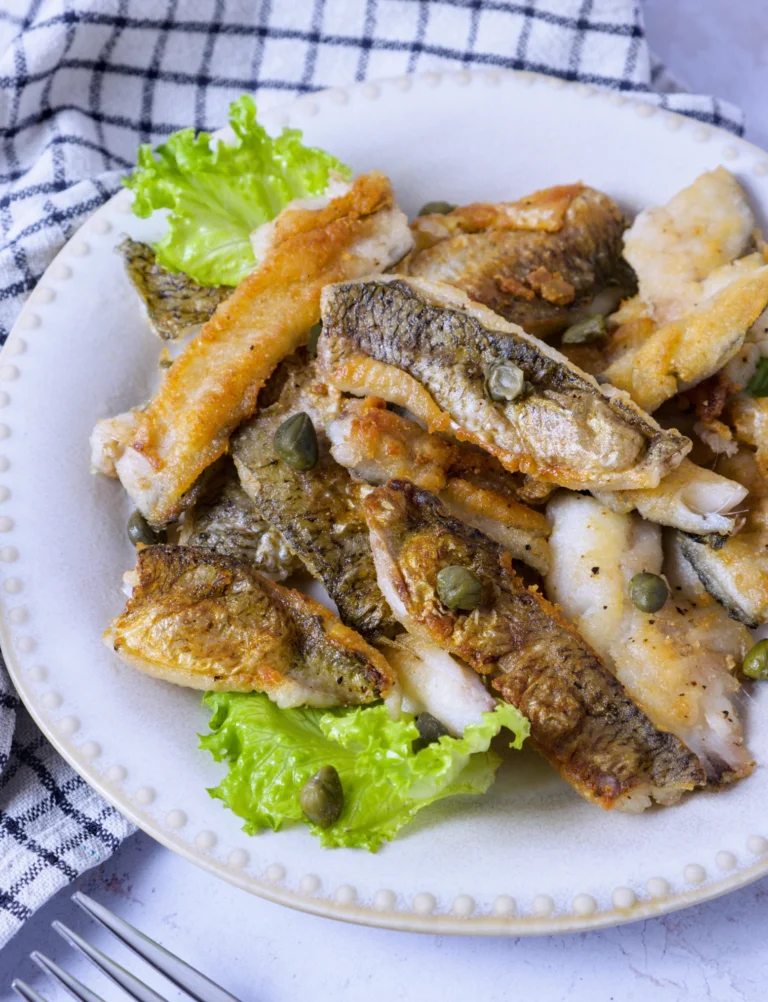
- Add capers: A spoonful of capers in with the brown butter turns it into something close to a sole grenobloise, the other great classic. Sharp, salty, brilliant against the rich butter.
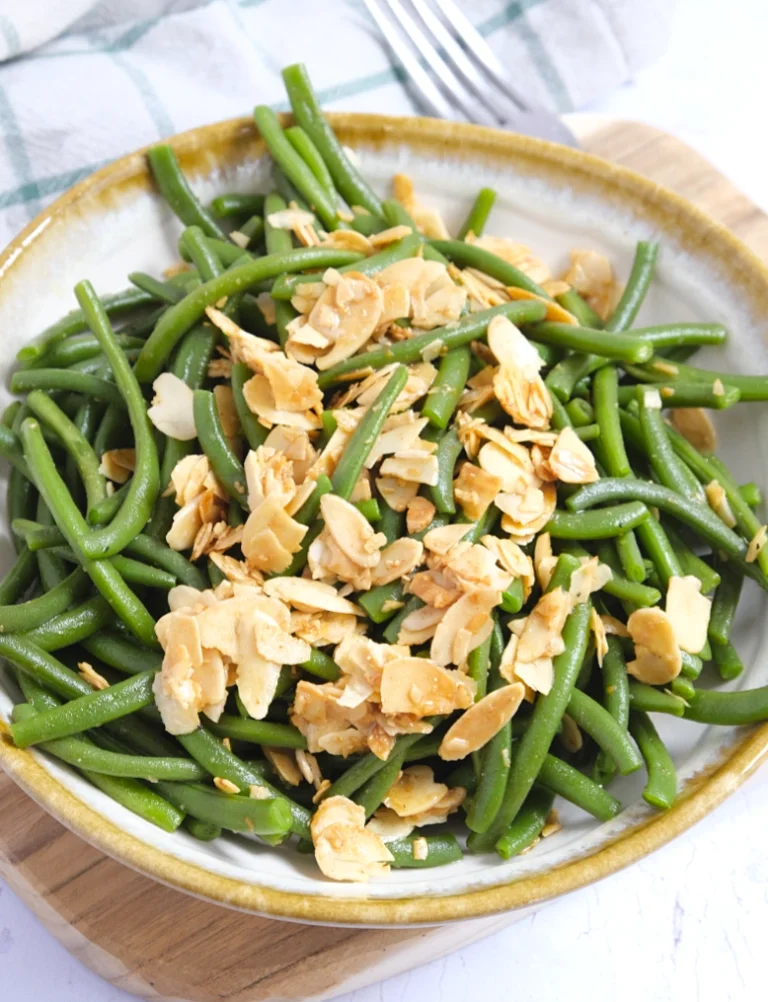
- Toasted almonds: Scatter a few flaked toasted almonds over at the end for a bit of crunch. Not strictly traditional for meunière, but a lovely addition.
- Use fillets instead of whole fish. If whole sole feels like a lot of work, or your fishmonger only has fillets, the method’s identical. Just drop the cooking time right down, a minute or two a side, since fillets are much thinner.
- Other flat fish: If you can’t get sole, plaice, lemon sole or dab all work the same way. They’re not quite as fine as dover sole, but the meunière treatment suits any delicate flat fish.
FAQ
What does meunière mean?
It means “the miller’s wife,” and it refers to the light dusting of flour the fish gets before cooking. Anything cooked à la meunière is floured and pan-fried in butter, then finished with lemon and parsley.
What’s the best fish for sole meunière?
Whole dover sole is the classic and the best choice. The flesh is firm enough to hold together in the pan and delicate enough to let the butter shine. Ask your fishmonger to skin and trim it for you.
Can I make sole meunière ahead of time?
Not really. It’s cooked in minutes and needs to be eaten straight away, while the butter’s foaming and the fish is crisp. You can make the beurre blanc a little ahead and keep it barely warm, but cook the fish at the last moment.
What’s the difference between beurre blanc and beurre noisette?
Beurre noisette is browned butter, cooked until the milk solids turn nutty and hazelnut-scented, and it’s the classic sauce meunière finish. Beurre blanc is a cold-butter emulsion on a wine and shallot reduction, sharper and silkier. They do opposite jobs, which is why they work well together.


 Prep Time 15 minutes
  Cook Time 20 minutes
  Total Time 35 minutes
  Servings 2
Description
Ingredients
For the sole
- 2 dover sole whole, skinned and trimmed
- 50 gr plain flour
- 80 gr unsalted butter
- 1 tbsp vegetable oil
- 1 tbsp lemon juice
- 1 handful flat-leaf parsley
- salt and white pepper
- 1 lemon cut into wedges, to serve

Instructions
1. Prepare the sole
- Pat the sole thoroughly dry on both sides with kitchen paper. Season generously with salt and pepper. Just before cooking, put the flour on a large plate, press each sole into it on both sides, then shake off every trace of excess. You want the thinnest possible coating, not a crust.
2. Fry the sole
- Heat the oil in a large frying pan over medium-high heat. Add about half the butter and let it foam. When the foam subsides and the butter turns light golden, lay the sole in carefully, presentation side down. Cook without moving for 3 to 4 minutes, until deep golden underneath. Slide a wide spatula under and turn. Cook for a further 3 to 4 minutes, basting regularly with the pan butter, until the flesh is firm and lifts cleanly from the bone at the thickest point near the head. Transfer to warm plates.
3. Make the beurre noisette
- Add the remaining butter over medium heat. Let it foam and then cook on until the milk solids turn brown and it smells of hazelnuts, about a minute. Watch it closely, it goes from nutty to burnt fast.
4. Finish and serve
- Take the pan off the heat and add the lemon juice (it'll splutter) and the chopped parsley. Swirl once and pour straight over the fish. Serve immediately with lemon wedges.
Notes
- Ask the fishmonger to skin and trim the sole. Most will do it without a second thought, and it saves you a fiddly 10 minutes at home.
- Flour the fish at the last possible moment. If it sits more than a few minutes, the flour draws moisture and the coating goes claggy rather than crisp.
- Watch the beurre noisette (brown butter) closely. The gap between nutty brown and burnt is about ten seconds. The moment it smells of hazelnuts and turns amber, add the lemon to stop it cooking.
- Don’t crowd the pan. If it won’t hold both fish flat, cook them one at a time. A crowded pan drops the temperature and you lose the colour.
- This dish does not wait. Have everything ready before the fish goes in, and serve straight away.
Share your feedback and spread the love!
If you try this recipe, I’d love to hear how it turns out! Leave a ★★★★★ rating and your thoughts in the comments, it helps fellow French foodies discover this recipe too. Snap a photo and tag @obviously.french on Instagram. Come talk about it in our Facebook group. And don’t forget to save this recipe to Pinterest so you’ll always have it handy for your next French-inspired meal!