 December 24, 2025
Disclosure: This post may contain affiliate links which provide us a small commission when used for purchase. Please read my disclosure policy for more information. I am grateful for your support!
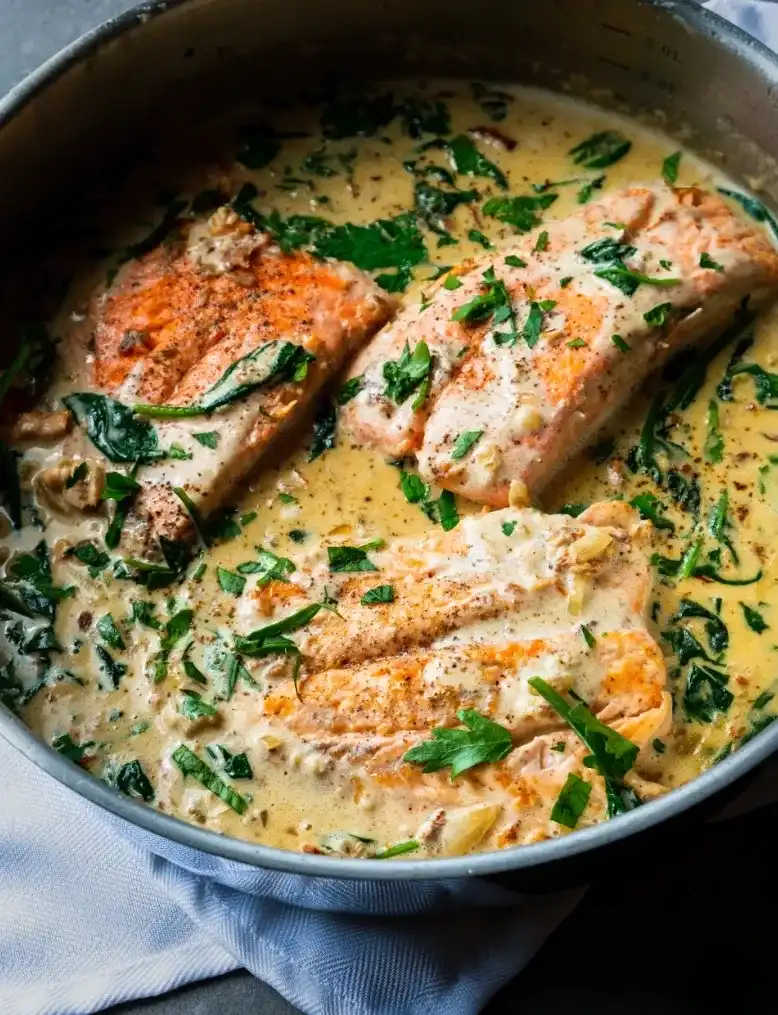
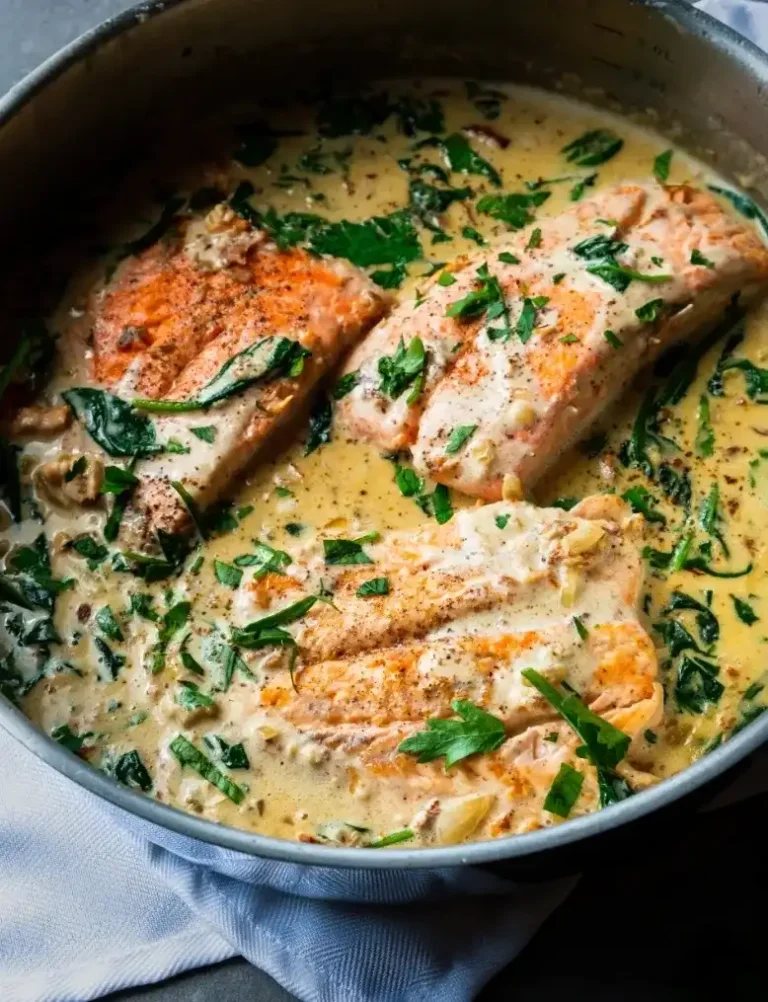
Now I know Salmon Florentine might sound like something you’d order rather than make, but it’s actually only a weeknight dish dressed up in a fancy French name. The Mornay sauce is the only part that asks for a little attention, but even that’s just a béchamel with cheese stirred in. Get that right and the rest is simply assembly. I love making this in all season, it’s healthy and rich at the same time!
Table of Contents
Where salmon florentine comes from
Anything labelled à la Florentine in French cooking means the same thing: served on a bed of spinach, usually under a cheese sauce. Salmon Florentine, eggs Florentine, sole Florentine, they all follow that template.
There’s a story attached, as ever. The popular one credits Catherine de’ Medici, the Florentine noblewoman who married the future Henry II of France in 1533, supposedly bringing her own cooks and a love of spinach with her, so that “Florentine” came to mean any dish served on spinach. It’s a lovely tale, and you’ll read it everywhere. Food historians don’t buy it, though: Italian influence on French cooking long predates that marriage, some say the term is older still, and there’s no real evidence Catherine did any such thing. A charming legend, but not a fact. Still i think you need to know what’s been said.
What’s certain is that Florentine is a genuine classic of French cuisine. Chef Escoffier set down a recipe for sole Florentine in his 1903 Guide Culinaire, fish on spinach under a Mornay sauce, and that’s the template this recipe for salmon florentine version follows. Which brings us to the sauce, because the sauce is the whole thing.
The sauce Mornay
A proper Florentine sauce is a Mornay, and Mornay is one of the easiest sauces in French cooking. It’s simply a béchamel with cheese melted into it. Make the classic white sauce, take it off the heat, stir in grated Gruyère (and often a little Parmesan) until it’s smooth and glossy, and you have Mornay!
You could use a quicker cream-and-cheese sauce instead (plenty of modern recipes do, and there’s a note on that below), but a real Mornay is what makes this taste like the classic rather than a shortcut.
Ingredients
- Salmon fillets – Skinless, thick fillets. Fresh, and ideally the same thickness so they cook evenly.
- Spinach – Fresh or frozen. It cooks down dramatically, so you need far more than looks sensible.
- Béchamel – The base of the Mornay sauce.
- Gruyère – Melted into the béchamel to make the Mornay, and a little on top. Comté or Emmental work too.
- Parmesan – A little in the sauce and over the top, for a sharper, savoury edge and a golden crust.
- Garlic and shallot – Softened with the spinach for extra depth.
- Nutmeg – In the béchamel, classic with both spinach and cheese sauce.
- Lemon – A squeeze over the salmon, to keep it bright under all that richness.
How to make salmon florentine
1. Wilt and squeeze the spinach
Soften the shallot and garlic in butter, add the spinach and wilt it down, then, crucially, tip it into a sieve and press or squeeze out all the water. Season it, and spread it in the base of a baking dish. Dry spinach euqlas a good Florentine!
2. Make the Mornay
Make a béchamel: melt butter, stir in flour to a roux, whisk in the milk gradually, and cook until it thickens and coats a spoon. Season with salt, white pepper and nutmeg. Then off the heat, stir in most of the Gruyère and Parmesan until smooth and glossy. That’s your Mornay sauce.
3. Assemble and bake
Nestle the salmon fillets into the spinach, season them and squeeze over a little lemon, then pour the Mornay over the top so everything’s blanketed. Scatter the last of the cheese over, and bake in a hot oven until the salmon is just cooked through, the sauce is bubbling, and the top is golden. A minute under the grill at the end gives you a properly browned crust.
Tools for this recipe
Check out my favorite kitchen essentials and cookware!
- Use a heavy saucepan to make the béchamel gently without it catching.
- Use a whisk to keep the sauce smooth as it thickens.
- Use a baking dish that fits the fillets snugly and goes from oven to table.
- Use a fine grater for the nutmeg and the cheese.
Tips for success
- Squeeze the spinach really dry: If you have wet spinach, it will flood the dish with water as it bakes. Wilt it, then squeeze it hard in a tea towel until no more water comes out.
- Take the béchamel off the heat before the cheese: add the Gruyère off the heat, or over a very low one, and stir until melted. Boiling cheese sauce can go grainy or split, so gentle is the rule.
- Don’t overcook the salmon: it’s ready when it flakes at the thickest point and is just opaque. It carries on cooking in the hot sauce as it rests, so pull it a touch early rather than late.
- Match the fillet thickness: fillets of a similar thickness cook evenly. If yours are uneven, tuck the thin tail ends under so they don’t dry out.
- Grill the top at the end: a minute or two under a hot grill gives you that golden, bubbling, properly gratinéed top. Watch it, since it colours fast.
How to store it
- Salmon Florentine is best fresh from the oven, when the sauce is bubbling and the salmon just set. But it keeps and reheats better than many fish dishes, since the sauce protects the salmon.
- Keep leftovers covered in a glass container the fridge for up to 2 days. Reheat gently in a moderate oven (covered with foil) rather than the microwave, which can toughen the salmon and split the sauce. It won’t be quite as good as fresh, but it makes a decent lunch.
- I wouldn’t freeze salmon Florentine assembled, since the Mornay can split on thawing and the salmon texture suffers. If you want to get ahead, make the spinach base and the Mornay separately a day in advance, keep them in the fridge, then assemble with fresh salmon and bake when you need it.
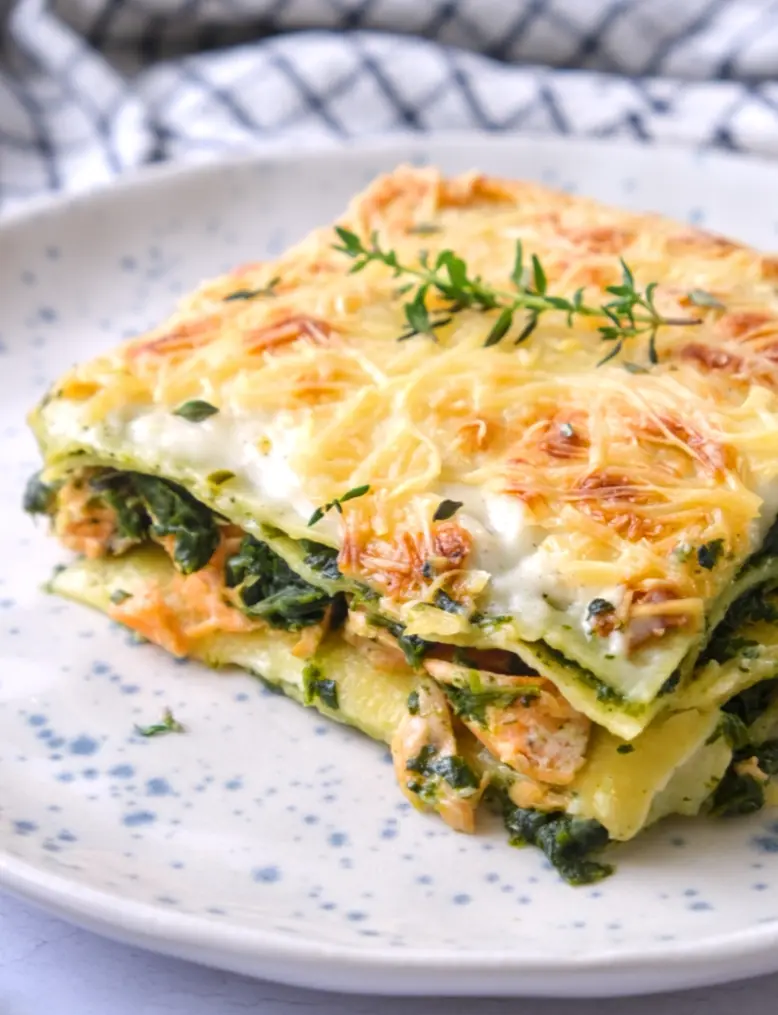
More salmon recipes to try
Variations
- Use a quick cream sauce: short on time? Skip the béchamel and simmer double cream with the garlic and cheese until thickened, then use that instead of Mornay. It’s the common modern shortcut, less classic but quicker.
- Add mushrooms: sautéed mushrooms folded through the spinach, lovely with the cheese sauce.
- Swap the fish: the same method works beautifully with cod, haddock, or sole (the Escoffier original).
- Add a crunch: a scatter of breadcrumbs mixed with the cheese on top gives you an extra crisp crust.
- Make it lighter: use half béchamel, half crème fraîche, and go easy on the cheese, for a slightly less rich version.
- Add lemon and dill: a little dill through the spinach and extra lemon, for a fresher, brighter finish.
FAQ
What is Salmon Florentine?
Salmon Florentine is salmon served on a bed of spinach under a creamy cheese sauce (traditionally Mornay), baked until golden. “À la Florentine” is a classic French term for any dish served on spinach with a cheese sauce, so eggs Florentine and sole Florentine follow the same idea.
What is Florentine sauce?
Strictly, the sauce in a Florentine dish is Mornay, a béchamel (white sauce made from a butter-flour roux and milk) with grated cheese, usually Gruyère and Parmesan, melted in. Many modern recipes use a simpler cream-and-cheese sauce instead, but Mornay is the classic.
Why is my Salmon Florentine watery?
Almost always the spinach. It holds a lot of water, and if it isn’t squeezed dry before baking, that water leaches into the dish. Wilt the spinach, then squeeze it hard in a tea towel or sieve until no more water comes out.
How do I know when the salmon is cooked?
It’s done when it flakes easily at the thickest point and is just opaque all the way through, about 15 to 18 minutes in the oven depending on thickness. It keeps cooking in the hot sauce as it rests, so pull it a touch early rather than risk drying it out.



 Prep Time 10 minutes
  Cook Time 20 minutes
  Total Time 30 minutes
  Servings 4
Description
Ingredients
For the Mornay sauce
- 40 gr unsalted butter
- 40 gr plain flour
- 500 ml whole milk
- 80 gr Gruyère grated
- 1 pinch nutmeg
- 30 gr Parmesan cheese grated
- salt and black pepper
For the spinach
- 500 gr spinach or 250g frozen, thawed
- 1 shallot finely chopped
- 2 cloves garlic
- 20 gr unsalted butter
- salt and black pepper


Instructions
1. Wilt the spinach
- Melt the butter in a frying pan over medium heat. Soften the shallot for 3 minutes, add the garlic for 1 minute, then add the spinach in handfuls, wilting it down. Tip into a sieve and press hard (or squeeze in a tea towel) to remove all the water. Season and set aside.
2. Make the béchamel
- Melt the butter in a saucepan. Stir in the flour and cook 1 to 2 minutes to a pale roux. Off the heat, whisk in the milk gradually, then return to medium heat and whisk until thickened and coating the back of a spoon, about 5 minutes. Season with salt, white pepper and nutmeg.
3. Turn it into Mornay
- Off the heat, stir in most of the Gruyère and Parmesan (keep some back for the top) until smooth and glossy.
4. Assemble
- Heat the oven to 200°C (180°C fan). Spread the squeezed spinach in a baking dish. Nestle the salmon fillets on top, season, and squeeze over the lemon. Pour the Mornay over to blanket everything, then scatter with the reserved cheese.
5. Bake
- Bake for 18 to 22 minutes, until the salmon is just cooked through and the sauce is bubbling. Finish under a hot grill for 1 to 2 minutes for a golden top.
6. Serve
- Rest 2 to 3 minutes. Serve with new potatoes, rice, or crusty bread and a green salad.
Notes
- Squeeze the spinach dry, or the dish goes watery. This is the key step.
- Add the cheese off the heat, or the sauce can go grainy.
- Mornay = béchamel + cheese. Full béchamel method on the linked page.
- Don’t overcook the salmon: just opaque and flaking, since it keeps cooking in the hot sauce.
- Make ahead: spinach and Mornay a day in advance; assemble with fresh salmon and bake.
Share your feedback and spread the love!
If you try this recipe, I’d love to hear how it turns out! Leave a ★★★★★ rating and your thoughts in the comments, it helps fellow French foodies discover this recipe too. Snap a photo and tag @obviously.french on Instagram. Come talk about it in our Facebook group. And don’t forget to save this recipe to Pinterest so you’ll always have it handy for your next French-inspired meal!