 August 2, 2026
Disclosure: This post may contain affiliate links which provide us a small commission when used for purchase. Please read my disclosure policy for more information. I am grateful for your support!
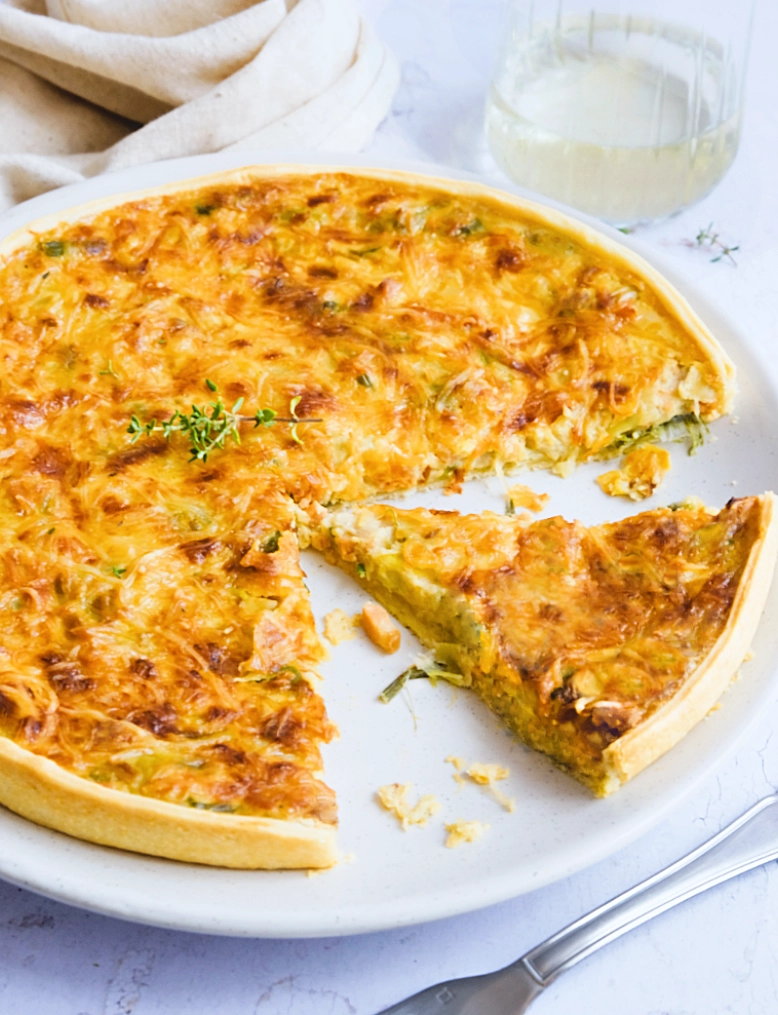
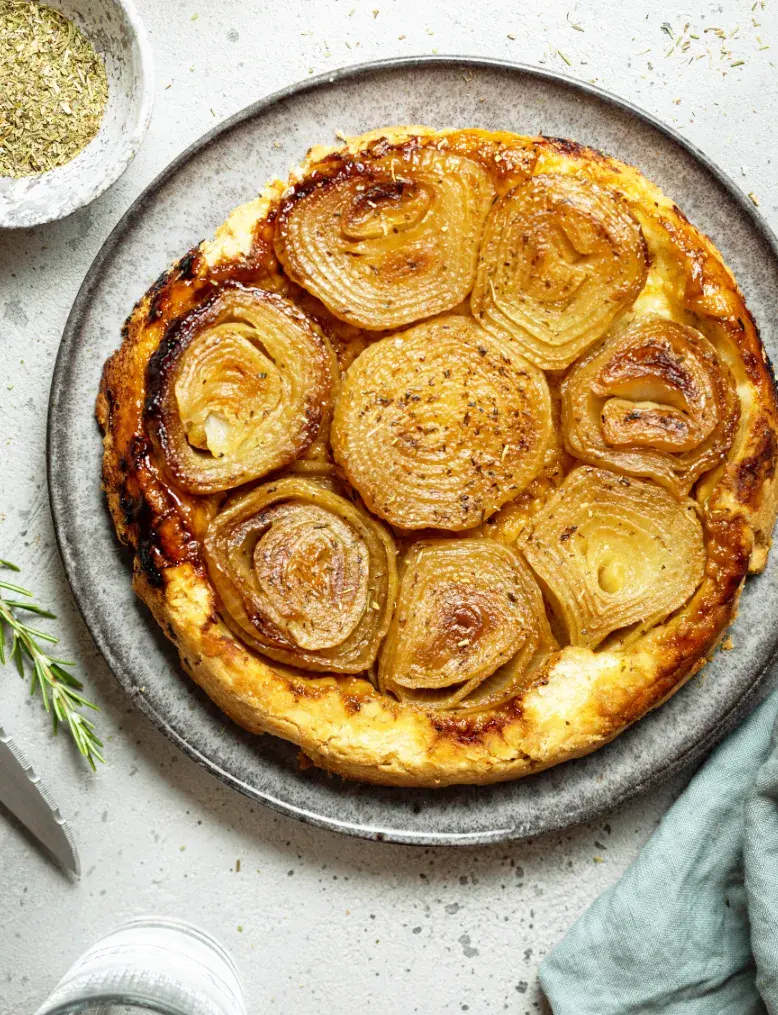
I clearly have a leek problem. I already made a leek tarte tatin, and here I am again, because I really can’t get enough of them. But don’t worry, this is a completely different tart. Where the tatin is upside-down, sweet and made with puff pastry, this one is the opposite: shortcrust pastry underneath, smoky vegetarian lardons for a savoury, salty bite, and the leeks cooked down into something soft and creamy.
I can’t quite call it a quiche either, since there’s only one egg in it. It sits somewhere of its own, and I love it for exactly that. It’s the perfect lunch, and it’s just as good cold the next day, packed up for a picnic or put out with a drink at apéro.
Table of Contents
Where leek tart comes from
The leek tart belongs to a family of French savoury tarts, and its most famous relative comes from the north. In Picardy, and across the border in Belgian Hainaut, it’s the flamiche aux poireaux, a regional treasure. The name flamiche comes from the Flemish flamike, a flambéed galette, referring to the flame of the oven, the same root as the Alsatian Flammekueche. The first recipes appeared in the Middle Ages in the leek-growing north of Europe.
It was peasant food, born of a cheap vegetable that grew well in cold northern soil. Leeks came from the garden, and the tart was made richer or plainer depending on what a household could afford. A family with a little money added cheese or lardons; a poorer one kept it plain. This cheese and leek tart is with both and it is the enriched everyday version, which is how most French families make it now.
There’s a useful distinction worth knowing. The strict Picard flamiche is often a covered tart, two layers of pastry sealed like a galette des rois. The everyday leek tart, the one I’ve made here, is an open tart with the leeks bound in a creamy mixture, closer in spirit to a quiche. Both are the same idea, leeks and pastry, dressed up two different ways.
Ingredients
- Leeks — cooked down in butter until soft and sweet before they go anywhere near the pastry. Use the white and pale green, which stay tender, and save the dark green for homemade stock.
- Butter — for cooking the leeks slowly, which draws out their sweetness and tames the raw oniony edge.
- Smoked lardons — vegetarian here, cooked separately until the edges colour, for the smoky, salty note that lifts the mild leeks.
- Flour and milk — the base of a light binder, made around the leeks themselves like a quick béchamel, which sets softer and creamier than an egg-and-cream custard.
- Egg — a single egg, stirred in off the heat, which binds the filling without making it dense or overly set.
- Gruyère — grated, for savoury depth and a golden top.
- Shortcrust pastry — pâte brisée, the classic base, crisp enough to hold the filling.
- Nutmeg — a small scrape, the classic partner to leeks, milk and cheese.
How to make leek tart
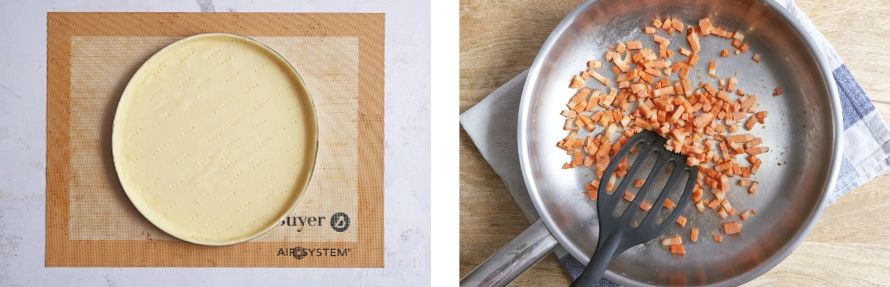
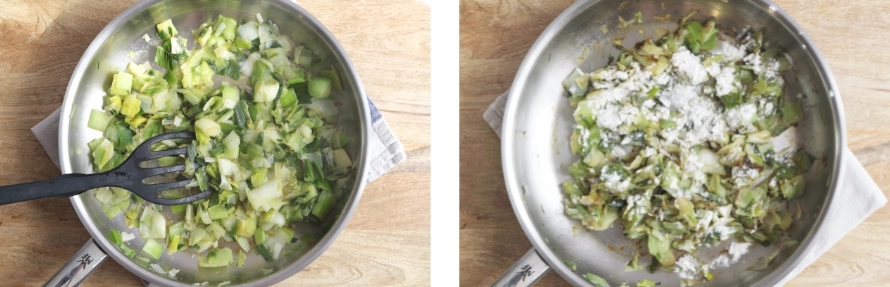
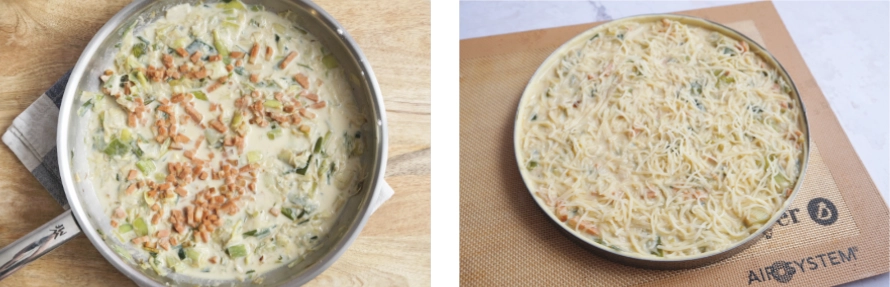
1. Prepare the pastry base
Line your tart tin or rings with shortcrust pastry. If you’re using tart rings, there’s no need to blind bake, since this filling is thick rather than liquid and won’t soak through. For a single deep tin, a quick blind bake keeps the base crisp.
2. Cook the lardons first
Cook the vegetarian lardons in a dry or lightly oiled pan until the edges colour and the smokiness develops. Set them aside to cool while you do the leeks, so they aren’t piping hot when they go into the mixture later.
3. Cook the leeks in butter, slowly
Slice the white and pale green into thin half-moons and rinse well. Melt the butter in a wide pan, add the leeks and a pinch of salt, and cook gently for 15 to 20 minutes, until soft, silky and collapsed, without letting them colour. This slow cooking is where the sweetness comes from, so keep the heat low.
4. Make the binder around the leeks
Stir the flour through the leeks and cook it for a minute, so it coats them and loses its raw taste. Pour in the milk a little at a time, stirring, then add the nutmeg and pepper. Keep stirring over very low heat until it thickens into a loose, creamy mixture, a couple of minutes.
5. Add the egg off the heat, then the lardons
Take the pan off the heat and let it cool for a minute, then stir in the beaten egg quickly, so it binds the mixture without scrambling. Fold in the cooled lardons. Taste, and go easy on any salt, since the lardons and cheese are already salty.
6. Fill, top with cheese and bake
Spread the mixture into the pastry and level it, then scatter the grated cheese over the top. Bake at 180°C for 30 to 35 minutes, until set and golden. Rest for 10 minutes before slicing, which lets the filling firm up so it cuts cleanly.
Tools for this recipe
Check out my favorite kitchen essentials and cookware!
- Use a tart ring, so you can lift the finished tart out cleanly. With rings you can skip the blind bake here.
- Use a wide frying pan or sauté pan to cook the leeks in a shallow layer, so they soften evenly rather than steaming in a heap.
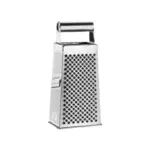
- Use a grater for the cheese, since freshly grated Gruyère melts better than pre-grated, which carries anti-caking starch.
- Use a rolling pin to roll the pastry evenly.
Tips for success
- Cook the leeks down fully before making the binder: undercooked leeks stay firm and watery. Soft, silky and collapsed is what you want before the flour goes in.
- Cook the flour for a minute before the milk: this is what stops the binder tasting of raw flour, exactly as you would for a béchamel.
- Add the egg off the heat: stir it into the mixture once it’s cooled for a minute, or the residual heat will scramble it instead of binding it.
- Cook the lardons separately and let them cool: they colour better in their own pan than crowded in with the leeks, and cooling them keeps them from cooking the egg.
- Go easy on the salt: between the lardons and the Gruyère there’s plenty already, so taste the mixture before adding any.
- Rest it before slicing: ten minutes out of the oven lets the filling set, so the slices hold together instead of collapsing.
- Grate the cheese generously over the top: the top layer browns and blisters, which is both flavour and a good-looking tart.
How to store it
- In the fridge: Keeps 3 days covered, and it’s genuinely good cold the next day, which makes it a fine make-ahead for lunch. Reheat slices in a moderate oven to bring back some crispness, rather than the microwave, which softens the pastry.
- At room temperature: Fine for a few hours on a lunch table, since it’s good warm or at room temperature rather than piping hot. Don’t leave it out longer, as it contains egg and milk.
- In the freezer: Freezes well, baked and cooled, for up to 2 months. Wrap tightly and reheat from frozen in a moderate oven. The pastry softens slightly but it’s a good standby to have.
More savoury tart recipes to try
Variations
- The classic flamiche: make it as a covered tart, two layers of puff pastry sealed and scored like a galette des rois, which is the strict Picard version.
- With salmon: the flamiche samarienne from the Somme bay adds salmon, which suits the leeks beautifully and makes a lovely pescatarian version.
- With goat’s cheese: crumbled over the top before baking, for a tangier, creamier tart.
- With Maroilles: the northern French version uses the region’s pungent washed-rind cheese, for something much stronger and traditional to Picardy.
- Without lardons: a plainer, fully vegetarian leek tart, closer to the older peasant version, which lets the sweetness of the leeks come through.
- With a mustard base: a thin layer of Dijon mustard spread on the pastry before the filling, which sharpens the whole tart.
FAQ
What’s the difference between a leek tart and a flamiche?
They’re closely related. The flamiche is the Picard version, often a covered tart with two layers of pastry, while the everyday leek tart is an open tart with the leeks bound in a creamy mixture, closer to a quiche.
How do you stop a leek tart from being soggy?
Cook the leeks down fully first so they aren’t watery, use a thick binder rather than a liquid custard, and blind bake the base if you’re using a deep tin. With tart rings and this thicker filling, blind baking isn’t necessary.
Can you make a cheese and leek tart ahead of time?
Yes. It keeps 3 days in the fridge and is good cold or gently reheated, so it’s a useful make-ahead. It also freezes well for up to 2 months.
What cheese is best for a leek tart?
Gruyère is the classic for a leek and cheese tart, melting well and browning to a golden top. Comté or Emmental work too, and for something more traditional to the north, the strong Maroilles is the regional choice.
Do you have to cook the leeks first?
Yes. Raw leeks stay firm and release water as the tart bakes. Cooking them slowly in butter first makes them sweet and silky, and it’s the base of the creamy binder that fills the tart.



 Prep Time 25 minutes
  Cook Time 35 minutes
  Total Time 1 hour
  Servings 6
Description
Ingredients
- 1 shortcrust pastry
- 4 leeks
- 40 gr unsalted butter
- 150 gr vegetarian lardons smoked
- 1 tbsp plain flour
- 300 ml whole milk
- 1 egg beaten
- 100 gr Gruyère cheese
- 1 pinch nutmeg
- salt and black pepper
Equipment

Instructions
1. Prepare the base
- Line a tart tin or tart rings with the shortcrust pastry. With rings, there's no need to blind bake. For a single deep tin, blind bake with baking beans at 180°C for about 15 minutes.
2. Cook the lardons
- Cook the vegetarian lardons in a separate pan until the edges colour. Set aside to cool.
3. Cook the leeks
- Slice the white and pale green of the leeks into thin half-moons and rinse well. Melt the butter in a wide pan, add the leeks and a pinch of salt, and cook gently for 15–20 minutes, until soft and silky, without colouring.
4. Make the binder
- Stir the flour through the leeks and cook for a minute. Pour in the milk a little at a time, stirring, then add the nutmeg and pepper. Keep stirring over very low heat until thickened and creamy, a couple of minutes.
5. Add the egg and lardons
- Take the pan off the heat and let it cool for a minute. Stir in the beaten egg quickly so it binds without scrambling, then fold in the cooled lardons. Taste and season lightly.
6. Fill and bake
- Spread the mixture into the pastry and level it. Scatter the grated Gruyère over the top. Bake at 180°C for 30–35 minutes, until set and golden. Rest for 10 minutes before slicing.
Notes
- Cook the leeks down fully first for sweetness and to keep the tart from being watery.
- Cook the flour for a minute before adding the milk, as you would a béchamel.
- Add the egg off the heat so it binds rather than scrambles.
- Good warm, at room temperature, or cold the next day.
Share your feedback and spread the love!
If you try this recipe, I’d love to hear how it turns out! Leave a ★★★★★ rating and your thoughts in the comments, it helps fellow French foodies discover this recipe too. Snap a photo and tag @obviously.french on Instagram. Come talk about it in our Facebook group. And don’t forget to save this recipe to Pinterest so you’ll always have it handy for your next French-inspired meal!