5 Famous Washed Rind Strong Smelling Cheeses

Washed rind cheeses aren’t subtle in any way, shape or form. They are strong smelling cheeses and announce themselves before you’ve unwrapped them, fill a room within minutes and tend to shock anyone who didn’t grow up with them. I grew up with Munster on the table and never thought twice about reaching for another slice.
What these cheeses have in common is what happens in the cellar. As they age, they’re wiped or brushed again and again, mostly with salted water, and in the case of Époisses with marc de Bourgogne. That’s what gives them their orange to rust-coloured rinds and smells that run from gently farmyard to full-on pungent.
The five here are all AOP cheeses with a long history in their own corner of France: Langres, Munster, Maroilles, Livarot and Époisses. I’ve put them roughly in order of strength, so if you’re new to this, start at the top and work your way down. If you want the basics first (why they smell, how to store them, whether to eat the rind), my guide to washed rind cheese covers all of that.
Table of Contents

Langres
Made in
Plateau de Langres and Bassigny, mostly in Haute-Marne (between Champagne and Burgundy)
Milk
Cow’s milk, raw or pasteurised (raw-milk Langres is rare)
Aged
At least 15 days for the small size, 21 days for the large one
AOP/PDO Status
Yes (AOC since 1991)
Fat content
50% minimum
Best time
Year-round
Where it comes from
Langres is named after the fortified hilltop town of Langres, and the tradition of making it goes back at least to the 18th century, according to its appellation file. The earliest dated written mention found by the producers is from 1874.
Its most recognisable feature is the hollow on top, called the fontaine (fountain). The cheese is rarely if ever turned while it ages, so the top sinks a little as it ripens. It’s washed with salted water, usually with a little annatto (rocou) added, which gives it that bright orange, wrinkly rind.
What it tastes like
For a washed rind cheese, Langres is quite gentle. The smell is definitely there, but the paste is dense and slightly chalky when young, turning creamy and melting as it ripens, with a salty, milky flavour that never gets aggressive. It’s the one I’d give to a nervous first-timer.
How to eat it
The tradition is to pour a little Champagne or marc into the fontaine just before serving and let it soak in for a moment. Few people bother day to day, but it’s a fun thing to do when you have guests. Otherwise, serve it with good bread and, naturally, a glass of Champagne.

Munster (Munster-Géromé)
Made in
Alsace and Lorraine, on both sides of the Vosges mountains
Milk
Cow’s milk, raw or pasteurised (farmhouse Munster is always raw milk)
Aged
At least 21 days, or 14 days for the small petit-munster
AOP/PDO Status
Yes (AOC since 1969)
Fat content
At least 20 g per 100 g of cheese (around 45% of the dry matter)
Best time
Year-round; farmhouse Munster is at its best from summer to autumn
Where it comes from
Munster takes its name from the town of Munster in Alsace, which grew up around a Benedictine monastery (the name comes from the Latin monasterium). The appellation’s own history links the cheese to the abbeys founded on the edges of the Vosges in the 7th and 8th centuries, which encouraged cheesemaking on their land. Cattle were moved between the two sides of the mountains with the seasons, which is how the cheese spread to Lorraine, where it’s also called Géromé.
It’s washed regularly with salted water while it ages, which builds its orange-red rind and that unmistakable smell.
What it tastes like
The smell is powerful, with a slight whiff of ammonia when it’s ripe. The paste is a different story: fine, supple and melting, lightly salty, with milky, hay-like and nutty notes. Young Munster is mild. Older Munster gets stronger and more complex, and the paste gets softer.
How to eat it
In Alsace, Munster is classically served warm-ish with boiled potatoes, a little dish of caraway seeds and a glass of Gewurztraminer. Locals call the seeds cumin, but the official rules for the cheese make it clear that it’s cumin des prés, which is caraway, not the cumin you’d put in a curry. You’ll also find Munster with caraway already mixed into the paste.
It’s brilliant melted, too: on toast, in a tarte flambée, or in a munstiflette, the Alsatian take on tartiflette.

Maroilles
Made in
Thiérache, in the Nord and Aisne departments near the Belgian border
Milk
Cow’s milk, raw, thermised or pasteurised
Aged
At least 3 to 5 weeks depending on size, often longer
AOP/PDO Status
Yes (AOC since 1976)
Fat content
At least 45% of the dry matter
Best time
Year-round
Where it comes from
Maroilles is named after the village of Maroilles and its Benedictine abbey of Saint-Humbert, founded in the 7th century. The appellation body dates the cheese itself to the 10th century, when the monks encouraged its production in the surrounding villages.
It’s a square cheese, a shape that goes back to the traditional wooden moulds of the region. There are four sizes: the full Maroilles (about 13 cm square), then the smaller Sorbais, Mignon and Quart. During ageing, it’s washed and brushed with water, sometimes lightly salted, which gives it a glossy red-orange rind.
What it tastes like
The smell is strong, earthy and impossible to ignore. The taste is far gentler: milky, lightly salty and slightly nutty, with a supple paste. At the minimum age, there’s still a chalky core in the middle. Leave it longer and the core disappears and the flavour gets stronger and more savoury.
How to eat it
In the north, Maroilles goes into a lot of cooking, including tarte au maroilles (also called flamiche) and goyère, both savoury tarts. On a cheese board, have it with a local beer from the north. Some people in the region dip it in their morning chicory coffee, a habit the film Bienvenue chez les Ch’tis made famous across France. I’ll let you decide on that one.

Livarot
Made in
Pays d’Auge, Normandy (Calvados, Orne and Eure)
Milk
Cow’s milk from Normande cows only; thermised or pasteurised milk is allowed
Aged
At least 3 weeks
AOP/PDO Status
Yes (AOC since 1975)
Fat content
40-45%
Fat content
Year-round; traditionally best from May to September
Where it comes from
Livarot is named after the town of Livarot in the Pays d’Auge and is one of Normandy’s oldest cheeses. The name appears in writing in 1693, when it was already being eaten in Paris. Its appellation file also claims a 13th-century ancestor, an “angelot” cheese mentioned in the Roman de la Rose around 1260, though Pont-l’Évêque claims the same ancestor.
It’s instantly recognisable thanks to the bands of dried reed (laîches) wrapped around it. They were originally there to stop the soft cheese collapsing, and the five bands earned it the nickname le Colonel, after the five stripes on a French colonel’s sleeve. It’s washed with salted water, with annatto added for the deep orange colour.
What it tastes like
Livarot is one of the strongest-smelling cheeses in Normandy, and the flavour is more assertive than most washed rinds too. The paste is supple, lightly salty and melting, with hay and straw notes, and as it ages, more animal and smoky flavours come through.
How to eat it
With crusty bread and a glass of dry Normandy cider, or a small Calvados after dinner if you’re feeling brave. Apples and pears go well with it. It can be cooked, but its strength means it’s usually eaten on its own. Don’t eat the reed bands, obviously.

Époisses
Made in
Burgundy, mainly the Auxois in Côte-d’Or, plus parts of Yonne and Haute-Marne
Milk
Whole cow’s milk, raw or pasteurised
Aged
At least 4 weeks
AOP/PDO Status
Yes (AOC since 1991)
Fat content
At least 50% of the dry matter
Best time
Year-round
Where it comes from
Legend credits a small community of Cistercian monks at Époisses with inventing the cheese in the early 16th century. Farmers’ wives in the area later took it over and refined it. Napoleon is said to have been fond of it, and Brillat-Savarin, France’s most famous food writer, is credited with calling it the “king of cheeses” in 1825.
Production declined after the First World War and had almost died out by the 1950s. In 1956, two farmers, Robert and Simone Berthaut, started making it again, and the Berthaut fromagerie is still run by their son today.
What makes Époisses different is the washing. It starts with plain or salted water, then switches to water mixed with marc de Bourgogne, the local grape brandy, with more marc as the cheese ripens. The orange colour is entirely natural: the rules don’t allow any added colouring.
What it tastes like
The smell is powerful, with an earthy, undergrowth character. The taste is far more refined than the smell suggests: creamy, salty and rich, with a little warmth from the marc. When fully ripe, the paste is soft enough to eat with a spoon.
How to eat it
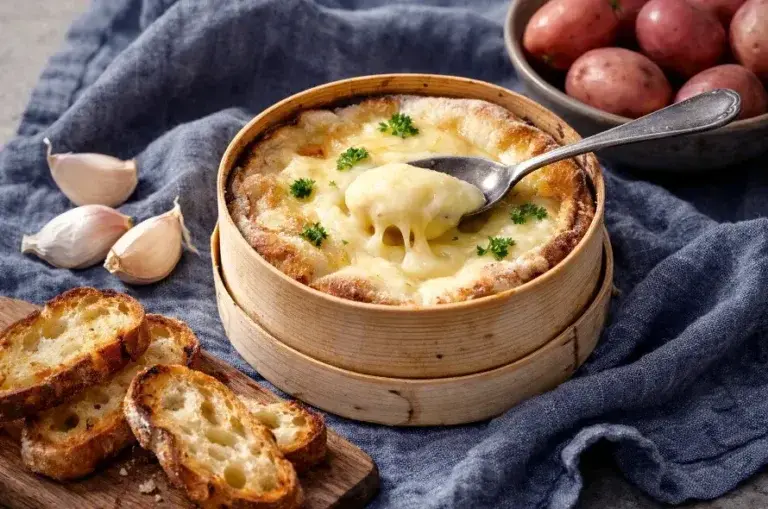
On its own with good bread and a Burgundy wine, red or white. A Gevrey-Chambertin is a classic choice if you’re treating yourself. It also bakes beautifully: warm a whole one in the oven until molten and dip bread into it.
If you’re in the US, you’ll find pasteurised Époisses at good cheesemongers, so this is one you don’t have to travel for.
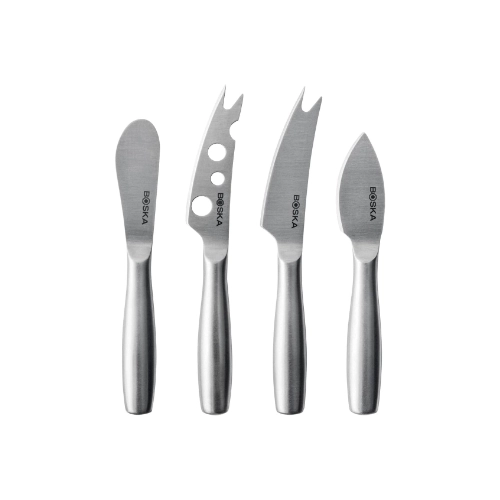
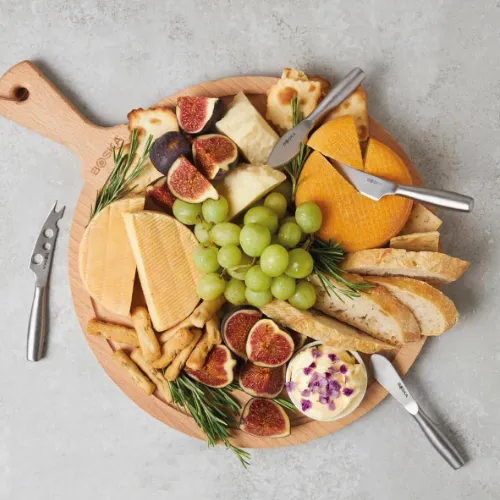
Boska Cheese Knives
Find it on Amazon >
Conclusion
These five won’t please everyone, and that’s fine. They’re a good reminder that smell and flavour are related but not the same thing: Maroilles smells like a farmyard and tastes of milk and hazelnuts, and Époisses smells fierce and eats like salted cream.
Pick the one that scares you least, let it sit out of the fridge for half an hour or so, and taste it slowly with good bread. The smell will be the last thing on your mind!
Over to you: which of these five have you tried, and which one would you put at the top? And if there’s a washed rind cheese from your region that deserves a place on this list, tell me about it in the comments.
A Complete Hosting Guide
This complete guide takes the intimidation out of French cheese and wine hosting, so you can create an impressive, memorable evening that feels effortless.
Just so you know, a few links here earn us a commission. Doesn’t cost you anything extra, and we only link to things that are actually worth your time.