 February 11, 2025
Disclosure: This post may contain affiliate links which provide us a small commission when used for purchase. Please read my disclosure policy for more information. I am grateful for your support!
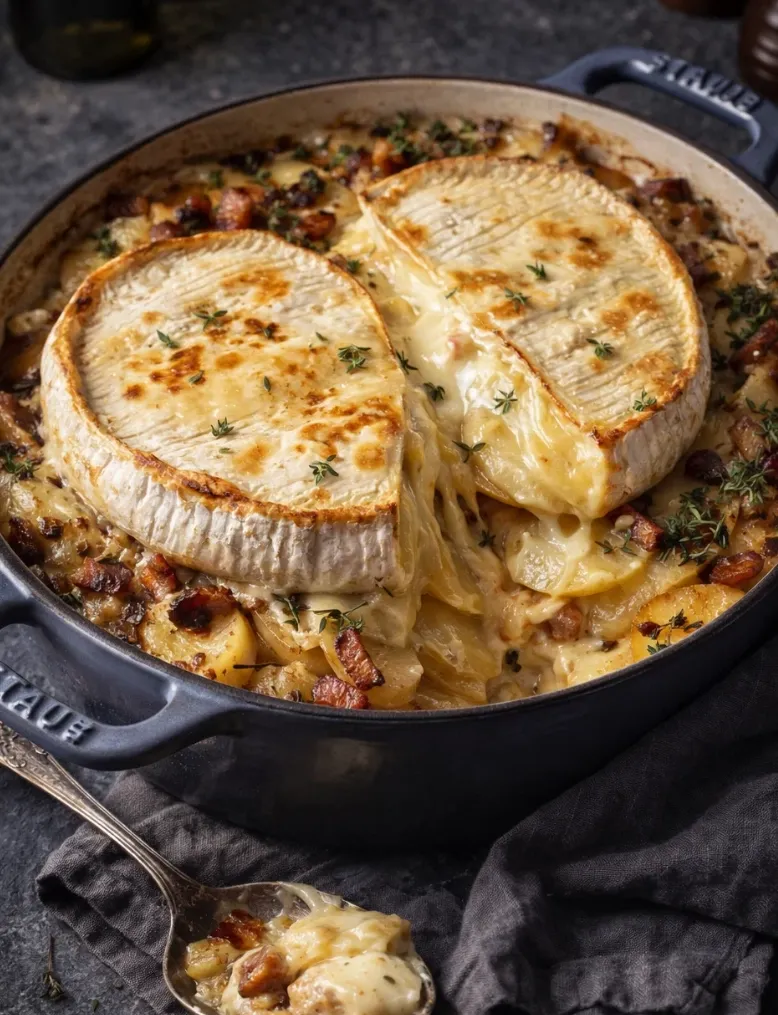
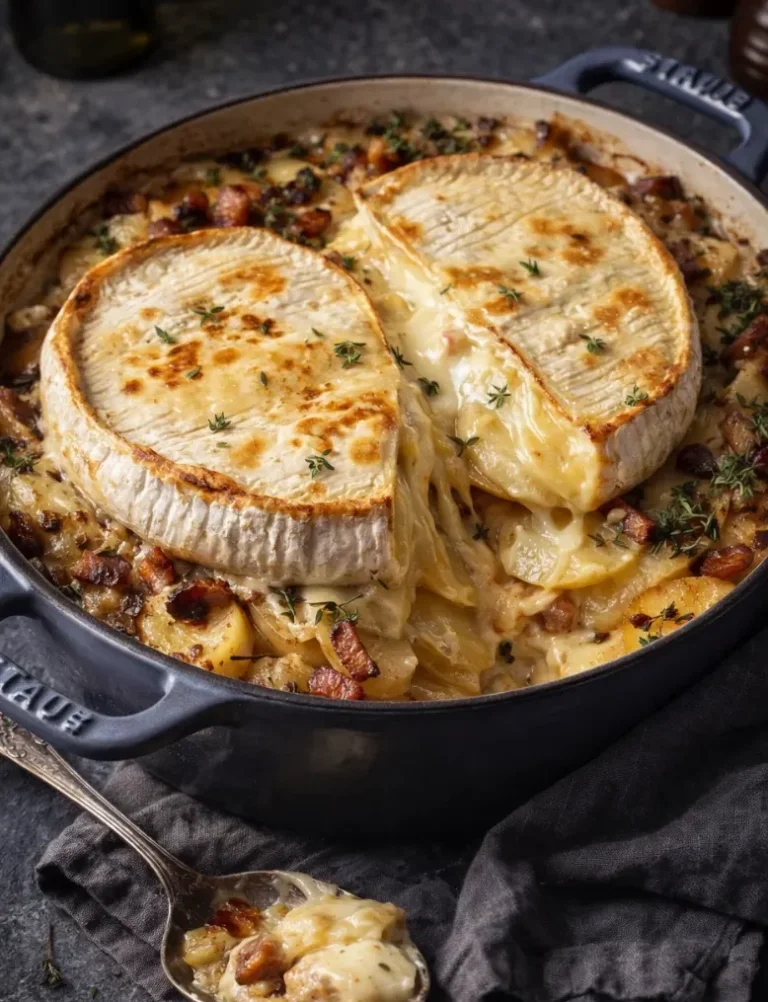
Come winter, tartiflette is the first thing I make to mark the start of cosy evenings. I taught it to my husband at the beginning of our relationship and he loved it so much that I’m no longer allowed to make it. When it’s on the menu he’s got it covered, and I sit back and wait for the moment the Reblochon starts to melt and the kitchen smells incredible!
Table of Contents
Where tartiflette comes from
This traditional Alpine Tartiflette is young and appeared only in the 1980s and has become a symbol of Savoyard cooking, made in kitchens all over France.
What’s genuinely old is the dish underneath it. The name comes from tartifla, Savoyard for potato, and tartiflette draws directly on péla, a peasant dish from the Aravis valley: unpeeled potatoes and onions cooked in a long-handled pan, the pela, over an open fire. Poor man’s food, and the cheese that went in was often whatever had taken on damp and couldn’t be sold. Take that, formalise it around a protected cheese, give it a better name, and push it through ski resorts just as après-ski culture was taking off. Not bad for a marketing campaign!
Ingredients
- Reblochon — a semi-soft washed-rind cheese from the Savoie, made from raw cow’s milk and aged at least two weeks, with a pale orange rind and a mild, nutty, savoury flavour. It’s fine cold and transformed when melted, which is the whole trick.
- Waxy potatoes — Charlotte or Roseval. They hold their shape through boiling and baking, where floury potatoes collapse into mush under all that cheese.
- Vegetarian smoked lardons — for a smoky, salty bite.
- Onion — softened slowly for sweetness against the salt and the cream.
- Dry white wine — a Savoie white traditionally. It deglazes the pan and its acidity cuts the richness.
- Double cream — adds even more richness.
How to make tartiflette
1. Boil the potatoes whole and undercook them slightly
Skins on, in well-salted water, about 20 minutes until just tender. Cooking them whole stops them waterlogging, and slightly underdone is right because they finish in the oven. Boil them soft now and you’ll have mush later. Drain, cool a little, then peel and slice thinly.
2. Cook the onions and lardons
Butter in the pan, onions until translucent, then the lardons until both are golden and fragrant. Give the lardons real time to colour at the edges, because that’s where the smokiness develops. Vegetarian ones release less fat, so the butter is doing double duty here.
3. Deglaze with the wine
Pour it in and let it bubble for a minute, scraping the pan. Then off the heat and stir in the cream, with pepper and a scrape of nutmeg. Taste before you add any salt, because the lardons and the Reblochon are both already salty and the dish reduces as it bakes.
4. Layer it
Potatoes, then some of the onion and lardon mixture, and repeat, distributing evenly rather than tipping the lot on in one go. If you want it properly gooey throughout, buy a second Reblochon and tuck slices between the layers as well as on top.
5. Reblochon rind side up
Slice the Reblochon in half horizontally to make two thinner rounds and lay them cut side down, rind up, across the top. The rind holds the cheese together as it melts and browns beautifully, so it stays a molten blanket rather than running straight to the bottom.
6. Bake until bubbling and golden
180°C for 45 to 50 minutes, until the cheese is melted, golden and bubbling, and a knife slides easily through the potatoes. Let it settle five minutes before serving, or the first spoonful is molten enough to do damage.

Tools for this recipe
Check out my favorite kitchen essentials and cookware!
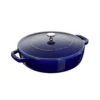
- Use a braisière deep enough to hold the layers without overflowing, which spreads heat evenly across the base and keeps the tartiflette bubbling hot at the table long after it leaves the oven.
- Use a sharp knife or a mandoline to slice the potatoes thinly.
Tips for success
- Boil the potatoes the day before if you can: cold cooked potatoes slice far more cleanly than warm ones, which crumble, and it splits the work in two.
- Slice the Reblochon horizontally with a long thin knife, cold from the fridge: room-temperature Reblochon squashes rather than cuts. Ten minutes in the freezer firms it up if it’s being difficult.
- Leave the rind on: people ask and it’s edible. It’s where a lot of the flavour is, and it’s what stops the cheese sliding off the top.
- If the top browns before the potatoes are done, cover with foil: better than pulling it early and finding hard potato underneath.
- Make it in the dish you’ll serve it in: this is rustic food, and transferring it to something smarter only breaks up the layers. This is why it’s nice to make it in a braisière.
How to store it
- In the fridge: Keeps 3 days covered in a glass container. The cheese firms up and the texture changes, but plenty of people prefer the second-day version and they’re not wrong. Reheat covered in a moderate oven rather than a microwave, which makes the cheese oily. Or like me, eat it cold for lunch!
- Making ahead: Assemble the whole thing up to a day ahead, keep it covered in the fridge, and bake when you need it, adding ten minutes or so from cold. Genuinely useful when you have people coming.
- In the freezer: Not ideal. Cooked potatoes go grainy and the cheese separates on thawing. If you must, freeze it baked and reheat from frozen in a low oven, but it won’t be what it was.
More cheese recipes to try
Variations
- Without cream: more contested than you’d think. Plenty of Savoyards insist cream has no place, because it softens the strong, wild flavour of the Reblochon. Try it once and decide for yourself.
- With mushrooms: sautéed mushrooms in place of the lardons is very good and keeps it vegetarian, with thyme to lift it.
- Croziflette: made with crozets, the small square buckwheat pasta of the Savoie, instead of potatoes. A proper regional variation and worth seeking the pasta out for.
- With other Alpine cheeses: Raclette, Morbier or a Tomme de Savoie all melt well!
FAQ
Is tartiflette a traditional Savoyard dish?
Not really. It appeared in the 1980s, either from the Reblochon marketing board or from a La Clusaz restaurateur with cheese to shift. What’s genuinely old is péla, the peasant dish of potatoes and onions it’s based on.
What cheese can I use instead of Reblochon?
You can use other Alpine cheeses like Raclette, Morbier or a Tomme de Savoie. They all melt beautifully!
Do you put the Reblochon rind side up or down?
Rind up. Slice the cheese horizontally and lay the halves cut side down, so the rind holds the cheese together as it melts and browns on top.
What potatoes are best for tartiflette?
Waxy varieties like Charlotte or Roseval, which hold their shape through boiling and baking. Floury potatoes disintegrate under the cheese.
Should tartiflette have cream in it?
It’s genuinely debated. Many recipes include it for richness, but plenty of Savoyards argue it mutes the Reblochon and leave it out. Both versions are made in the region.



 Prep Time 30 minutes
  Cook Time 45 minutes
  Total Time 1 hour 15 minutes
  Servings 4 people
Description
Ingredients
- 1 kg waxy firm potatoes Charlotte, Roseval, or Waitrose Essential Red Potatoes
- 250 gr smoked plant-based lardons
- 1 onion
- 450 gr Reblochon cheese
- 250 ml double cream or plant based double cream
- 125 ml dry white wine optional, traditionally from Savoie
- 1 tbsp unsalted butter
- salt and black pepper
Equipment

Instructions
1. Cook the potatoes
- Wash the potatoes and cook them whole, skin on, in a large pot of salted water for about 20 minutes, until just tender but not falling apart, as they'll finish cooking in the oven. Drain, cool slightly, then peel and cut into thin slices.
2. Prepare onions and lardons
- Peel and finely slice the onion. Heat the butter in a frying pan, add the onion and cook gently until translucent. Add the smoked lardons and fry until both are golden and fragrant.
3. Deglaze (optional)
- Pour in the white wine and let it bubble for a minute to deglaze the pan. Remove from the heat and stir in the cream. Season with pepper and a pinch of nutmeg. Taste before adding salt, as the lardons and cheese are already salty.
4. Layer the tartiflette
- Preheat the oven to 180°C (160°C fan). In your baking dish, layer potatoes, then some of the onion, lardon and cream mixture. Repeat, distributing everything evenly. For extra gooeyness, add slices from a second Reblochon between the layers.
5. Add the Reblochon
- Slice the Reblochon in half horizontally to make two thinner rounds. Place them rind side up over the top of the dish.
6. Bake
- Bake in the centre of the oven for 45–50 minutes, until the cheese is melted, golden and bubbling and the potatoes are tender all the way through. Rest for 5 minutes before serving.
Notes
- Reblochon is essential for authenticity. If you can’t find it, pther Alpine cheese will melt beautifully too like Morbier, Raclette or a Tomme de Savoie.
- Some French cooks skip the cream, letting the cheese do all the work, but most traditional recipes include it for extra richness.
- Tartiflette is pure winter comfort, don’t even think about calories!
Share your feedback and spread the love!
If you try this recipe, I’d love to hear how it turns out! Leave a ★★★★★ rating and your thoughts in the comments, it helps fellow French foodies discover this recipe too. Snap a photo and tag @obviously.french on Instagram. Come talk about it in our Facebook group. And don’t forget to save this recipe to Pinterest so you’ll always have it handy for your next French-inspired meal!