 September 22, 2025
Disclosure: This post may contain affiliate links which provide us a small commission when used for purchase. Please read my disclosure policy for more information. I am grateful for your support!
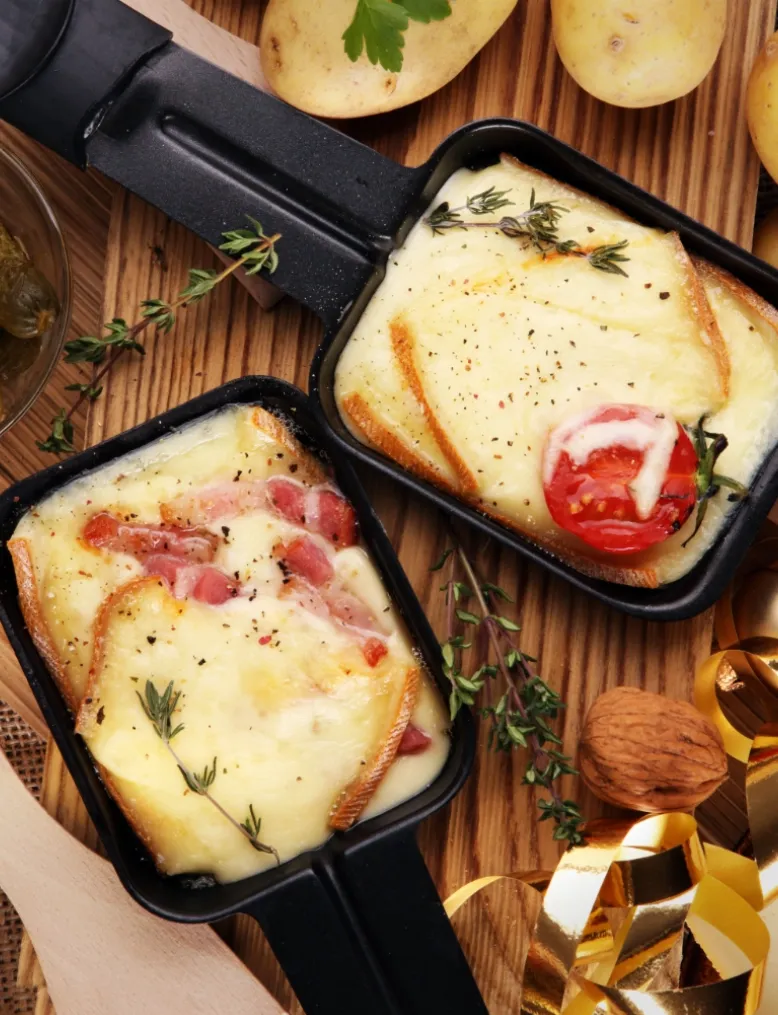
I grew up with Raclette and fondue as Christmas dinner traditions, and it still feels like a special occasion every time. Raclette is the best winter dinner to share with family and friends around the table. The cheese is completely addictive, you will eat too much of it, but that’s how a raclette evening should go. I’m not a huge fan of the winter season, but this makes it a lot more bearable!
Table of Contents
Where raclette comes from
The name comes from racler, to scrape, and that single gesture is the entire history of the dish. Alpine herders took cheese with them when they moved the cows up to summer pasture, and in the evenings they’d prop a half wheel beside the fire, wait for the cut face to melt, and scrape it onto bread or potatoes. Nobody invented it. It’s what you do when you have cheese and a fire.
This happened on both sides of the mountains. The Swiss Valais has the most famous claim, with a detailed account from Sion in 1574 and melted-cheese references in convent texts as far back as 1291. But the French side has its own line: the earliest trace in the Maurienne dates to 1477, where shepherds set a half-wheel on a stone with the cut face to the flames. For centuries nobody called it raclette at all, it was simply fromage rôti, roasted cheese, or Bratchäs in Swiss German. The word raclette only turns up widely in written French around 1875, by which point it was clearly already familiar.
Both traditions are now protected: the Swiss Raclette du Valais has been AOP since 2003, and the Raclette de Savoie won its IGP on 27 January 2017. What actually carried raclette out of the mountains and onto ordinary tables was the ski boom of the 1970s, and then the electric raclette grill, which meant you no longer needed a fire or a specialist heated contraption. That’s how it reached little me in France.
What to drink
A dry white wine from Savoie is the traditional pairing, something like Apremont or Abymes, which have the freshness and acidity to cut through the richness of the cheese. A Riesling from Alsace works really well too. Keep it dry, Alpine if you can, and keep it cold!
Ingredients
- Raclette cheese — the entire meal, so this is where the money goes. A semi-hard Alpine washed-rind cheese, pale yellow inside, mild and nutty cold, deeply savoury and aromatic once melted. That famous smell comes from washing the rind during ageing. Count 250g per person, which sounds enormous and is exactly right.
- Firm-fleshed potatoes — waxy, not floury. They need to hold their shape under a flood of hot cheese rather than collapsing into mash. Small enough to eat whole or halved.
- Cornichons — sharp, vinegary and essential. They cut the richness, which is precisely what lets you eat far more cheese than you intended.
- Pickled onions — same job as the cornichons, with a bit more sweetness.
- Salad leaves and mustard vinaigrette — the fresh, acidic counterpoint that resets your palate between rounds.
How to make raclette
1. Boil or steam the potatoes
Waxy potatoes, skins on, in well-salted water. Cook them whole so they don’t waterlog, and get them to the table hot. Lukewarm potatoes under melted cheese is the most common way a raclette disappoints, so a covered dish or a warmed bowl matters more than it sounds.
2. Slice the cheese
About 5mm. Thicker and it won’t melt through before the top catches; thinner and it’s gone in seconds. Lay it out on a plate so people can help themselves without a queue. Some raclette cheese come already sliced.
3. Make the vinaigrette
Mustard and vinegar first, then the oil in a stream while whisking. Dress the leaves only as you sit down, or they’ll be limp by round two.
4. Preheat the grill properly before anyone starts
A cold grill means the first round takes twice as long and comes out pale rather than golden. Give it ten minutes.
5. Melt, scrape, repeat
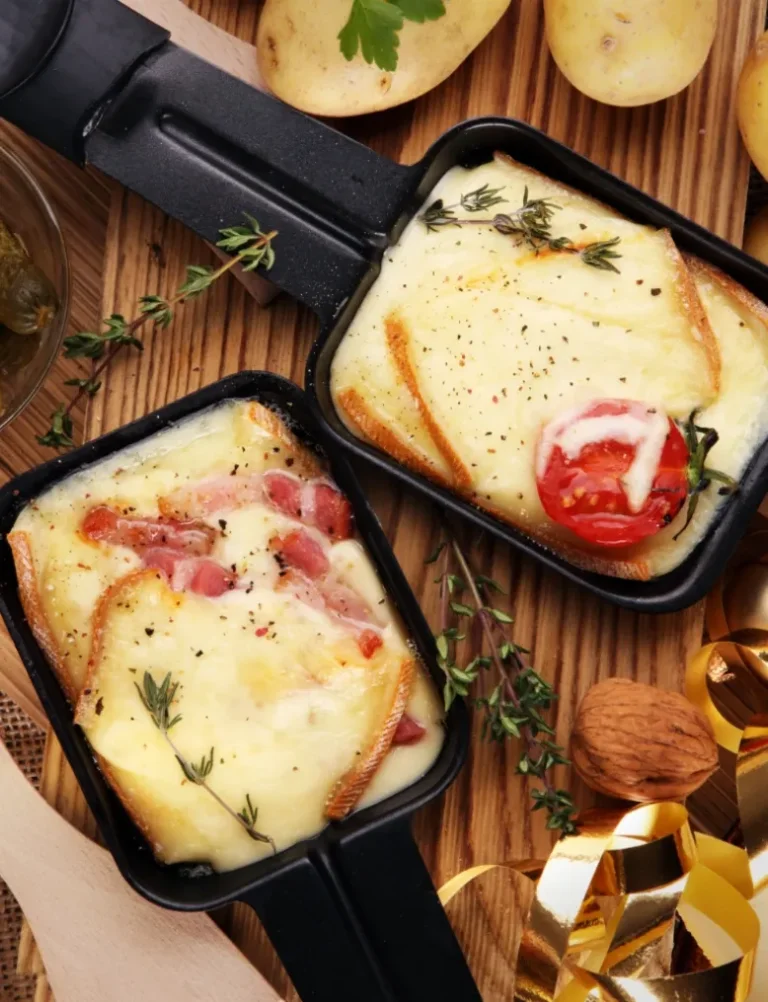
A slice in each little pan, under the element for 3 to 5 minutes until bubbling and golden. Scrape it straight over the hot potatoes and pickles, and put the next slice on immediately!
Tools for this recipe
Check out my favorite kitchen essentials and cookware!
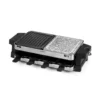
- Use a raclette grill with individual pans, so everyone melts their own to their own taste.
Tips for success
- Take the cheese out of the fridge 30 minutes ahead: fridge-cold cheese melts unevenly, browning on top while the middle is still solid. Room temperature melts smoothly.
- Keep the potatoes hot, not warm: a tea towel over the serving bowl, or a lidded dish. Cold potato is what turns glorious cheese into a congealed disappointment.
- Don’t overload the little pans. One slice, maybe one and a half. Overfilled pans overflow onto the element, burn, and make the whole room smell of scorched cheese for the rest of the evening.
- Have twice as many cornichons as you think you need: they’re the thing that makes 250g of cheese per person physically possible, and they always run out first.
- Open a window: this is a fragrant meal, and your house will remember it tomorrow!
How to store it
- In the fridge: Leftover cheese keeps well wrapped in waxed paper (not clingfilm, which makes it sweat) for a week or two. Cooked potatoes keep 3 days in a glass container and are excellent fried in butter the next morning. Cornichons and pickled onions keep indefinitely.
- At room temperature: Bring the cheese out half an hour before the meal, but don’t leave it sitting out afterwards. Wrap it and get it back in the fridge once you’ve finished.
- In the freezer: Raclette cheese can be frozen if you’ve badly overbought, and it’s fine for melting afterwards, though the texture suffers if you wanted to eat it cold. Don’t freeze cooked potatoes, they go grainy.
More cheese recipes to try
Variations
- Vegetables in the pans: mushrooms, cherry tomatoes, sliced peppers or courgette in the little pan underneath the cheese, so they cook in it.
- Different cheeses on the table: put out a second cheese alongside the raclette, a Morbier, a Reblochon, a smoked raclette or a pepper-crusted one. People compare, which adds to the fun.
- On bread instead of potatoes: the original mountain version was scraped onto bread, not potatoes, so it’s arguably more authentic. A good sourdough works beautifully.
- The proper half-wheel. If you ever get the chance, a real raclette machine that melts the cut face of a half wheel is a different experience from the little pans. Some cheesemongers hire them out for parties.
FAQ
How much raclette cheese per person?
About 250g per person, which sounds like a lot and isn’t. Raclette is the whole meal rather than one course, and people eat steadily for an hour or more.
What potatoes are best for raclette?
Firm, waxy varieties like Charlotte or Ratte. They hold their shape under the melted cheese, whereas floury potatoes break down and go mushy.
Can you eat the rind on raclette cheese?
Yes, the washed rind is edible and many people (me included) think it’s the best part, especially left under the grill until golden and crisp. Rindless raclette is available if you’d rather.
What’s the difference between raclette and fondue?
Fondue is a shared pot of melted cheese you dip into. Raclette is melted in individual pans, so each person controls their own, and it’s scraped over potatoes rather than dipped.
Can you make raclette without a raclette grill?
Yes, though it’s less fun. Melt slices in small ovenproof dishes under a hot grill, or in a heavy pan, and scrape over the potatoes. You lose the communal rhythm but the food is the same.


 Prep Time 25 minutes
  Cook Time 20 minutes
  Total Time 45 minutes
  Servings 4
Description
Ingredients
Fondue
- 1 kg Raclette cheese 250g per person
- 800 gr firm-fleshed potatoes
On the side
- 200 gr pickled gherkins cornichons
- 150 gr pickled onions
Equipment
Instructions
1. Prepare the potatoes
- Wash the potatoes and boil them whole in salted water until tender, about 20–25 minutes. Drain and keep warm in a covered dish, they need to be hot when they reach the table.
2. Slice the cheese
- Cut the raclette into 5mm slices if it isn't pre-sliced, and arrange on a plate ready for melting.
3. Make the salad
- Whisk the Dijon and vinegar in a small bowl. Slowly drizzle in the olive oil, whisking until emulsified. Season. Toss with the leaves just before serving.
4. Heat the raclette grill
- Preheat for around 10 minutes so the first round melts properly.
5. Set the table
- Put out the hot potatoes, cornichons, pickled onions and dressed salad so everyone can help themselves throughout.
6. Melt the cheese
- Place a slice in each individual raclette pan and slide it under the heating element. Melt for 3–5 minutes, until bubbling and golden.
7. Scrape and repeat
- Scrape the melted cheese over the potatoes and pickles on your plate, then start the next slice straight away. Keep going, share, chat, and enjoy.
Notes
- Raclette means “to scrape,” the traditional way to serve melted cheese over food.
- Firm or waxy potatoes hold up perfectly to the cheese, unlike floury ones which break down.
- The crisp salad with mustard dressing cuts through the cheese’s richness and refreshes the palate.
- Vegetarian friendly, simple, and endlessly satisfying!
Share your feedback and spread the love!
If you try this recipe, I’d love to hear how it turns out! Leave a ★★★★★ rating and your thoughts in the comments, it helps fellow French foodies discover this recipe too. Snap a photo and tag @obviously.french on Instagram. Come talk about it in our Facebook group. And don’t forget to save this recipe to Pinterest so you’ll always have it handy for your next French-inspired meal!