 September 22, 2025
Disclosure: This post may contain affiliate links which provide us a small commission when used for purchase. Please read my disclosure policy for more information. I am grateful for your support!
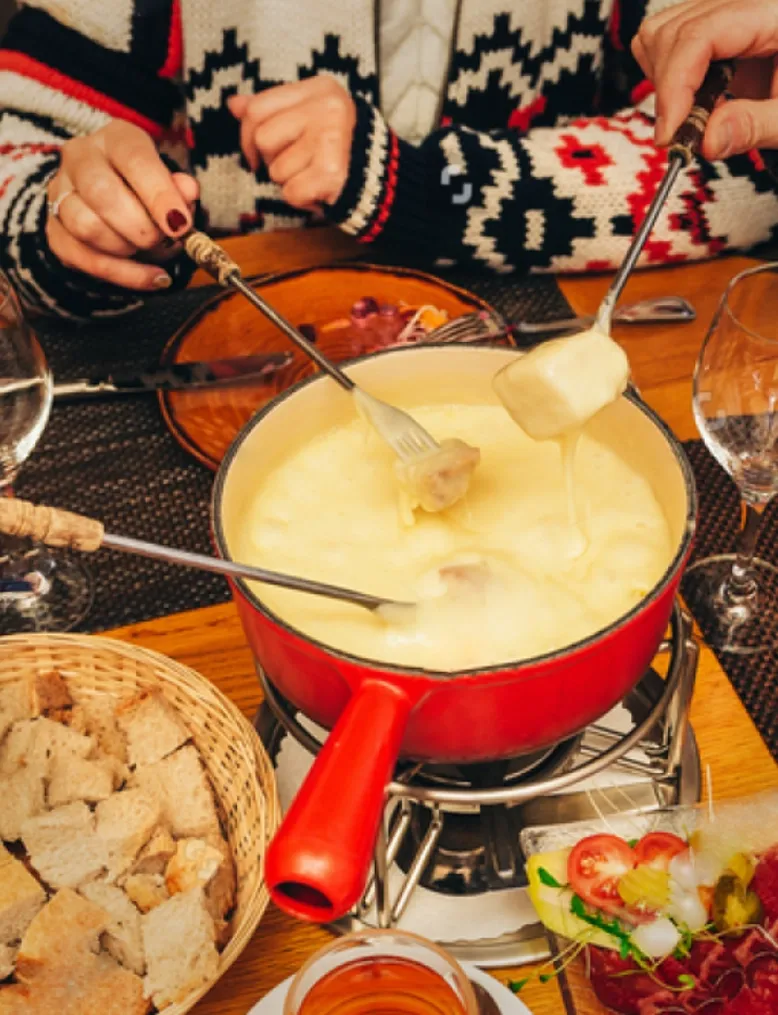
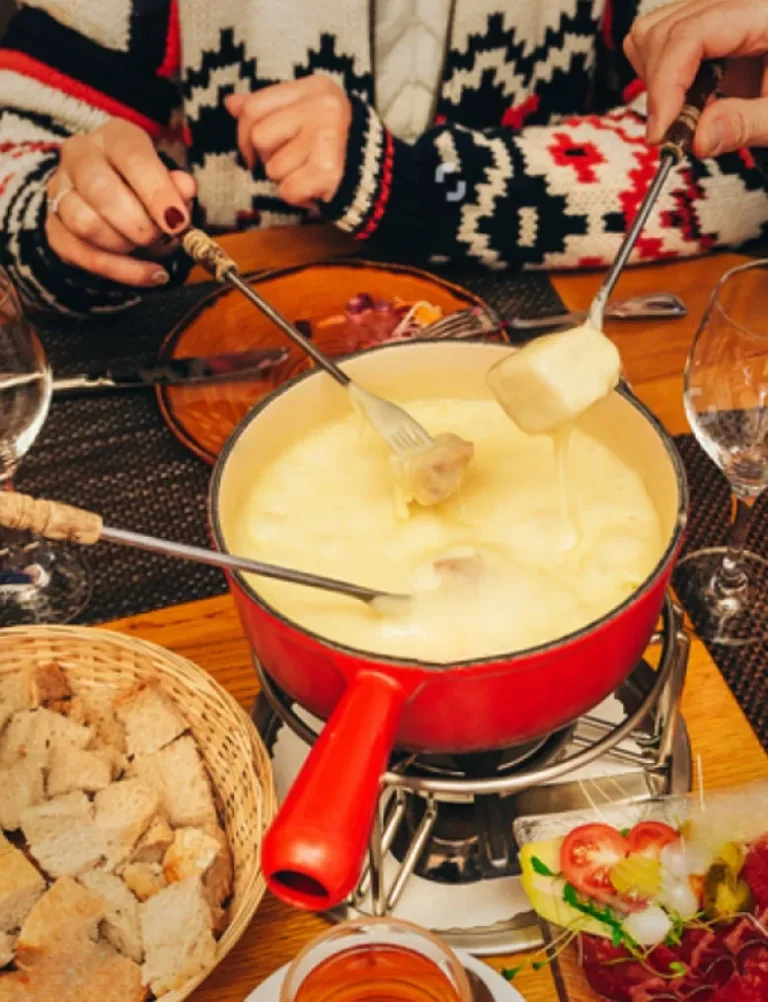
When in France, you have to melt cheese. I grew up in the south, so cheese fondue Savoyarde was a Christmas dinner treat, just like raclette. Honestly, I looked forward to the holidays more for this gooey dinner than for the presents. And the best thing about being a grown-up is that I can make it whenever I want, and I won’t lie, I’ve done it in full summer because I simply craved it. Don’t judge me. Winter is obviously when this gets made most, but there are no rules besides one: don’t drop your baguette in the pot. I’ll explain why in a minute!
Table of Contents
Where cheese fondue Savoyarde comes from
We borrowed this one from our neighbours the Swiss. The historian Marie-Thérèse Hermann, who wrote the book on Savoyard peasant cooking, put it plainly: before the war nobody made fondue in Savoie. It was a luxury dish the Genevans introduced them to, and it only took hold after the Second World War, in the northern part of Savoie along the Swiss border. Savoie has never claimed to have invented it.
The fondue we know today is surprisingly modern: wine only entered the recipe in 1911, and kirsch in 1923. Before that, French versions were quite different. Vincent la Chapelle’s 1734 recipe had white wine, garlic and nutmeg, while Brillat-Savarin’s in 1794 was gruyère, eggs and butter with no wine at all, closer to scrambled eggs than to anything you’d dip bread into.
What made it famous was marketing and then cinema. The Swiss dairy industry pushed fondue hard in the 1930s to revive interest in Swiss cheese against foreign competition, and when it appeared at the 1940 New York World’s Fair billed as Switzerland’s national dish, it went international. In France it was the ski tourism boom from the 1950s that wove it into Savoyard identity, and then Les Bronzés font du ski in 1979, with its legendary ruined-fondue scene, that fixed it permanently in the French imagination. Not many dishes can claim a cult film helped make them famous, but fondue can.
Ingredients
- Beaufort — the backbone. Robust, creamy and deeply savoury, with that amazing Alpine milk flavour. If you only splash out on one cheese, make it this one.
- Comté — brings a fruity edge and slight sharpness that lifts the whole blend and stops it tasting heavy.
- Emmental — smooths everything out with a gentle nuttiness and gives the fondue its stretch when you pull the bread away. (Some Savoyards insist the truly traditional third cheese is gruyère de Savoie, which is worth trying if you can find it.)
- Dry white wine — The acidity is what keeps the cheese proteins in a smooth emulsion instead of a lumpy, greasy mass. A dry Savoie white, Apremont for choice, and something you’d happily drink with the meal.
- Garlic — rubbed round the pot, which flavours it subtly without dominating.
- Cornflour — the insurance policy. It stabilises the emulsion and stops it splitting.
- Kirsch — traditional, optional, and it adds an aromatic lift that cuts the richness.
- Day-old baguette — the vehicle, and half the meal. Slightly stale is better.
- Black pepper and nutmeg — the classic seasoning.
How to make cheese fondue Savoyarde
1. Grate the cheese yourself
All three, before you turn on any heat. Grated cheese melts evenly; cubes sink and clump. And once the wine is hot you won’t have time to stand there grating.
2. Rub the pot with garlic, then heat the wine gently
Almost to a simmer, never to a boil. Boiling wine cooks off the acidity that’s holding your emulsion together and you’ll be fighting a split fondue for the rest of the evening.
3. Add the cheese in handfuls
A handful at a time, stirring constantly in a figure of eight, waiting until it’s fully melted before the next goes in. Tipping it all in drops the temperature and gives you a stringy, clumped mess. This is the step that takes patience and it’s the one that decides everything.
4. Slake the cornflour with the kirsch and stir it in at the end
Cornflour straight into hot liquid goes lumpy. Mixed smooth with the kirsch first, it stirs in cleanly and gives you that glossy, stable finish.
5. Season, then get it to the table.
Pepper and a little nutmeg, no salt. Onto the burner, and keep the flame low enough that it stays creamy rather than bubbling and separating. Stir it every so often through the meal.
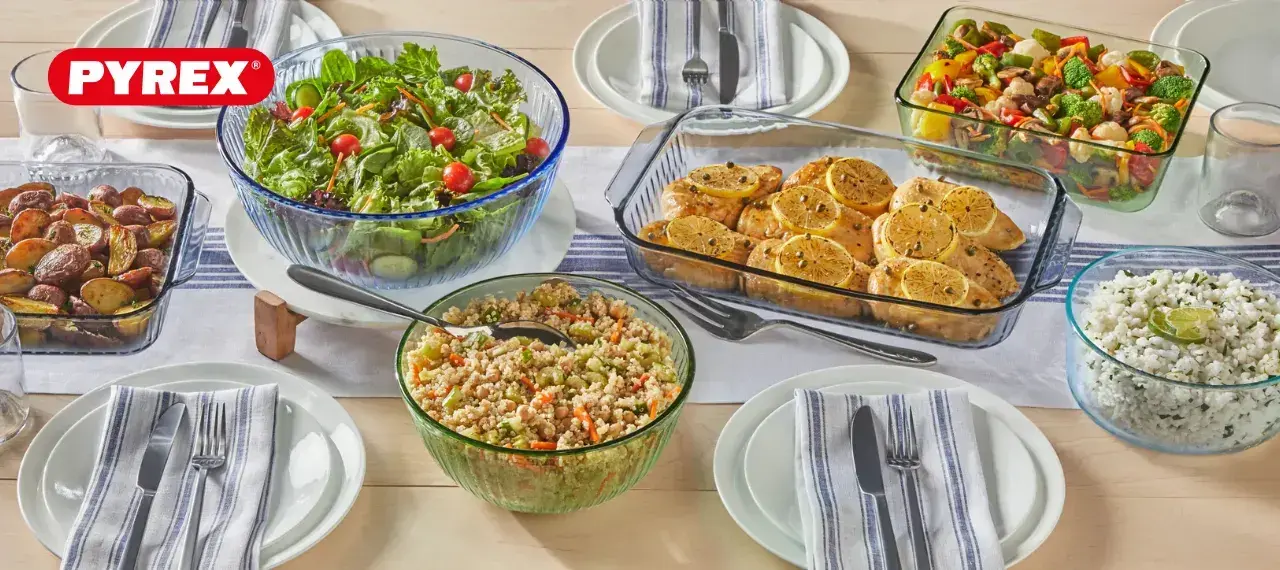
Tools for this recipe
Check out my favorite kitchen essentials and cookware!
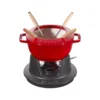
- Use a cast iron fondue pot with its burner, because cast iron holds a steady, even heat through a long meal without hot spots that would catch and separate the cheese.
Tips for success
- Use day-old bread, and keep the crust on: fresh bread is too soft and disintegrates the moment it hits hot cheese. Slightly stale cubes with crust on one side hold together on the fork, and the crust is what your fork grips.
- Grate, don’t cube, and never buy pre-grated: pre-grated cheese carries anti-caking starch that stops it melting smoothly. Grating your own takes five minutes and makes a visible difference.
- Never let the wine boil: heat kills the acidity that emulsifies the cheese. Just below a simmer, the whole time.
- If it splits, don’t panic: whisk a teaspoon of cornflour into a splash of cold wine or lemon juice and stir it in vigorously off the heat. Acid and starch will usually bring it back together.
- Keep the burner low at the table: a fondue held too hot separates into oil and rubber within twenty minutes. You want it barely bubbling at the edges.
- Stir as you dip: everyone should swirl their bread through rather than just dunking it, which keeps the fondue moving and stops the base catching.
How to store it
- In the fridge: Leftover fondue keeps 2 to 3 days in a covered container. It sets solid, which is normal. Reheat it very gently in a pan with a splash of wine, stirring constantly, and it’ll come back. Leftover grated cheese keeps a week wrapped well.
- At room temperature: Bring the cheese out of the fridge 30 minutes before you start, so it melts evenly. Don’t leave the finished fondue sitting out after the meal.
- In the freezer: Not recommended. The emulsion breaks on thawing and comes back grainy and oily. If you have a lot left over, use it up instead: stirred through pasta, spooned over boiled potatoes, or as the base of a very good cheese toastie.
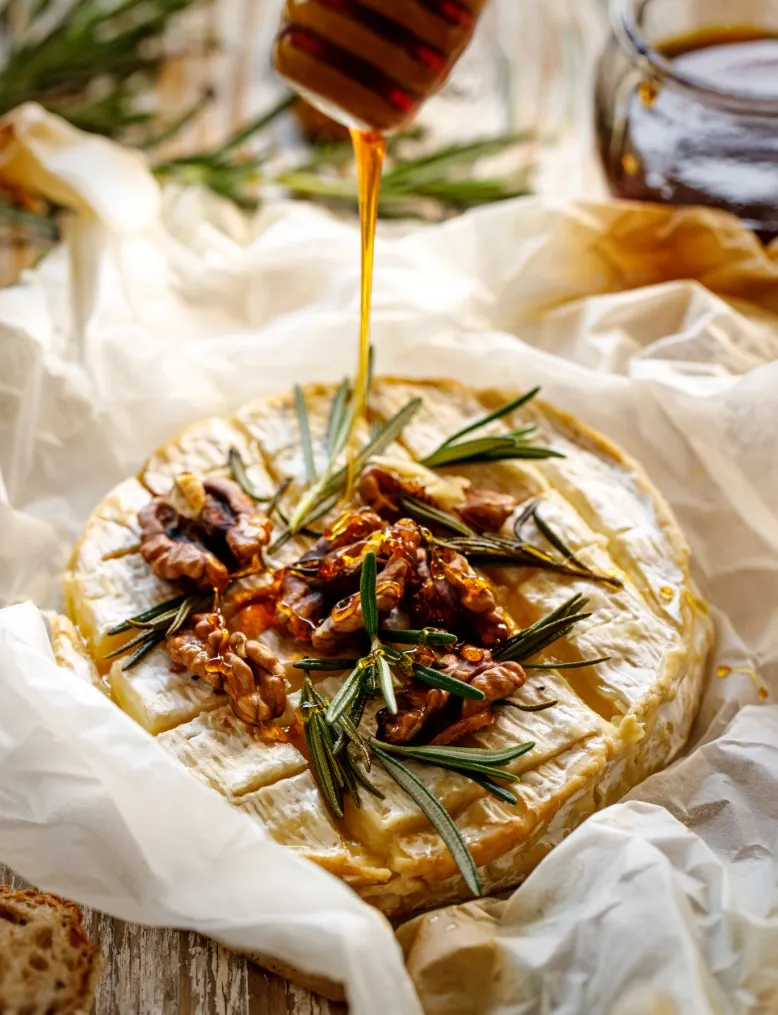
More cheese recipes to try
Variations
- Moitié-moitié, the Swiss classic: half gruyère, half vacherin fribourgeois. Softer, creamier and richer than the Savoyard three-cheese version, and worth making once to taste the difference.
- With gruyère de Savoie: several Savoyards will tell you the properly traditional French blend is Comté, Beaufort and gruyère de Savoie rather than Emmental. Slightly deeper and less stretchy.
- Beyond bread: boiled new potatoes, blanched cauliflower or broccoli, cornichons, pickled onions, mushrooms, or cubes of apple or pear. The fruit against salty melted cheese is delicious.
- With mushrooms: Fondue aux cèpes, with dried porcini rehydrated and their soaking liquid added with the wine, gives an earthy, autumnal version.
- Truffle: a little truffle paste or shaved fresh truffle stirred in at the end. Expensive, wildly good, and a genuinely different dish. Or use truffle oil to infuse.
- Without alcohol: replace the wine with an equal quantity of dry cider or, for something alcohol-free, unsweetened apple juice sharpened with a good squeeze of lemon. You need the acidity, so don’t just use stock or milk.
FAQ
What is the best cheese for fondue?
The classic Savoyarde blend is Beaufort, Comté and Emmental in equal parts: Beaufort for depth, Comté for fruitiness, Emmental for smoothness and stretch. Grate them yourself rather than buying pre-grated.
Why did my cheese fondue go stringy or split?
Usually the wine boiled, the cheese went in too fast, or there wasn’t enough acidity. Keep the wine below a simmer, add cheese a handful at a time, and stir in cornflour slaked with kirsch to stabilise it.
Can you make cheese fondue without wine?
You need the acidity, so substitute dry cider, or unsweetened apple juice with a good squeeze of lemon. Milk or stock alone won’t emulsify the cheese and you’ll get a greasy, separated pot.
What do you dip in a cheese fondue besides bread?
Boiled new potatoes, blanched cauliflower or broccoli, cornichons, pickled onions, mushrooms, and cubes of apple or pear all work well. Fruit against salty cheese is a particularly good combination.
Is fondue Swiss or French?
Swiss in origin. The historian Marie-Thérèse Hermann noted that fondue wasn’t made in Savoie before the war and arrived from Geneva, taking hold only afterwards. The Savoyarde version is the French adaptation, using French Alpine cheeses.


 Prep Time 15 minutes
  Cook Time 15 minutes
  Total Time 30 minutes
  Servings 4
Description
Ingredients
- 300 gr Beaufort cheese grated
- 300 gr Comté cheese grated
- 300 gr Emmental cheese
- 1 clove garlic
- 350 ml dry white wine
- ½ tsp corn starch
- 30 ml Kirsch cherry brandy, optional for digestion
- nutmeg to taste
- black pepper to taste
Equipment
Instructions
1. Prepare the pot
- Rub the inside of the fondue pot with the cut sides of the garlic clove. This flavours the pot gently without overpowering the fondue.
2. Heat the wine
- Pour the wine into the pot and heat over medium heat until hot and steaming, but do not let it boil.
3. Mix cornflour and Kirsch
- In a small bowl, combine the cornflour with the Kirsch until smooth. This stabilises the cheese mixture.
4. Melt the cheeses
- Gradually add the grated Beaufort, Comté and Emmental to the hot wine, a handful at a time, stirring constantly in a figure-eight motion. Wait until each addition is fully melted before adding more.
5. Thicken the fondue
- Once all the cheese is melted and smooth, stir in the cornflour and Kirsch mixture until the fondue thickens and turns glossy.
6. Season
- Add a good grind of black pepper and a light dusting of nutmeg. Don't add salt, the cheese provides plenty.
7. Serve and enjoy
- Set the pot over the fondue burner, keeping the flame low. Serve straight away with the cubed day-old baguette for dipping.
Notes
- The triple cheese blend of Beaufort, Comté, and Emmental is key for authentic Savoyarde fondue, balancing nuttiness, creaminess, and melting texture.
- Using the same dry white Savoie wine for cooking and drinking with the meal enhances harmony. Apremont is a classic choice.
- Stirring in figure eights is said to improve creaminess, though feel free to stir in whatever way feels right, just keep it gentle to avoid curdling.
- Kirsch is traditional but optional; it adds a touch of aromatic depth and helps with digestion.
Share your feedback and spread the love!
If you try this recipe, I’d love to hear how it turns out! Leave a ★★★★★ rating and your thoughts in the comments, it helps fellow French foodies discover this recipe too. Snap a photo and tag @obviously.french on Instagram. Come talk about it in our Facebook group. And don’t forget to save this recipe to Pinterest so you’ll always have it handy for your next French-inspired meal!