 September 26, 2026
Disclosure: This post may contain affiliate links which provide us a small commission when used for purchase. Please read my disclosure policy for more information. I am grateful for your support!
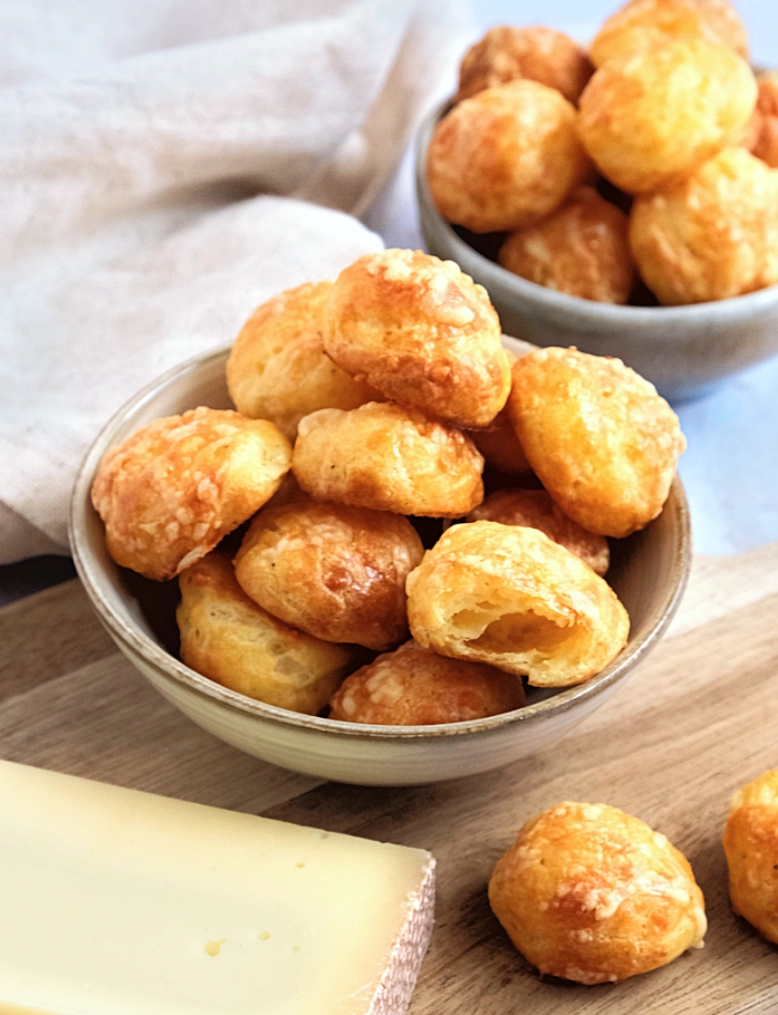
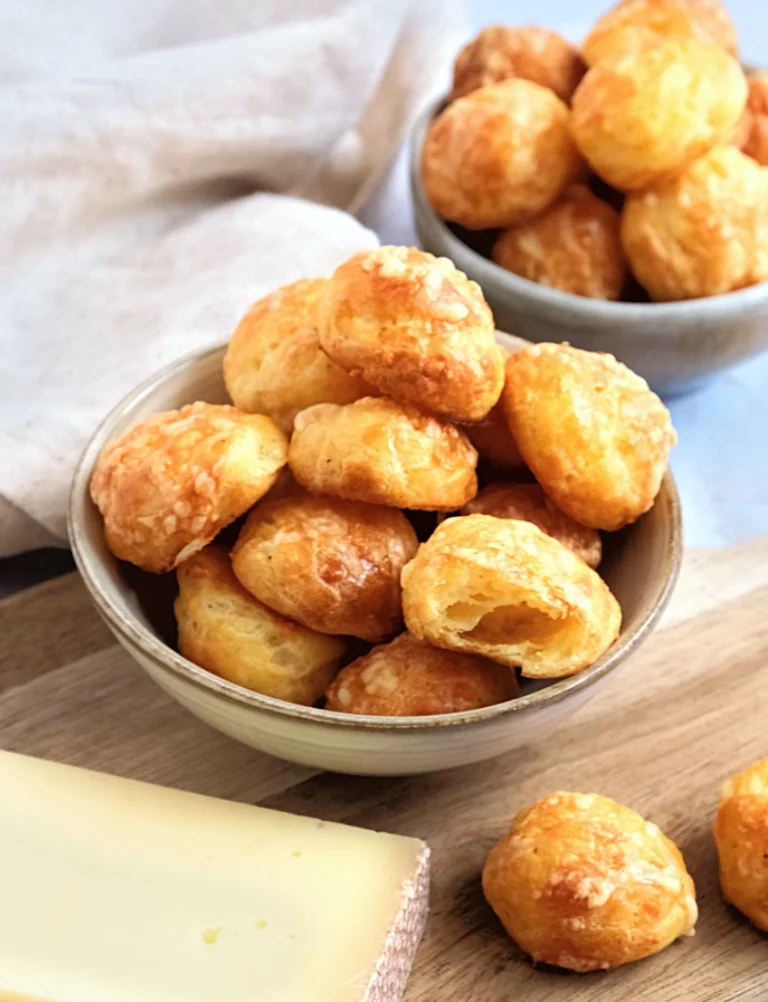
Gougères are my favourite thing to make when people are coming over or when I go to an apéro myself. They look like you went to some trouble, they disappear in minutes, and they’re so easy to make. It really is just cheese beaten into choux pastry. Warm from the oven, crisp outside and soft and cheesy within, they’re impossible to stop eating.
They come from Burgundy, where no apéro is complete without them, and they go with a glass of white wine. If you can make choux pastry, you can make this gougeres recipe, and once you have, you’ll find yourself making them constantly for a simple movie night at home!
Table of Contents
Where gougères comes from
Gougères are Burgundian to the core, and Burgundy takes them seriously. In the region, a good meal is expected to begin with a batch of them alongside a glass of Aligoté or Crémant, and there’s even a village near Auxerre, Flogny-la-Chapelle, that has proclaimed itself the world capital of the gougères.
Their history reaches back further than most apéro food. The choux pastry underneath is often traced to the cooks who came to France in the sixteenth century, though that story is more legend than fact, and the gougère itself appears in the record at a feast in Sens in 1571. By the eighteenth century they were well established, and they’ve been a fixture of Burgundian tables ever since.
They come in different forms across the region: piped small as individual puffs for apéro, shaped into a large shareable crown, or made as a ring to slice. What they always share is the cheese, a hard pressed cheese like Comté or Gruyère beaten into the warm choux, which melts as it bakes and gives the puffs their savoury depth. Don’t confuse them with their sweet cousins, chouquettes and profiteroles, which start from the same paste but go in an entirely different direction.
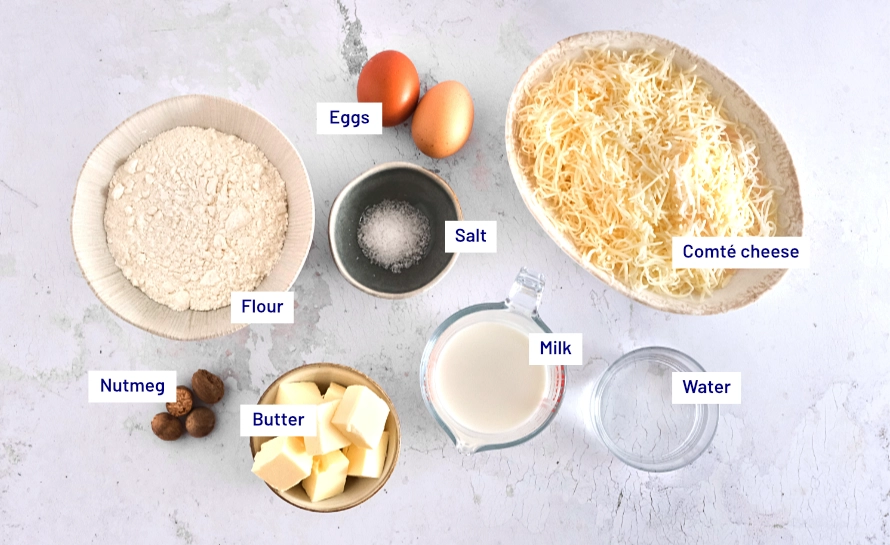
Ingredients
- Choux pastry — the base, and the whole method lives on its own page. Made as usual, right up to the point where the eggs are beaten in.
- Comté — the classic Burgundian choice, grated, for a deep, nutty, savoury flavour. A well-aged Comté gives the most character. Some goes into the paste, a little more on top.
- Nutmeg — a pinch, the traditional partner to cheese in the gougères, adding a warm background note.
- Black pepper — a good grind, since the cheese brings the salt and the pepper brings the lift.
- Egg, for glazing — beaten and brushed over the tops, which gives that golden, glossy bakery finish.
How to make gougères
1. Make the choux pastry
Make a choux pastry in the usual way, right up to the point where the eggs are fully beaten in and the paste is smooth, shiny and falls from the spatula in a slow, pointed V. That’s the base, and everything from here is the cheese.
2. Beat in the cheese while the paste is warm
Beat the grated Comté into the still-warm paste, along with a pinch of nutmeg and a good grind of pepper, until the cheese is evenly worked through. Warm paste takes the cheese smoothly; if it cools too much first, the cheese sits in clumps rather than melting through.
3. Pipe them, spaced well apart
Fit a plain nozzle and pipe rounds about 3 to 4cm across in staggered rows on a lined tray, spaced well apart since they expand. Dip a finger in beaten egg and press down any peaks, which would otherwise catch and burn before the puff is done.
4. Glaze and top with more cheese
Brush the tops lightly with beaten egg and scatter over a little extra grated Comté. The glaze gives a golden finish and the extra cheese bakes into a crisp, savoury crust on top.
5. Bake, and don’t open the door
Into a hot oven for 25 to 30 minutes, and this is the rule that matters most: don’t open the door while they bake. Cold air collapses the rising puffs and they won’t recover. They’re ready when deep golden all over and firm to the touch.
6. Cool a little, and eat warm
Let them settle a few minutes on the tray, then move them to a rack. They’re at their best warm, when the shell is still crisp and the inside soft and cheesy, so get them to the table while they’re fresh from the oven.
Tools for this recipe
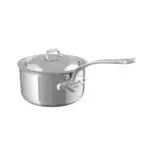
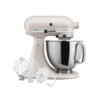
Check out my favorite kitchen essentials and cookware!
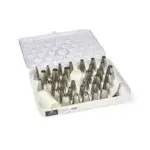
- Use a piping bag with a plain nozzle to shape the gougères evenly, since consistent size means they bake at the same rate.
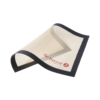
- Use a baking mat or parchment so the bases release cleanly without sticking.
- Use a pastry brush to glaze the tops evenly with beaten egg for a golden finish.
- Use a grater for the Comté, since freshly grated melts far better than pre-grated, which carries anti-caking starch.
Tips for success
- Beat the cheese in while the paste is warm: warm choux takes the cheese evenly and it melts through. Cool paste leaves it sitting in lumps that never fully work in.
- Grate the Comté finely: fine cheese distributes through the paste and melts cleanly, where coarse chunks can sink and stop the puffs rising evenly.
- Pipe them the same size: consistent rounds bake at the same rate, so you don’t get some pale and some overdone on the same tray.
- Press down the peaks: a finger dipped in egg flattens the points that would otherwise burn while the rest of the puff bakes.
- Never open the oven door: gougères rise on steam and set in dry heat, and a rush of cold air at the wrong moment collapses them for good.
- Bake them properly deep gold: pale gougères are damp and doughy inside and sink as they cool. Real colour, including in the grooves, means a set, hollow shell.
- Serve them warm: they’re best within the hour. A few minutes in a hot oven brings back the crispness if they’ve been sitting.
How to store it
- At room temperature: Best eaten the day they’re made, ideally warm. They’ll sit a few hours once baked, and a few minutes in a hot oven revives the crisp shell.
- In the freezer: Gougères freeze very well, which makes them a brilliant thing to have ready for guests. Freeze them baked, then reheat from frozen in a hot oven for 8 to 10 minutes, which also re-crisps them. You can also freeze them piped and unbaked on the tray, and bake straight from frozen.
- The paste ahead: The raw cheese choux keeps overnight in the fridge in a sealed piping bag, so you can pipe and bake fresh the next day.
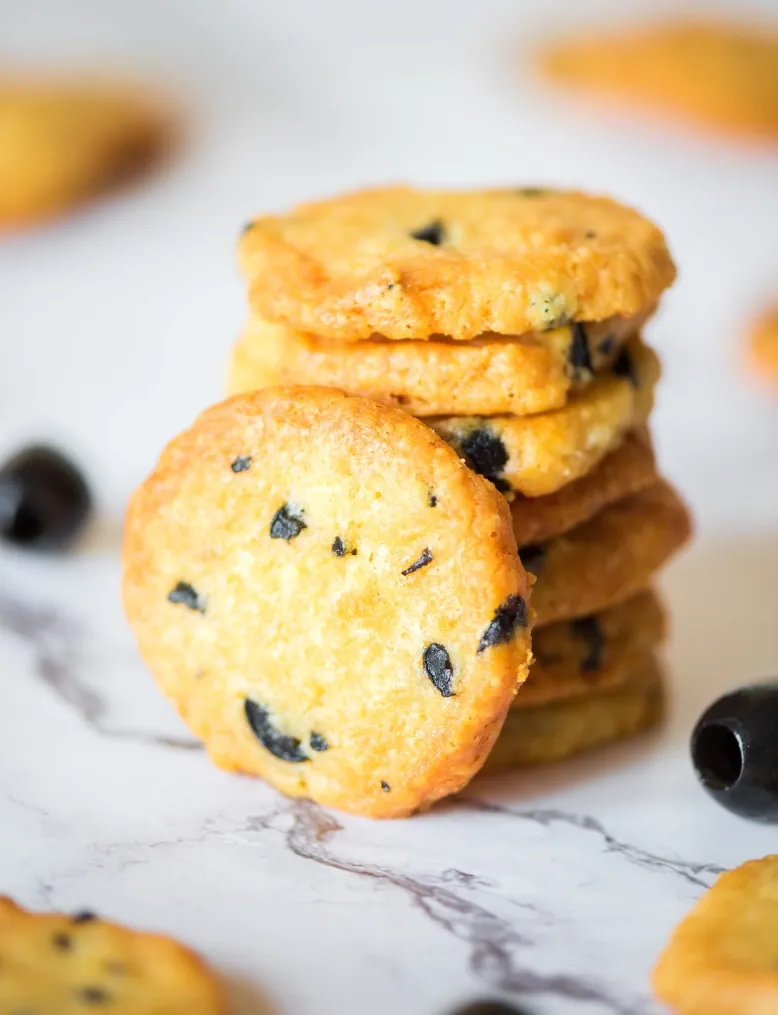
More appetizers recipes to try
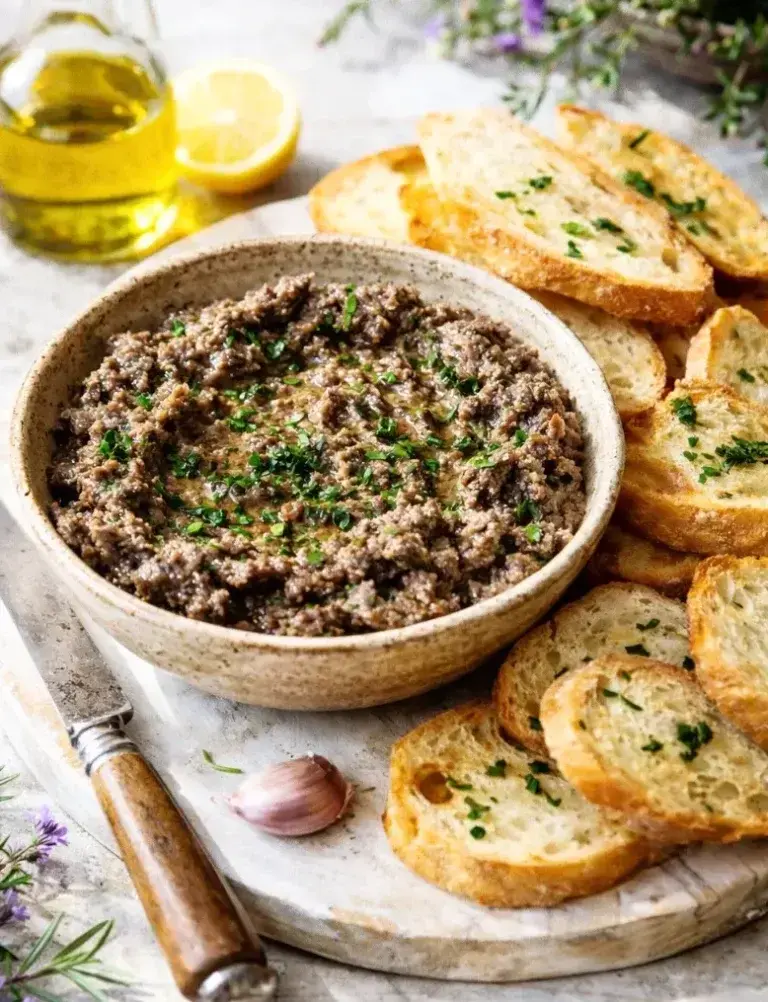
→ Rillettes de thon (Tuna Spread)
Variations
- With Gruyère: the other traditional choice, a little milder and stretchier than Comté, and thoroughly authentic to the Burgundian original.
- With Emmental: milder again, and it melts beautifully. Good if you want the texture and the cheese pull without a strong flavour.
- A mix of cheeses: Comté for depth with a little Gruyère for melt is a lovely combination, and many Burgundian cooks blend them.
- As a shareable crown: pipe the paste in a single large ring rather than individual puffs, the traditional Burgundian gougère en couronne, to bring to the table and tear apart.
- With mustard: a teaspoon of Dijon beaten into the paste with the cheese, which sharpens them and suits the Comté gougeres.
- Filled: split the baked gougères and fill with a savoury cream, soft cheese or a little mousse, for a smarter canapé.
FAQ
What are gougères?
Gougères are French cheese puffs from Burgundy, made from choux pastry with grated hard cheese beaten in, usually Comté or Gruyère. They bake up light and hollow, crisp outside and soft within, and are traditionally served warm at apéro.
What cheese is best for gougères?
Comté is the classic Burgundian choice for its deep, nutty flavour. Gruyère and Emmental both work well too, milder and very good melters. A mix of Comté and Gruyère gives the best of both.
Why did my gougères collapse?
Either the oven door was opened during baking, or they came out underbaked. Don’t open the door, and bake until deep golden all over so the shell is set and dry before they cool.
Can you make gougères ahead of time?
Yes. They freeze very well baked, and reheat from frozen in a hot oven in 8 to 10 minutes. You can also freeze them piped and unbaked, or keep the raw paste in the fridge overnight to bake fresh.
What do you serve with gougères?
A cold glass of white wine, traditionally a Burgundian Aligoté, Crémant or Petit Chablis. They’re apéro food, but also good alongside a soup or salad, or split and filled as a canapé.



 Prep Time 20 minutes
  Cook Time 30 minutes
  Total Time 50 minutes
  Servings 35 gougères
Description
Ingredients
Choux pastry
- 62 ml whole milk
- 62 ml water
- 50 gr unsalted butter
- 75 gr plain flour sifted
- 125 gr eggs beaten
- 1.5 gr salt
Gougères
- 150 gr Comté cheese
- 1 pinch nutmeg
- black pepper
- 1 egg beaten, for glazing
Equipment


Instructions
1. Weigh the eggs and heat the liquid
- Beat the eggs and weigh exactly 125g into a jug. Set aside. Put the milk, water and butter into a small saucepan over medium heat. Bring to a rolling boil, making sure the butter melts fully before the liquid boils.
2. Add the flour
- Take the pan off the heat. Tip in the sifted flour and salt all at once. Stir hard with a heat-resistant spatula until it comes together into a smooth ball with no lumps. This is the panade.
3. Dry out the panade
- Return the pan to medium heat. Cook, stirring constantly, for 4 to 5 minutes, until the paste dries out, pulls cleanly from the sides, and leaves a thin film on the base of the pan.
4. Cool the panade
- Transfer to a bowl or stand mixer. Beat with a spatula or the paddle for 2 to 3 minutes to cool it. It must stop steaming before the eggs go in.
5. Add the eggs gradually
- Add the beaten egg a little at a time, beating well between each addition. Stop when the paste is smooth, shiny, and falls from the spatula in a pointed V. You may not need all 125g.
6. Beat in the cheese
- While the choux pastry is still warm, beat in the grated Comté, a pinch of nutmeg and a good grind of black pepper, until the cheese is evenly worked through. Go easy on salt, since the cheese is already salty.
7. Pipe
- Heat the oven to 180°C fan (200°C conventional) and line a tray. Pipe rounds about 3–4cm across in staggered rows, spaced well apart. Dip a finger in the beaten egg and press down any peaks so they don't burn.
8. Glaze and top
- Brush the tops lightly with beaten egg and scatter over a little extra grated Comté, which gives a golden, cheesy crust.
7. Bake
- Bake for 25–30 minutes without opening the door at any point, until deep golden all over and firm. Cool a few minutes on the tray, then move to a rack.
Notes
- Beat the cheese in while the choux paste is still warm, so it works through evenly.
- Never open the oven door while baking, or the gougères collapse and won’t recover.
- Bake them properly deep gold. Pale gougères are damp inside and sink as they cool.
- Best eaten warm, within an hour. Reheat in a hot oven for a few minutes to crisp them up.
Share your feedback and spread the love!
If you try this recipe, I’d love to hear how it turns out! Leave a ★★★★★ rating and your thoughts in the comments, it helps fellow French foodies discover this recipe too. Snap a photo and tag @obviously.french on Instagram. Come talk about it in our Facebook group. And don’t forget to save this recipe to Pinterest so you’ll always have it handy for your next French-inspired meal!