 September 11, 2025
Disclosure: This post may contain affiliate links which provide us a small commission when used for purchase. Please read my disclosure policy for more information. I am grateful for your support!
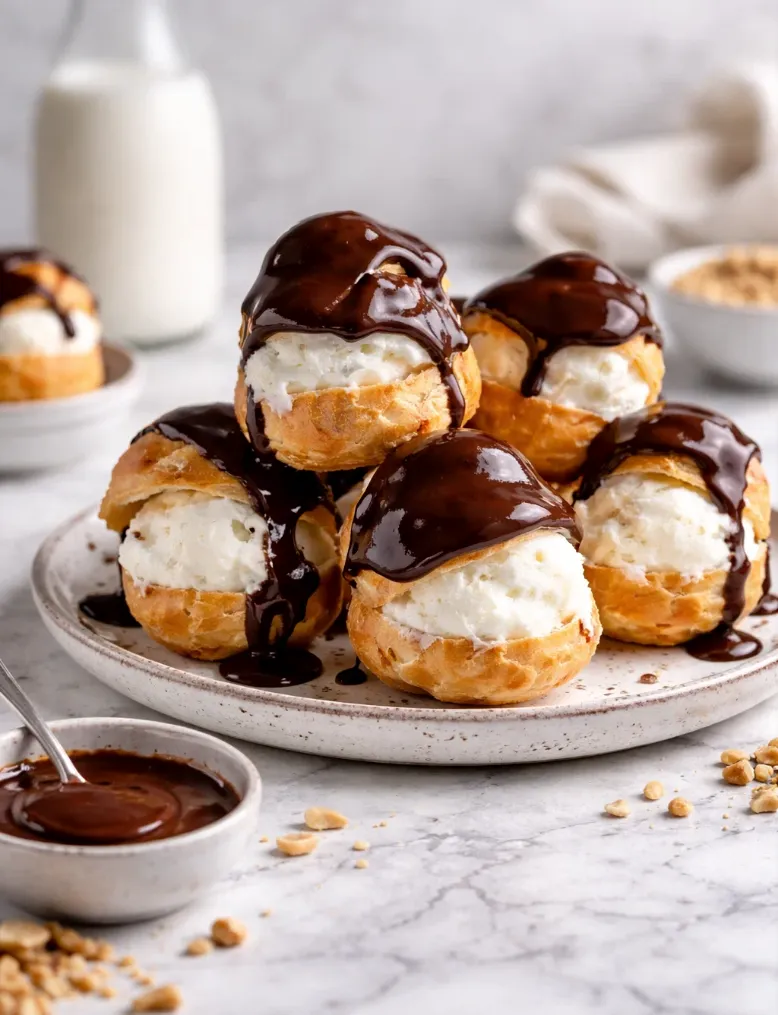
I don’t think I need to introduce profiteroles, or convince you they’re a treat. I’ve been eating them my whole life, as a tower or as a couple too many on my plate. They’re light and satisfying at the same time. They start with the same choux pastry as chouquettes, éclairs, religieuses, gougères and Paris-Brest, which are super airy, but these get filled with whipped cream and drizzled with chocolate ganache. Do I need to say more?
Table of Contents
Where profiteroles come from
Profiteroles weren’t always a dessert, and the name has nothing to do with pastry. In the 16th century a profiterolle was a small reward given to servants, literally a little profit: a ball of bread dough cooked under hot ash and dropped into broth. From there it became savoury, small hollow buns stuffed with sweetbreads, truffles, artichoke hearts and mushrooms, and an 18th-century French dictionary still defines potage de profiteroles as exactly that.
The sweet version came much later, and it arrived with choux pastry. It’s documented that the pâtissier Jean Avice refined the pastry and shaped it into buns, and his pupil Antonin Carême developed the recipe we use now, filling them with cream and putting them at the centre of French pâtisserie.
As for who first poured chocolate over them, nobody knows. It’s one of those things that seems too obvious to have needed inventing.
The croquembouche
Profiteroles reach their most spectacular form in the croquembouche, the towering cone of choux buns bound with caramel that appears at the centre of French wedding tables. The name means “crunches in the mouth,” a reference to the set caramel coating each bun. If you marry a French person, this is what turns up instead of a tiered cake. More impressive, and considerably harder to eat elegantly. I speak from experience.
Ingredients
- Milk and water — half and half. Water gives a better puff and a crisper shell, milk gives colour and flavour, so together you get both.
- Butter — richness, and it’s what makes the dough workable. Cut it small so it melts before the liquid boils.
- Plain flour — sifted, and added all at once. It gelatinises in the hot liquid, which is what traps the steam later.
- Eggs — the whole structure. They’re added to consistency rather than by count, so hold some back (more below).
- Sugar and salt — a small amount of each, for flavour and browning rather than sweetness.
- Double cream — for the filling, well chilled so it whips properly, and again for the ganache.
- Dark chocolate, 65% — the ganache. Dark enough to balance all that sweet cream, and chopped small so it melts evenly.
How to make profiteroles
1. Make and dry the panade
Butter, milk and water go in the saucepan cold together, and you want the butter fully melted before it hits a rolling boil. Take it off the heat, then tip in all the flour and salt at once and beat hard with a heat-resistant spatula until it forms a smooth ball. Back on medium heat, keep it moving for 4 to 5 minutes. You’re done when it films the base of the pan and smells faintly of warm biscuit. This step is what makes them puff, so don’t cut it short.
2. Cool it, then add the eggs slowly
Let it cool about ten minutes, or beat it on its own until it stops steaming. Hot dough scrambles the egg and gives you dense, heavy buns. Add the beaten egg a splash at a time, beating fully between each addition. It’ll look split and slimy before it comes smooth again.
3. Stop at the ribbon
Keep going until the dough falls from the spoon in a thick smooth ribbon and holds a soft peak. You may not need all four eggs, so add the last one gradually and watch. This is the single judgement that decides whether they rise, so don’t tip it all in and hope.
4. Pipe evenly and smooth the peaks
Pipe mounds 3 to 4cm across with a plain 1cm nozzle, well spaced on a lined tray. Then wet a finger and press down every peak. Left standing, those tips catch and burn to bitter little points while the rest is still pale.
5. Bake hot, then lower, and leave the door shut
Ten minutes at 220°C to drive the puff, then down to 165°C for another 20 to 25 minutes to dry them out. Don’t open the door, not even for a peek. Cold air collapses them and they don’t recover. They’re done when deep golden all over, sides included, not just on top.
4. Pierce, cool, and fill at the last minute
Straight out of the oven, pierce each bun with a skewer so the steam escapes rather than softening the shell from inside. Cool completely on a rack. Then whip the cream, make the ganache, and assemble just before serving, because the clock starts the moment the cream goes in.
Tools for this recipe
Check out my favorite kitchen essentials and cookware!
- Use a heat-resistant spatula to effortlessly mix the panade
- Use a piping bag sturdy enough to handle warm, stiff choux dough without splitting, since even sizing is what gives you buns that bake at the same rate.
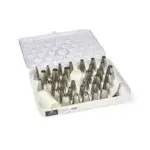
- Use a plain round 1cm nozzle (nozzle set) to pipe neat, even mounds rather than spooning them, which never comes out consistent.
- Use a baking mat so the bases cook evenly and the buns release without sticking or catching.
Tips for success
- Weigh your eggs rather than counting them: four eggs can vary by 30g, which is the difference between a perfect ribbon and a batter that spreads. Aim for roughly 200g of beaten egg and add the last of it slowly.
- Sift the flour and have it ready before you start: once the liquid boils you have seconds, and fumbling for the flour means it boils down and throws the ratio out.
- Pierce the profiteroles the moment they leave the oven: trapped steam condenses inside and softens the shell from within, which is why a beautifully crisp bun can turn leathery on the rack.
- Make the ganache while the shells cool: it should be warm at serving, not hot, and it thickens as it sits, so timing it to the assembly saves reheating.
- Don’t overwhip the cream: soft peaks that just hold their shape. Another thirty seconds and you’ve made homemade butter!
- Bake the shells a day ahead if you’re entertaining: they keep airtight overnight, and five minutes in a hot oven brings the crispness right back.
How to store it
- Assembled: They don’t keep, and that’s simply the nature of french profiteroles. Within an hour the cream has softened the pastry. So assemble what you’ll eat.
- Unfilled shells: Airtight at room temperature for a day, or frozen for up to a month. Either way, refresh them in a hot oven for a few minutes and cool before filling, which restores the crisp shell completely.
- Cream and ganache: Whipped cream keeps a day covered in a glass container the fridge and may need a quick re-whisk. Ganache keeps a week in the fridge and reheats gently over a pan of warm water or in short bursts in the microwave.
More dessert recipes to try
Variations
- Ice cream instead of cream: the restaurant version, and the contrast between properly cold ice cream and warm ganache is sharper than with whipped cream. Fill straight from the freezer and serve immediately.
- Crème pâtissière: richer and more traditional in some houses. Pipe it in through a hole in the base rather than slicing the buns, which keeps them neater.
- Chouquettes: the same dough, piped smaller, scattered with pearl sugar and left unfilled. The simplest thing you can do with choux, and very moreish.
- Salted caramel sauce: in place of chocolate, poured warm. Very good against plain whipped cream.
- Coffee or praline cream: fold a spoon of strong coffee or praline paste into the whipped cream. Both are classic French choux fillings and take the dessert somewhere more grown-up.
- Croquembouche: stack the filled buns into a cone bound with caramel. Difficult, spectacular, and the traditional French celebration cake if you fancy the challenge!
- Less sugar: easy here, because almost none of the sugar is structural. The choux takes only a tablespoon and can lose it; the cream can drop from 30g to 15g; and using a 70% chocolate for the ganache makes the whole dessert markedly less sweet without losing anything.
FAQ
Why did my profiteroles collapse?
Usually the oven door was opened during baking, or they came out too early. Bake until deep golden all over, not just on the domes, and pierce them straight away so trapped steam can escape.
How do I know when the choux pastry for profiteroles is right?
Use the ribbon test. The dough should fall from the spoon in a smooth, thick ribbon and hold a soft peak. Chunks mean it needs more egg, and a pouring consistency means there’s too much.
Can I make profiteroles ahead of time?
Bake the shells a day ahead and keep them airtight, or freeze them for a month. Refresh in a hot oven, cool, then fill just before serving. Don’t assemble in advance.
What’s the best filling for profiteroles?
Lightly sweetened whipped cream, crème pâtissière or vanilla ice cream. Ice cream gives the sharpest contrast with warm ganache; whipped cream is lighter and my preference.
Why are my choux buns flat instead of puffed?
The dough was too wet, or it wasn’t dried enough in the pan before the eggs went in. Add the last egg gradually and stop at the ribbon stage.


 Prep Time 20 minutes
  Cook Time 35 minutes
  Total Time 55 minutes
  Servings 6
Description
Ingredients
For the choux pastry
- 125 ml whole milk
- 125 ml water
- 100 gr unsalted butter
- 1 tbs sugar
- 1/4 tsp salt
- 140 gr plain flour sifted
- 4 egg at room temperature
For the homemade whipped cream filling
- 300 ml Double cream chilled
- 30 gr icing sugar
- 1 tsp vanilla extract
For the chocolate ganache
- 200 gr dark chocolate 65% cacao, chopped
- 200 ml Double cream
Equipment


Instructions
1. Make the choux pastry
- Put the water, milk, butter, sugar and salt in a medium saucepan over medium heat. Stir until the butter melts and the mixture comes to a boil. Remove from the heat, add all the flour at once, and beat vigorously with a heat-resistant spatula until the dough forms a ball and pulls away from the sides. Return to medium heat and keep beating for 2–3 minutes to dry the dough out.
2. Cool slightly and add eggs
- Transfer the dough to a bowl or mixer and let it cool for about 10 minutes, until it stops steaming. Beat the eggs together, then add them a little at a time, beating well after each addition, until the dough is smooth and glossy and falls from the spoon in a thick ribbon. You may not need all the egg.
3. Pipe and bake
- Preheat the oven to 220°C (200°C fan). Pipe mounds about 3–4cm across onto the lined tray, spacing them well apart. Smooth any peaks with a wet finger. Bake for 10 minutes, then reduce to 165°C (145°C fan) and bake for another 20–25 minutes, until deep golden and well puffed. Don't open the oven during baking.
4. Cool
- Remove from the oven and pierce each puff with a skewer to let the steam escape. Cool completely on a wire rack.
5. Whip the cream
- Pour the chilled cream into a large cold bowl with the icing sugar and vanilla. Whisk with an electric mixer until soft peaks form: light and fluffy, holding its shape but still smooth. Don't overwhisk or you'll have butter.
6. Make the ganache
- Heat the cream gently until just boiling, then pour over the chopped chocolate. Leave for 2–3 minutes, then whisk until smooth and glossy.
7. Assemble
- Slice each bun in half horizontally. Spoon or pipe a generous dollop of whipped cream into the base and replace the top. Drizzle generously with warm ganache just before serving.
Notes
- For the best profiteroles, drying the dough well on the stove before adding eggs is crucial as it ensures a light, hollow puff that won’t collapse.
- When piping, keep the sizes even so they bake consistently. Avoid opening the oven door during baking to prevent sudden temperature drops that can deflate the puffs.
- Using chilled cream straight from the fridge helps the whipped cream hold its shape longer.
- Assemble the profiteroles just before serving to keep the pastry crisp and the cream fresh.
- If you want to prepare ahead, bake the choux shells in advance and freeze them; reheat briefly in the oven before filling and serving.
Share your feedback and spread the love!
If you try this recipe, I’d love to hear how it turns out! Leave a ★★★★★ rating and your thoughts in the comments, it helps fellow French foodies discover this recipe too. Snap a photo and tag @obviously.french on Instagram. Come talk about it in our Facebook group. And don’t forget to save this recipe to Pinterest so you’ll always have it handy for your next French-inspired meal!