 August 2, 2026
Disclosure: This post may contain affiliate links which provide us a small commission when used for purchase. Please read my disclosure policy for more information. I am grateful for your support!
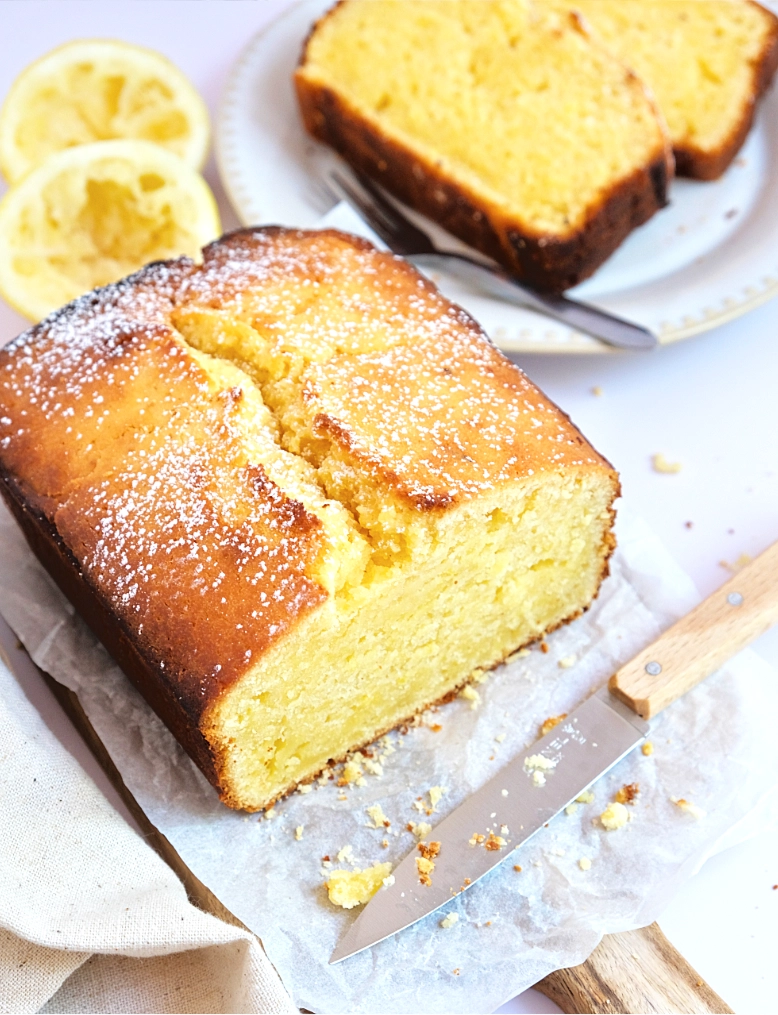
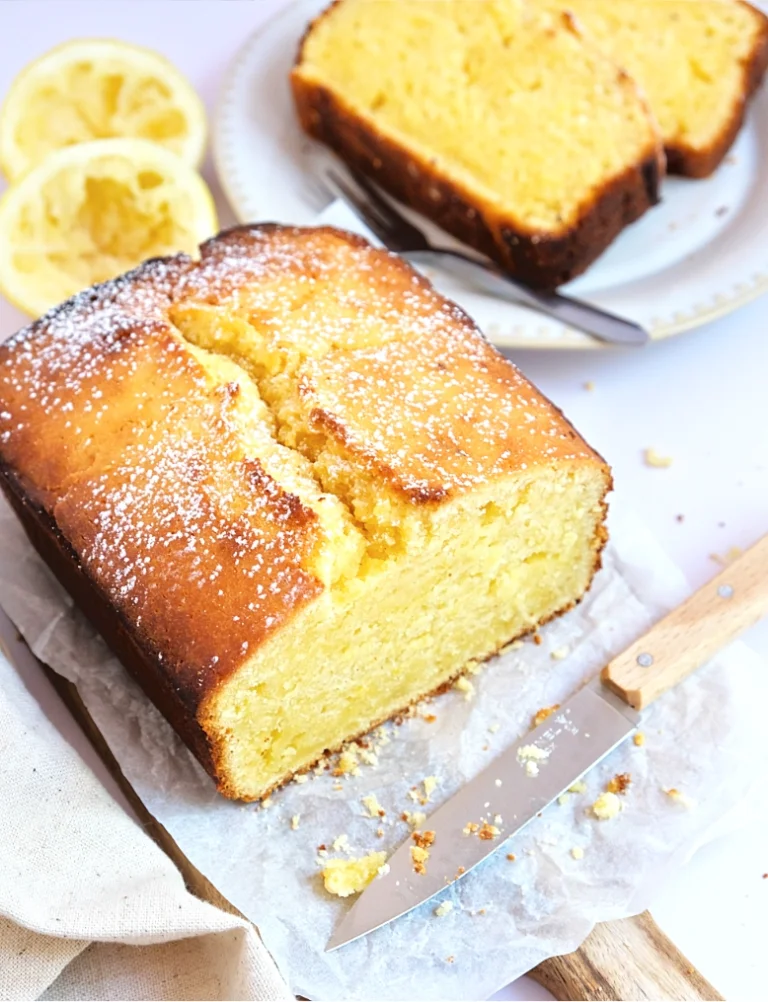
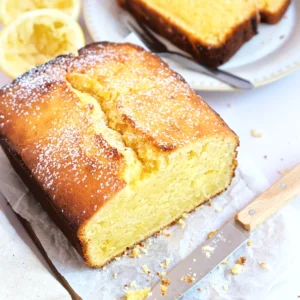
I love a French cake au citron, but I have one complaint about most of them: they taste more of sugar than of lemon. So I set out to fix that. This intense lemon cake with yogurt is deliberately less sweet, with the zest of four or five lemons and a good hit of juice, for a true lemon explosion!
It’s also dense and moist rather than light and fluffy, which is exactly how I like it. It’s a loaf that sits under a cloth on the counter and gets better over a day or two, cut in thick slices with a coffee. If you’ve been let down by lemon cakes that promised citrus but didn’t delivered, this lemony cake recipe is the one for you.
Table of Contents
Where a lemon cake with yogurt comes from
The French cake au citron has an English accent, and the French don’t hide it. The word cake itself is borrowed from English, used in France for exactly this kind of loaf baked in a tin, and it descends from the English pound cake of the 1600s.
Its direct French ancestor is the quatre-quarts, the Breton version of the pound cake. The name comes from its proportions: equal weights of butter, sugar, eggs and flour, with the eggs alone doing the rising. It dates to the early eighteenth century, from Brittany, a region that has never been shy with butter, and traditionally it’s made there with French salted butter, which gives it a particular character. It’s one of the first cakes French children learn to bake, alongside the equally beloved gâteau au yaourt, the yoghurt cake measured out in yoghurt pots.
This lemony cake recipe version sits between those traditions. It keeps the density and the butter of the quatre-quarts, borrows the yoghurt that makes the gâteau au yaourt so tender, and then does its own thing by cutting the sugar right back so the lemon leads. It isn’t the classic pâtisserie cake au citron, which is sweeter and often soaked in syrup. It’s a lemon lover’s version, and the one I wish more bakeries sold.
Ingredients
- Lemons — you’ll want the zest of four or five plus the juice of a couple. Unwaxed, since the zest carries most of the flavour and you don’t want wax coating in the batter.
- Caster sugar — less than the classic recipes use, deliberately, so the cake tastes of lemon rather than syrup. It’s rubbed with the zest to draw the citrus oils out.
- Yoghurt — for moisture and a slight tang that reinforces the lemon. This is part of what keeps the crumb dense and tender rather than dry.
- Butter — melted, not creamed, which gives a denser, moister crumb than a light aerated one. Good unsalted butter.
- Eggs — large, at room temperature, which blend more smoothly and give a better rise.
- Plain flour — the structure. Sifted, so there are no heavy pockets in a dense cake.
- Bicarbonate of soda — a small amount, activated by the acidic lemon juice and yoghurt, for a gentle lift without the taste some people notice in baking powder.
- Soft butter, for the line — a thin line of very soft butter piped down the centre before baking, which makes the cake split cleanly along the top.
How to make a lemon cake with yogurt
1. Scent the sugar with the lemon zest
Rub the lemon zest into the sugar with your fingertips until the sugar is damp and smells strongly of lemon. This presses the citrus oils out of the zest and into the sugar, which carries the flavour through the whole cake far better than zest stirred into flour.
2. Whisk in the eggs, yoghurt and juice
Whisk the eggs into the lemon sugar until pale and slightly thickened, then whisk in the yoghurt and the lemon juice until smooth. The mixture may look a little loose, which is right for a moist crumb.
3. Add the melted butter
Whisk in the cooled melted butter until glossy and combined. Let the butter cool before it goes in, since hot butter would begin to cook the eggs.
4. Fold in the flour and bicarb
Sift the flour, bicarbonate of soda and salt over the bowl and fold in until just combined. Work fairly quickly once the bicarb meets the acidic batter, and stop as soon as the flour disappears. Overmixing makes even a dense cake tough.
5. Fill the tin and pipe the butter line
Pour the batter into a lined 9×5 loaf tin and level the top. Pipe or spoon a thin line of very soft butter straight down the centre, from end to end. This is the pâtissier’s trick that makes the cake split open cleanly along the middle instead of cracking at random.
6. Bake until split and golden
Bake at 160°C fan (180°C conventional) for 55 to 65 minutes, until deep golden, risen, and split down the centre, with a skewer coming out clean. The bicarb browns the crust faster, so cover loosely with foil if it colours before it’s cooked through. Cool the lemon pound cake in the tin 15 minutes, then turn out onto a rack to cool completely before slicing.

Tools for this recipe
Check out my favorite kitchen essentials and cookware!
- Use a 9×5 inch loaf pan, which this quantity is sized to fill to a proper high, domed loaf.
- Use a microplane zester to take the lemon zest without the bitter white pith beneath it.
- Use a whisk for the wet ingredients, since this is a melted-butter batter that comes together by whisking rather than creaming.
- Use a small piping bag or a spoon to lay the soft butter line neatly down the centre.
Tips for success
- Use the zest of four or five lemons: the zest is where the lemon flavour lives, far more than the juice, so don’t be shy with it. This is what makes this lemon zest cake taste of lemon rather than sweetness.
- Rub the zest into the sugar: fingertips press the oils out of the peel and into the sugar. It takes a minute and it makes a real difference to how lemony the cake tastes.
- Melt the butter, don’t cream it: melted butter gives the dense, moist crumb you want here. Creaming would make it lighter and more open, which is a different cake.
- Pipe the butter line with very soft butter: soft, not melted, so it holds a line rather than running into the batter. This is what gives the clean split down the top.
- Don’t overmix once the flour is in: fold to just combined and stop. The bicarb starts reacting with the acid straight away, so a light hand and reasonable speed both help.
- Expect a darker crust: bicarbonate of soda browns faster than baking powder, so the outside will be a deep gold. Foil over the top if it’s colouring too fast before the middle is done.
- Wait until it’s completely cool to slice: a dense, moist cake cut warm will drag and squash. Patience gives you clean slices.
How to store it
- At room temperature: Wrapped in clingfilm or in a tin for up to 4 days, and it’s genuinely better on day two, once the crumb settles and the lemon deepens. This is a keeping cake.
- In the fridge: Not needed, and it firms the crumb. Room temperature keeps it moist and tender, unless your kitchen is very warm.
- In the freezer: Freezes very well for up to 3 months, wrapped tightly, whole or in slices. Thaw at room temperature. Slices are handy to take out one at a time.
More lemony recipes to try
Variations
- Lemon and poppy seed: fold a couple of tablespoons of poppy seeds through the batter, a classic pairing with the citrus.
- With a lemon glaze: if you do want it a touch sweeter and glossier, a thin icing-sugar-and-lemon-juice glaze over the cooled cake, though the cake stands on its own without.
- Lime or orange: the same method with lime, or with orange for something rounder and less sharp.
- Salted butter, the Breton way: use salted butter in place of the unsalted and the pinch of salt, for the quatre-quarts character of Brittany.
- With almonds: replace 50g of the flour with ground almonds for an even denser, moister crumb with a faint marzipan note.
FAQ
Why does my lemon cake taste more of sugar than lemon?
Most recipes use a lot of sugar, which buries the citrus. This one cuts the sugar back and uses the zest of four or five lemons, so the lemon leads. The zest, rubbed into the sugar, is where most of the flavour comes from.
Why use bicarbonate of soda instead of baking powder?
Bicarbonate of soda gives a gentle lift without the taste some people notice in baking powder. It needs acid to work, which the lemon juice and yoghurt provide. It does brown the crust faster, so expect a deeper gold.
How do you get a lemon cake to split down the middle?
Pipe a thin line of very soft butter down the centre of the batter before baking. The butter creates a weak point, so the cake splits open cleanly along the middle instead of cracking at random.
Why is my lemon cake dense rather than fluffy?
Because it’s meant to be. This is a dense, moist loaf in the pound cake tradition, made with melted butter and yoghurt. If you want it lighter, that’s a different style of cake.
Can you make this lemon cake with yogurt ahead of time?
Yes, and it’s better for it. It keeps 4 days wrapped at room temperature and improves after a day. It also freezes well for up to 3 months, whole or in slices.


 Prep Time 15 minutes
  Cook Time 1 hour
  Total Time 1 hour 15 minutes
  Servings 10
Description
Ingredients
- 100 ml lemon juice
- 4 lemons zest
- 200 gr caster sugar
- 4 eggs room temperature
- 150 gr yogurt greek
- 220 gr unsalted butter
- 330 gr plain flour
- ¾ tsp bicarbonate of soda
- 1 pinch salt
For the butter line
- 20 gr butter very soft




Instructions
1. Preheat the oven and line the loaf pan
- Preheat the oven to 160°C fan (180°C conventional) and line the loaf pan.
2. Zest and infuse
- Zest the lemons and rub the lemon zest into the sugar with your fingertips until damp and fragrant, which pushes the citrus oils into the sugar.
3. Whisk the wet ingredients
- Whisk the eggs into the lemon sugar until pale and slightly thickened, then whisk in the yoghurt and the lemon juice.
4. Add the melted butter
- Whisk in the cooled melted butter until smooth and glossy.
5. Fold in the dry ingredients
- Sift together the flour, bicarbonate of soda and salt, and fold into the batter until just combined. Don't overmix. Work quickly once the bicarb meets the acid.
6. Fill the pan and pipe the butter line
- Pour the batter into the pan and level it. Pipe or spoon a thin line of very soft butter straight down the centre, end to end, which makes the cake split cleanly along the middle.
7. Bake
- Bake for 55–60 minutes, until deep golden and a skewer inserted in the centre comes out clean. It should have risen and split down the middle. Cover loosely with foil if it browns too fast.
8. Cool
- Leave in the pan 15 minutes, then lift onto a rack to cool completely before slicing.
Notes
- The butter line down the centre is what gives the clean professional split. It’s optional but easy.
- Less sugar than the classic French versions, so it tastes of lemon rather than syrup. Don’t cut it further, as sugar is what keeps it moist.
- Bicarbonate of soda browns the crust faster than baking powder, so the outside will be a deeper gold.
Share your feedback and spread the love!
If you try this recipe, I’d love to hear how it turns out! Leave a ★★★★★ rating and your thoughts in the comments, it helps fellow French foodies discover this recipe too. Snap a photo and tag @obviously.french on Instagram. Come talk about it in our Facebook group. And don’t forget to save this recipe to Pinterest so you’ll always have it handy for your next French-inspired meal!