
 May 3, 2026
Disclosure: This post may contain affiliate links which provide us a small commission when used for purchase. Please read my disclosure policy for more information. I am grateful for your support!
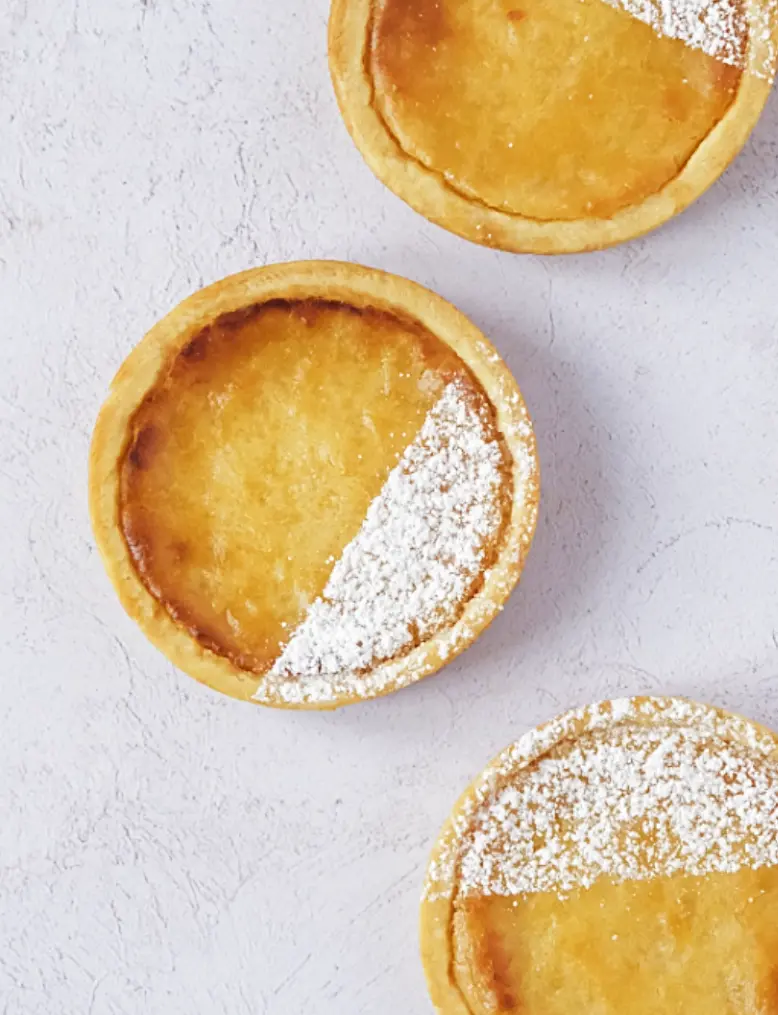
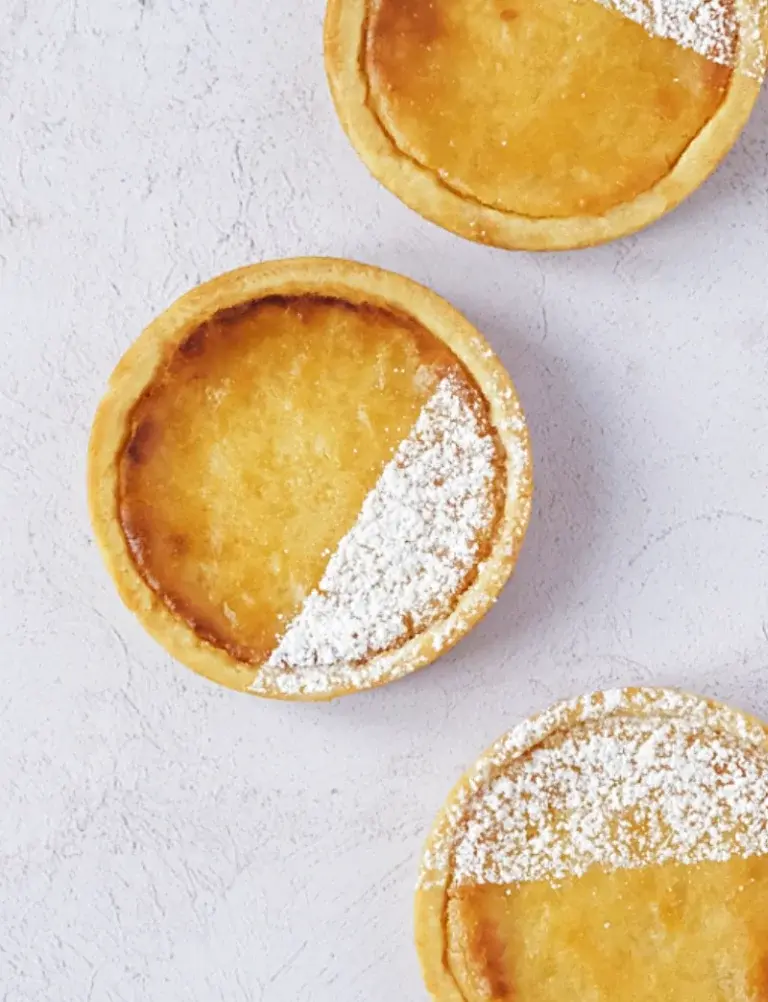
These lemon tartlets are right at the top of my husband’s list of treats. Sometimes I just make the lemon curd in a jar on its own, and he finishes that about as fast as he finishes these. They’re a favourite with a lot of people, I think because they’re so refreshing and don’t feel as heavy as other pastries. I love them in summer, though I’ll admit I make them in the darkness of winter too.
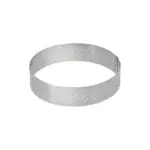
You could do one big tart, obviously. But by now you’ll know I love using my 8cm tart rings for individual tartlets, so I can hand someone an unsliced tartlet when they turn unexpected up for a coffee. They just look nicer to offer than a slice cut from a big tart that’s, let’s be honest, already been picked at in our house. Other times I keep the baked shells and the lemon cream separately in the fridge and skip baking the cream altogether. Both ways are completely addictive!
Table of Contents
Where lemon tartlets comes from
Lemon tart doesn’t have one neat origin story, but its roots run deep in French pâtisserie. You can find the tarte au citron meringuée with meringue on top in bakeries all across France, and it belongs to the long tradition of French fruit tarts built on a sweet pastry shell and a rich, simple filling. These individual lemon tartlets without the meringue are the more minimalistic elegant version of the big one, and are perfect for single-servings.
Ingredients
- Pâte sablée – The sweet, crisp, crumbly shell that shatters against the filling. It’s sweeter than a plain shortcrust, so it plays off the sharp lemon rather than fighting it.
- Lemons – You want both juice and zest, so unwaxed if you can. Roll them firmly on the worktop before juicing to get more out of them.
- Eggs – The body of the filling, setting it to that soft, custardy texture as it bakes.
- Caster sugar – Balances the sharpness. Enough to round the lemon off, not so much it becomes sweet.
- Butter – Melted into the filling for richness and that silky finish.
- Cornflour – Just a little, to stabilise the filling so it sets clean without going heavy or eggy.
- Icing sugar – A dusting to finish. Softens the sharpness and gives that clean, polished look.
How to make lemon tartlets
1. Make the pastry
Follow the pâte sablée method: rub the cold cubed butter into the flour, icing sugar and salt until sandy, add the egg and bring together into a disc without overworking. Wrap and chill for at least 30 minutes.
2. Blind bake and seal the cases
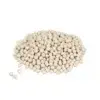
Once your chilled pâte sablée (sweet shortcrust pastry) cases are lined, blind bake them with baking beans until dry and lightly golden, then brush the insides with a little egg wash and pop them back in for a couple of minutes until it sets glossy. This seals the pastry against the wet filling and keeps the base crisp instead of soggy. It’s a standard pâtisserie trick and it genuinely earns its few extra minutes.
A quick tip while they’re cooling: run a fine grater lightly around the top rim of each case to file off any ragged edges. Thirty seconds a case, and they look shop-bought neat.
3. Make the lemon filling
Whisk the eggs, sugar, cornflour, lemon juice and zest together until smooth, then whisk in the cooled melted butter off the heat. It’s really that simple. Keep it smooth and don’t whip air into it, since you want it silky, not frothy. Here is the full recipe of the lemon curd.
4. Fill and bake
Pour the filling into the sealed, cooled cases, right up to the top (a piping bag with a nozzle makes this tidy, but a jug is fine). Bake gently and don’t wait for it to look fully set in the oven. You want the edges set but a slight wobble still in the middle when you nudge the tray. It carries on firming as it cools, so a filling that looks perfect in the oven will be dense and rubbery once cold.
4. Cool and dust
Let them cool completely in their tins before you even think about unmoulding, because the filling only sets fully as it cools and a warm one will slump. Once cold, dust lightly with icing sugar just before serving, not before, or it dissolves into the surface and vanishes.
Tools for this recipe
Check out my favorite kitchen essentials and cookware!
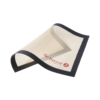
- Use 8cm tart rings for individual tartlets, set on a baking mat so the bases bake crisp with airflow underneath.
- Roll the pastry to an even 3mm with a rolling pin.
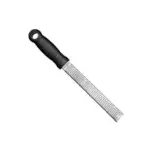
- Zest the lemons (and file the pastry rims) with a fine grater.
Tips for success
- Keep the pastry cold at every stage: cold butter, cold dough, and if your kitchen’s warm, chill the bowl too. Warm butter means tough, greasy pastry.
- Don’t skip the egg-wash seal: brushing the baked cases with egg wash and setting it in the oven creates a barrier that keeps the base crisp even a day after filling.
- Roll the lemons before juicing: press and roll them firmly on the worktop first, you’ll get noticeably more juice out of them.
- Pull the filling while it wobbles: take out the lemon tartlets when the edges are set but the centre still has a slight jiggle. It firms as it cools. Overbake it and the texture goes dense instead of smooth.
- Dust the sugar just before serving: icing sugar dusted on too early soaks in and disappears. Do it at the last moment for that clean, polished finish.
How to store it
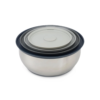
- I found these 10cm wide tall airtight containers where you can happily stack the empty baked shells or undusted tartlets (without the icing sugar, reserve that for when you serve them) to store the treats. These containers take 5 tartlets. Pop a little round of baking parchment between each layer so they lift out clean. They’ll keep well in the fridge for up to 2 days.
- One thing worth knowing: serve them at room temperature or only slightly chilled, not fridge-cold. Straight from the fridge the filling firms up too much and the lemon flavour goes flat and dull. Give them about 30 minutes out of the fridge before serving and they’ll be exactly where you want them, soft, bright and sharp.
- You can also get ahead by storing the components separately: keep the baked, sealed shells in a tin and the lemon cream in a jar in the fridge, then fill just before serving for maximum crispness. (This is the no-bake version my husband raids the jar for.)
Variations
- Other citrus: swap some or all of the lemon for lime, or for blood orange in winter, for a sweeter, prettier filling. Pink grapefruit works too.
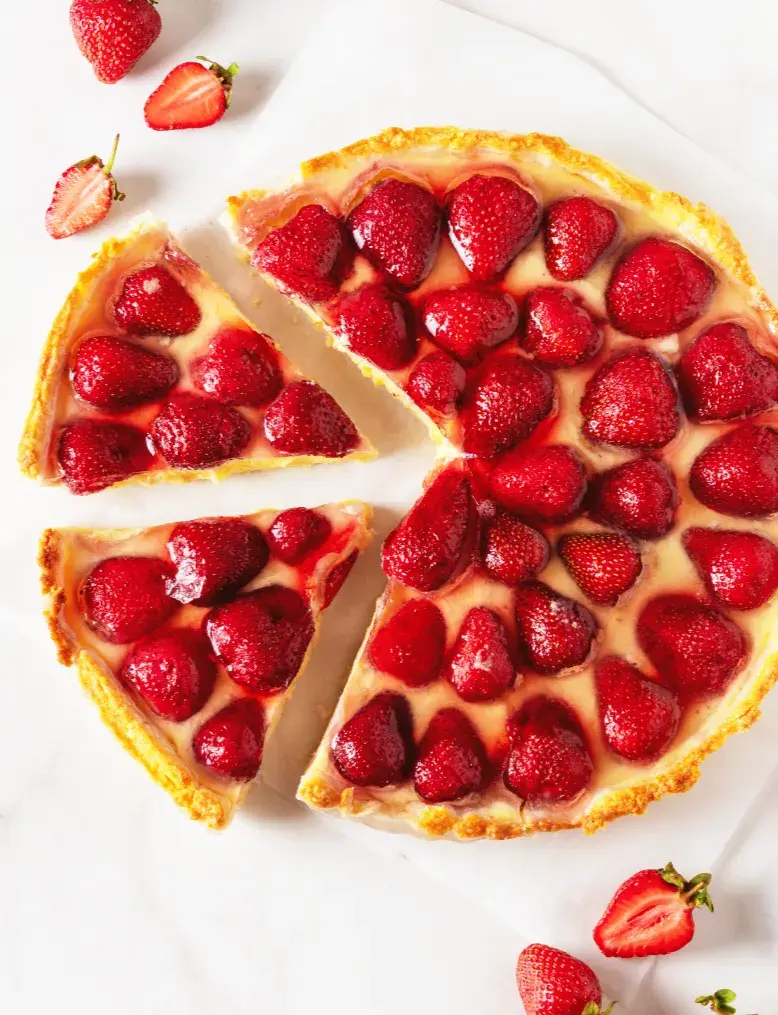
- Add a berry: press a raspberry or two into the filling before baking, or scatter fresh ones on top after. The sharpness suits the lemon.
- Meringue tartlets: pipe and torch a little Italian meringue on top for a tarte au citron meringuée version. A bit more work but as tasty!
- A less-sweet shell: if you prefer a more neutral, less sweet base, swap the pâte sablée for a pâte brisée, which lets the lemon lead without any extra sweetness.
- One big tart: same filling and pastry in a 24cm tart ring instead of individual ones. Just add a few minutes to the bake.
FAQ
What’s the difference between lemon tartlets and lemon curd tartlets?
In curd tartlets, the lemon curd is cooked separately and spooned into pre-baked shells. In these French-style lemon tartlets, the filling bakes directly in the pastry, which gives it a firmer, smoother, custardy texture that holds its shape and slices cleanly. Both versions are tasty!
Can I make lemon tartlets ahead of time?
Yes. They keep in the fridge for up to 2 days in an airtight container. Dust with icing sugar only just before serving. You can also store the baked shells and lemon cream separately and assemble at the last minute for the crispest base.
Why is my lemon filling rubbery or dense?
It was probably overbaked. Take the tartlets out while the edges are set but the centre still wobbles slightly, as the filling firms up as it cools. Baking until it looks fully set in the oven gives you a dense, rubbery texture once cold.
How do I stop the tartlet bases going soggy?
Two things: blind bake the cases until dry and lightly golden, then brush the insides with egg wash and set it in the oven for a couple of minutes. That seal creates a barrier between the pastry and the wet filling and keeps the base crisp.
What pastry is best for lemon tartlets?
A pâte sablée (sweet shortcrust) works beautifully here, as its crisp, crumbly, biscuity texture is a lovely contrast to the sharp, silky lemon filling. A less-sweet pâte brisée works too if you’d rather the shell stayed neutral, but the sablée gives you that melt-in-the-mouth shortbread quality.



 Prep Time 30 minutes
  Cook Time 35 minutes
  Total Time 2 hours 5 minutes
  Servings 6
Description
Ingredients
For the pâte sablée (sweet shortcrust pastry)
- 250 gr plain flour sifted
- 150 gr unsalted butter room temperature
- 80 gr icing sugar sifted
- 50 gr egg room temperature
- 1 pinch salt
For the lemon curd filling
- 3 egg
- 100 gr caster sugar
- 150 ml lemon juice
- 2 lemons for the zest
- 80 gr unsalted butter
- 20 gr corn starch
For decoration
For the egg wash seal
- 1 egg yolk
- 2 tbsp whole milk
Equipment





Instructions
1. Make the pastry
- Follow the pâte sablée method: rub the cold cubed butter into the flour, icing sugar and salt until sandy, add the egg and bring together into a disc without overworking. Wrap and chill for at least 30 minutes.
2. Line and chill the tart rings
- Lightly butter the tart rings. Roll the pastry to about 3mm and cut 6 circles slightly larger than the rings. Press in carefully, trim, and prick the bases with a fork. Chill the lined tins for another 30 minutes.
3. Blind bake
- Heat the oven to 180°C fan (200°C conventional). Line each case with parchment and baking beans. Bake 15 minutes, then remove the paper and beans and bake a further 5 to 7 minutes, until dry and lightly golden. Turn the oven down to 160°C fan (180°C conventional).
4. Neaten and seal
- Once cool enough to handle, run a fine grater gently around the top rim of each case to file off any ragged bits. Whisk the egg yolk and milk, and brush the insides (base and sides) of each case. Return to the oven for 2 to 3 minutes until the wash sets glossy. Cool completely.
5. Make the filling
- Whisk the eggs, sugar, cornflour, lemon juice and zest until smooth. Whisk in the cooled melted butter until fully combined.
6. Fill and bake
- Pour the filling into the sealed cases, right to the top. Bake for 12 to 15 minutes, until just set at the edges with a slight wobble in the centre. It firms as it cools.
7. Make the lemon filling
- In a bowl, whisk together the eggs, caster sugar, cornstarch, lemon juice and lemon zest until smooth and combined. Add the cooled melted butter off the hob and whisk again until everything is well incorporated.
8. Fill and bake the tartlets
- Pour or pipe the filling into the sealed cases, fill them right to the top. Slide them carefully into the oven and bake for 12–15 minutes. The filling should be just set at the edges with a slight wobble still in the centre when you gently move the tray. It will firm up as it cools.
7. Cool and dust
- Cool completely in the tins before unmoulding. Once cold, dust lightly with icing sugar just before serving.
Notes
- The egg-wash seal is worth it. It keeps the base crisp even a day after filling.
- Your fine grater doubles as an edge-filer for the baked pastry rims. The fine side gives control without taking off too much.
- Keep the pastry cold at every stage. Warm butter means tough, greasy pastry.
- Don’t skip the second chill after lining. It really does prevent shrinkage.
- Roll the lemons firmly before juicing for more juice.
- Keeps 2 days in the fridge. Dust with icing sugar just before serving, not before.
Share your feedback and spread the love!
If you try this recipe, I’d love to hear how it turns out! Leave a ★★★★★ rating and your thoughts in the comments, it helps fellow French foodies discover this recipe too. Snap a photo and tag @obviously.french on Instagram. Come talk about it in our Facebook group. And don’t forget to save this recipe to Pinterest so you’ll always have it handy for your next French-inspired meal!

I absolutely love this recipe. It opens your palate to a whole new flavour experience. The filling is surprisingly easy to make when you follow the instructions, and the reward at the end is absolutely fanbloodytastic!
Fanbloodytastic? That sounds like it’s a keeper! And it really is super easy to bake!