
 July 25, 2025
Disclosure: This post may contain affiliate links which provide us a small commission when used for purchase. Please read my disclosure policy for more information. I am grateful for your support!
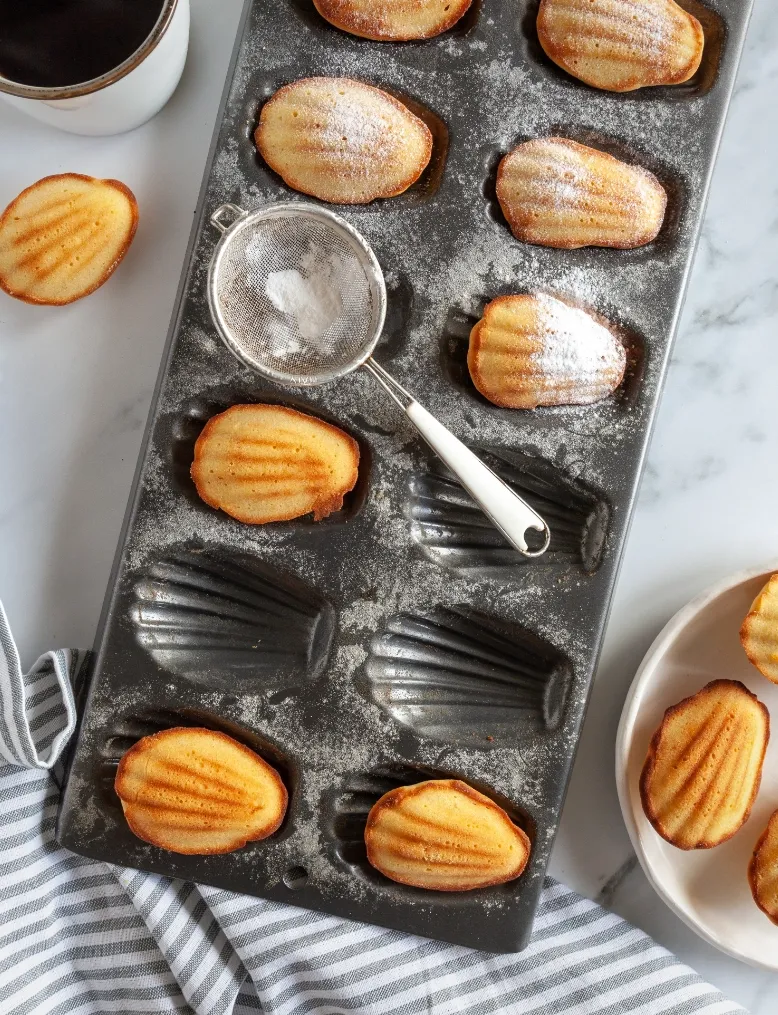
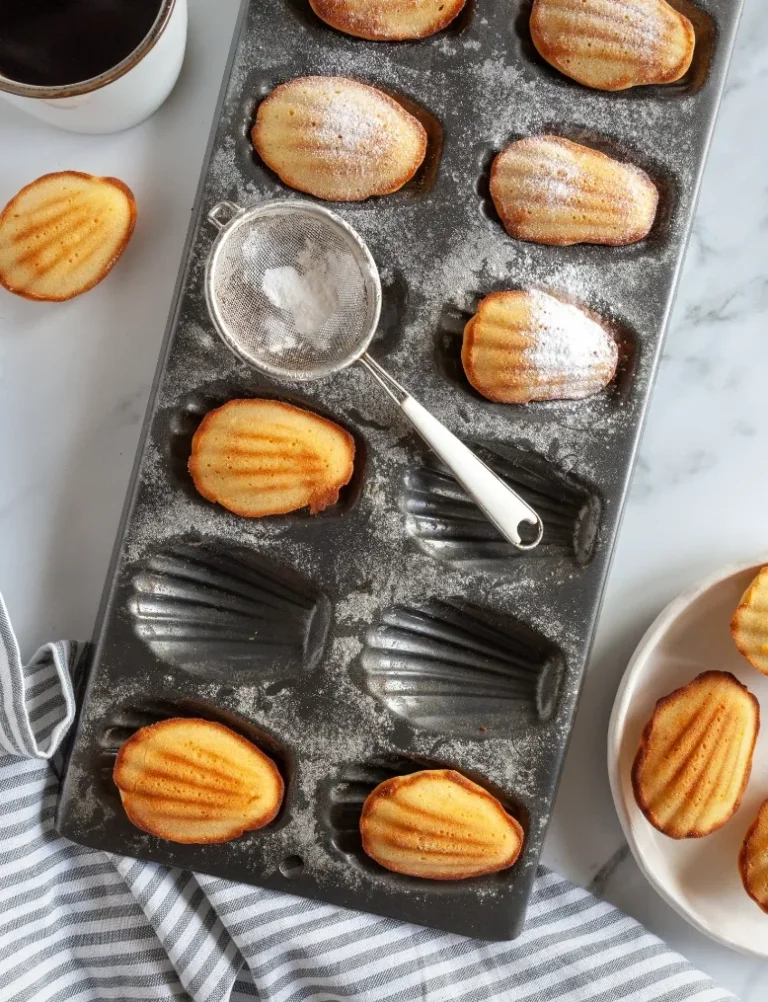
When I met my English husband I wanted to introduce him to French treats, and I obviously started with the most elegant one: madeleines. These little cakes are so delicate, they look lovely, and they’re the perfect thing with coffee. Or tea, to meet the UK halfway.
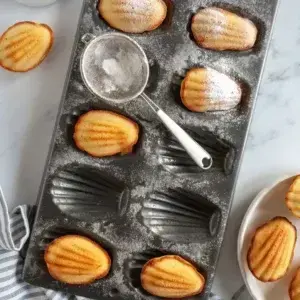
I knew about madeleines of course, but I never dared look up how to make them because they seemed so intricate. I was surprised how easy it actually was. Since then we make them regularly with our beloved madeleine tray, which has been seriously overused and still looks like new. If you like simple, light butter cakes with a faint hint of lemon, you should definitly try these!
Table of Contents
Where madeleines come from
The madeleine belongs to Commercy, a small town in Lorraine, and the story attached to it is one of the great French kitchen legends. As with most of them, nobody can prove a word. In the meantime, Commercy still takes them very seriously and has produced them commercially since the 19th century. For years, if you passed through by train, women with big wicker baskets would crowd the platform selling boxes through the carriage windows.
Marcel Proust and the madeleine
No cake has generated more literary commentary than the one eaten by the narrator of Proust’s In Search of Lost Time. He dips a madeleine into tea and is overwhelmed by a rush of childhood memory, the taste unlocking a whole lost world. It’s one of the most famous passages in French literature.
That’s why madeleine de Proust entered the language as shorthand for any small sensory thing, a taste, a smell, a sound, that suddenly brings back a wave of nostalgia. Every French person knows what it means.
Ingredients
- Butter — the entire flavour, so use a good one, French if you can. It’s melted and folded in last, which keeps the crumb tender rather than aerated like a sponge.
- Eggs — whisked with the sugar until pale and thick, which builds the air that gives madeleines their lightness.
- Sugar — sweetens and helps the edges caramelise into that slightly crisp rim.
- Honey — a small amount, for a faint background flavour and to keep the centres moist. It also helps them colour.
- Plain flour and baking powder — the structure and the lift. The baking powder works with the cold-batter-hot-tin contrast to give you the hump.
- Lemon zest and juice — the classic flavour, and more traditional than people expect. Zest is where the real flavour is.
- Salt — a pinch, which stops the whole thing tasting flatly sweet.
How to make madeleines
1. Whisk the eggs and sugar until pale
Crack the eggs into a bowl with the sugar and whisk until pale, thick and slightly frothy. This is where the air comes from, so give it a few minutes rather than a quick stir. Then whisk in the honey until it’s evenly distributed.
2. Melt the butter and flavour it
Melt the butter in a separate bowl and stir in the lemon juice, zest and a pinch of salt. Letting the zest sit in warm butter draws the oils out, which spreads the lemon through the whole batter rather than leaving it in specks.
3. Fold in the dry, then the butter
Sift the flour and baking powder together and fold gently into the egg mixture until just combined. Then pour in the lemony butter and fold through carefully. Don’t beat it. Overworked batter gives you tough, flat madeleines instead of light ones.
4. Chill the batter
Cover and refrigerate for at least 2 hours, or overnight. This is the step that makes the hump, and there’s no shortcut. Cold batter hitting a hot tin is what forces the rise, so skipping it gives you flat shells.
5. Butter the madeleine tray and get the oven hot
Grease the madeleine tray well with melted butter, right into the ridges, even if it’s non-stick. Heat the oven to 220°C, and put the tray in the fridge with the batter if you can, since a cold tin exaggerates the temperature shock further.
6. Fill three-quarters full and bake hot, then lower
Spoon the batter in, filling each shell about three-quarters, because they rise considerably. Bake 3 minutes at 220°C to force the hump, then drop to 200°C for another 7 minutes until golden at the edges.
7. Turn them out straight away
Tip them out of the tray as soon as they come out of the oven, or the residual heat carries on cooking them and the edges go hard. Cool on a rack if you can bear to wait, though warm from the tray is the best they will ever be.
Tools for this recipe
Check out my favorite kitchen essentials and cookware!
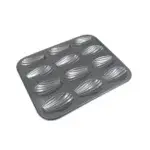
- Use a madeleine tray, because without the shell mould you simply have small cakes. The shape is what gives you the even bake, the golden ridged outside and the softer middle.
- Use a pastry brush to get melted butter properly into every ridge of the tray, since madeleines stick in exactly the places you can’t reach with a finger.
- Use a sieve for the flour and baking powder, so the raising agent is evenly distributed and you don’t get lumps in a delicate batter.
Tips for success
- Chill the madeleine tray as well as the batter: cold batter in a cold tray going into a very hot oven maximises the temperature shock, and the shock is what makes the hump.
- Butter the tray even if it’s non-stick: madeleines have ridges and a delicate crumb, and one that tears coming out is a sad thing after a two-hour wait.
- Don’t overfill: three-quarters looks stingy and is correct. Fuller shells overflow the mould and lose their defined shape.
- Use a piping bag or a small ice cream scoop: far neater than spooning, and the shells all end up the same size, so they bake evenly.
- Zest the lemon straight into the butter, not the flour: the warmth releases the oils, which is where the flavour is. Zest tossed through dry flour barely registers.
- Make the batter the night before: it improves with a longer rest, and it turns a two-and-a-half hour recipe into a fifteen-minute one on the day.
How to store it
- At room temperature: They keep 2 to 3 days in an airtight container, but be honest with yourself, the crisp edge is gone within a few hours. Madeleines are a same-day cake.
- In the fridge: For the batter, not the baked cakes. The batter keeps 2 days covered and genuinely improves, so you can bake a few fresh whenever you want them, which is the best way to eat them.
- In the freezer: They freeze well baked and cooled, for up to 2 months. Thaw at room temperature and warm briefly in a low oven, which brings back some of the crisp edge. The raw batter also freezes.
More dessert recipes to try
Variations
- Orange instead of lemon: same principle, slightly rounder and sweeter. Orange zest with a spoonful of Grand Marnier is very good.
- Dipped in chocolate: half-dip the cooled shells in dark chocolate and let it set. Café-pâtisserie style, and it makes them look luxurious.
- Brown butter: take the butter to beurre noisette before adding it, which gives a nutty, caramelised depth. Just like the Financiers cakes.
- Matcha: a teaspoon of matcha in the dry ingredients gives an earthy note and a green colour that stops people in their tracks.
- Lavender: a pinch of culinary lavender in the batter, and I mean a pinch. Very Provençal, and soapy if you overdo it.
- Poppy seeds and lemon: the poppy seeds add a gentle crunch that suits the citrus, and they look good against the pale crumb.
- Less sugar: the sugar here is partly structural, since it’s what caramelises the edges into that crisp rim. You can drop from 100g to about 80g and still get a good madeleine, slightly less crisp and more buttery. Below that they turn pale and cakey, so if you want them less sweet, lean on extra lemon zest instead.
FAQ
Why don’t my madeleines have a hump?
The batter wasn’t chilled long enough, or the oven wasn’t hot enough. The hump comes from the shock of cold batter hitting a hot tin in a very hot oven, so rest the batter at least 2 hours and start at 220°C.
Do you need a madeleine tray?
Yes, really. Without the shell mould you get small cakes rather than madeleines, and the shape is what gives the even bake, crisp ridged edges and soft centre.
Are madeleines cakes or biscuits?
Cakes. The French call them petits gâteaux, and the batter is closer to a génoise than to anything biscuit-like, despite the small size and crisp edges.
Why are my madeleines dry?
Overbaked. They need only about ten minutes in total and carry on cooking in the hot tin, so turn them out the moment they come out of the oven.
Can you make madeleine batter ahead?
Yes, and you should. It keeps 2 days in the fridge and improves with the rest, so you can bake them fresh in batches whenever you want.


 Prep Time 2 hours 15 minutes
  Cook Time 10 minutes
  Total Time 2 hours 25 minutes
  Servings 12 madeleines
Description
Ingredients
- 2 egg
- 100 gr sugar
- 20 gr honey
- 100 gr unsalted butter
- 100 gr plain flour
- 3 gr baking powder
- 1 squeeze lemon juice
- 1 pinch salt
Equipment

Instructions
1. Prepare the egg mixture
- Crack the eggs into a bowl with the sugar and whisk until pale, thick and slightly frothy, to get the air bubbles going.
2. Incorporate honey
- Mix the honey into the egg and sugar until smooth and evenly distributed.
3. Melt and flavour the butter
- In a separate bowl, melt the butter. Stir in the lemon zest, a squeeze of lemon juice and a pinch of salt. Letting the zest sit in the warm butter draws out its oils.
4. Combine dry ingredients
- Sift the flour and baking powder together and add to the egg mixture. Fold gently until just incorporated.
5. Add the butter
- Pour the lemony butter into the batter and fold through carefully. Don't overwork it.
6. Rest the batter
- Cover and refrigerate for at least 2 hours, or overnight. This is what creates the classic hump.
7. Preheat and prepare your tray
- Grease the madeleine tray well with melted butter, getting into all the ridges. Preheat the oven to 220°C.
8. Fill and bake
- Spoon the batter into the tray, filling each shell about three-quarters full. Bake for 3 minutes at 220°C, then reduce to 200°C and bake for another 7 minutes, until golden and domed.
9. Cool and enjoy
- Turn them out of the tray straight away so they don't keep cooking. Cool on a rack, if you can resist.
Notes
- The rest in the fridge is what makes the hump. Don’t skip it.
- Turn them out of the madeleine tray immediately or the edges harden.
- Best within an hour of baking. The batter keeps 2 days in the fridge, so bake in batches for fresh madeleines whenever you want them.
Share your feedback and spread the love!
If you try this recipe, I’d love to hear how it turns out! Leave a ★★★★★ rating and your thoughts in the comments, it helps fellow French foodies discover this recipe too. Snap a photo and tag @obviously.french on Instagram. Come talk about it in our Facebook group. And don’t forget to save this recipe to Pinterest so you’ll always have it handy for your next French-inspired meal!

These madeleines turned out beautifully light with a delicate crisp edge! Reminded me of the little cakes I had in Paris years ago. Will definitely bake again for afternoon tea!