 February 9, 2026
Disclosure: This post may contain affiliate links which provide us a small commission when used for purchase. Please read my disclosure policy for more information. I am grateful for your support!
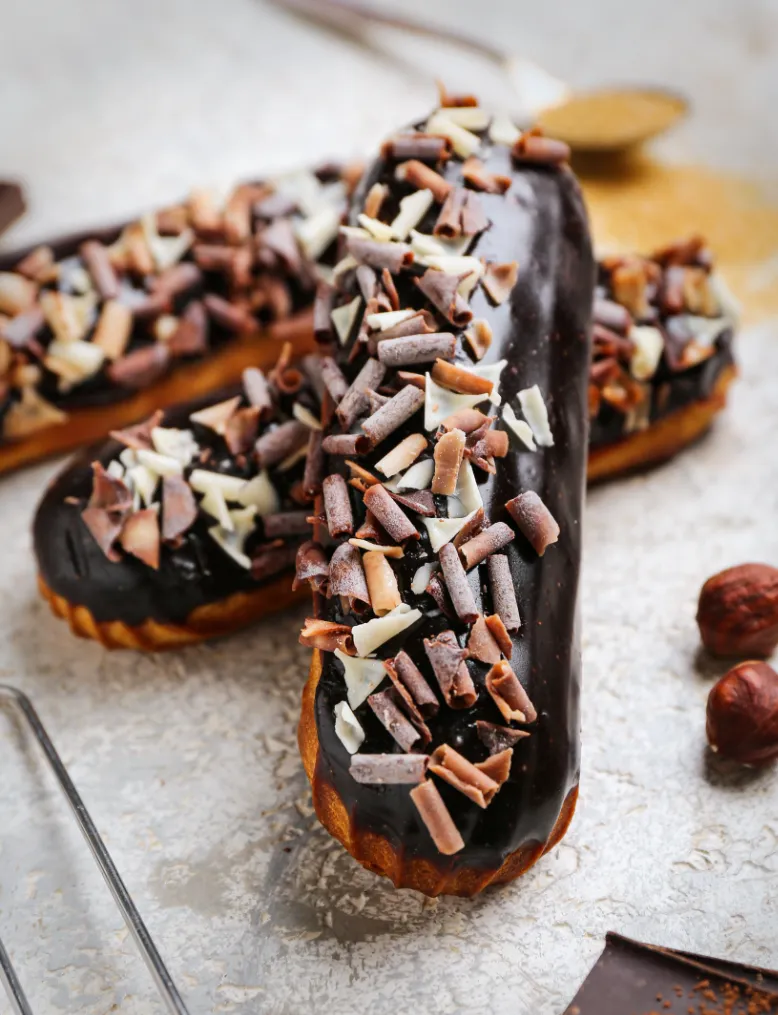
I ate one of my first proper chocolate éclairs when I was about seven, standing on a pavement in Paris. My grandfather had just bought it, wrapped in a little square of wax paper, and it was bigger than my hand. He told me to eat it right there, because it wouldn’t survive the journey home. And he was right, as always!
A great French éclair isn’t a travelling dessert. It’s a right-here, right-now indulgence, eaten that moment when it’s at its best. And once you’ve made your own, crisp choux pastry shell, cool vanilla cream, glossy chocolate on top, you’ll understand exactly why he wouldn’t let me wait!
Table of Contents
Where chocolate eclairs comes from
Éclairs appeared in France in the mid-19th century, though the exact origin is, as with most things in French pâtisserie, debated. Most credit Antonin Carême, the legendary chef who effectively invented modern French pâtisserie, though since he died in 1833 and the name came later, his direct hand is uncertain. What’s clear is that the éclair grew out of an earlier choux pastry called the pain à la duchesse (or petite duchesse), a finger-shaped pastry rolled in almonds, which was refined into the cream-filled, glazed éclair we know. By the late 19th century it was firmly established in every serious pâtisserie in the country.
Even the name is a small mystery. Éclair means “lightning,” and nobody’s quite sure why, some say because it’s eaten in a flash, others because of the way the glossy glaze catches the light. The chocolate version was the original benchmark; coffee came soon after as its great rival and has never quite unseated it.
The choux pastry itself is older still, possibly back to the 16th century, and it’s the same dough used for profiteroles, Paris-Brest, religieuses and gougères. That’s the real reason it’s worth learning: get choux right, and a whole category of French pâtisserie opens up to you. It has a fearsome reputation, but it isn’t as hard as people say. It just rewards attention: the right consistency, the right oven temperature, and the discipline not to open the oven door early. (I’m guilty of that one, curiosity got the better of me more than once, but I’ve learned my lesson.) Follow those rules and the rest is straightforward.
Ingredients
- Choux pastry (milk, water, butter, flour, eggs) – The crisp, hollow shell. A simple dough, but the ratios and technique matter. It’s the same base as profiteroles and Paris-Brest.
- Crème pâtissière (milk, vanilla, yolks, sugar, cornflour, butter) – The silky vanilla pastry cream filling, the heart of the éclair. Made first, so it can chill. Vanilla – A pod is best for the cream, since the vanilla flavour is front and centre. Good extract works too.
- Dark chocolate and cream – For the glossy ganache glaze. A 60–70% dark chocolate gives the best balance of shine and flavour.
- Butter – A little in both the cream and the glaze, for richness and a glossy finish.
How to make chocolate eclairs
1. Make the crème pâtissière
Infuse the milk with vanilla, whisk it into the yolks beaten with sugar and cornflour, then cook it back in the pan, whisking constantly, until it thickens suddenly into a custard. Cook it another couple of minutes to lose the raw cornflour taste, beat in the butter, then press clingfilm onto the surface and chill it until cold and thick. Making it first means it’s ready and set by the time the shells are baked.
2. Make the choux pastry
Bring the milk, water, butter, sugar and salt to a boil, then tip in all the flour at once and beat hard to a smooth ball that pulls from the pan. Dry it out over low heat for a minute or two, then cool it slightly and beat in the eggs one at a time, until you have a smooth, glossy paste that falls in a V from the spoon. That V is your sign it’s right, too stiff and it won’t puff, too loose and it spreads.
3. Pipe and bake
Pipe 12cm lengths onto lined trays, well spaced, and smooth any peaks with a wet finger (peaks catch and burn). Bake hot, then lower the heat and bake on until deep golden and completely dry, and here’s the rule: do not open the oven door for the first 25 minutes, or they’ll collapse. Once baked, poke a hole in each end and return them to the turned-off oven to dry out fully, so they stay crisp. Cool completely before filling.
4. Fill, glaze and serve
Fill each shell with the pastry cream, piped through small holes in the base until it feels heavy. Make the ganache by pouring hot cream over the chopped chocolate, stirring to a glossy glaze, and letting it thicken to a coating consistency. Dip the top of each éclair, let the excess drip, and neaten the edges. Let the glaze set, then serve, ideally within a few hours.
Tools for this recipe
Check out my favorite kitchen essentials and cookware!
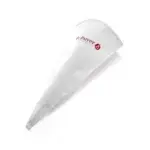
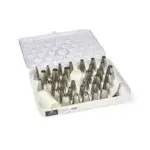
- Use a good piping bag with a plain nozzle for neat, even éclairs.
- Use a heavy saucepan for the choux and the pastry cream, so nothing catches.
- Use a heat-resistant spatula to beat the eggs into the choux.
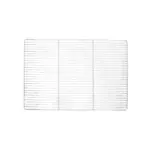
- Use a cooling rack to cool the shells crisp and to catch the drips when glazing.
Tips for success
- Make the choux pastry cream first: it needs at least a couple of hours to chill and set firm enough to pipe. Making it first means it’s ready when the shells are baked and cooled.
- Don’t open the oven door: for the first 25 minutes, leave it shut. Choux rises on steam, and a blast of cool air makes them collapse. (I know the temptation, but resist it!)
- Get the choux consistency right: after the last egg, the paste should fall from the spoon in a V shape, smooth and glossy. Too stiff and it won’t puff; too runny and it spreads flat. Add the last egg gradually if you’re unsure.
- Dry the shells out: after baking, poke a hole in each and return them to the turned-off oven to dry. Any trapped steam softens them from the inside, so drying keeps them crisp.
- Pipe evenly: even pressure gives even éclairs. Uneven ones bake unevenly and look wrong. Use the drawn guidelines and a proper nozzle.
How to store it
- Éclairs are a right-here, right-now dessert, at their absolute best within a few hours of assembling, while the choux is still crisp and the cream cool. The longer a filled éclair sits, the more the pastry softens as it takes up moisture from the cream, so fill them close to serving.
- Assembled, they’ll keep in the fridge for up to a day, though the shell won’t be as crisp. Bring them back to room temperature for 15 minutes before eating, since fridge-cold dulls the flavour and firms the cream too much.
- The clever way to get ahead is to keep the components separate: unfilled choux shells keep in an airtight container for 2 days (crisp them in a 150°C oven for 5 minutes before filling), the pastry cream keeps 2 days in the fridge, and the ganache 3 days (gently rewarmed). Then fill and glaze just before serving. Unfilled shells also freeze for a month, thaw and crisp in a warm oven.
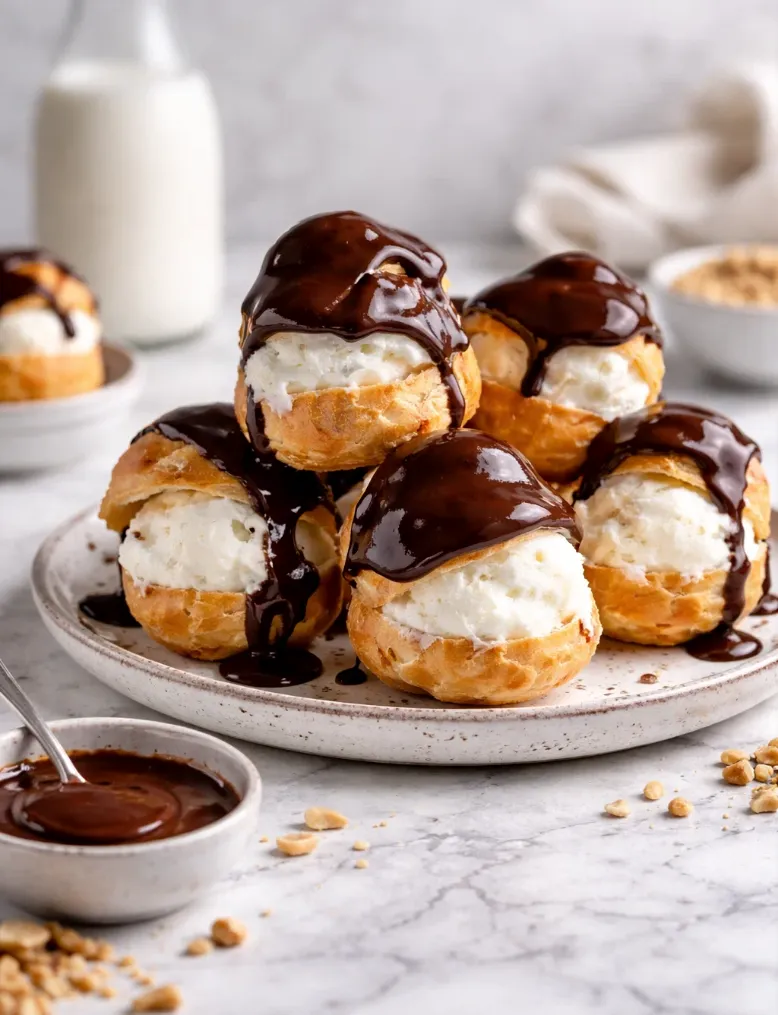
More dessert recipes to try
Variations
- Less sugar: the choux and glaze are hard to reduce (sugar is minimal in the pastry and structural in the ganache), but you can cut the sugar in the pastry cream a little and use a higher-percentage (70%+) dark chocolate for the glaze, which is less sweet and more intense.
- Coffee French éclairs: add a tablespoon of strong instant coffee (or espresso) to the pastry cream, and a little to the glaze, for the classic éclair au café, chocolate’s great rival.
- Salted chocolate: a pinch of fleur de sel in the ganache glaze, for a salted-chocolate finish.
- Vanilla (fondant) éclairs: finish with a classic white fondant glaze instead of chocolate, for another look and taste.
- Different fillings: flavour the pastry cream with a little dark rum, praline, or pistachio, all classic French éclair fillings.
- Chocolate cream too: for a double-chocolate éclair, whisk a little melted dark chocolate into the pastry cream as well as glazing with ganache.
FAQ
Why did my éclairs collapse or go flat?
Usually one of three things: the oven door was opened too early (choux pastry rises on steam and collapses in cool air), the paste was too runny (add the last egg gradually), or they were underbaked and still damp inside. Bake until deep golden and dry, and don’t open the door for the first 25 minutes.
Can I make éclairs ahead of time?
Best assembled within a few hours of serving, since the shells soften once filled. But you can make the components ahead: unfilled shells keep 2 days (or freeze a month), pastry cream 2 days, and ganache 3 days. Fill and glaze just before serving for the crispest result.
What’s the difference between an éclair and a profiterole?
They’re made from the same choux pastry. An éclair is piped long and oblong, filled with pastry cream and glazed on top; a profiterole is a small round puff, usually filled with cream or ice cream and served with chocolate sauce. Same dough, different shape and finish.
Can I use a ganache instead of fondant?
Yes, and this recipe does. Traditional éclairs used fondant icing, but chocolate ganache (chocolate melted with cream) is more forgiving to make at home and, many think, tastes better. It gives a glossy, rich chocolate top that sets to a slight shine.


 Prep Time 45 minutes
  Cook Time 35 minutes
  Total Time 1 hour 20 minutes
  Servings 12 éclairs
Description
Ingredients
For the Choux Pastry (Pâte à Choux)
- 125 ml whole milk
- 125 ml water
- 100 gr unsalted butter
- 1 tbsp caster sugar
- 1 pinch salt
- 150 gr plain flour sifted
- 4 eggs at room temperature
For the Crème Pâtissière (Pastry Cream)
- 500 ml whole milk
- 1 vanilla pod or 2 teaspoons vanilla extract
- 6 eggs yolks
- 125 gr caster sugar
- 40 gr corn starch
- 25 gr unsalted butter
For the Chocolate Glaze
- 200 gr dark chocolate 60-70% cocoa
- 100 ml double cream
- 25 gr unsalted butter
Equipment

Instructions
Make the Crème Pâtissière
1. Infuse the milk
- Heat the milk with the split vanilla pod and seeds until just steaming. Off the heat, leave to infuse 15 minutes.
2. Make the custard base
- Whisk the yolks, sugar and cornflour until pale. Remove the pod, then gradually whisk the warm milk into the yolks.
3. Cook the pastry cream
- Return to the pan and cook over medium heat, whisking constantly, until it thickens suddenly. Whisk 2 minutes more to cook out the cornflour. Off the heat, whisk in the butter.
4. Chill
- Transfer to a bowl, press clingfilm onto the surface, and chill at least 2 hours until cold. Whisk smooth before using.
Make the Choux Pastry
5. Prep
- Heat the oven to 200°C (180°C fan). Line two trays; draw 12cm guide lines on the parchment, spaced 5cm apart, and flip it over.
6. Make the choux paste
- Bring the milk, water, butter, sugar and salt to a rolling boil. Off the heat, tip in all the flour and beat to a smooth ball that pulls from the pan. Return to low heat 1 to 2 minutes to dry, stirring, until a film forms on the pan base.
7. Add eggs
- Cool 5 minutes. Beat in the eggs one at a time. It'll look split, then come together into a smooth, glossy paste that falls in a V.
8. Pipe
- Pipe 12cm lengths onto the trays using the guides, 5cm apart. Smooth any peaks with a wet finger.
9. Bake
- Bake 10 minutes at 200°C, then reduce to 180°C (160°C fan) and bake another 20 to 25 minutes until deep golden and dry. Do not open the door for the first 25 minutes.
10. Dry out
- Poke a hole in each end, then return to the turned-off oven, door ajar, for 10 minutes. Cool completely on a rack.
Assemble
11. Fill
- Make three small holes in the base of each éclair. Pipe in the pastry cream (small round nozzle) until it feels heavy and just starts to push back out.
12. Make the chocolate glaze
- Put the chopped chocolate in a heatproof bowl. Heat the cream and butter until just simmering (don't let it boil), pour it over the chocolate, and leave for 1 minute. Stir gently until smooth and glossy, then leave to cool for 10 to 15 minutes, until thick enough to coat without running off.
13. Glaze the éclairs
- Holding a filled éclair by both ends, dip the top into the glaze, then lift it out and let the excess drip back into the bowl. Run a finger along the edges to neaten the line, and set it glazed-side up on a wire rack.
14. Set and serve
- Leave the éclairs at room temperature for about 30 minutes, until the glaze has set. Serve within a few hours, ideally the same day.
Notes
- Make the pastry cream first, so it’s chilled and pipeable by the time the shells are baked.
- Don’t open the oven door for the first 25 minutes, or they collapse.
- The choux is right when it falls from the spoon in a V, smooth and glossy.
- Dry the shells in the turned-off oven so they stay crisp.
- Best within a few hours of assembling; keep components separate to make ahead.
Share your feedback and spread the love!
If you try this recipe, I’d love to hear how it turns out! Leave a ★★★★★ rating and your thoughts in the comments, it helps fellow French foodies discover this recipe too. Snap a photo and tag @obviously.french on Instagram. Come talk about it in our Facebook group. And don’t forget to save this recipe to Pinterest so you’ll always have it handy for your next French-inspired meal!