September 13, 2026
Disclosure: This post may contain affiliate links which provide us a small commission when used for purchase. Please read my disclosure policy for more information. I am grateful for your support!
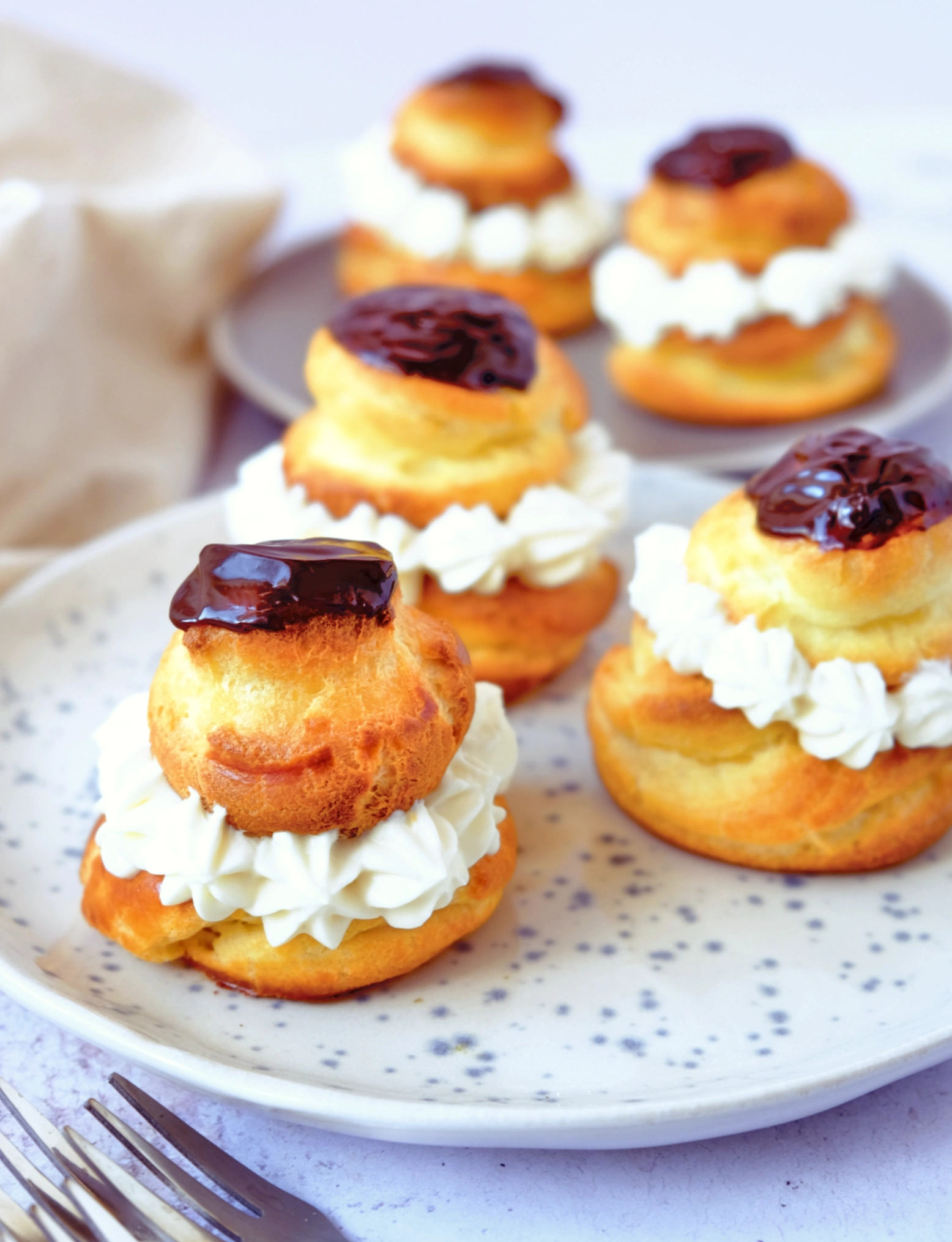
The religieuse is one of the grand old Parisian pastries, and it is actually pretty easy to make! It’s basically an assembly of components you might already know how to make: choux pastry, pastry cream, a chocolate ganache to glaze and glue, and a little whipped cream to finish.
The pastry is meant to look like a nun! Hence the name. It’s a project rather but like I said earlier, nothing really complicated. And let’s be fair, there’s nothing more satisfying as a tray of perfectly lined-up “nuns” on the counter, just waiting to be eaten with friends and family!
Table of Contents
Where a religieuse comes from
The religieuse was born in a Parisian café around 1855. The famous café-glacier Frascati, on the boulevard Montmartre, was run by a Neapolitan ice-cream maker, and it’s there the pastry first appeared. The name is the funny part: a religieuse is a nun, and the pastry was said to look like her outfit, the large choux forming the body and robe, the small one on top the head in its coif, the dark glaze recalling the colour of the habit. Frascati himself is credited with the name.
It didn’t start out looking the way it does now. The first religieuses were square, a block of choux filled with chocolate or coffee pastry cream, or with Chiboust cream, and topped with whipped cream. The neat stacked round shape everyone recognises came a little later, once the piping bag arrived in the late 1840s and pâtissiers could shape choux cleanly. The word itself only entered the Larousse dictionary in 1904, half a century after the pastry.
It shares its DNA with the éclair, the same choux pastry and pastry cream, differing mainly in shape and in generosity. Where an éclair is a two-bite thing you eat standing up, a religieuse asks you to sit down with a plate and a fork. It’s a small monument rather than a snack, which is exactly its appeal.
A note on this version:
The strictly classic religieuse is glazed with fondant and decorated with buttercream. This recipe takes the modern pâtissier’s route, glazing with a dark chocolate ganache instead, which many prefer since it’s less sweet and easier to handle at home, and finishing with whipped cream mascarpone rather than buttercream. It’s not the 1856 original, but it’s how a lot of good pastry cooks make it today and my personal perfect version of it!
Ingredients
- Pâte à choux — you’ll pipe this in two sizes, larger buns for the bodies and small ones for the heads. One batch is plenty.
- Crème pâtissière — plain vanilla pastry cream, made ahead and thoroughly chilled, to fill both sets of choux.
- Dark chocolate and cream — for the ganache, which does two jobs here: glazing the tops and gluing the small choux onto the large ones. Use a good dark chocolate, around 60 to 70%, so it sets firm and isn’t too sweet.
- Cream and mascarpone — for the whipped cream mascarpone, the piped decoration. The mascarpone stabilises the whipped cream so it holds its shape and doesn’t weep.
- Icing sugar and vanilla — a little, to sweeten and flavour the whipped cream.
How to make a religieuse
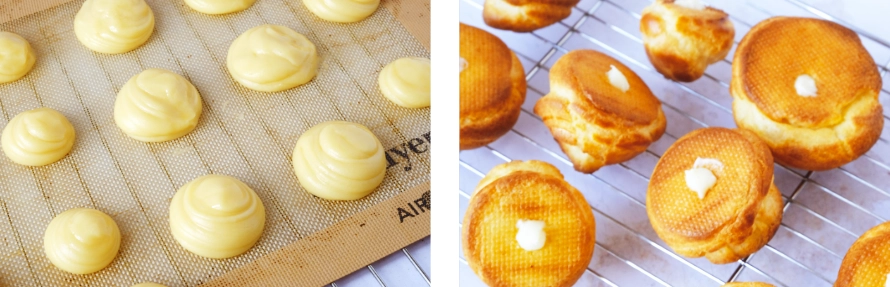
1. Fill the choux with pastry cream
Whisk the cold pastry cream smooth and pipe it into each bun through a small hole in the base, using a fine nozzle, until you feel it grow heavy. Fill both the large and the small choux. Filling from underneath keeps the tops neat for glazing.
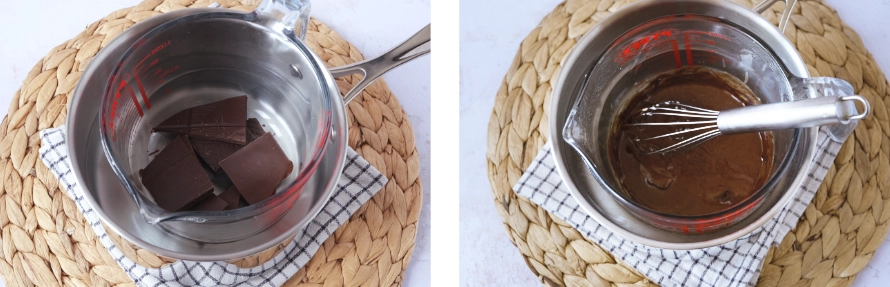
2. Make the ganache
Warm the cream until it just steams, pour it over the chopped chocolate, wait a minute, then stir from the middle until smooth and glossy. Let it cool and thicken slightly until it coats a spoon, so it clings to the choux rather than running straight off.
3. Glaze the tops
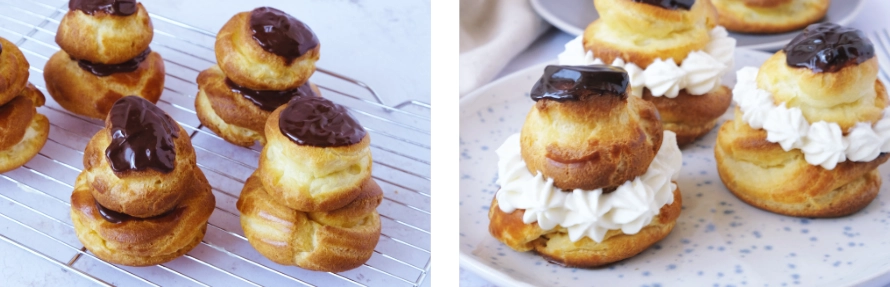
Dip the top of each filled choux into the ganache, or spoon it over, turning to coat the crown neatly and letting the excess drip back. Do both sizes. Set them down and let the ganache firm up a little before stacking.
4. Stack the small choux on the large ones
Put a small dab of ganache on top of each large choux and set a small one on top, pressing gently so it holds. The ganache sets into glue, which is what keeps the little head in place. Let them set fully before the next step.
5. Whip the whipped cream mascarpone
Whip the cold cream, mascarpone, icing sugar and vanilla together to firm peaks, watching closely near the end, since mascarpone stiffens quickly and can overwhip. It should hold a clean shape for piping.
6. Pipe the decoration and finish
Fit a star nozzle and pipe a collar of chantilly mascarpone around the join where the two choux meet, in little peaks, which is the traditional finish and hides the seam. A small point of cream on the very top if you like. Chill until serving.
Tools for this recipe
Check out my favorite kitchen essentials and cookware!
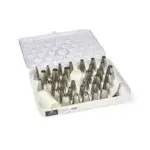
- Use a piping bag with a fine nozzle to fill the choux from underneath, and a star nozzle for the chantilly collar.
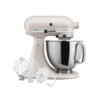
- Use an electric mixer to whip the chantilly mascarpone to firm peaks quickly and evenly, since mascarpone overwhips easily by hand.
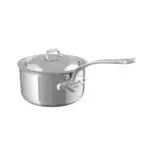
- Use a small heavy saucepan to warm the cream for the ganache gently, without catching.
- Use a cooling rack to set the glazed choux on while the ganache firms.
Tips for success
- Chill the pastry cream firm, then whisk it smooth: set pastry cream pipes cleanly into the choux; loose cream leaks straight back out of the hole.
- Let the ganache thicken before glazing: too warm and it runs off the choux and pools. It should be at a coating consistency, thick enough to cling, before you dip.
- Glaze before you stack: it’s far easier to coat each choux top cleanly while they’re separate than to reach around a stacked one.
- Use the ganache as glue: a dab between the two choux sets firm and holds the small one in place, which is exactly what the recipe needs and why you don’t want fondant here.
- Don’t overwhip the mascarpone cream: it goes from soft to grainy fast. Stop at firm peaks that hold a shape, and watch it closely near the end.
- Assemble on the day you serve: choux soften once filled, so fill, glaze and decorate close to serving rather than the day before.
- Pipe the collar to hide the join: the ring of whipped cream where the two choux meet is both the traditional look and a neat way to cover the seam.
How to store it
- In the fridge: Best eaten the day they’re made, while the choux still have some crispness. They’ll keep a day covered a container in the fridge, though the shells soften as the cream sits in them. Keep them chilled, since they contain both pastry cream and whipped cream.
- The components ahead: This is the way to plan it. Pastry cream keeps 3 days, baked unfilled choux pastry freeze for a month and re-crisp from frozen, and ganache keeps a week in the fridge and re-melts gently. Assemble on the day!
- In the freezer: Don’t freeze assembled. The filled choux and the chantilly break down on thawing. Freeze only the empty baked choux.
More dessert recipes to try
Variations
- Chocolate religieuse: fill with chocolate pastry cream as well as glazing with ganache, for a fully chocolate version. Classic.
- Coffee religieuse: the other traditional flavour: coffee pastry cream inside, and a little coffee in the ganache or a coffee glaze.
- With fondant, the classic way: if you want the strictly traditional finish, glaze with coffee or chocolate fondant instead of ganache, and pipe buttercream instead of whipped cream.
- Praline: fill with a praline pastry cream and finish with chopped toasted hazelnuts on the ganache.
- Salted caramel: a caramel pastry cream filling with a chocolate ganache glaze, which is a very popular modern pâtisserie flavour.
FAQ
Why is it called a religieuse?
Because it’s said to look like a nun in her habit. The large choux is the body and robe, the small one on top the head in its coif, and the dark glaze recalls the colour of the habit. The pastry was created at Café Frascati in Paris around 1855.
What’s the difference between a religieuse and an éclair?
They use the same choux pastry and pastry cream. An éclair is a single filled length, while a religieuse is two round choux stacked large-on-small, glazed and decorated. The religieuse is the more generous, sit-down version.
Can I use ganache instead of fondant on a religieuse?
Yes, and many modern pâtissiers do. The classic finish is fondant, but a dark chocolate ganache is less sweet, easier to handle at home, and doubles as the glue that holds the small choux on top.
Can you make a religieuse ahead of time?
Make the components ahead: pastry cream keeps 3 days, ganache a week, and baked unfilled choux freeze for a month. Assemble on the day you serve, since filled choux soften.
What is whipped cream mascarpone?
Whipped cream stabilised with mascarpone, sweetened and flavoured with vanilla. The mascarpone helps it hold its piped shape and stops it weeping, which makes it ideal for decoration.



 Prep Time 1 hour
  Cook Time 30 minutes
  Total Time 2 hours
  Servings 8 religieuses
Description
Ingredients
For the choux pastry
- 125 ml whole milk
- 125 ml water
- 100 gr unsalted butter
- 150 gr plain flour sifted
- 200 gr eggs beaten
- 1.5 gr salt
For the crème pâtissière / pastry cream
- 500 ml whole milk
- 1 vanilla pod
- 4 eggs
- 100 gr caster sugar
- 45 gr corn starch
- 25 gr unsalted butter
For the ganache
- 150 gr dark chocolate (60–70%), chopped
- 150 ml Double cream
For the whipped cream mascarpone
- 150 ml Double cream cold
- 75 gr mascarpone cold
- 25 gr icing sugar
- 1 tsp vanilla extract
Equipment



Instructions
1. Make the components
- Make and bake the pâte à choux, piping 8 large buns (~5cm) and 8 small ones (~3cm). Make the crème pâtissière and chill it firm.
2. Fill the choux
- Whisk the pastry cream smooth. Using a fine nozzle, pipe it into each bun through a hole in the base until heavy. Fill all the large and small choux.
3. Make the ganache
- Warm the cream until it just steams and pour it over the chopped chocolate. Leave 1 minute, then stir from the centre until smooth and glossy. Let it cool to a coating consistency.
4. Glaze
- Dip each filled choux, large and small, in the ganache, coating the crown neatly. Let the excess drip back and set the choux down to firm up.
5. Stack
- Put a dab of ganache on top of each large choux and set a small one on top, pressing gently so it holds. Let it set.
6. Whip the whipped cream mascarpone
- Whip the cold cream, mascarpone, icing sugar and vanilla to firm peaks, watching closely so it doesn't overwhip.
7. Decorate
- Fit a star nozzle and pipe a collar of chantilly mascarpone around the join between the two choux, in little peaks, with a small point on top if you like. Chill until serving.
Notes
- Fill the choux with firm, cold pastry cream whisked smooth, or it leaks out.
- Let the ganache thicken to a coating consistency before glazing, and use a dab as glue to hold the small choux on top.
- Don’t overwhip the mascarpone cream. Stop at firm peaks.
- Assemble on the day you serve. Filled choux soften over time.
Share your feedback and spread the love!
If you try this recipe, I’d love to hear how it turns out! Leave a ★★★★★ rating and your thoughts in the comments, it helps fellow French foodies discover this recipe too. Snap a photo and tag @obviously.french on Instagram. Come talk about it in our Facebook group. And don’t forget to save this recipe to Pinterest so you’ll always have it handy for your next French-inspired meal!