 April 1, 2025
Disclosure: This post may contain affiliate links which provide us a small commission when used for purchase. Please read my disclosure policy for more information. I am grateful for your support!
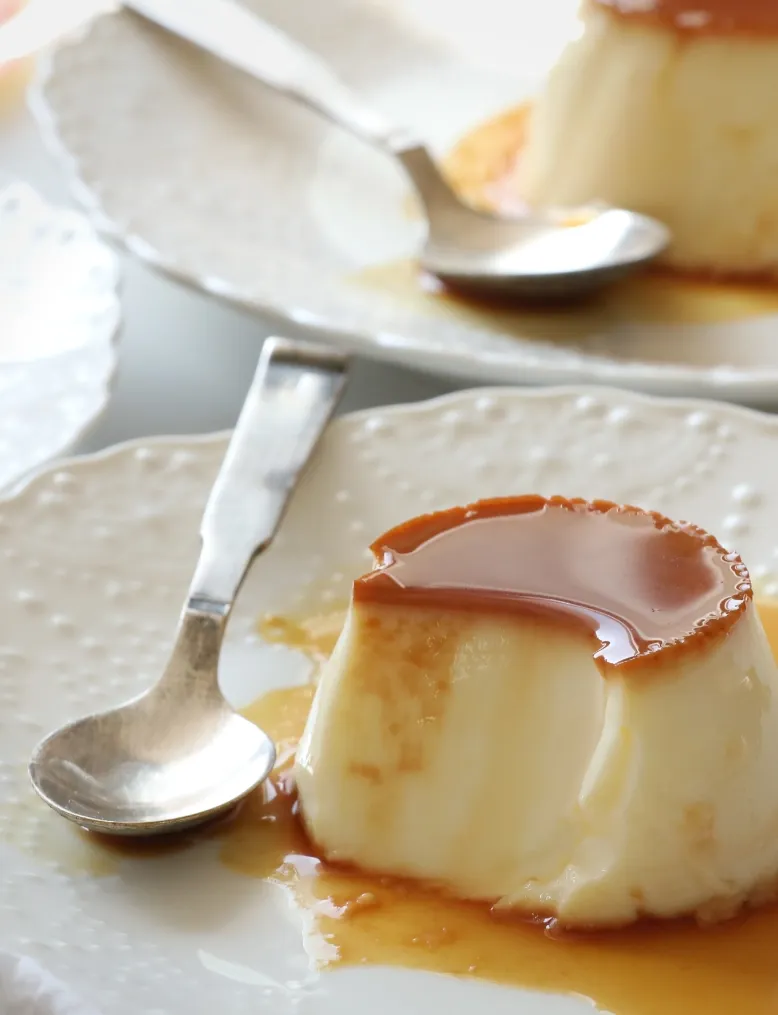
Oeufs au lait is a dessert my neighbour Nathalie talks about when she shares childhood stories with me. And it’s true, every French child knows it and every French adult, me included, remembers it. It’s a creamy vanilla custard that wobbles, with sweet amber caramel underneath. Light, spoonable, and it dissolves on the tongue!
Table of Contents
Where oeufs au lait comes from
This one goes back a very long way. Rural French families were making it in the Middle Ages with whatever their land gave them: fresh milk from the cow, eggs from the hens, sugar when they could afford it. There’s no technique to speak of and no equipment needed, which is probably why it barely changed over the centuries.
The vanilla came later, arriving from the colonies in the seventeenth century, and French cooks folded it in without complicating anything. Every region then made it their own: cinnamon here, rum there, orange flower water in the south, calvados in Normandy, a scrape of nutmeg in Alsace. The custard underneath stayed exactly the same.
It’s worth knowing where it sits among its relatives, because the French names confuse the French too. Oeufs au lait is the custard itself, baked gently and eaten from the dish it cooked in. Add caramel and turn it out onto a plate and you’ve made a crème renversée. Bake it with cream and egg yolks and blowtorch the top and you have crème brûlée. Set it on pastry with flour in the mix and it’s a flan pâtissier. This is the simplest of the family, and the oldest.
Ingredients
- Whole milk — the fat is what gives the custard its body and velvety finish.
- Eggs — whole eggs set firmly enough to hold a wobble.
- Sugar — some whisked with the eggs, the rest for the caramel underneath.
- Vanilla — a whole pod if you have one, split and scraped, so the seeds speckle the custard. Extract works too.
- Water — a spoonful, just to start the caramel dissolving.
How to make oeufs au lait
1. Make the caramel and line the ramekins
Sugar and water in a small pan over medium heat. Stir just until the sugar dissolves, then stop stirring entirely and let it bubble until it turns a rich amber. Pour it straight into the ramekins and tilt to coat the bases. It hardens quickly and remelts in the oven, spreading itself perfectly.
2. Infuse the milk gently
Split the vanilla pod, scrape the seeds, and put both into the milk. Heat until it just trembles, with small bubbles forming at the edge, and no further. Boiling milk hitting eggs is how you get scrambled egg rather than custard. Take it off, leave it to infuse a few minutes, then fish out the pod.
3. Whisk the eggs and sugar pale
Crack the eggs into a bowl with the sugar and whisk until the mixture lightens and thickens slightly, ribboning off the whisk. This is what the French call faire blanchir, and it dissolves the sugar properly so the finished custard is smooth rather than grainy.
4. Combine slowly, whisking all the while
Pour the warm milk onto the eggs in a thin steady stream, whisking constantly with your other hand. Tip it in quickly and the heat cooks the eggs on contact. Slow and steady is the whole trick, and it takes about a minute.
5. Strain it, then fill the ramekins
Pass the mixture through a fine sieve into a jug. This catches the chalazae and any egg that has begun to set, and it’s the difference between a good custard and a silky one. Pour gently over the hardened caramel.
6. Bake low and slow in a bain-marie
Set the ramekins in a deep dish, pour hot water halfway up their sides, and bake at 150°C for 30 to 40 minutes. Low heat is everything here. Too hot and the custard cracks, browns and turns grainy instead of setting smooth.
7. Take them out while they still wobble
They’re ready when the centre still trembles slightly and a knife tip near the edge comes out clean. They carry on setting as they cool, so a fully firm custard in the oven is an overcooked one on the table.
8. Cool, then chill
Let them come to room temperature, then into the fridge for at least two hours, ideally overnight. They need that time to finish setting and the flavour is noticeably better the next day. Serve cold, in the ramekins they were baked in.
Tools for this recipe
Check out my favorite kitchen essentials and cookware!
- Use ramekins that conducts heat gently and evenly, so the custard sets slowly and finishes setting as it cools rather than stopping all at once.
- Use a deep baking dish for the bain-marie, big enough that the ramekins sit without touching and the water reaches halfway up.
- Use a whisk to combine the milk and eggs steadily, since this is the step where custard is won or lost.
Tips for success
- Don’t stir the caramel once the sugar has dissolved: stirring encourages it to crystallise into grains. Swirl the pan instead, and watch it constantly, since it goes from amber to burnt in seconds.
- Let the milk cool for a minute or two before it meets the eggs: traditional recipes heat it only to frémir. If it’s too hot, no amount of careful whisking will save you.
- Whisk gently, don’t aerate: bubbles whisked into the mixture rise and set as a foamy, pockmarked surface. Skim off any foam before you pour.
- Cover with foil if the tops brown too fast: standard French practice, and it lets you finish the cooking gently rather than pulling them out early.
- Use a deep bain-marie dish and pour the water once it’s on the oven shelf: carrying a tray of hot water and full ramekins across the kitchen only ends one way.
- Boil the milk deliberately for a richer version: some families boil it five minutes first to drive off water and concentrate the flavour, which gives a deeper, more golden custard. Let it cool properly before it meets the eggs.
How to store it
- In the fridge: Keeps 3 days covered, and it’s better on day two once fully set and the vanilla has settled through. Cover them, as custard picks up other fridge smells readily.
- At room temperature: Only for the cooling period before they go into the fridge. This is an egg custard, so don’t leave it standing about.
- In the freezer: No. Freezing splits the custard and it thaws watery and grainy, losing exactly the silkiness you baked it for.
More dessert recipes to try
Variations
- Without caramel: just the vanilla custard, baked and eaten from the dish. This is oeufs au lait at its most basic and it’s lovely.
- Orange flower water: a teaspoon in the milk, which is the southern French version and very fragrant.
- Dark Rum or calvados: a tablespoon stirred into the milk. Calvados is the Normandy way, rum turns up all over.
- Cinnamon or nutmeg: a stick of cinnamon infused in the milk, or a scrape of nutmeg over the top before baking, which is the Alsatian touch.
- Lavender honey: replace some of the sugar with lavender honey, as they do in the south. Floral, and beautiful with the vanilla.
- Less sugar: the sugar in the custard isn’t structural, since the eggs do the setting, so you can drop it from 100g to around 70g without any trouble. The caramel is another matter, since sugar is what caramel is, so if you want it less sweet, make the plain version without caramel instead.
FAQ
What’s the difference between oeufs au lait and crème caramel?
Oeufs au lait is the baked custard, eaten from the dish it cooked in. When it’s baked over caramel and then turned out onto a plate, the French call it a crème renversée. Same custard, different presentation.
Why did my custard turn out rubbery or grainy?
Too many eggs, or the oven was too hot. Stick to three eggs per 500ml of whole milk and bake gently at 150°C in a bain-marie.
Can I use semi-skimmed milk?
You can, but it won’t be the same. The fat in whole milk gives the custard its body and velvety texture, and lower-fat milk gives something noticeably thinner.
How do I know when oeufs au lait is done?
The centre should still wobble slightly when you move the dish, and a knife tip near the edge should come out clean. It keeps setting as it cools, so take it out looking barely done.
Do you serve oeufs au lait warm or cold?
Cold, after at least two hours in the fridge and preferably overnight. It needs that time to finish setting, and it tastes better for it.


 Prep Time 10 minutes
  Cook Time 40 minutes
  Total Time 50 minutes
  Servings 4
Description
Ingredients
- 1 l whole milk
- 6 egg
- 100 gr sugar
- 1 vanilla pod or 2 tsp vanilla extract
- 1 tbsp water
For the caramel
- 100 gr sugar
Equipment

Instructions
1. Make the caramel
- Put 100g sugar and the water in a small saucepan over medium heat. Stir gently until the sugar dissolves, then stop stirring and let it bubble until it turns a rich amber. Pour immediately into the ramekins and tilt to coat the bases. Set aside to harden.
2. Infuse the milk
- Pour the milk into a large saucepan. Split the vanilla pod lengthwise, scrape out the seeds, and add both pod and seeds. Heat gently until the milk just trembles, with small bubbles at the edge, without letting it boil. Remove from the heat, leave to infuse a few minutes, then remove the pod.
3. Whisk the eggs and sugar
- Crack the eggs into a large bowl with the remaining 100g sugar. Whisk until the mixture pales and thickens slightly.
4. Combine
- Pour the warm milk slowly onto the eggs in a thin steady stream, whisking constantly, until smooth.
5. Strain and fill
- Pass the mixture through a fine sieve into a jug, then pour gently into the ramekins over the hardened caramel. Skim off any foam from the surface.
6. Bake in a bain-marie
- Set the ramekins in a deep dish, place on the oven shelf, and pour in hot water to come halfway up their sides. Bake at 150°C (130°C fan) for 30–40 minutes, until the centres still wobble slightly and a knife tip near the edge comes out clean. Cover loosely with foil if the tops brown too quickly.
7. Cool and chill
- Lift the ramekins out of the water and cool to room temperature, then refrigerate for at least 2 hours, preferably overnight.
8. Serve
- Serve cold, straight from the ramekins they were baked in.
Notes
- Caramel watch: Keep an eye on the caramel as it cooks, it can burn quickly.
- Vanilla options: If you don’t have a vanilla pod, vanilla extract works just as well.
- Make ahead: This dish is even better the next day.
- Never let the milk boil before it meets the eggs, or they’ll scramble.
Share your feedback and spread the love!
If you try this recipe, I’d love to hear how it turns out! Leave a ★★★★★ rating and your thoughts in the comments, it helps fellow French foodies discover this recipe too. Snap a photo and tag @obviously.french on Instagram. Come talk about it in our Facebook group. And don’t forget to save this recipe to Pinterest so you’ll always have it handy for your next French-inspired meal!