Lime Pudding
Desserts
 November 7, 2026
Lime Pudding
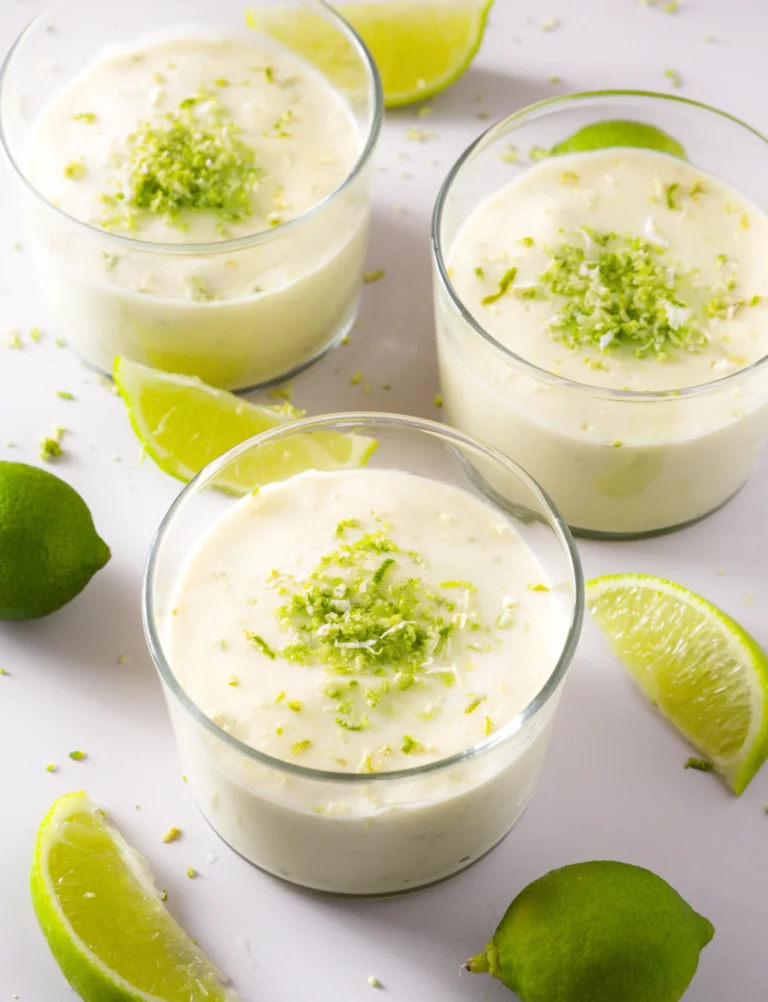
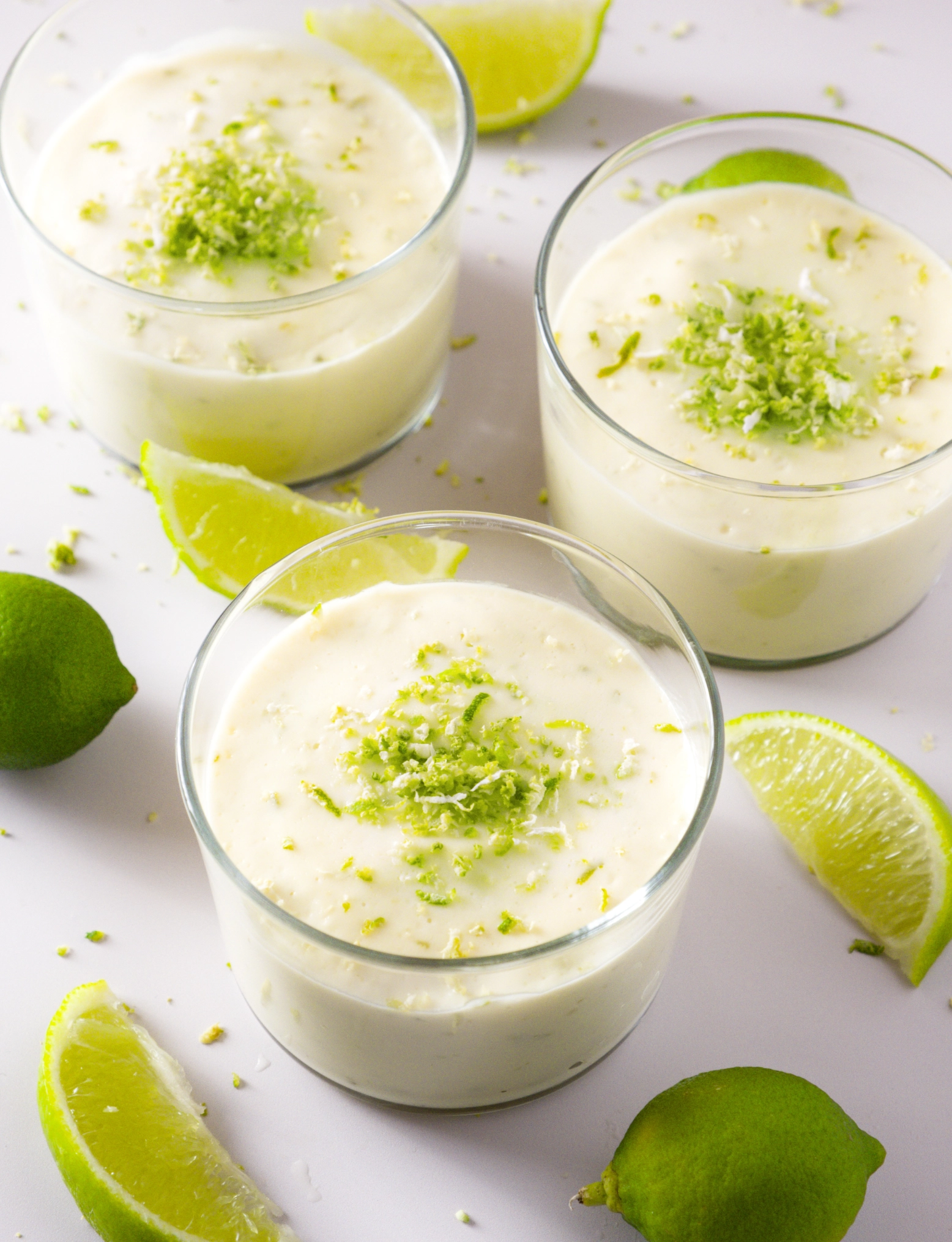
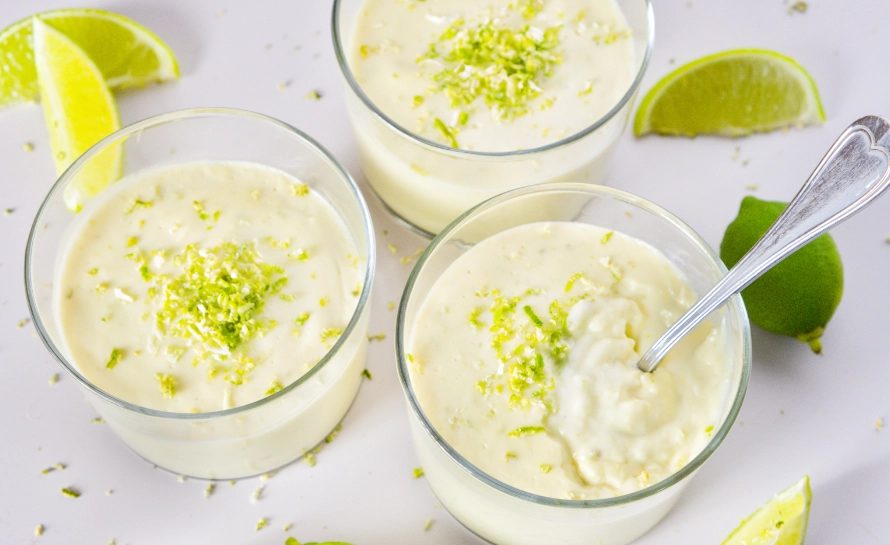
Silky and creamy lime pudding, spooned cold from little glasses. Sharp, zesty lime against rich, velvety cream, with flecks of green zest all the way through. The crème dessert au citron vert: tangy, refreshing, and gone in seconds!
November 7, 2026
Disclosure: This post may contain affiliate links which provide us a small commission when used for purchase. Please read my disclosure policy for more information. I am grateful for your support!
Why did I make this lime pudding at the beginning of November? Because my neighbour’s tree was full of ripe limes. I didn’t quite understand it at first, as I thought limes were summer fruits, but there you go. You learn something new everyday.
In France, we call it a “crème dessert au citron vert”: a soft, spoonable cream you eat cold, straight from the glass.
I always try to use as little sugar as possible, because more than anything, I love the complex perfume and taste of limes. So this lime custard pudding only has 45 grams of sugar for six glasses. The lime does the talking, the milk keeps it gentle, and it still tastes like an indulgent dessert!
I set mine in “verrines”, little glasses, with extra zest grated on top. It takes a short moment at the stove, a few hours in the fridge, and they’re ready to savour. One…or two. It’s hard to stop!
Table of Contents
Where French lime pudding comes from
Open any French supermarket fridge and you’ll find a whole shelf of “crèmes desserts” in little pots: chocolate, vanilla, caramel. The category really took off in 1970, when Danone launched Danette, a creamier take on “vla”, the Dutch milk pudding. It’s still the best-selling one on that shelf today.
The homemade version is simpler. It’s a softer cousin of crème pâtissière, the thick custard inside éclairs, made with less cornflour so it stays spoonable rather than firm enough to pipe.
And the glass? That came later. In 1994, the French pastry chef Philippe Conticini was working on a plated dessert and decided to rebuild it vertically, in a Burgundy wine glass. He called it a “verrine”. Today you’ll see them at almost every French dinner party and apéritif, sweet or savoury (like my courgette & feta appetizers).
So this French lime pudding is a bit of both: an everyday crème dessert, but dressed up in a verrine to look fancy if you have a dinner party!
Ingredients
- Whole milk — full-fat milk gives the creamiest lime pudding. Semi-skimmed works, but it sets softer and tastes thinner.
- Limes — mine came straight from my neighbour’s tree, but any fresh limes will do! Buy unwaxed if you can, since the zest goes in. Small key limes work too, but you’ll need more of them.
- Egg yolks — from large eggs. They give the lime pudding its colour and richness. Keep the whites for meringues or financiers.
- Sugar — caster sugar (superfine sugar) or ordinary granulated sugar. It all dissolves in the hot milk.
- Cornflour (cornstarch) — called maïzena in France. This is what sets the pudding, so measure it carefully.
- Butter (optional) — a small piece of unsalted butter, stirred in at the end, makes it silkier.
How to make lime pudding
1. Infuse the milk
Warm the milk with the lime zest and leave it for 10 minutes. The zest flavours the milk gently, without any of the sharpness of the juice.
2. Whisk the yolks
Mix the yolks, sugar and cornflour until smooth, so there are no dry lumps of cornflour waiting to ambush you later.
3. Pour the milk onto the yolks
Slowly, whisking all the time. This warms the yolks gently instead of scrambling them.
4. Cook until it bubbles
Back in the pan, whisk without stopping. It stays liquid for a few minutes, then thickens quite suddenly. Let it bubble for a full minute: egg yolks contain an enzyme that breaks down starch, and if the crème doesn’t boil, it can set and then turn runny in the fridge.
5. Add the lime juice off the heat
Juice cooked with cornflour weakens the set, and added at the end it keeps its fresh taste. Add it bit by bit and taste, because limes vary a lot.
5. Chill
Cling film pressed onto the surface stops a skin forming. A few hours in the fridge and your lime pudding cups are ready.

Tools for this recipe
Check out my favorite kitchen essentials and cookware!
- Use a heavy-based saucepan, so the milk heats evenly and doesn’t catch on the bottom.
- Use a whisk, so you can reach into the corners of the pan while the crème thickens.
- Use a fine zester, so you get only the green zest and none of the bitter white pith.
- Use verrines or small glasses of about 100 ml, so you can see the flecks of zest through the glass.
Tips for success
- Zest before you juice: a whole lime is much easier to zest than a squeezed half obviously.
- Milk onto yolks, never the other way: pouring the warm milk slowly onto the yolks is what keeps them smooth.
- Keep whisking: the crème catches in the corners of the pan first, so get the whisk right in there.
- Let it bubble for a full minute: this is the step that stops your lime pudding turning runny later.
- Taste as you add the juice: stop when it tastes fresh and tangy, not harsh. If it’s too sharp, stir in a teaspoon of sugar while it’s still hot.
- Whisk before serving: after a night in the fridge it firms up, and a quick whisk makes it silky again.
How to store it
- In the fridge: up to 3 days, each glass covered with cling film (plastic wrap) or a lid so it doesn’t pick up fridge smells.
- In the freezer: I wouldn’t. Cornflour creams go grainy and watery when they thaw. If six is too many, halve the recipe instead.
- Making ahead: it’s a good dessert to make the day before. Add anything crunchy just before serving, and grate a little fresh zest on top if it’s been in the fridge a couple of days, as the lime mellows.

More dessert recipes to try
Variations
- Lemon pudding: use lemons instead of limes, in the same quantities. It’s softer and a little less fragrant.
- With a curd layer: spoon a thin layer of lemon or lime curd into the bottom of each glass before adding the crème, for a sharper hit at the end!
- With a crunch: crushed sablés or petit-beurre biscuits, at the bottom or on top.
- Firmer or softer: for a firmer set, use 40 g of cornflour. For a looser, more pourable cream, use 30 g.
- Serve it properly: cold, in small glasses, with fresh zest on top!
FAQ
What is crème dessert?
Crème dessert is the French name for a smooth, spoonable milk pudding, thickened with cornflour and often egg yolks, and eaten cold from a pot or glass. It’s softer than crème pâtissière and lighter than a baked custard. Chocolate and vanilla are the classics, and this crème dessert au citron vert is a fresher, tangier version.
Is lime pudding the same as lime custard?
Nearly. In the US, this stovetop dessert is called a pudding. In the UK, lime custard is the closer name, though British custard is usually poured rather than set. This French lime pudding is thick enough to eat with a spoon, and softer than a baked custard or a crème brûlée.
Is lime pudding the same as lime curd?
No. Lime curd is made mostly with lime juice, eggs, sugar and butter, so it’s thick, sharp and very rich, and you use it as a spread or a filling. Lime pudding is milk-based, so it’s milder, creamier and lighter, and you can eat a whole glass of it.
Why did my lime pudding go runny?
Usually because it didn’t boil. Egg yolks contain an enzyme that breaks down starch, and only boiling stops it. If the crème thickened but never bubbled, it can set and then turn liquid in the fridge. Next time, let it bubble gently for a full minute while you whisk.
Will lime juice curdle the milk?
Not if you add it at the end. Once the crème has thickened and you’ve taken it off the heat, the cornflour and egg yolks protect the milk, so the juice blends in smoothly. Added at the start, it could curdle the milk and weaken the set.
Can you freeze lime pudding?
No, I wouldn’t. Cornflour-thickened creams go grainy and watery once thawed, and the texture doesn’t come back. It keeps for 3 days in the fridge, so make it a day or two ahead, or halve the recipe if six glasses is too many.

Get this recipe in your inbox!
Pop in your email and I’ll send it straight over, ready for when you cook. Plus one email a month from my French kitchen!
DessertsFrench
Lime Pudding
Silky and creamy lime pudding, spooned cold from little glasses. Sharp, zesty lime against rich, velvety cream, with flecks of green zest all the way through. The crème dessert au citron vert: tangy, refreshing, and gone in seconds!
Ingredients
- 500 ml whole milk
- 2 limes zest
- 3 egg yolk
- 45 gr caster sugar
- 35 gr corn starch
- 55 ml lime juice
- 15 gr unsalted butter
Equipment





Instructions
Infuse the milk
- Zest the limes straight into a saucepan, add the milk and heat until steaming, without boiling. Take it off the heat and leave it for 10 minutes.
Mix the yolks
- In a bowl, whisk the yolks, sugar and cornflour until smooth and pale.
Combine
- Reheat the milk briefly until hot. Pour it slowly onto the yolk mixture, whisking all the time, then pour everything back into the saucepan.
Cook
- Over medium heat, whisk constantly, getting into the corners of the pan. After a few minutes it will thicken quite suddenly. Keep whisking and let it bubble gently for 1 minute.
Add the lime juice
- Take it off the heat. Stir in the butter, then add the lime juice a little at a time, tasting as you go. Stop when it tastes fresh and tangy but not harsh. If it’s too sharp, stir in a teaspoon of sugar while it’s still hot.
Chill
- If there are any lumps, push it through a sieve. Cover with cling film touching the surface, so no skin forms, and chill for at least 2–3 hours.
Serve
- Whisk it briefly to loosen it, then spoon or pipe it into the verrines. Some finely grated lime zest on top looks nice.
Notes
- Too sharp? Limes vary a lot. If it tastes harsh after the juice, stir in a teaspoon of sugar while the crème is still hot.
- Don’t skip the boil. Letting it bubble for a full minute stops the pudding turning runny in the fridge.
- Firmer or softer. Use 40 g of cornflour for a firmer set, or 30 g for a looser crème.
- Lemon version. Use lemons instead of limes, in the same quantities.
- Egg whites. Keep them in the fridge for 2 to 3 days, or freeze them for meringues or financiers.
- Storage. Up to 3 days in the fridge, covered. Not suitable for freezing.
Made it? I’d love to know!
Leave a rating and your thoughts in the comments, it helps fellow French foodies discover this recipe too. Snap a photo and tag @obviously.french on Instagram, or pin the recipe on Pinterest!