 February 6, 2026
Disclosure: This post may contain affiliate links which provide us a small commission when used for purchase. Please read my disclosure policy for more information. I am grateful for your support!
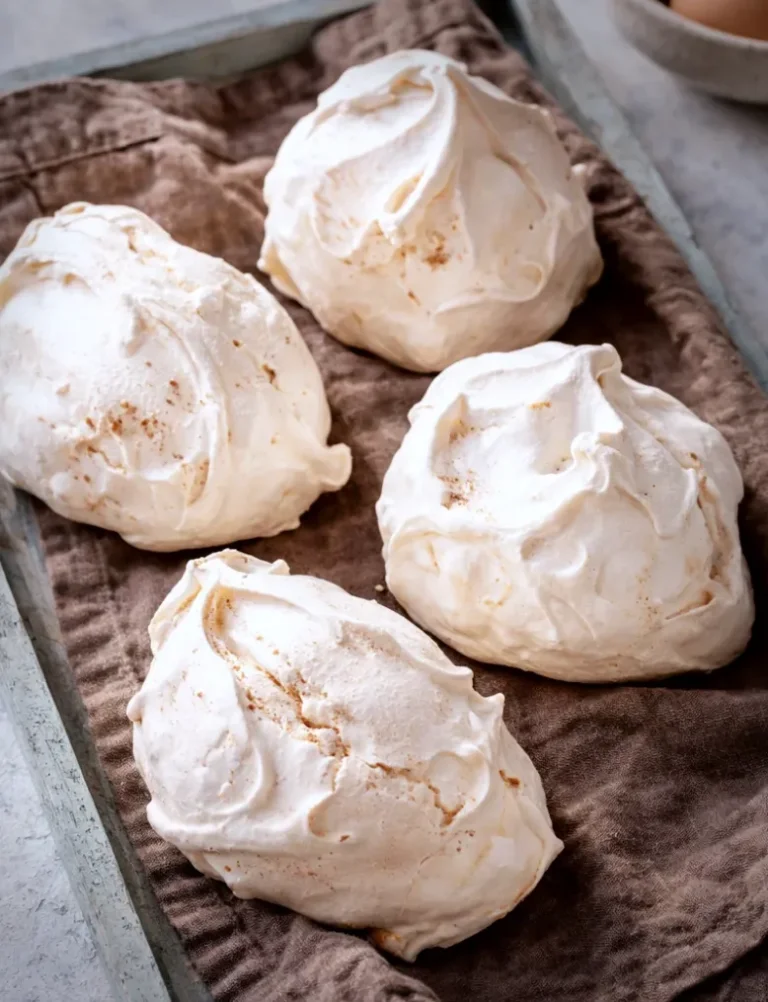
My goûter, the four o’clock after-school snack every French child has between school and dinner, was almost always meringues. Mine came from the bakery two streets away: a twice as big as my little hands, plain white meringue tucked into a paper bag. I’d eat it on the walk home, trying to make it last as long as I could.
Maybe it’s my nostalgia speaking, but I think they look amazing. And cost almost nothing to make, which is rather the joy of them. Just egg whites and sugar, a bit of patience, and an oven you can trust!
Table of Contents
Where meringues comes from
Nobody quite agrees where meringues come from. The name first appears in print in François Massialot’s 1692 French cookbook, but the dessert itself is older and its origins are genuinely disputed. One story credits a Swiss pastry cook called Gasparini, working in the town of Meiringen, whose name the meringue supposedly borrowed. Another traces it to the Polish word marzynka and a chef in the service of King Stanisław Leszczyński, the exiled Polish king turned Duke of Lorraine, whose daughter married Louis XV and is said to have carried the recipe to Versailles. To muddy it further, the earliest written recipes that really look like meringues are actually English, from manuscripts in the early 1600s.
So, honestly? France didn’t invent the meringue. But France adopted it because it was in my childhood days. By the time Marie-Antoine Carême was laying down the rules of French pâtisserie in the early 1800s, meringues were already a staple, turning up in grand aristocratic desserts and simple bakery windows alike. Marie-Antoinette is said to have loved them so much she made them with her own hands at the Trianon. However it arrived, you can find it in every French bakery today!
Three types of meringues
French pâtisserie recognises three main kinds of meringue, and it helps to know which is which.
Swiss meringue
Made by warming the egg whites and sugar together over a bain-marie before whisking.
Italian meringue
Made by pouring hot sugar syrup into whisking whites, which gives something incredibly stable and silky.
Both are wonderful in the right place, but both ask for more kit and precision than most home kitchens want to bother with.
French meringue
Made completely cold. You just whisk egg whites with sugar until stiff and glossy, then bake them low and slow until they’re dry all the way through. No thermometers, no syrups, nothing over a bain-marie. What you need instead is a little patience and an oven you can trust. It’s the simplest of the three!
Ingredients
- Egg whites – The whole structure. Room temperature whips to greater volume, and they must be completely free of any yolk or grease, or they won’t whip. A brilliant way to use up whites left from a yolk-heavy recipe like pastry cream.
- Caster sugar – Whisked into the whites gradually to stabilise them and build the structure. Its fine grains dissolve easily.
- Icing sugar – Folded in at the end for extra sweetness and that signature crisp, shattering texture.
- Salt – A pinch, to help the whites whip.
How to make meringues
1. Whisk the whites and add the sugar
Make sure your bowl and whisk are spotlessly clean and grease-free (wipe them with a little vinegar or lemon juice and dry them), since any trace of fat stops the whites whipping. Whisk the room-temperature whites with a pinch of salt to soft peaks, then start adding the caster sugar very gradually, a spoonful at a time, whisking well between each. Adding it slowly is what keeps the meringue stable; dumped in at once, it deflates the whites. Keep whisking to stiff, glossy peaks that stand straight up. Rub a little between your fingers, if it feels gritty, keep going until you can’t feel any sugar.
2. Fold in the icing sugar and shape
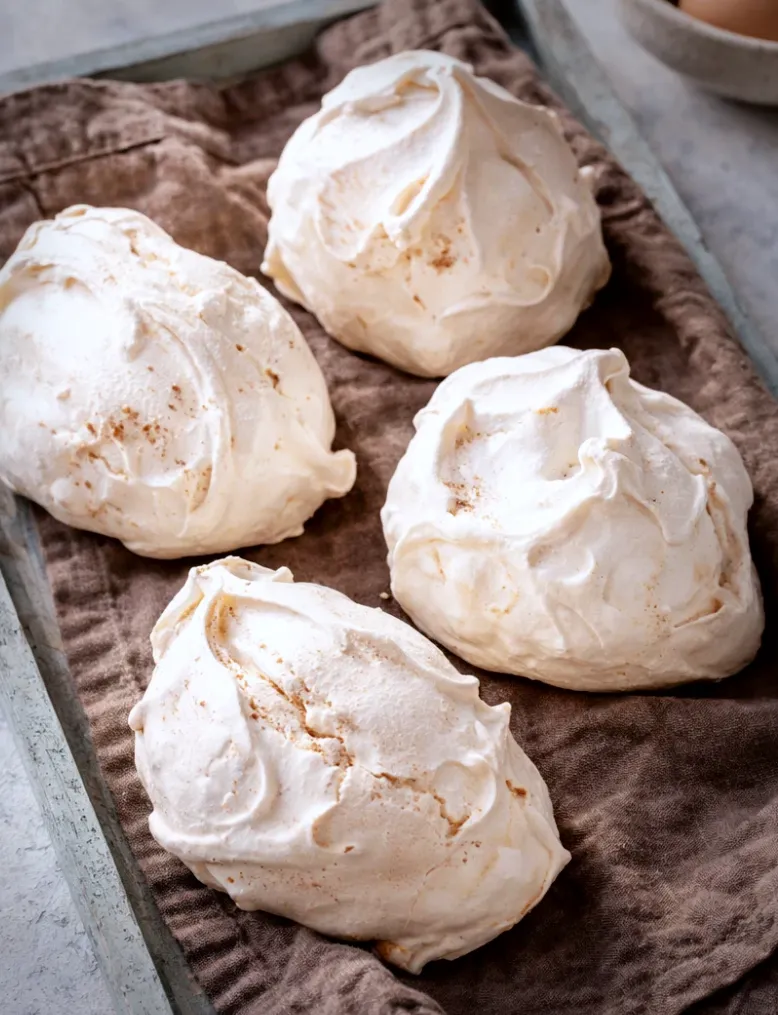
Sift the icing sugar over and fold it in gently with a spatula, in big sweeping motions, so you keep the air in. Then shape: scoop generous spoonfuls and push them off with a second spoon into rough domes on a baking mat, spaced well apart. Don’t fuss over making them neat, the rustic swooping shape is part of their charm.
3. Bake low and slow
This is the crucial part, and “bake” is almost the wrong word, you’re drying them out, not cooking them. Into a very low oven for a couple of hours, until they lift cleanly off the tray and sound hollow when you tap the base. They should be crisp outside and completely dry inside. Keep the oven low enough and they stay a pale ivory-white; too hot and they colour and can weep. Then turn the oven off and let them cool inside with the door a little open, which stops them cracking.
Tools for this recipe
Check out my favorite kitchen essentials and cookware!
- Use a stand mixer (or an electric mixer) to whisk the whites to stiff, glossy peaks.
- Use a super clean mixing bowl, free of any grease, or the whites won’t whip.
- Use a baking mat so the meringues lift off cleanly in one piece.
Tips for success
- Everything must be grease-free: any trace of fat, from the bowl, the whisk, or a speck of yolk in the whites, stops them whipping. Wipe the bowl and whisk with vinegar or lemon juice and dry them, and separate the eggs carefully.
- Add the caster sugar gradually: a spoonful at a time, whisking between each. Adding it all at once deflates the whites. This slow addition is what gives you a stable, glossy meringue.
- Dissolve the sugar fully: rub a little meringue between your fingers, it should feel completely smooth. Any grittiness means undissolved sugar, which causes weeping. Keep whisking until it’s smooth.
- Bake low and slow: a very low oven dries the meringues rather than cooking them, giving that crisp-all-the-way-through texture. Too hot and they colour, crack or weep. Low and patient is the whole secret.
- Don’t make them on a humid day: sugar draws moisture from the air, so on a rainy or humid day meringues never crisp properly and turn sticky. Wait for a dry day.
How to store it
- This is where meringues really earn their place: they keep for weeks!
- Store them cooled in an airtight container at room temperature for up to 2 weeks (some say longer). Don’t refrigerate them, the moisture in the fridge turns them sticky and soft. If they do soften, you can re-crisp them in a very low oven for 15 to 20 minutes and cool them again.
- That keeping quality is the whole point of the tradition, French cooks bake meringues to use up whites left over from yolk-heavy things like pastry cream, and then have something ready for goûter, for a quick dessert, or for whoever happens to knock at the right moment.
More dessert recipes to try
Variations
- Less sugar: sugar is structural in meringue, it’s what gives the stable foam and the crisp set, so you genuinely can’t reduce it much without the meringue failing. This is one of those honest cases where the sugar is doing the work and can’t simply be cut. If you want them less sweet, pair them with sharp, unsweetened fruit or crème fraîche rather than reducing the sugar.
- Add vanilla: fold ½ tsp vanilla extract in with the icing sugar, for a gently vanilla meringue.
- Make them a dessert: sandwich two with whipped cream and berries (an Eton mess in meringue form), or crush over fruit and cream, or pile onto a pavlova base.
- Flavour or colour them: a little cocoa powder sifted in with the icing sugar for chocolate meringues, or a drop of colouring folded through, or crushed freeze-dried raspberries for colour and tang.
- Chocolate-dipped: dip the cooled bases in melted dark chocolate and let them set, for a smarter finish.
- Nutty meringues: fold in a few finely chopped toasted hazelnuts or almonds before shaping, for texture.
FAQ
What’s the difference between French, Swiss and Italian meringue?
French meringue whisks raw egg whites with sugar cold, then bakes them, it’s the simplest. Swiss meringue warms the whites and sugar over a bain-marie before whisking, giving a denser, smoother result. Italian meringue pours hot sugar syrup into whisking whites, making it the most stable and silky. This recipe is French meringue.
Why did my meringues go sticky or weep?
Usually either the sugar wasn’t fully dissolved (rub a little between your fingers, it should feel smooth) or they were baked too hot. Both make the sugar weep out as sticky beads. Humidity does it too, so avoid making them on damp days. Whisk until smooth and bake low and slow.
Why won’t my egg whites whip?
Almost always grease. Any trace of fat, from an unclean bowl, the whisk, or a speck of yolk in the whites, stops the whites forming a foam. Use a spotlessly clean bowl wiped with vinegar or lemon juice, and separate the eggs carefully so no yolk gets in.
How long do meringues keep?
Beautifully well, up to 2 weeks in an airtight container at room temperature, sometimes longer. Don’t refrigerate them, as the moisture turns them sticky. If they soften, re-crisp them in a very low oven for 15 to 20 minutes.
Why are my meringues chewy in the middle?
They weren’t dried out long enough. French meringues need a long, low bake to dry all the way through. If the centre is still soft or sticky, return them to the low oven for another 20 to 30 minutes. (A little chew is lovely if you’re after a pavlova, but classic meringues should be crisp throughout.)


 Prep Time 15 minutes
  Cook Time 2 hours
  Total Time 3 hours 15 minutes
  Servings 6 large meringues
Description
Ingredients
- 3 eggs about 90gr, at room temperature
- 90 gr caster sugar
- 90 gr icing sugar
- 1 pinch salt
Instructions
1. Prepare your setup
- Heat the oven to 100°C (90°C fan). Line a tray. Wipe the bowl and whisk with vinegar or lemon juice and dry, so they're grease-free. Separate the eggs carefully (no yolk in the whites) and bring the whites to room temperature.
2. Start whisking the egg whites
- Whisk the whites with the salt on medium speed until foamy, then to soft peaks that flop over, about 2 to 3 minutes.
3. Add the caster sugar gradually
- With the mixer running, add the caster sugar a tablespoon at a time, waiting 15 to 20 seconds between each. The meringue turns glossy and smooth.
4. Whisk to stiff peaks
- Increase to medium-high and whisk to stiff, glossy peaks that stand straight up, another 5 to 7 minutes. Rub a little between your fingers; if gritty, keep whisking until smooth.
5. Fold in the icing sugar
- Sift the icing sugar over and fold in gently with a spatula, keeping the air in.
6. Shape large meringues
- Using two large spoons, shape 6 generous domes onto the tray, spaced at least 5cm apart. Keep them rustic.
7. Bake low and slow
- Put them in and immediately reduce to 90°C (80°C fan). Bake for 2 hours, until they lift cleanly and sound hollow when tapped underneath, crisp outside, dry inside.
8. Cool completely
- Turn off the oven, crack the door open, and leave them to cool completely inside, about 1 hour. If still soft in the centre, return to the low oven for 30 minutes.
Notes
- The traditional French ratio: French meringue uses the “tant-pour-tant” (equal weights) method: the same weight of egg whites, caster sugar, and icing sugar. Total sugar = 2x the weight of egg whites. For this recipe: 90g egg whites + 90g caster sugar + 90g icing sugar = 180g total sugar. This is the classic French proportion found in virtually all traditional recipes.
- Why two types of sugar? The caster sugar is whisked into the whites to stabilize them and create structure. The icing sugar is folded in at the end, it adds extra sweetness and helps create that signature crisp, shattering texture. Both are essential to proper French meringue.
- Room temperature matters: Room temperature egg whites whip to greater volume than cold ones.
- Don’t make meringues on a rainy or humid day. The sugar absorbs moisture from the air. On humid days, your meringues will never crisp up properly and will turn sticky and soft. Wait for a dry day.
- Store cooled meringues in an airtight container at room temperature for up to 2 weeks. Don’t refrigerate them, the moisture will make them sticky. If they do get soft, you can re-crisp them in a low oven (90°C) for 15-20 minutes.
- Troubleshooting weeping meringues: If your baked meringues develop sticky beads of moisture on the surface, you either didn’t whisk long enough to dissolve all the sugar, or you baked them at too high a temperature. The sugar is weeping out. They’re still edible, just not as pretty.
- Traditional French meringues have no added flavoring, just the pure sweetness of sugar and egg whites. If you want to add a little something, you can add vanilla, use 1/2 tsp vanilla extract folded in with the icing sugar.
Share your feedback and spread the love!
If you try this recipe, I’d love to hear how it turns out! Leave a ★★★★★ rating and your thoughts in the comments, it helps fellow French foodies discover this recipe too. Snap a photo and tag @obviously.french on Instagram. Come talk about it in our Facebook group. And don’t forget to save this recipe to Pinterest so you’ll always have it handy for your next French-inspired meal!