 July 24, 2025
Disclosure: This post may contain affiliate links which provide us a small commission when used for purchase. Please read my disclosure policy for more information. I am grateful for your support!
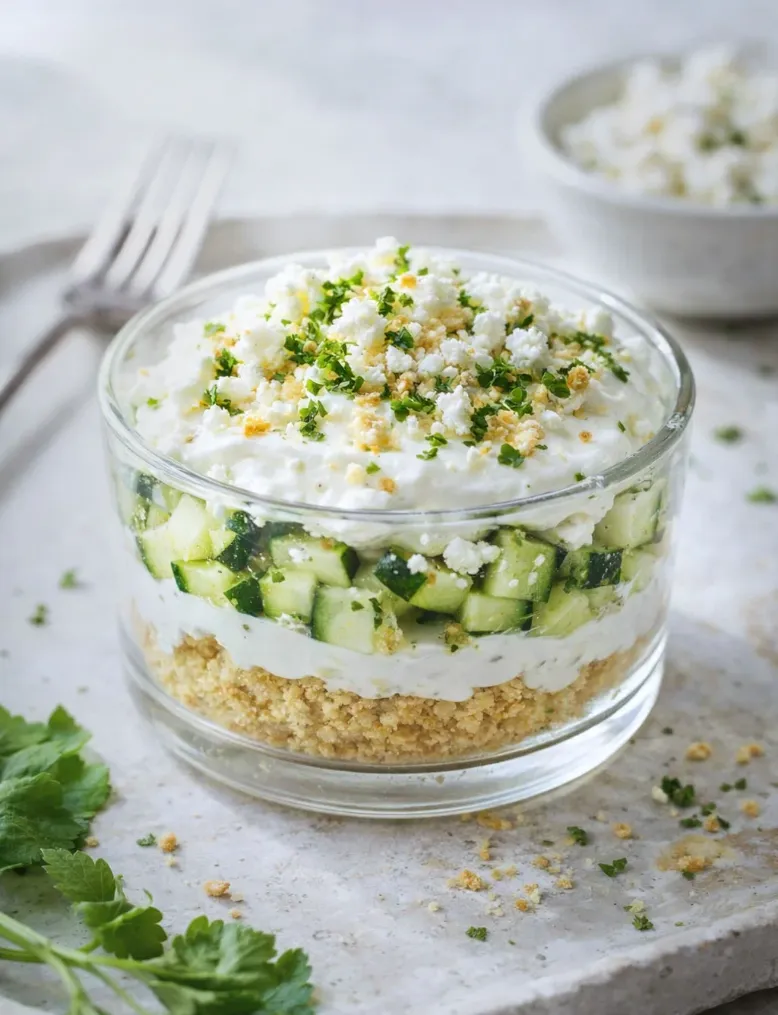
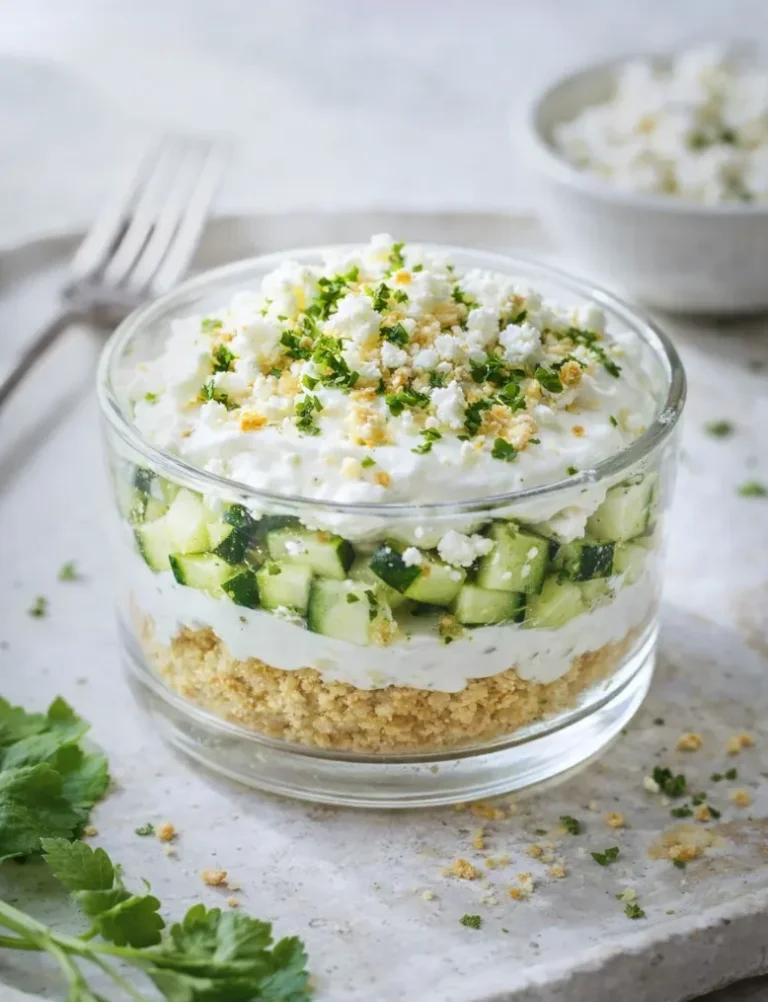
These feta appetizers were an experiment from my neighbour Nathalie, and we love being her guinea pigs when she calls us over to test something. They looked impressive and festive in the little glasses we call verrines in French, and she explained that the base was made with Tuc biscuits. You know the ones, those salted octagonal golden-yellow crackers.It was so good that I had to share it with you too, in case you have guests coming over and want to treat them. Serve them chilled as a starter, or dotted along an apéro table alongside other small things and something crisp to drink.
Table of Contents
Where feta appetizers come from
The verrine looks like it has always been there, but it’s younger than most people making them. It was invented in 1994 by the pastry chef Philippe Conticini, who presented desserts vertically in a small glass instead of flat on a plate, so you could see every layer through the side. Dismissed as a fad at first, it did cross from sweet to savoury and moved into French home kitchens.
For this recipe it solves a practical problem. Courgettes and whipped cheese on a plate slump into each other and look like a mess. But in a glass you control the proportions, and each spoonful becomes its own pleasurable moment, and there’s no serving or slicing to go wrong. The courgette brings moisture and freshness, the feta brings salt and tang, and they work together like a perfect seasoning system.
Ingredients
- Courgettes — the fresh, sweet layer. Sautéed hard enough to lose their water and pick up a little colour, which concentrates the flavour.
- Feta — the backbone. Salty, lactic and acidic, and the whole reason the dish works against the mild courgette. Buy a block in brine rather than pre-crumbled.
- Mascarpone — there purely for structure and smoothness, not flavour. It turns crumbly feta into something pipeable without softening the taste.
- Salted crackers — crushed for the base, giving the crunch that stops the whole thing being uniformly soft.
- Fresh herbs — mint, chives and parsley. Mint in particular is very good with courgette and feta.
- Olive oil — for cooking the courgettes and a drizzle through the feta for richness.
- Lemon zest (optional) — a little brightness if your cheese is particularly rich.
How to make courgette and feta appetizers
1. Sauté the courgettes
Dice the courgettes small and cook them in olive oil over medium-high heat for about ten minutes, until tender but still holding their shape. Salt them as they cook, which draws out the water. Undercook them and they’ll be watery in the glass; the edges should catch a little colour.
2. Cool them completely
Spread them on a plate to cool. This is the step that decides whether your layers look clean or collapse, because warm courgette will melt the feta layer above it and everything will slide into a mess. Twenty minutes, or make them ahead.
3. Blend the feta and mascarpone until smooth
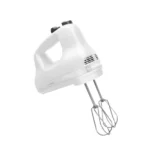
Crumble the feta into a bowl with the mascarpone and blend, ideally with an electric mixer, until there’s no graininess at all. Test it on your tongue rather than by eye. Then fold through the chopped herbs and season with black pepper and a little olive oil.
4. Crush the crackers for the base
Crush them coarsely rather than to dust, so there’s actual crunch. Put them in the glasses just before you layer, not hours ahead, or they’ll soften into the courgette juices below.
5. Layer, and keep the bands clean
Crackers first, then the cooled courgette, then pipe the feta over the top. Piping rather than spooning is what makes a row of glasses look like a matching set instead of a happy accident, and it keeps the feta off the sides of the glass where smears show.
6. Chill for an hour or two
Cover loosely and refrigerate the feta appetizers for at least an hour, which firms the feta slightly and lets the flavours settle. Add fresh herbs on top just before serving, so they stay bright rather than wilting in the fridge.
Tools for this recipe
Check out my favorite kitchen essentials and cookware!
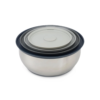
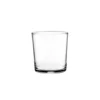
- Use small clear tumblers or verrines, since the whole point is seeing the layers through the side. Straight-sided glasses show the bands more cleanly than curved ones.
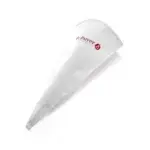
- Use a piping bag to get the feta in neatly and control exactly how much goes into each glass, which is what keeps the layers even across a whole row.
- Use an electric mixer to get the feta genuinely smooth, since mashing by hand leaves it grainy.
Tips for success
- Cook the courgettes in a wide pan in one layer: piled up they steam in their own water and turn to mush, which is not the texture you want in a glass.
- Salt the courgettes early, drain them late: salting during cooking pulls the water out. If there’s liquid in the pan at the end, tip it away before cooling, or it’ll pool in the glass.
- Buy feta in brine, not pre-crumbled: pre-crumbled is drier, often coated to stop it clumping, and it never blends as smoothly.
- Add the crackers last: they’re the only element that can’t wait. Assemble the rest ahead and put the crumbs in shortly before the feta goes on if you’re making them well in advance.
- Taste the feta cold, not warm: it’ll be eaten straight from the fridge, and cold mutes salt, so what tastes perfectly seasoned at room temperature can taste flat when chilled.
- Make a spare glass: fillings never divide evenly, and it lets you taste one without breaking up the set.
How to store it
- In the fridge: Assembled feta appetizers keep well for a few hours, and they’re better for an hour’s rest. Beyond about four hours the cracker base softens. Cover loosely so they don’t pick up fridge smells.
- The components: Whipped feta keeps 3 days covered, and the cooked courgettes 2 days. Storing them separately and assembling on the day gives you a much better result if you’re planning further ahead.
- In the freezer: Don’t. Both the feta cream and the courgettes turn watery and grainy on thawing, and there’s nothing here that benefits from it.
Variations
- Roasted peppers or sun-dried tomatoes: diced and tossed with the courgettes for colour and a sweeter, more intense layer.
- Goat’s cheese instead of feta: milder and creamier. You’ll want a little more lemon or a pinch of salt to compensate for the lost tang.
- With mint and pea: swap half the courgette for blanched peas crushed with mint, which is fresh and very green.
- Toasted nuts on top: chopped pistachios or toasted pine nuts scattered over give a second point of crunch and look good against the cream.
- Smoked salmon layer: a little smoked salmon between the courgette and the feta turns this from a light starter into something more substantial.
- Vegan: a cashew-based cream with lemon, salt and a spoonful of nutritional yeast stands in for the feta, and the courgettes and crackers do the rest.
- On toast instead: if you don’t have glasses, spread the whipped feta on toasted sourdough and pile the courgettes over. Different dish, same flavours, no piping bag required.
FAQ
Can you make these feta appetizers ahead of time?
Yes, that’s the point of them. Assemble an hour or two ahead and keep them covered in the fridge. Beyond about four hours the cracker base starts to soften, so add that layer later if you’re preparing further in advance.
How do you make whipped feta smooth?
Blend feta with mascarpone, roughly two parts to one, using an electric mixer until there’s no grain left at all. Test it on your tongue rather than looking at it, since it can look smooth and still feel sandy.
What’s a verrine?
A small clear glass used to serve layered food, invented by the French pastry chef Philippe Conticini in 1994. The transparent sides show every layer, and it’s now used for savoury dishes as much as sweet.
What can I use instead of feta?
A mild goat’s cheese works well, though it’s creamier and less tangy, so add lemon zest or a little extra salt to compensate.
Do I need a piping bag?
Not strictly, but it makes a real difference. Piping keeps the layers even and stops the feta smearing down the inside of the glass, which is what makes a row of them look deliberate.


 Prep Time 20 minutes
  Cook Time 10 minutes
  Total Time 30 minutes
  Servings 6
Description
Ingredients
- 2 courgette
- 300 gr feta
- 150 gr mascarpone
- 100 gr salted crackers
- 1 handful mint
- 1 handful chives
- 1 handful parsley
- 3 tbsp olive oil
- ½ lemon zest, optional
- salt and black pepper
Equipment
Instructions
1. Prepare the courgettes
- Wash and dice the courgettes into small pieces. Sauté in olive oil over medium-high heat for about 10 minutes, until tender but still firm and lightly coloured at the edges. Season with salt and pepper. Drain off any liquid and set aside to cool completely.
2. Whip the feta
- Crumble the feta into a bowl with the mascarpone and blend with an electric mixer until completely smooth, with no graininess left. Fold in the chopped mint, chives and parsley. Season with black pepper, a drizzle of olive oil and the lemon zest if using. Taste from a cold spoon.
3. Crush the crackers
- Crush the crackers coarsely, so they keep some crunch rather than turning to dust.
4. Layer the verrines
- Sprinkle a thin layer of crushed crackers into the bottom of each glass. Add a layer of the cooled courgettes. Pipe or spoon a generous layer of whipped feta over the top, keeping it off the sides of the glass.
5. Chill and serve
- Cover loosely and chill for at least 1 hour, so the flavours settle and the feta firms slightly. Scatter fresh herbs over just before serving.
Notes
- Let the courgettes cool completely before layering, or they’ll melt the feta and you’ll lose the clean separation.
- Feta is already salty, so season lightly and taste it cold.
- Add the cracker layer close to serving if you’re making these more than a few hours ahead, so it stays crunchy.
Share your feedback and spread the love!
If you try this recipe, I’d love to hear how it turns out! Leave a ★★★★★ rating and your thoughts in the comments, it helps fellow French foodies discover this recipe too. Snap a photo and tag @obviously.french on Instagram. Come talk about it in our Facebook group. And don’t forget to save this recipe to Pinterest so you’ll always have it handy for your next French-inspired meal!