 February 6, 2026
Disclosure: This post may contain affiliate links which provide us a small commission when used for purchase. Please read my disclosure policy for more information. I am grateful for your support!
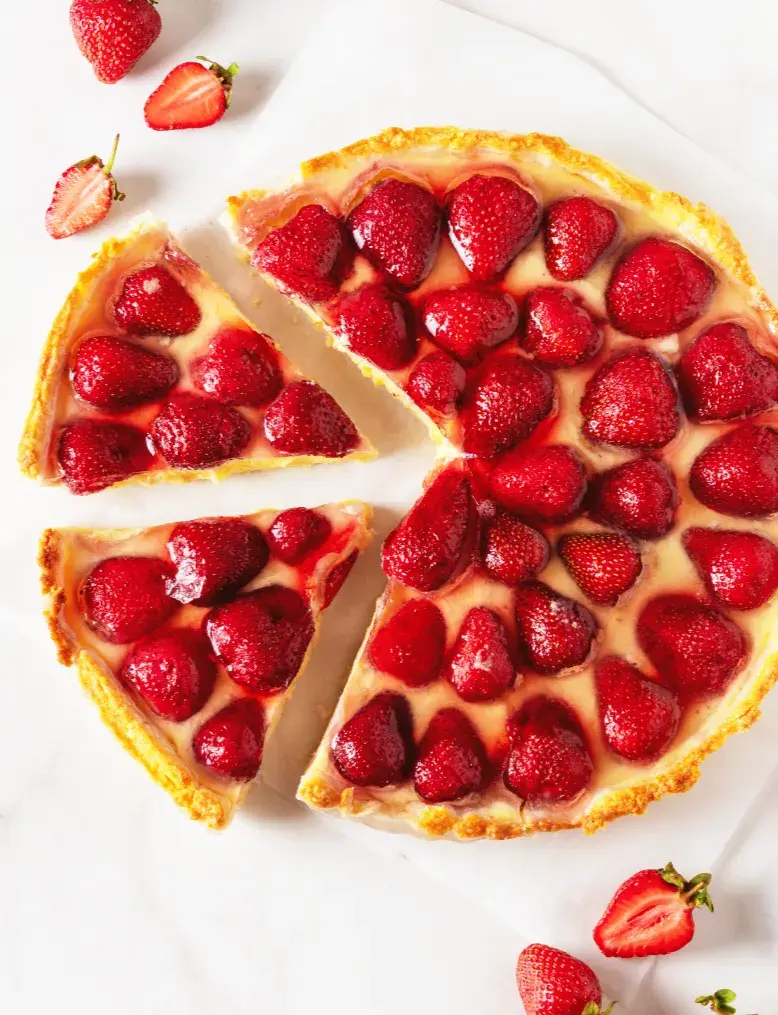
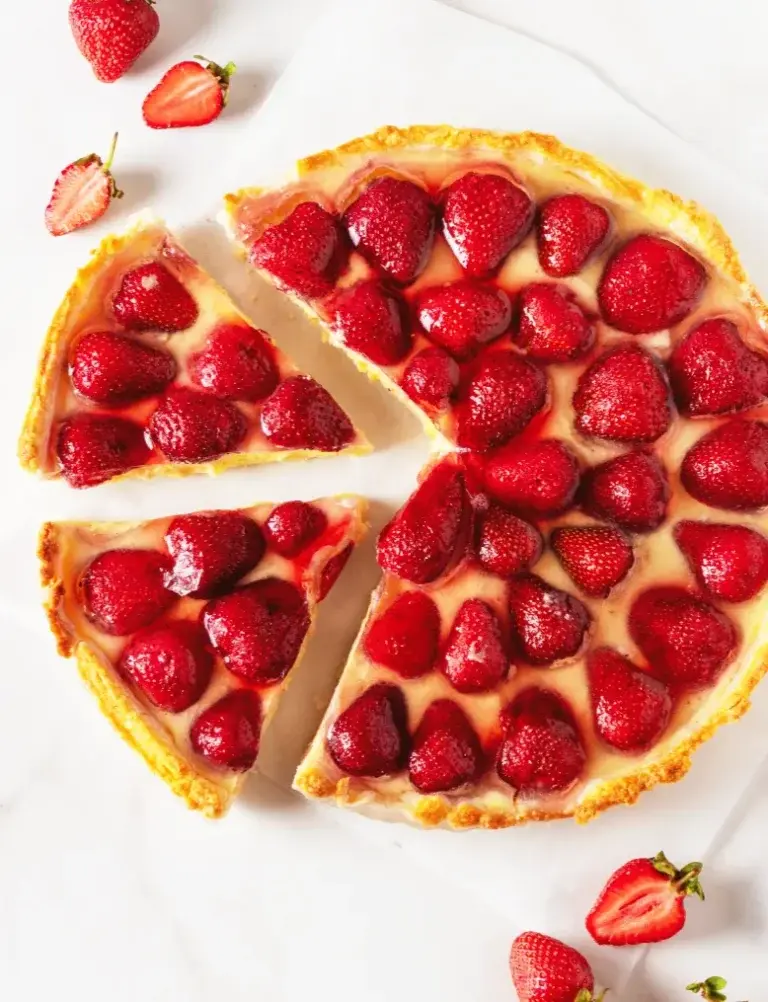
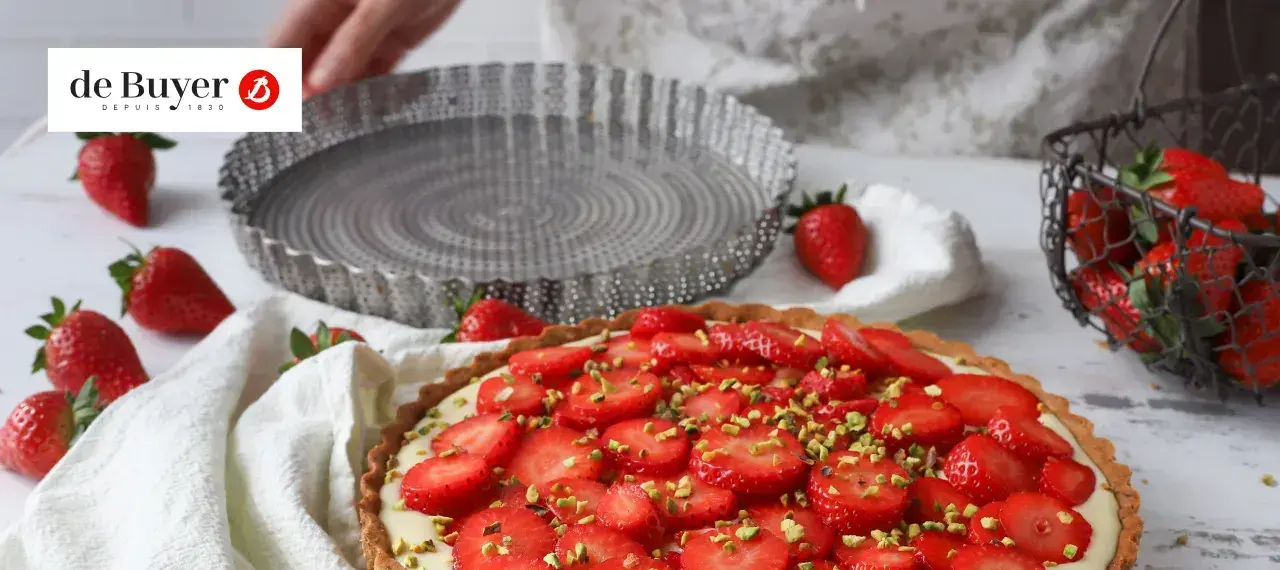
You know those strawberry tarts in pâtisserie windows every summer. The golden pastry, the perfectly arranged berries sitting on that pale, glossy cream. What if I told you that you can make that at home? I know. It’s a lot to take in. But you really can, and this is how!
Table of Contents
Where strawberry tart comes from
The tarte aux fraises is a pâtisserie fixtures that feels like it’s always existed, and in a sense it has. It’s built on two pillars of French pastry: a sweet shortcrust pastry and a vanilla cream. Nothing clever, just two things done properly, with good fruit on top.
And the filling is called crème diplomate, and it’s the reason a pâtisserie tart holds its shape while a homemade one so often slumps. It’s crème pâtissière, the vanilla custard at the heart of French pastry, stabilised and then folded through with whipped cream. Richer than whipped cream, far lighter than straight pastry cream, and it slices cleanly even on a warm afternoon. The name comes from the old diplomate pudding, a moulded 19th-century dessert; pâtissiers borrowed the technique for fruit tarts precisely because it sits in the shell without collapsing.
Ingredients
- Strawberries – Ripe, fragrant and in season. Small to medium ones have far more flavour than the giants. Buy well and use them the same day if you can.
- Sweet shortcrust pastry – The sandy, buttery, sweet crisp shell.
- Whole milk, egg yolks, sugar, cornflour – The crème pâtissière base: rich, vanilla-scented, and the backbone of the filling.
- Vanilla – A pod is worth it here, since the cream is vanilla-led and there’s nowhere to hide.
- Double cream – Whipped and folded into the pastry cream to lighten it into a diplomat cream.
- Agar agar – The vegetarian setting agent that stabilises the cream so it holds its shape (see the note below, it needs boiling to work).
A note on setting the cream
Classic crème diplomate is set with gelatine. This version uses agar agar instead, which is plant-based (it’s made from seaweed), so the tart is vegetarian-friendly. It works, but it behaves differently and needs handling properly.
Agar has to be boiled to activate, so it goes into the milk and gets boiled with the custard, not sprinkled into it off the heat. Do that and it won’t set at all. It also sets firmer and more brittle than gelatine, so a diplomat cream made with agar is a little more set and a little less mousse-like than the classic. It’s still lovely, and it holds beautifully in the tart, but if you want that softest, silkiest pâtisserie texture, use gelatine (about 4g of leaf gelatine, softened and whisked into the hot custard).
How to make strawberry tart
1. Blind bake the shell
Line your tart tin with the chilled sweet shortcrust pastry, chill it again, then blind bake it with baking beans until golden and completely dry. Don’t cut it short, since the shell is going to hold a wet cream and any dampness left in the pastry means a soggy base. A brush of beaten egg over the base after the beans come out, baked for a couple more minutes, seals it beautifully. Cool it completely before filling.
2. Make the crème diplomate
Make a crème pâtissière: infuse the milk with vanilla, whisk in the yolks beaten with sugar and cornflour, then cook it out until it thickens. If you’re using agar agar, whisk it into the milk at the start so it boils with the custard. Cool the pastry cream to room temperature under clingfilm pressed onto the surface, whisk it smooth again, then fold in softly whipped cream in three additions with a light hand, keeping the air in. That’s your diplomat cream: light, mousse-like, and stable. Chill it to set.
3. Assemble
Spread the cream into the cooled shell, about 1.5cm deep, and level it. Hull the strawberries (halve the larger ones) and arrange them over the top, packed closely for a full carpet of fruit rather than a sparse scatter. This is the bit worth taking your time over, since it’s the whole look of the tart. Chill briefly to set, then serve.
Tools for this recipe
Check out my favorite kitchen essentials and cookware!
- Use a 24cm perforated tart ring or fluted tart ring and a perforated baking mat to get clean edges and a crisp, evenly baked base.
- Use a heavy saucepan to cook the pastry cream gently without catching.
- Use a whisk to keep the custard smooth as it thickens.
- Use an electric mixer to whip the cream to soft peaks.
Tips for success
- Wait for strawberry season: this tart lives or dies on the fruit. If they don’t smell fragrant, they won’t taste of anything, and pastry and cream can’t save them.
- Blind bake the shell properly: bake until golden and completely dry, and seal it with a brush of egg wash. A wet cream on an under-baked shell means a soggy base within the hour.
- Boil the agar, don’t sprinkle it: agar agar needs to be boiled to activate, so whisk it into the milk and let it boil with the custard. Sprinkled in off the heat, it simply won’t set.
- Fold the cream in gently: whip the cream only to soft peaks, and fold it into the (room-temperature) pastry cream in three additions with a light hand. Overworking knocks out the air and the cream loses its lightness.
- Assemble on the day: the tart is at its best within a few hours. After that the berries release juice and the pastry softens, so make the components ahead but assemble close to serving.
How to store it
- This is a tart to make and eat the same day. Once assembled, keep it in the fridge and eat it within about 4 to 6 hours, that’s when the pastry is still crisp, the cream set, and the berries fresh. After that the strawberries start weeping juice into the cream and the base softens.
- Leftovers keep in the fridge for a day and are still nice, if less pristine. Don’t freeze it: the cream splits and the strawberries turn to mush on thawing.
- The clever way to get ahead is to make the components separately. The blind-baked shell keeps in an airtight container for a day (or freezes unbaked for a month), and the crème pâtissière keeps in the fridge for a day before you fold in the whipped cream. Then whip, fold, fill and arrange on the day you’re serving.
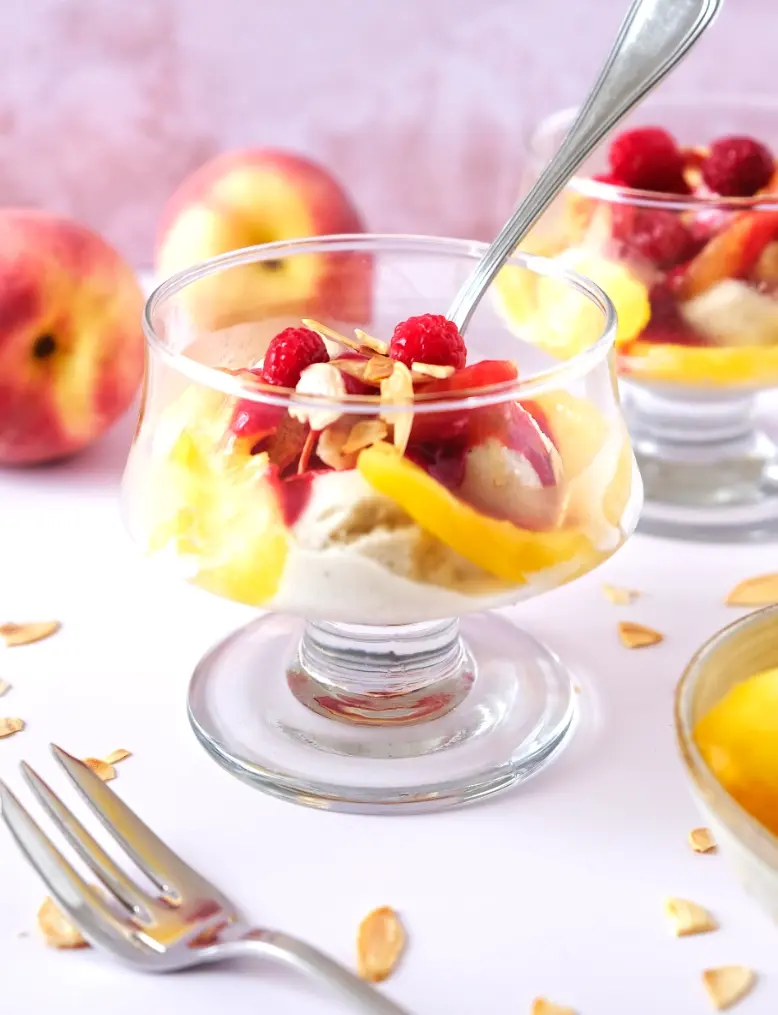
More fruit dessert recipes to try
Variations
- Less sugar. The cream carries most of the sugar here, and you can pull the pastry cream’s sugar back by about a quarter without affecting the set, letting ripe strawberries lead. Don’t cut the pastry’s sugar much, though, since it’s part of what makes sablée sandy and short rather than tough.
- Other summer fruit. Raspberries, blueberries, redcurrants, apricots, or figs in autumn. Same pastry, same cream, just change the fruit with the season.
- Add a glaze. Brush the berries with warmed, sieved apricot jam or redcurrant jelly for that glossy pâtisserie shine (and it keeps them from drying out).
- Add pistachios. A scatter of chopped pistachios around the edge, pistachio and strawberry is a classic French pairing.
- Lemon or basil. A little lemon zest in the cream, or a few shredded basil leaves over the berries, both lovely with strawberries.
- Individual tartlets. Make them in 8cm rings for a dinner-party finish. Same method, shorter bake.
FAQ
What is crème diplomate?
Crème diplomate is crème pâtissière (vanilla pastry cream) that’s been stabilised with gelatine (or agar) and lightened by folding in whipped cream. It’s richer than whipped cream and much lighter than plain pastry cream, and crucially it holds its shape in a tart shell without collapsing, which is why French pâtissiers use it for fruit tarts.
Can I make a strawberry tart ahead of time?
Make the components ahead, not the finished tart. The blind-baked shell keeps a day in an airtight container, and the pastry cream keeps a day in the fridge before you fold in the whipped cream. Assemble on the day and eat within 4 to 6 hours, before the berries weep and the pastry softens.
How do I stop the tart base going soggy?
Blind bake the pâte sablée until it’s golden and completely dry, then brush the base with beaten egg and return it to the oven for a couple of minutes to seal it. That barrier keeps the wet cream off the pastry. Assembling close to serving helps too.
Can I use gelatine instead of agar agar?
Yes, and gelatine is the traditional choice for crème diplomate, giving a softer, silkier set. Use about 4g of leaf gelatine, softened in cold water and whisked into the hot custard. Agar is the vegetarian alternative but must be boiled to activate and sets a little firmer.
What strawberries are best for a French strawberry tart?
Small to medium, ripe, fragrant berries in season, gariguette or mara des bois if you can find them. Big supermarket strawberries look impressive but taste watery. If they don’t smell of strawberry, they won’t taste of it, so buy from a market in season and use them the day you buy them.


 Prep Time 40 minutes
  Cook Time 30 minutes
  Total Time 5 hours 10 minutes
  Servings 8
Description
Ingredients
For the Pâte Sablée
- 250 gr plain flour
- 125 gr unsalted butter cold and cubed
- 100 gr icing sugar
- 2 egg
- 1 tsp vanilla extract or seeds from 1/2 vanilla pod
- pinch salt
For the Crème Diplomate
- 500 ml whole milk
- 1 vanilla pod or 2 tsp vanilla extract
- 6 egg yolks
- 125 gr caster sugar
- 40 gr corn starch
- 1 tsp agar agar powder
- 300 ml Double cream well chilled
For the Topping
- 600 gr strawberries small to medium, perfectly ripe
Equipment




Instructions
1. Make the pâte sablée / sweet shortcrust pastry
- Follow the sweet shortcrust pastry method. Shape into a disc, wrap, and chill at least 1 hour.
2. Line the tart ring
- Roll the pastry between two sheets of baking paper to about 3mm and roughly 30cm across. Flip it into the fluted tin, press gently into the corners, trim, and prick the base. Chill another 30 minutes.
3. Blind bake
- Heat the oven to 180°C (160°C fan). Line with paper and baking beans and bake 20 minutes. Remove the paper and beans, brush the base with beaten egg, and return for 10 to 12 minutes until golden and completely dry. Cool completely in the tin.
4. Make the crème pâtissière
- Whisk the agar into the milk in a saucepan, add the vanilla pod and seeds, and bring to a boil. Meanwhile whisk the yolks and sugar until pale, then whisk in the cornflour. Pour a third of the hot milk onto the yolks, whisking, then return everything to the pan. Whisk over medium heat until it thickens, then boil gently for 2 minutes (this activates the agar and cooks out the cornflour).
5. Cool it
- Strain into a clean bowl, press clingfilm onto the surface, and cool to room temperature (about 1 to 2 hours). Don't refrigerate yet.
6. Make the crème diplomate
- Whisk the cooled pastry cream smooth. Whip the cold double cream to soft peaks. Fold it into the pastry cream in three additions with a spatula, keeping it light and mousse-like. Chill 1 hour to set.
7. Assemble
- Spread the cream into the cooled shell, about 1.5cm deep, and level it. Hull the strawberries, halving larger ones, and arrange over the cream, packed closely.
8. Chill and serve
- Chill 30 minutes before serving. Eat within 4 to 6 hours.
Notes
- Agar must be boiled to activate; whisk it into the milk and boil it with the custard. Off the heat it won’t set. Gelatine (4g leaf, into the hot custard) gives a softer, more classic set.
- Blind bake until dry and seal with egg wash, or the base goes soggy.
- Fold gently. Whip the cream only to soft peaks and fold in three additions.
- Strawberry selection: small to medium, ripe and fragrant. Gariguette or mara des bois if you can get them. If they don’t smell, they won’t taste.
- Make ahead: shell keeps a day; pastry cream keeps a day before folding in the cream. Assemble on the day.
Share your feedback and spread the love!
If you try this recipe, I’d love to hear how it turns out! Leave a ★★★★★ rating and your thoughts in the comments, it helps fellow French foodies discover this recipe too. Snap a photo and tag @obviously.french on Instagram. Come talk about it in our Facebook group. And don’t forget to save this recipe to Pinterest so you’ll always have it handy for your next French-inspired meal!