
 March 29, 2026
Disclosure: This post may contain affiliate links which provide us a small commission when used for purchase. Please read my disclosure policy for more information. I am grateful for your support!
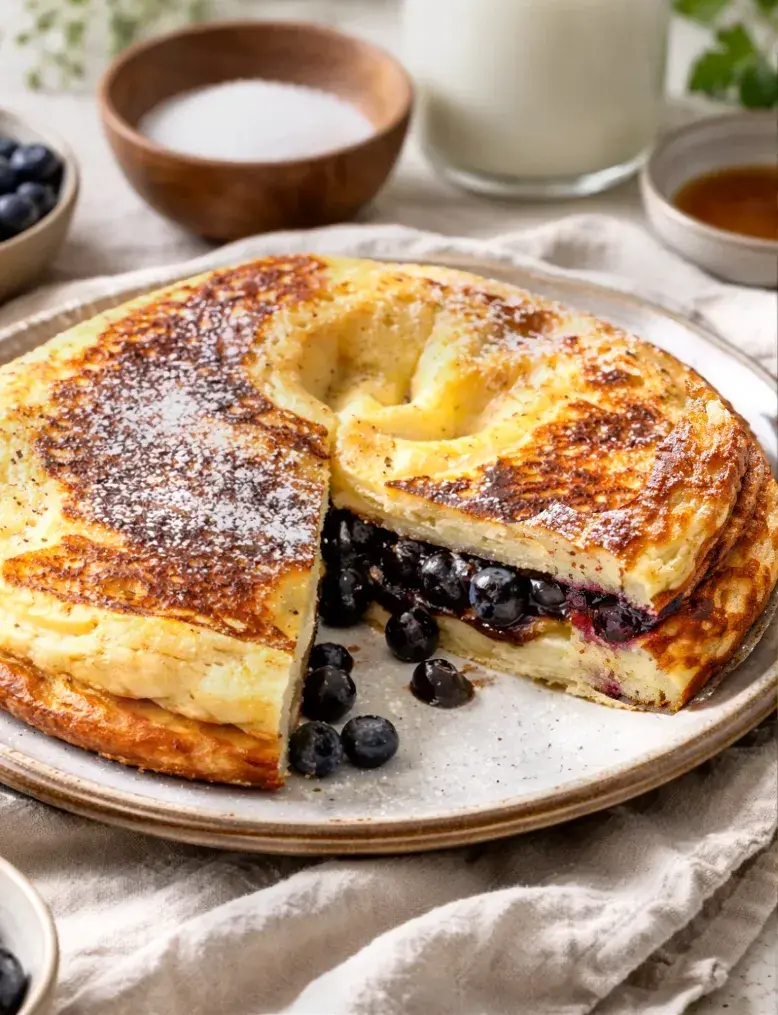
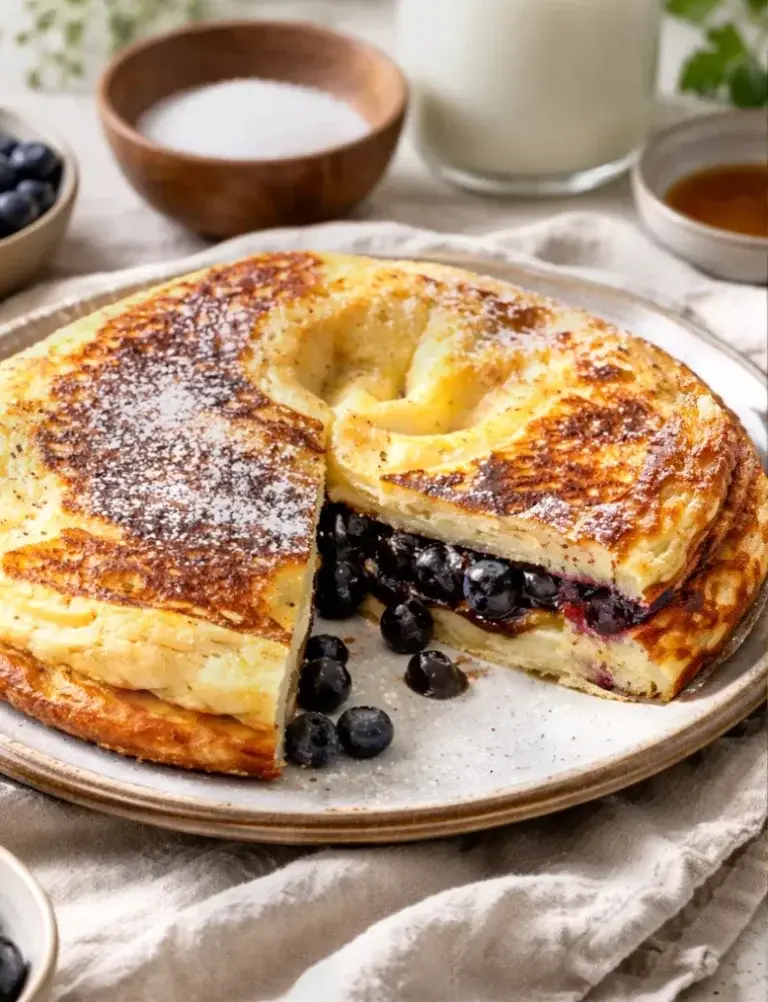
I was at a market and got chatting to an elderly lady from the Auvergne, who started telling me about the pachade, a fat French pancake I’d never once heard of. She described it so well that I went straight home and made it that same afternoon!
It comes from the rugged, volcanic heart of France, a region that doesn’t make much noise about its cooking but turns out some of the most satisfying, honest food in the whole country. And once you’ve made this fat pancake dessert, you’ll understand exactly why it’s been passed down through Auvergnat families for generations.
Table of Contents
Where pachade comes from
The pachade belongs to the Cantal, up in the Massif Central, where the winters are long and the cooking is built to keep you going. It’s peasant food in the best sense: eggs, flour, milk, a pinch of salt, French butter, and whatever fruit or cheese was in the house.
There’s a lovely bit of history in the name. It probably comes from the Occitan pascada, and it’s tied to Pâques, which is Easter. Because the pachade was traditionally a way to use up the eggs you’d stockpiled before Easter. So nothing was wasted.
And it comes both ways, sweet and savoury. The sweet version, the one here, is made with wild blueberries (myrtilles are the Cantal classic). The savoury one melts Cantal or Saint-Nectaire cheese into the batter, sometimes with ham or lardons. Same thick pancake but depending on your mood, sweet or savoury. Just like the fougasse from down south.
Ingredients
- Eggs – The backbone of the batter, and a lot of them for the quantity, which is what gives the pachade its rich, almost custardy set. Use good free-range ones.
- Plain flour – Just enough for structure. A pachade is more egg than flour, closer to a clafoutis than a bread.
- Whole milk – For a rich, tender batter. Whisk it in gradually to avoid lumps.
- Sugar – For the sweet version, in the batter and sprinkled over the blueberries. And powdered sugar to serve.
- Wild blueberries – Use wild blueberries if you can. Frozen works too if you drain them well.
- Butter – For cooking. Plenty of it in a hot pan is what gives you that crisp, golden, lacy underside.
- Salt – A pinch, to season the batter. Even a sweet one needs it.
How to make pachade
1. Make and rest the batter
Whisk the eggs, flour and sugar together, then whisk in the milk gradually until smooth, and add a pinch of salt. Cover and rest it in the fridge, ideally a few hours or overnight, though even 30 minutes helps. Give it a quick whisk to wake it up before cooking.
2. Cook it slow and golden
Melt a good knob of butter in a hot frying pan, then pour in the batter (or half of it, if you’re making two to sandwich). Cook over medium heat, unhurried, until the underside is deep golden and lacy and the top is nearly set, then flip it, using a plate to help if it’s too heavy to toss, and cook the other side. Don’t rush it on high heat, or the outside burns before the middle cooks. It wants a good 5 to 8 minutes a side.
3. Fill, fold and serve
For the classic Auvergnat way, cook two pachades, pile sweetened blueberries over one, top with the second, and turn the whole thing out. Dust with icing sugar and serve warm, that’s when it’s at its best, while the edges are still crisp. A little crème fraîche or vanilla ice cream alongside is never wrong!
Tools for this recipe
Check out my favorite kitchen essentials and cookware!
- Use a mixing bowl to whisk the batter smooth and let it rest.
- I use my professional whisk to work the milk in gradually, so the batter stays lump-free.
- Use a heavy cast iron skillet to get an even, golden, french pancake.
Tips for success
- Rest the batter if you can: a few hours or overnight in the fridge makes the pachade more tender and even. Even 30 minutes helps. Whisk it to wake it up before cooking.
- Cook it slow, not hot: a pachade is thick, so it needs gentle, patient heat to set the middle before the bottom burns. Medium heat, 5 to 8 minutes a side, no rushing.
- Use plenty of butter in a hot pan: that’s what gives you the crisp, golden, lacy underside that makes a pachade special. Don’t be shy with it!
- Use a plate to flip: it’s a heavy, thick pancake, so instead of tossing it, slide it onto a plate and invert it back into the pan. Far less likely to end up on the floor.
- Serve it warm: a pachade is at its best fresh and warm, when the edges are still crisp and the blueberries are soft and jammy. It softens as it cools, so don’t make it wait.
How to store it
- A pachade is best eaten warm, straight from the pan, when the edges are crisp. But it keeps perfectly well for a day or two.
- Keep it covered in the fridge for up to 2 days. Reheat it gently in a dry pan or a warm oven to bring back some of the crispness, rather than the microwave, which leaves it soft (though honestly, cold pachade straight from the fridge is a fine breakfast too). A fresh dusting of icing sugar wakes it up.
- It doesn’t freeze especially well, the texture suffers, so it’s best made fresh. Happily, the batter itself keeps a day or two in the fridge (and is better for the rest), so you can make the batter ahead and cook a fresh pachade when you want one.
More recipes to try
Variations
- Less sugar: the berries brings plenty of natural sweetness, so you can cut the sugar in the batter right back if you want, or leave it out and rely on ripe fruit plus a light dusting of icing sugar at the end.
- Apple pachade: the easiest year-round version. Thin slices of apple laid into the batter as it cooks, dusted with sugar and maybe a little cinnamon.
- Prune and rum: soak pitted prunes in a little warm rum first, then fold through. A rich, wintry, very traditional Auvergnat version.
- Savoury pachade: skip the sugar and melt grated Cantal or Saint-Nectaire into the batter, with a little vegetarian ham or crisp vegetarian lardons. Served with a green salad, it’s a proper light meal.
FAQ
What is a pachade?
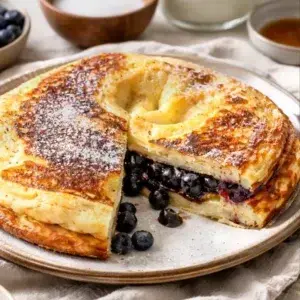
A pachade is a thick, rustic pancake from the Auvergne region of France, made from an eggy batter of flour, milk and eggs. It’s crisp and golden underneath, soft and almost custardy on top, and made both sweet (with fruit) and savoury (with cheese). It’s somewhere between a thick pancake and a clafoutis.
What’s the difference between a pachade and a crêpe?
A crêpe is thin, delicate and lacy; a pachade is thick, hearty and filling, with far more egg in the batter. A pachade is cooked slowly and gently to set its thick middle, while a crêpe cooks in seconds. The pachade is closer to a clafoutis in texture, or a fat pancake.
Can I make a pachade ahead of time?
The batter is best made ahead, it improves after a few hours’ rest (or overnight) in the fridge. The cooked pachade is best warm and fresh, but keeps 2 days in the fridge and reheats in a dry pan or warm oven. It doesn’t freeze well.
Is a pachade sweet or savoury?
Both. Traditionally it was made either way, depending on what was to hand. The sweet version has fruit and sugar; the savoury version melts Cantal or Saint-Nectaire cheese into the batter, often with ham or lardons. This recipe is the sweet, fruit version.


 Prep Time 10 minutes
  Cook Time 20 minutes
  Servings 4
Description
Ingredients
For the batter
- 4 eggs
- 200 gr plain flour
- 100 gr caster sugar
- 500 ml whole milk
- 1 pinch salt
- unsalted butter
For the blueberry filling
- 400 gr blueberries
- 100 gr icing sugar
To serve
Equipment
Instructions
1. Make the batter
- Whisk the eggs, flour and sugar together in a large bowl. Gradually whisk in the milk until smooth, then add the salt. Cover and rest in the fridge, ideally 2 hours or overnight (or at least 30 minutes). Whisk briefly before using.
2. Prepare the blueberries
- Tip the blueberries into a small bowl, add the sugar, and stir gently. Leave to macerate while you cook the pachade, the sugar will draw out the juice and soften the fruit slightly without turning it to mush.
3. Cook the pachade
- Melt a good knob of butter in a hot frying pan over medium heat. Pour in the batter, it should spread to fill the pan in a thick layer. Reduce the heat slightly to medium and cook for 3-4 minutes until the underside is well browned and the edges are set. Slide onto a plate and invert back into the pan (or flip if you're confident). Cook the other side for another 5 minutes, until golden and cooked through.
4. Cook the second pachade
- Add a little more butter to the pan and repeat with the remaining batter. Same process, same timings.
5. Assemble and serve
- Place the first pachade on a serving plate or board. Spoon the sugared blueberries evenly over the surface. Place the second pachade directly on top, pressing very gently. Dust generously with icing sugar and bring straight to the table. Cut into wedges like a tart and serve warm.
Notes
- Rest the batter for a more tender, even pachade. A few hours or overnight is ideal.
- Cook it slow, not hot. It’s thick, so it needs gentle heat to set the middle before the bottom burns.
- Plenty of butter in a hot pan gives the crisp, lacy, golden underside.
- Use a plate to flip this heavy pancake safely.
- Best warm. Reheat leftovers in a dry pan or warm oven, not the microwave.
Share your feedback and spread the love!
If you try this recipe, I’d love to hear how it turns out! Leave a ★★★★★ rating and your thoughts in the comments, it helps fellow French foodies discover this recipe too. Snap a photo and tag @obviously.french on Instagram. Come talk about it in our Facebook group. And don’t forget to save this recipe to Pinterest so you’ll always have it handy for your next French-inspired meal!

I love the insightful facts on the dish. It looks so delightful and yummy
Thank you! I hope you’ll enjoy it 🙂