
Salmon Lasagna
 June 12, 2026
Disclosure: This post may contain affiliate links which provide us a small commission when used for purchase. Please read my disclosure policy for more information. I am grateful for your support!
I still think about that Sunday afternoon. My neighbour Nathalie, her mum, her husband and me, eating out on her patio. Nathalie always makes something pescatarian when I come for lunch, which I find so thoughtful, and I thank her for it probably one too many times because they are all meat eaters and she always go out of her ways for little old me.
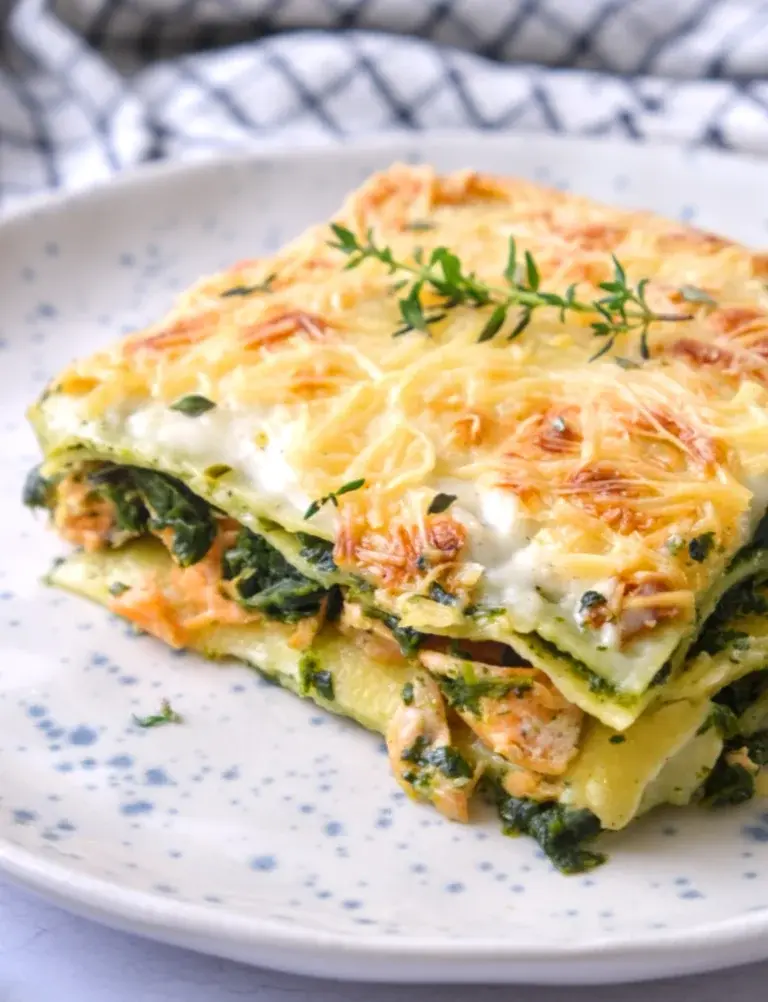
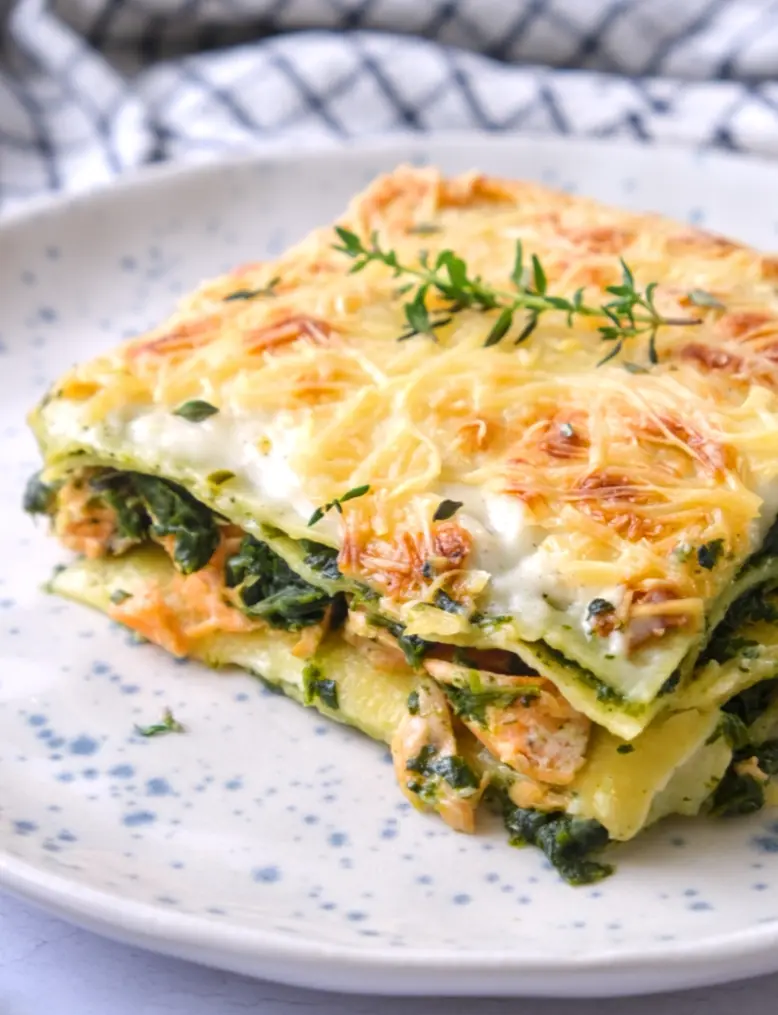
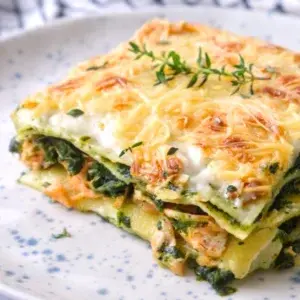
This salmon lasagna was a total surprise and obviously I went for seconds! It was outright perfect and I had to make it at home and share it with you as it is such a simple recipe of a lasagna with white sauce instead of the more known red one.
Table of Contents
Where lasagna comes from
Most people picture lasagna and think tomato sauce. And that’s a great dish, no argument. But this one is built on a generous homemade béchamel instead of a tomato base, and it’s something else entirely. Lighter, more delicate, creamy and savoury without any acidity, which makes it the ideal backdrop for salmon and spinach.
This white-sauce lasagna is the traditional one from our Italian neighbours. Lasagna comes from Emilia-Romagna in northern Italy, and if you walk into a trattoria in Bologna, the lasagne is almost always made with béchamel, never ricotta or heaps of tomato. The official Bologna recipe, registered with the Italian Academy of Cuisine in 1982, uses besciamella (their word for béchamel) to bind the layers and stop the top drying out. So when Nathalie made this with béchamel, she wasn’t doing anything unusual. She was doing exactly what Italian and French home cooks have done for generations.
Ingredients
- Fresh salmon – Skinless, boneless, cut into 2cm cubes and fresh instead of smoked, for the body of the dish.
- Spinach – Fresh, wilted and squeezed very dry. It turns silky in the béchamel and becomes part of the sauce rather than a separate layer.
- Fresh lasagna sheets – My preference, since they need no pre-cooking and give a softer result. Dried works too, with a tweak (see tips).
- Butter, flour and whole milk – These are for the béchamel. The sauce that carries the whole dish, so make it properly.
- Nutmeg – A must in a traditional béchamel. You won’t taste it outright, but the sauce feels flat without it.
- Gruyère – Grated over the top for a golden, bubbling finish. Comté works too.
- Shallot – Softened with the spinach for a gentle savoury base.
The pasta
Fresh lasagna sheets are my preference here, and they make the assembly significantly easier because they need no pre-cooking. Most good supermarkets carry them. If you can only find dried sheets, they work perfectly well, just pre-cook them briefly in boiling salted water and add a little extra béchamel to the layers since dried pasta absorbs more moisture as it bakes.
How to make salmon lasagna
1. Wilt and drain the spinach
In a frying pan, soften the shallot in butter, then wilt the spinach down in batches until it collapses. Tip it into a colander and, once it’s cool enough to handle, squeeze it hard, really wring the water out, then chop it roughly. This is the single most important step in the whole recipe. Wet spinach means a watery lasagna that slides apart, so be ruthless with it.
2. Make the béchamel
Melt the butter, stir in the flour, and cook the roux for a minute or two until it’s smooth and smells faintly biscuity. Then add the warm milk gradually, whisking constantly, until you’ve got a smooth, thick sauce. Season with salt, white pepper and a generous pinch of nutmeg. Keep it a touch looser than you think you want, since the pasta drinks up sauce as it bakes. If you have lumps, just keep whisking, or push it through a sieve. The full method’s on my béchamel recipe page.
3. Assemble
Always start with béchamel on the base of your baking dish and always finish with it on top, that’s what stops the pasta drying out and welding to the dish. So first béchamel, then three sheets, half the spinach, half the salmon, more béchamel. Repeat. Then a final three sheets, the last of the béchamel spread right to the edges to cover the pasta completely, and the Gruyère (or Comté) scattered over. Any bare pasta will go hard, so cover it.
4. Bake and rest
Bake until the top’s deep golden and bubbling at the edges. Then, and this is the hard part, leave it to rest for 10 minutes before you cut it. I know it’s tempting to start slicing, but the layers need to settle or the whole thing slides across the plate. It’s worth the wait, I promise.
Tools for this recipe
Check out my favorite kitchen essentials and cookware!
- Use a wide frying pan to wilt the spinach down in batches.
- Make the béchamel in a heavy saucepan and keep a whisk to hand, it’s the difference between smooth and lumpy.
- I bake this in a 30 x 20cm baking dish, which holds three layers of three sheets neatly.
Tips for success
- Squeeze the spinach as dry as you can: this is an important step. Fresh spinach releases a lot of water, and wet spinach makes a watery lasagna that won’t hold its layers. Press it firmly, and do it more than once.
- Put the salmon in raw: You don’t need to pre-cook it. Raw cubes cook perfectly in the oven surrounded by béchamel and stay moist. Pre-cooked salmon goes through the heat twice and dries out.
- Always start and finish with béchamel in your baking dish: sauce on the base stops sticking, sauce on top stops the pasta drying to a crisp. Cover every bit of the top pasta.
- Keep the béchamel a little loose: the pasta absorbs sauce as it bakes, especially dried sheets.
- Rest it before cutting: waiting ten minutes lets the layers set so it slices cleanly instead of collapsing.
How to store it
- This lasagna reheats brilliantly, and honestly the flavours deepen overnight, so leftovers are something to look forward to. Keep it covered in the fridge for up to 3 days. Reheat in the oven, covered with foil, at 180°C for about 15 minutes.
- It also freezes well after baking. Cool it completely, portion it, and freeze, then reheat covered with foil at 180°C for about 25 minutes from frozen.
- And it’s a great make-ahead for entertaining: assemble it the night before, cover, and keep it in the fridge, then bake when you need it, adding about 10 minutes to the time if it’s going in cold.
More fish recipes to try
Variations
- Add a little smoked salmon: alongside the fresh salmon you can add smoked salmon for a more pronounced flavour and a subtle saltiness against the cream.
- Swap the greens: wilted leeks (softened down) or chard work in place of, or alongside, the spinach. Squeeze any of them dry.
- Use dried sheets: if fresh aren’t available, pre-cook dried sheets in boiling salted water for 2 minutes, and add a bit more béchamel to the layers, since dried pasta drinks up more.
- Frozen spinach: works well if you haven’t got fresh. Thaw completely and squeeze very firmly. You’ll need about 400g frozen to replace 700g fresh.
- Make it richer: a handful of grated Parmesan through the béchamel, or a few prawns tucked in with the salmon, both lift it for a special occasion.
FAQ
Can you put raw salmon in lasagna?
Yes, and you should. Raw salmon cubes cook gently in the oven surrounded by warm béchamel and stay moist and tender. Pre-cooking it first means it goes through the heat twice and dries out. So cut it into cubes and layer it in raw.
Can I make salmon lasagna ahead of time?
Yes. Assemble it the night before, cover, and refrigerate, then bake when needed (add about 10 minutes if baking from cold). It also reheats and freezes brilliantly, and the flavours deepen overnight, so leftovers are excellent.
How do I stop my salmon lasagna being watery?
Two things: squeeze the cooked spinach as dry as you possibly can before layering, and don’t pre-cook the salmon. Wet spinach is the main culprit, as it releases water into the béchamel and loosens everything.
Can I use dried lasagna sheets instead of fresh?
Yes. Pre-cook dried sheets in boiling salted water for about 2 minutes, drain, and lay them flat before assembling. Add a little extra béchamel to the layers too, since dried pasta absorbs more moisture as it bakes.


 Prep Time 25 minutes
  Cook Time 40 minutes
  Total Time 1 hour 15 minutes
  Servings 4
Description
Ingredients
Lasagna
- 9 fresh lasagna sheets
- 600 gr salmon fresh fillet, skinless and boneless, cut into 2cm cubes
- 700 gr spinach fresh
- 1 shallot finely sliced
- 20 gr unsalted butter
- 80 gr gruyère grated
Béchamel
- 60 gr plain flour
- 60 gr unsalted butter
- 600 ml whole milk
- 1 pinch nutmeg freshly grated
- 1 pinch salt
- 1 pinch white pepper
Equipment
Instructions
1. Cook and drain the spinach
- Melt the butter in a wide pan over medium heat. Add the shallot and cook 2 minutes until softened. Add the spinach in batches,and cook until fully wilted, about 5 minutes. Tip into a colander, cool slightly, then press firmly to remove as much liquid as possible. Chop roughly and set aside.
2. Make the béchamel
- Melt the butter in a saucepan over low-medium heat. Stir in the flour and cook for 1 to 2 minutes, until smooth and faintly biscuity. Add the warm milk gradually, whisking constantly, until smooth and thick. Season with salt, white pepper and nutmeg. Set aside.
3. Prep the oven and dish
- Heat the oven to 180°C fan / 200°C conventional. Butter a 30 x 20cm baking dish.
4. Assemble
- Spread a layer of béchamel over the base. Lay 3 sheets on top. Spread over half the spinach, then half the salmon, then a layer of béchamel. Repeat with 3 more sheets, the rest of the spinach and salmon, and more béchamel. Finish with the last 3 sheets, the remaining béchamel spread right to the edges, and the Gruyère.
5. Bake and rest
- Bake for 35 to 40 minutes, until deep golden and bubbling at the edges. Rest for 10 minutes before slicing.
Notes
- Squeeze the spinach well. The most important step. Wet spinach makes a watery lasagna that won’t hold its layers.
- Raw salmon goes in. Don’t pre-cook it. It cooks perfectly in the oven and stays moist. Pre-cooked salmon dries out.
- Fresh sheets need no pre-cooking. For dried, pre-cook 2 minutes and add extra béchamel, as they absorb more.
- Generous sauce. Lasagna needs plenty of béchamel between every layer. Always start and finish with it.
- Frozen spinach works: thaw and squeeze very firmly. About 400g frozen replaces 700g fresh.
- Make ahead: assemble the night before and refrigerate; add 10 minutes if baking from cold. Freezes well after baking.
Share your feedback and spread the love!
If you try this recipe, I’d love to hear how it turns out! Leave a ★★★★★ rating and your thoughts in the comments, it helps fellow French foodies discover this recipe too. Snap a photo and tag @obviously.french on Instagram. Come talk about it in our Facebook group. And don’t forget to save this recipe to Pinterest so you’ll always have it handy for your next French-inspired meal!
Thanks for the great recipe . I’ve made it yesterday for my family and everyone found it very delicious 🤤. Thanks for sharing this great recipe 👌🏼
This is exactly why I love sharing recipes, I love hearing that the whole family enjoyed it! Thanks so much for trying it 🙂