 November 11, 2025
Disclosure: This post may contain affiliate links which provide us a small commission when used for purchase. Please read my disclosure policy for more information. I am grateful for your support!
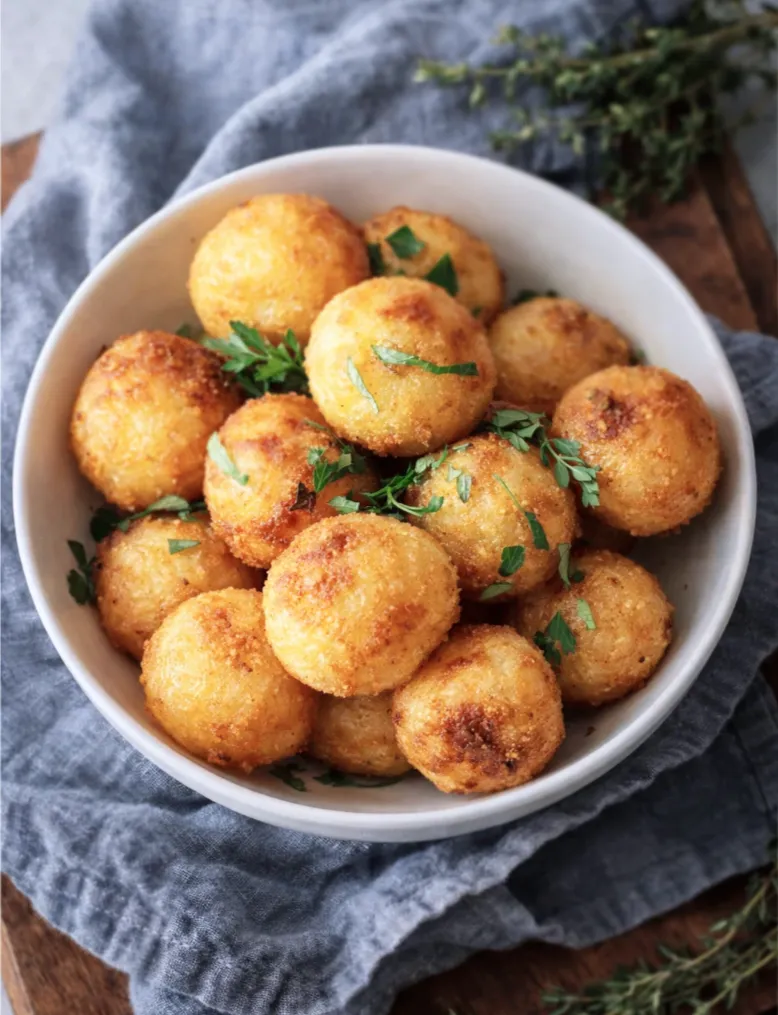
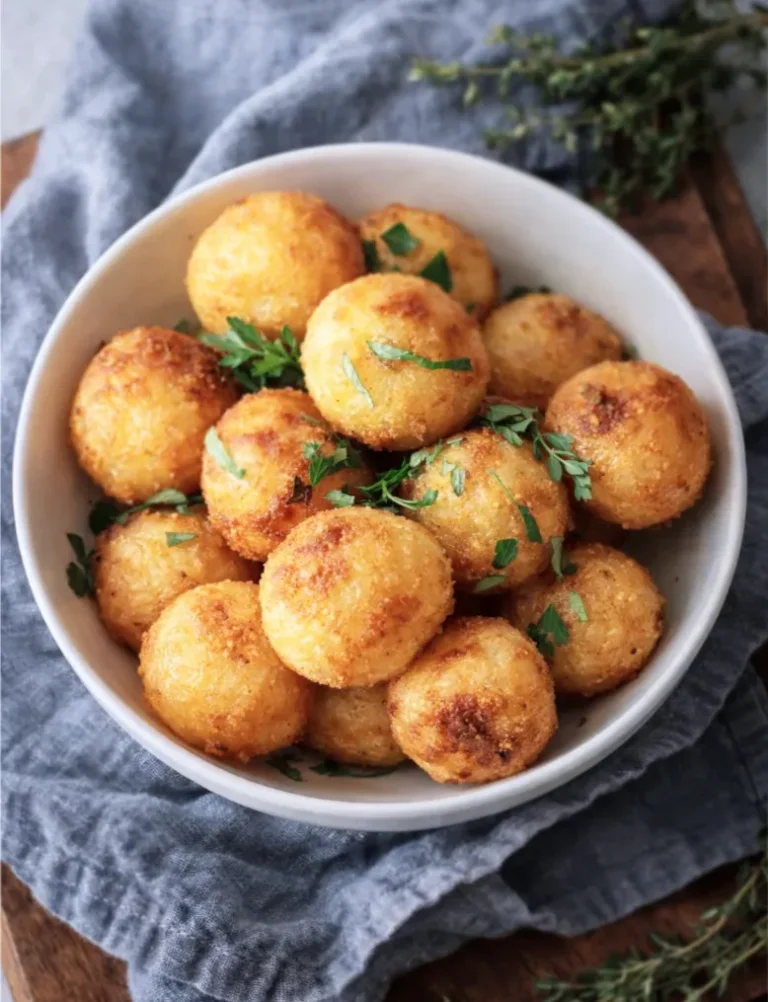
These precious little potato puffs are a bit tricky to make, and I’ll be honest, my first time didn’t go perfectly. But once you’ve done it a couple of times, you start to understand the consistency with the choux pastry and how pommes dauphine should look and feel. And then? Then you get to enjoy your creation, and you’ll make them far more often than is reasonable!
Table of Contents
Where pommes dauphine come from
Pommes dauphine are named for the Dauphine, the wife of the Dauphin, heir to the French throne. There’s a story that gets told with them, worth telling as folklore rather than fact: the Dauphin kept turning up late to dinner, so the kitchen needed something quick and impressive to keep the guests happy. Nobody actually knows who invented them, but the dish in its modern form, mashed potato and choux fried together, appears around 1864.
What makes them clever is that they fold two classic preparations into one. Mashed potato, enriched like pommes duchesse, meets pâte à choux, or choux pastry the light pastry behind chouquettes, éclairs, Paris-Brest, religieuses, gougères and profiteroles. Piped into hot oil, the choux puffs around the potato into a shell that’s crisp outside and almost hollow within. No other fried potato does this, and that airy lightness is why they are amazing.
Pommes means apples in French, but it is also shorthand for pommes de terre, “apples of the earth,” which is the word for potatoes. Almost every French potato dish starts with pommes in its name: pommes frites, pommes Anna, pommes sarladaises. There must be a hundred variations, each with its own method. Pommes dauphines are one of the more elegant ones.
Ingredients
- Floury potatoes — the base, and they must be floury (Maris Piper, King Edward, Bintje). Waxy ones hold too much water and won’t mash light or dry.
- Butter — goes into the hot mash for richness and that faint buttery flavour running through the puff.
- Water and butter (for the choux) — the liquid base the flour cooks into. Butter for richness, a pinch of salt for seasoning.
- Plain flour — cooked into the choux to build the structure that puffs and holds the hollow shell.
- Eggs — beaten into the choux to give it the lift. They’re what makes the puffs rise and go hollow, so don’t skimp or rush them.
- Neutral oil for frying — rapeseed, vegetable or sunflower. Nothing with a strong flavour, and enough of it for a proper deep fry.
How to make pommes dauphine
1. Make the mash, and dry it out
I boil the floury potatoes until they’re falling apart, then, and this is the bit people skip, I return them to the hot pan for a minute to steam off every trace of water. Wet potato is the number one reason a batch fails. Mash until completely smooth, stir in the butter while hot, and season well.
2. Make the choux pastry
Boil the water and butter, tip in the flour off the heat, and beat to a smooth ball. Then dry it on low heat for a couple of minutes until it stops sticking to the pan. Beat in the eggs one at a time, it’ll look split and hopeless before it comes back glossy, keep going.
3. Fold the two together while warm
Both need to be warm or they won’t combine smoothly. Mix to a uniform paste that’s soft but holds its shape, and season harder than feels right, frying dulls it.
4. Fry small, and mind the temperature
170°C on a thermometer, no guessing. Pipe walnut-sized lumps straight into the oil, four or five at a time so the temperature doesn’t crash. Too hot and they brown raw inside; too cool and they drink oil. They’ll sink, rise, and puff. Lift out, drain on paper, salt while hot, and get them to the table fast.
Tools for this recipe
Check out my favorite kitchen essentials and cookware!
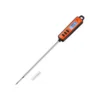
- Use a kitchen thermometer to hold the oil at 170°C, which is the difference between airy puffs and greasy ones.
- Use a piping bag with a plain round nozzle to pipe even, walnut-sized lumps straight into the oil without the mixture splitting the bag.
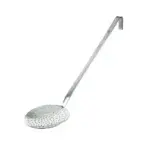
- Use a skimmer spoon to lift the puffs out cleanly and let the excess oil drain back into the pot.
Tips for success
- Dry the potatoes well and mash them smooth, a ricer or really thorough mashing makes for a lump-free mixture and cleaner puffs.
- Season the mixture generously: frying dulls it, so it needs to taste bold before it goes in the oil.
- Keep the oil steady at 170°C and let it recover between batches.
- Fry in small batches and get them to the table fast, they’re at their best within 20 minutes.
How to store it
- In the fridge: The uncooked mixture keeps, covered, for a few hours. Bring it back to room temperature before frying. Cooked puffs can be kept a day and reheated in a 200°C oven for 5–6 minutes, though they lose a little of their magic.
- In the freezer: Freeze the piped, uncooked puffs on a tray until solid, then bag them. Fry straight from frozen, adding 2–3 minutes to the cooking time.
- Serving ahead: If you’re frying in batches, hold the finished ones in a low oven (around 100°C) on kitchen paper while you do the rest.
More potato recipes to try
Variations
- Cheese: fold 50g grated Gruyère into the mixture before frying for a richer, savoury version.
- Herbs: a little chopped chive or parsley through the mix gives colour and freshness.
FAQ
What are pommes dauphine made of?
Mashed potato and choux pastry, folded together and deep-fried. The choux puffs up around the potato to make a crisp, almost hollow puff.
What’s the difference between pommes dauphine and croquettes?
Both are fried potato, but croquettes are dense, breadcrumbed and solid throughout, while pommes dauphine use choux pastry to puff up light and hollow inside.
Why aren’t my pommes dauphine puffing up?
Usually the oil temperature or wet potato. Keep the oil at 170°C, and make sure the potatoes are properly dried out and the choux pastry cooked before you combine them.
Are pommes dauphine the same as pommes duchesse?
No, but they’re related. Pommes duchesse is the enriched mashed potato that’s piped and baked; pommes dauphine folds that style of potato into choux pastry and deep-fries it.


 Prep Time 25 minutes
  Cook Time 30 minutes
  Total Time 55 minutes
  Servings 4
Description
Ingredients
For the mashed potato
- 500 gr floury potatoes
- 30 gr unsalted butter
- salt and black pepper
For the choux pastry
- 125 ml water
- 50 gr unsalted butter
- 75 gr plain flour
- 2 egg
- 1 pinch salt
For frying
- 1,5 l rapeseed oil or vegetable oil or sunflower oil
Equipment


Instructions
1. Cook the potatoes
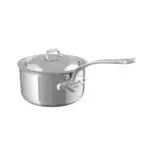
- Peel and cut into even 4cm chunks. Put in a large saucepan of cold, salted water, bring to the boil, then simmer 15–20 minutes until completely tender. Drain well, then return to the hot pan for a minute to dry out. Any water left in the potatoes makes the mixture too wet.
2. Mash the potatoes
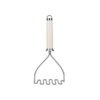
- Mash the potatoes really well until there are no lumps. Add the butter while hot, with a good pinch of salt and pepper. Mix and set aside to cool slightly while you make the choux. The potato should be warm, not boiling, when you combine them.
3. Make the choux pastry
- Put the water, butter and a pinch of salt in a medium saucepan over medium heat. Bring to a proper boil so the butter fully melts. Off the heat, tip in all the flour at once and beat hard with a heat-resistant spatula until it forms a smooth ball. Return to low heat and beat for about 2 minutes to cook out the raw flour and dry the dough, it's ready when it stops sticking to the sides.
4. Add the eggs
- Off the heat, let it cool a minute. Beat in the eggs one at a time, mixing well after each. It'll look split at first, that's normal, keep going until it's smooth and glossy and drops slowly off the spoon. If too stiff, beat in a tiny splash of water.
5. Combine potato and choux
- Add the choux to the mash while both are still warm. Mix thoroughly to a smooth, uniform paste, soft and pipeable but holding its shape. Taste and season well, frying dulls the flavour.
6. Heat the oil
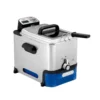
- Pour oil into your fryer or heavy pot to a depth of at least 8cm. Heat to 170°C, checked with a thermometer. Too hot and the outside burns before the inside cooks; too cool and they turn greasy and won't puff.
7. Fry
- Pipe walnut-sized amounts (plain nozzle) straight into the oil, cutting them off with scissors or a knife, or use two spoons. Fry 4–5 at a time, don't overcrowd. They'll sink, float, and puff. Fry 6–8 minutes, turning occasionally, until golden all over and roughly doubled in size.
8. Drain and serve
- Lift out with a skimmer spoon and drain on kitchen paper. Keep warm in a low oven (around 100°C) while you fry the rest. Salt lightly while hot. Serve immediately, best within 20 minutes.
Notes
- The mixture can be made a few hours ahead and kept covered in the fridge. Bring it back to room temperature before frying.
- If the mixture seems too wet to hold its shape, add a tablespoon of flour. If it’s too stiff, add a splash of milk.
- Don’t skip the potato ricer if you’ve got one, lumpy potatoes make lumpy puffs.
- You can freeze uncooked pommes dauphines on a tray, then fry them from frozen, adding 2-3 minutes to the cooking time.
- Day-old pommes dauphines can be reheated in a 200°C oven for 5-6 minutes, but they won’t be quite as good as fresh.
- For a cheesy version, add 50g grated Gruyère to the mixture!
Share your feedback and spread the love!
If you try this recipe, I’d love to hear how it turns out! Leave a ★★★★★ rating and your thoughts in the comments, it helps fellow French foodies discover this recipe too. Snap a photo and tag @obviously.french on Instagram. Come talk about it in our Facebook group. And don’t forget to save this recipe to Pinterest so you’ll always have it handy for your next French-inspired meal!