 March 30, 2026
Disclosure: This post may contain affiliate links which provide us a small commission when used for purchase. Please read my disclosure policy for more information. I am grateful for your support!
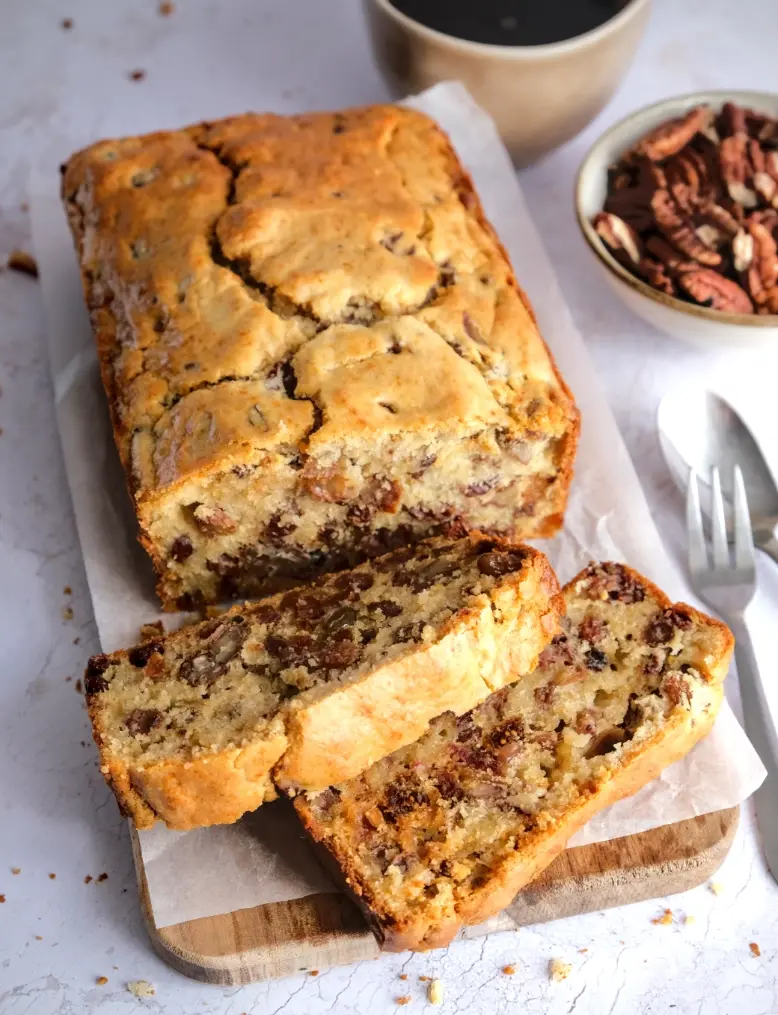
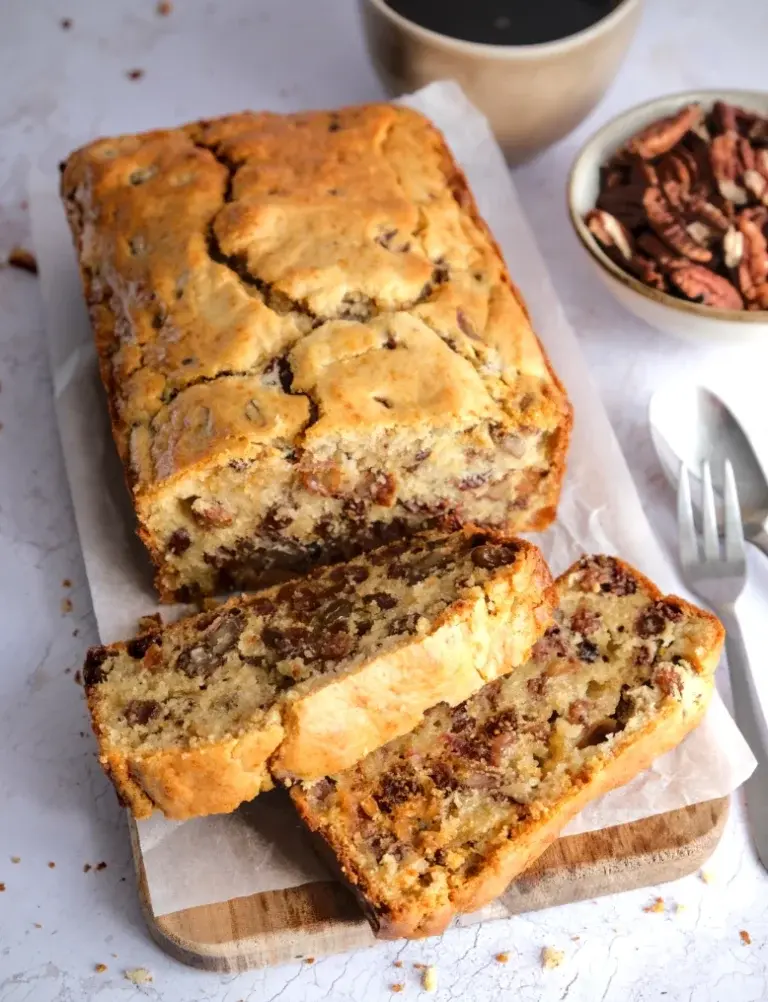
This fruit and nuts cake was passed down by our neighbour Brigitte. Like so many of the best recipes I’ve got, I had to ask for it, because I seriously couldn’t stop eating it. I had it for breakfast, at four o’clock in the afternoon (the French goûter) and again as dessert. It’s the best with a good coffee or tea, and I promise you’ll keep going back for one more slice.
And the great thing about this fruitcake, there’s no added sugar at all! The sweetness comes entirely from the dried fruit, so you can feel a little less guilty going back for a second slice. Brigitte told us it keeps for weeks in a tin, then added that it probably won’t last that long. She was absolutely right.
Table of Contents
Where fruit and nuts cake comes from
Here’s a fact that surprises people: “cake” in French is an Anglicism. The French borrowed “cake” from English, which itself took “kaka” from Old Norse, and in French it specifically means a rectangular loaf-shaped cake with dried fruit and sometimes nuts. So when a French person says “un cake,” they mean exactly this, not any other shape.
The fruitcake itself goes back a long way. The Romans had a version called satura, meaning “mixture” (our word “saturate” comes from the same root), and they carried it on campaign as portable food. By the Middle Ages, with cane sugar arriving via the Crusades to candy and preserve fruit, a recognisable fruitcake had appeared, tied to weddings and religious feasts. The French version is lighter than a British Christmas cake, and it doesn’t demand days of prep or weeks of feeding with brandy. It’s more simple generous home baking.
Ingredients
- Dried fruit (raisins, dates, dried figs, dried apricots) – The heart of the cake and its only sweetness. A mix gives more complexity, but the blend is up to you. Raisins alone work fine too.
- Nuts (almonds, hazelnuts, walnuts) – Roughly chopped, for texture and a toasty depth against the soft fruit.
- Dark rum – For soaking the fruit. Warm strong tea works if you’d rather skip the alcohol entirely.
- Plain flour – A spoonful gets set aside to coat the fruit so it doesn’t sink.
- Butter – Softened, beaten until pale. A good French butter is worth it here.
- Baking powder – The lift. There’s a fair bit, since it’s a dense, heavy batter.
- Eggs and milk – The rest of the batter. Plant milk works fine.
How to make fruit and nuts cake
1. Soak the fruit
Warm the dried fruit gently with the rum (or tea) in a small saucepan until it swells and drinks up most of the liquid, then leave it to cool. Don’t rush this, it’s what sweetens and moistens the whole cake. Keep any liquid left in the pan, it goes in later.
2. Coat the fruit and nuts
Toss the cooled fruit and the chopped nuts with a heaped tablespoon of the flour, taken from your total. This flour coating is the trick that keeps them suspended through the bake instead of sinking to the bottom. Brigitte’s test: lift a spoonful, and if it all slides off, fold in a little more flour.
3. Make the batter
Beat the softened butter pale and fluffy with a whisk, then beat in the eggs one at a time, then the milk. It may look slightly split, which is fine. Sift in the remaining flour and baking powder and fold with a heat-resistant spatula until just combined, then fold in the coated fruit, nuts and reserved liquid. You want it thick enough to hold the fruit in suspension but still a batter, not a paste. If it’s too loose, add a little more flour.
4. The two-temperature bake
This is what makes the texture. Start hot to set the rise and form that golden crack along the top, then drop the heat and let it cook through slowly for an even, moist crumb. Scrape into a lined loaf pan, bake at 180°C/160°C fan for 65 minutes, then reduce to 160°C/140°C fan for a further 45 to 55, until a skewer comes out clean. It’s a hotter start than a sweet fruitcake, since there’s no sugar to brown gently, so tent with foil if the top colours too fast. Don’t open the oven early or crank the heat to hurry it, it needs the full time.
Tools for this recipe
Check out my favorite kitchen essentials and cookware!
- I use a small saucepan to warm and soak the fruit.
- A whisk beats the butter pale and fluffy, and a heat-resistant spatula folds everything together without knocking the air out.
- I bake this in an aluminized steel loaf pan. If you want to go deeper on which material suits which bake, I’ve written about the best loaf pans separately.
Tips for success
- Soak the fruit properly: don’t rush the soak. Well-soaked fruit is what sweetens and moistens the whole cake, and rushed fruit gives you a drier, less flavourful crumb.
- Coat the fruit in flour: a tablespoon of flour tossed through the fruit and nuts keeps them suspended instead of sinking to the bottom.
- Judge the batter by the spoon: lift a spoonful, and if everything slides off, fold in a little more flour. Too heavy and thick, though, and the crumb comes out dense and dry. You want thick enough to hold the fruit, still loose enough to be a batter.
- Respect the two temperatures: the hot start gives the rise and crust; the low, slow finish gives the moist even crumb. Don’t open the oven early or turn it up to speed things along.
- Wait before you cut it: it slices best after a day, and genuinely improves over the following week as the fruit softens and the rum works through the crumb. I know you won’t wait, but I challenge you to.
How to store it
- Make it on a Sunday and it’ll be at its best by Tuesday or Wednesday, and still good the following weekend. Wrap it in parchment and keep it in a rectangular cake container or tin. The flavours deepen as it rests, the fruit keeps softening, and the rum works its way through the crumb day by day. It’s better if you wait, but I’m fairly sure you won’t manage it.
- It also freezes well. Slice it first, wrap the slices carefully, and freeze, then you can pull out one at a time. It keeps for weeks in a tin at room temperature, no need to refrigerate.
More dessert recipes to try
Variations
- Change the fruit: the mix is entirely yours! Raisins alone work well; a blend of figs, dates and apricots gives more complexity. Use what you have and obviously what like.
- Swap the rum: warm strong tea soaks the fruit just as well for an alcohol-free cake, with a slightly different flavour. Or try a different spirit, brandy or Armagnac both suit it.
- Add spice: a little cinnamon, mixed spice or orange zest folded in takes it more towards a festive cake.
- Flambé the fruit: burn off the alcohol from the soaked fruit for a faint caramel note and no booze in the finished cake.
FAQ
Why is there no sugar in this fruitcake?
The sweetness comes entirely from the dried fruit, which is plenty once it’s soaked and concentrated. It makes for a less cloying, more grown-up cake, and it’s why the initial bake runs hot, since there’s no sugar to brown the crust gently.
How do I stop the fruit sinking in my cake?
Toss the soaked fruit and nuts with a tablespoon of flour before folding them in. The coating grips the batter and keeps everything suspended. Also make sure the batter is thick enough, if a spoonful all slides off, fold in a little more flour.
Can I make this fruitcake without alcohol?
Yes. Warm strong tea soaks the dried fruit just as well as rum and keeps the crumb moist. The flavour’s slightly different but the cake’s just as good. Or flambé the rum-soaked fruit to burn off the alcohol while keeping the flavour.
How long does fruit and nuts cake keep?
Weeks, in a tin at room temperature. It actually improves for the first several days as the fruit softens and the rum works through the crumb, and it’s still good a week or more after baking. It freezes well too, sliced and wrapped.


 Prep Time 20 minutes
  Cook Time 1 hour 50 minutes
  Total Time 2 hours 40 minutes
  Servings 10 slices
Description
Ingredients
For the fruit and nut mixture
- 50 gr raisins
- 50 gr dates
- 50 gr dried figs
- 50 gr dried apricots
- 50 gr almonds
- 50 gr hazelnuts
- 50 gr walnuts
- 60 ml dark rum or substitute warm tea if you prefer no alcohol
For the cake
- 250 gr plain flour
- 130 gr unsalted butter softened
- 120 ml milk or plant based milk
- 2 eggs
- 12 gr baking powder




Instructions
1. Soak the fruits
- Put the raisins, chopped dates, figs and apricots in a small saucepan with the rum (or warm strong tea). Warm gently over low heat until the fruit swells and drinks up most of the liquid, then leave to cool. Reserve any liquid left in the pan.
2. Prep loaf pan and oven
- Heat the oven to 180°C / 160°C fan. Line a loaf pan with parchment, leaving an overhang on the long sides to lift the cake out later.
3. Coat the fruit and nuts
- Toss the cooled fruit and the chopped almonds, hazelnuts and walnuts with 1 heaped tablespoon of flour taken from the 250g. This keeps them suspended instead of sinking.
4. Beat the butter, eggs and milk
- Beat the softened butter for 2 to 3 minutes until pale and fluffy. Beat in the eggs one at a time, then the milk. It may look slightly split, which is fine.
5. Fold in flour and fruit
- Sift the remaining flour and baking powder together and fold in with a heat-resistant spatula until just combined. Don't overmix. Fold in the coated fruit and nuts with any reserved soaking liquid. The batter should be thick enough to hold the fruit; if it looks loose, fold in a little more flour.
6. Bake
- Scrape into the pan and level the top. Bake at 180°C / 160°C fan for 65 minutes, then reduce to 160°C / 140°C fan and bake a further 45 to 55 minutes, until a skewer in the centre comes out clean. It's a hotter start than a sweet fruitcake because there's no sugar to brown gently, so tent with foil if the top colours too fast.
7. Cool and store
- Cool completely in the pan before lifting out. Wrap in parchment and keep in a tin. It slices best after a day and keeps for weeks, improving with time.
Notes
- The fruit mixture is entirely up to you. Raisins alone work well. A mix of raisins, figs, dates, and apricots gives more complexity. Use whatever you have and you like.
- If you prefer not to use rum, warm tea works just as well for soaking the fruit.
- Flour tip: The batter needs to be thick enough to suspend the fruit. If everything sinks to the bottom, add a little more flour and fold again.
- The two-temperature baking is the key to the texture. The initial high heat gives the cake its rise and crust. The lower temperature cooks it through slowly without drying it out.
- This cake is excellent sliced and eaten as it is, but also very good with a little salted butter on each slice.
Share your feedback and spread the love!
If you try this recipe, I’d love to hear how it turns out! Leave a ★★★★★ rating and your thoughts in the comments, it helps fellow French foodies discover this recipe too. Snap a photo and tag @obviously.french on Instagram. Come talk about it in our Facebook group. And don’t forget to save this recipe to Pinterest so you’ll always have it handy for your next French-inspired meal!