French coffee habits and traditions
Some of my earliest memories are basically framed in coffee aroma. My dad would push open the door of our local café, lean on the counter, and order his tiny cup of dark coffee at the bar. The waiter barely had time to turn away before the cup was empty. A quick “bonne journée,” a nod to whoever else was there, and he was gone. It was like watching a miniature ritual every morning, and it was never just him. Shopkeepers, tradesmen, office workers – they’d all pass through that same café, swallow one intense mouthful, and step back out into the day as if the coffee had switched them on.
At home it was a different rhythm. In the mornings, coffee didn’t always arrive in a cup but in a bowl. When I was little, mine was hot chocolate in a bowl alongside biscottes. As an adult, it’s often coffee in that same format. It looks slightly odd if you didn’t grow up with it, but to me a bowl of coffee you can wrap both hands around is the most normal thing in the world.
Whenever I leave France, the hardest thing is not the language but it’s finding coffee that feels “right.” I’m very attached to a “café court”, short, strong, essentially an espresso, though I’ll happily flirt with a cappuccino now and then. When I realised you can get some properly French brands online, I started smuggling it into my suitcase.
France without coffee is basically unimaginable. The beans might come from far away, but the way we drink them is very ours. Coffee here is habit and pleasure, background and main event, all at once.
How much coffee do French people drink?
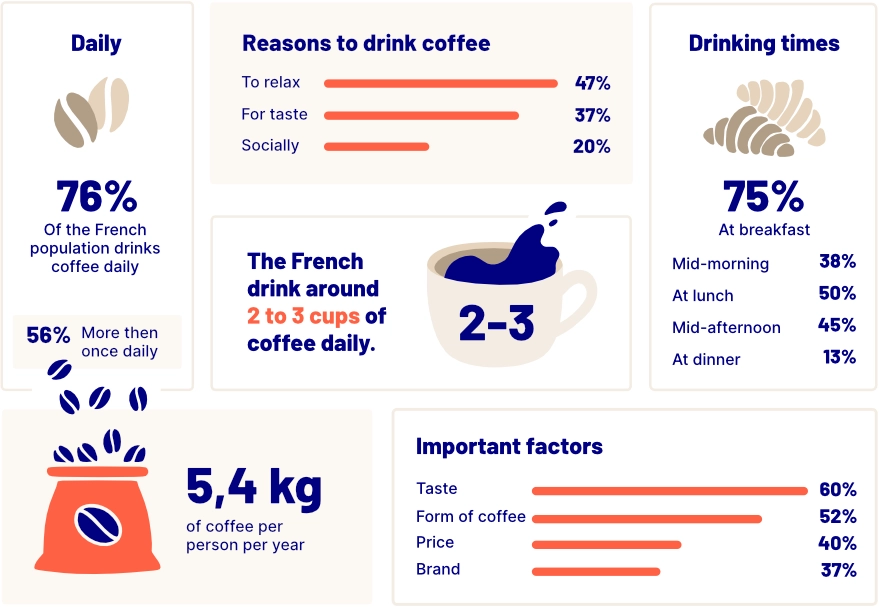
Short answer: a lot. France sits comfortably among the world’s biggest coffee‑drinking countries, with consumption around 350,000 metric tons a year, ranking roughly fifth globally. That includes everyone from a postman in rural Auvergne to a senator in the Palais du Luxembourg. Somewhere, right now, they are probably holding a cup.
Financially, it’s a serious business. Depending on which market report you look at, the French coffee market is worth well over 10 billion dollars and still growing steadily. What always amuses me is that instant coffee still does incredibly well here in revenue and growth terms. For a country that can be very snobbish about food, there is clearly a soft spot for “just add water” when mornings are chaotic. Convenience and nostalgia often win, even in France.
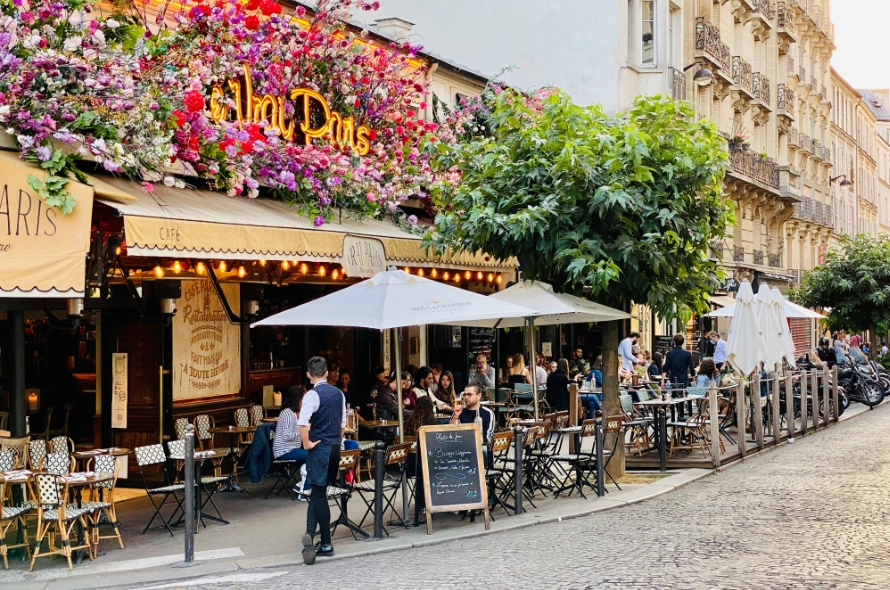
How to order coffee in France
French café menus often look deceptively short, but each little word hides a specific drink. Once you know the basics, you can walk in, order with confidence, and pretend you’ve been doing it all your life.
Un café
This is the default. Ask for “un café” and you’ll get a small espresso, nothing added. That’s the one my father used to knock back at the counter and the same one I order when I’m out.
Un café allongé
Literally a “lengthened” coffee, basically an espresso topped up with hot water. Think along the lines of an Americano. It’s for when you want to sip and think, not shoot and run.
Un café crème
Somewhere between a cappuccino and a milky coffee: espresso with a generous amount of hot milk and foam. Traditionally a morning thing; order one mid‑afternoon in an old‑school café and you might get a look.
Un café au lait
A little heavier on the milk and usually associated with breakfast, especially at home, often served in a bowl. In cafés it’s less common now, and many places will nudge you toward a “crème” instead.
Une noisette
This one is an espresso with a tiny splash of hot milk, the colour is hazelnut, hence the name. It’s a good option if you like the idea of a macchiato.
Un café Américain
A more generous black coffee, similar to what British or American drinkers might expect as a standard cup: espresso plus extra water, often in a bigger mug. It’s not on every menu, but most waiters will understand if you ask.
Un déca
Decaf. If you just say “un déca,” you’ll usually get a decaf espresso. You can combine it with anything above: “un déca crème,” “un déca allongé,” and so on.
Un café gourmand
This is the most fun one to order: a shot of espresso served with a little assortment of mini desserts or pastries. It’s a very French way of saying “I can’t choose just one dessert” after a meal, let’s just do more than one.
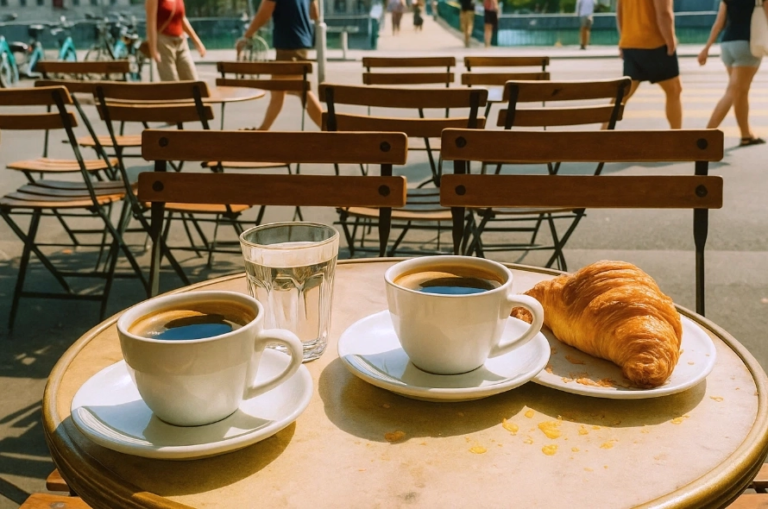
A rough rule: milky coffees belong to the morning, especially with breakfast; a simple espresso is standard after lunch or dinner, drunk on its own, with no food. Takeaway cups are still relatively rare outside stations and chains; the default is to actually stop, stand at the bar or sit on the terrace, and drink your coffee as an activity in itself.
Ordering at the bar is for when you’re in a hurry or just want that quick jolt, in > drink > out. Sitting down, especially outside, signals that you’re there to stretch the moment rather than the drink. You don’t see giant flavoured lattes with elaborate toppings much, and nobody expects the wifi password to be the main attraction. That’s one of the things I love most about the French coffee culture, it’s just coffee without the performance.
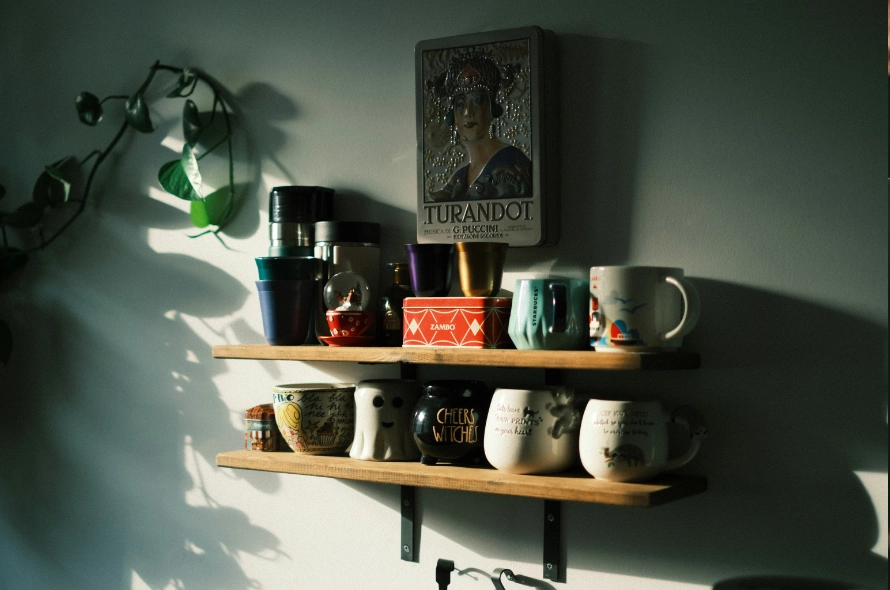
French coffee at home: a quick guide
Most French households aren’t full of gleaming, complicated espresso machines. The reality is more modest and to me, much more charming. A lot depends on what you grew up with, but some patterns repeat everywhere.
Whatever your method, do yourself a favour and have something small and sweet next to it, a madeleine, a square of chocolate, a financiers. Coffee and a little treat is a miniature ritual in itself, don’t you think?
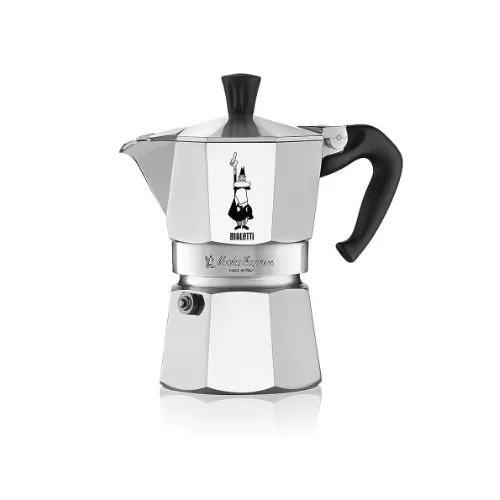
Bialetti Moka Express
Find it on Amazon >
Bialetti Moka Express
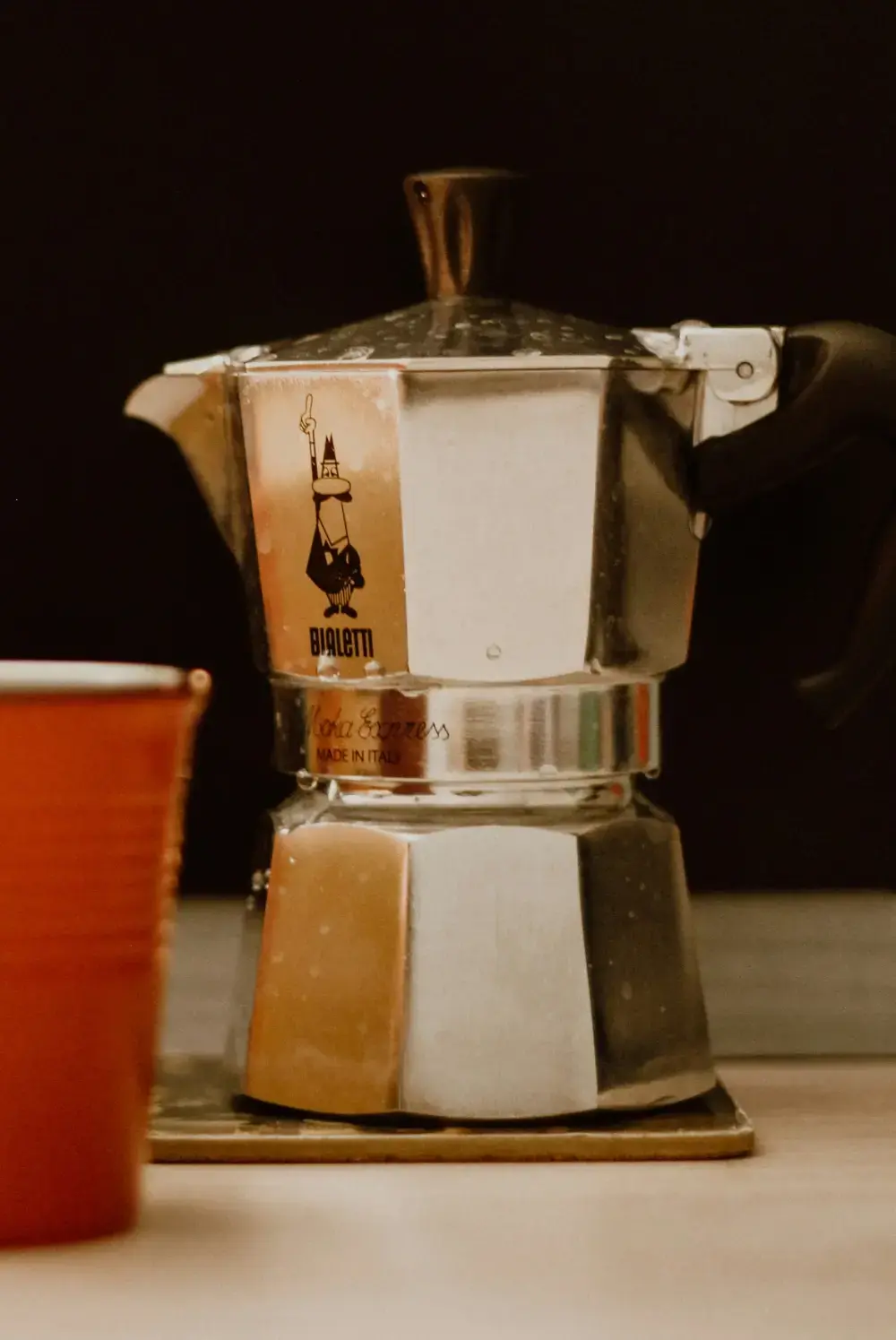
The little stovetop moka pot is technically Italian, but it has been adopted enthusiastically in France. The classic version is the Bialetti Moka Express, all aluminium angles and black handle, invented in the 1930s. You fill the base with water, spoon finely ground coffee into the filter, screw it together, and let it puff and gurgle on the hob.
What comes out is strong, concentrated, and wonderfully comforting. It isn’t quite espresso, but it’s in the same family. A lot of families still swear by it because it’s cheap, sturdy, and makes the kitchen smell like someone is properly awake.
Le Creuset French Press
Find it on Amazon >
Le Creuset French Press
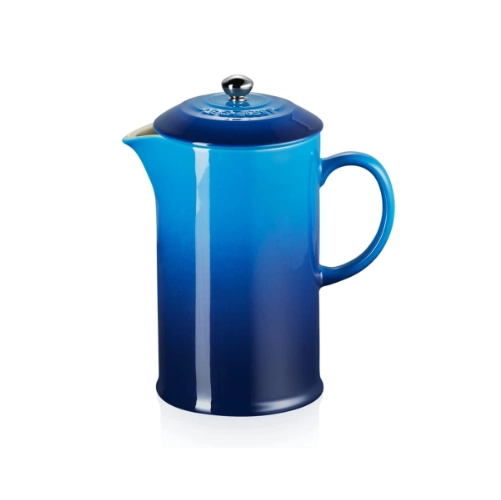
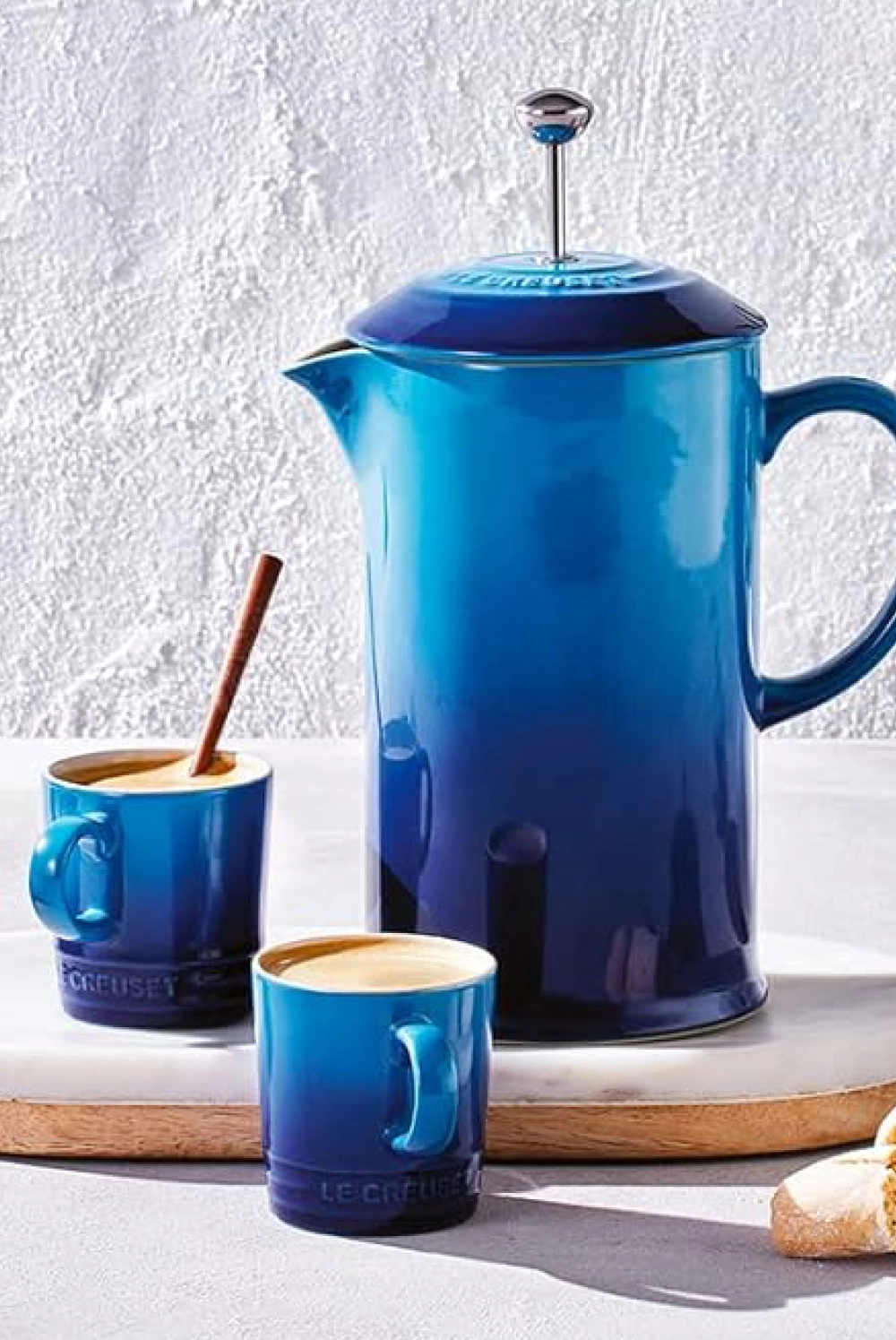
Despite the name, the French press is just as international, but we really do use it. You might hear it called a “cafetière à piston.” Coarse grounds, hot water, wait a few minutes and plunge. It’s simple, forgiving, and gives you a full‑bodied, slightly heavier cup that works especially well if you like sitting with a big mug rather than a tiny cup.
People who like control tend to love this method because you can tweak everything: the grind, the steep time, the coffee‑to‑water ratio. A Le Creuset version looks beautiful on the table, which never hurts.
Hario V60 Ceramic
Find it on Amazon >
My tiny morning dripper
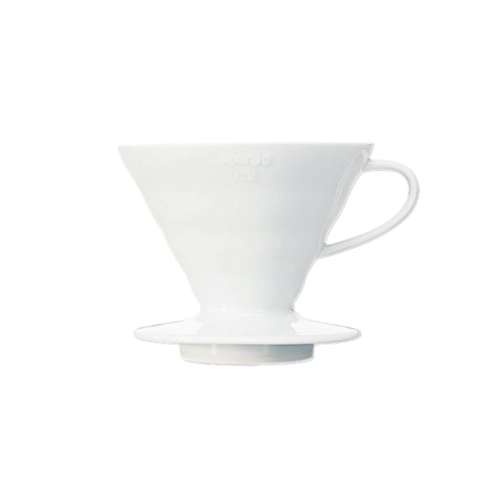
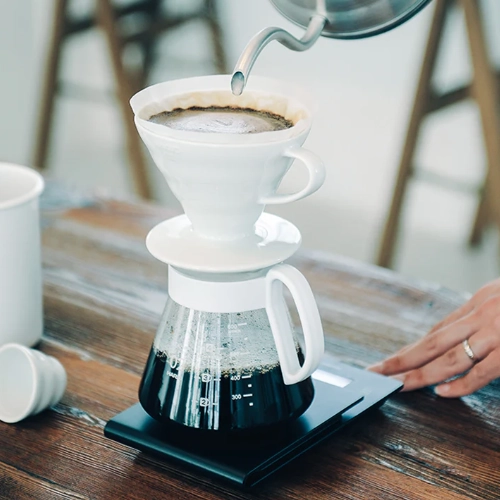
At home, my daily coffee is made with a Hario V60 ceramic dripper. It’s small, it sits directly over my cup, and it makes exactly one serving of coffee that is entirely mine (as my dear English husband drinks tea, obviously). FThe soothing ritual is to place the filter, spoon a spoonful of nice smelling coffee, followed by a gentle pour of hot water, and a couple of minutes later it’s done. When I’m finished, I throw the filter in the compost and rinse the dripper under hot water. That’s the whole cleaning routine.
My morning comfort blend is Carte Noir which is just perfect for every cup. Carte Noir has been part of French kitchen cupboards since the late 1970s, launched as a pure Arabica coffee at a time when quality was sliding. It’s still one of the brands you’ll most often see in friends’ houses.
Filter machines, pods, and new habits
The classic cafetière filtre (the drip filter machine) is still everywhere, especially in offices and homes where one cup will never be enough. It quietly produces pot after pot of fairly gentle coffee, and you can tell exactly when it’s mid‑morning in a French office by the smell. Supermarket shelves are full of pre‑ground blends designed for this, from very dark roasts that lean into that stereotypical French bitterness to lighter, breakfast‑friendly mixes.
Pods and capsules have slipped in over the past decade and are now firmly part of the landscape, especially for people who want speed and zero thinking at 7 a.m. Purists grumble that it sacrifices flavour and ritual; others will happily take the convenience. The truth is probably somewhere in the middle.
What I like is what’s happening alongside all that, there is a shift towards better beans. Small roasters, short roasting dates, bags that proudly tell you which farm they came from instead of just “Arabica blend.” Ethical sourcing and freshness used to be niche concerns, now they’re creeping towards the mainstream of French coffee culture.
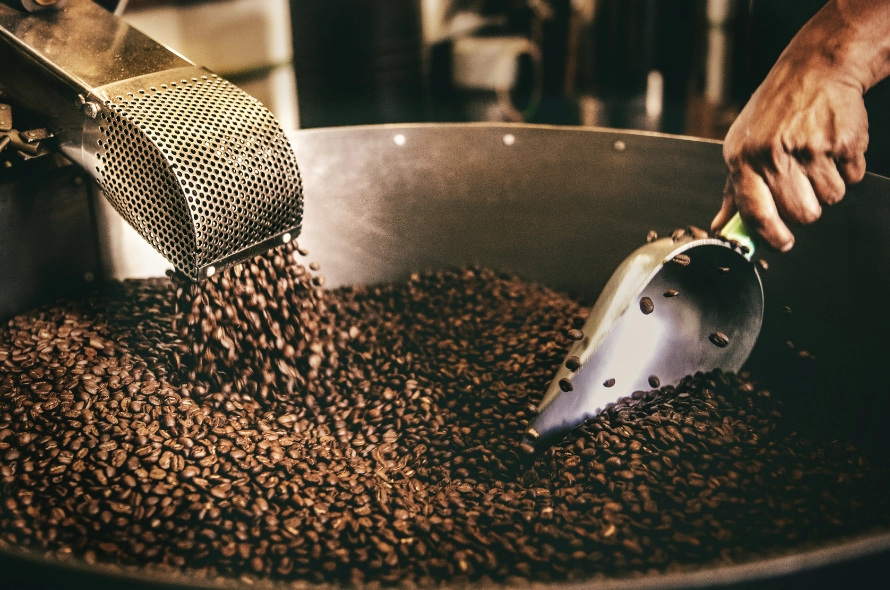
The French Coffees Worth Drinking at Home
If you want to recreate a French‑style coffee at home, the method matters, but the coffee matters more. These are the coffees worth trying for some Frenchness.
Fairtrade French Style Ground Coffee
Think of this as your reliable every‑morning option: dark, full‑bodied, with those classic notes of caramel and chocolate that people associate with “proper” French coffee. It behaves nicely in a moka pot or French press and feels strong without being aggressive.
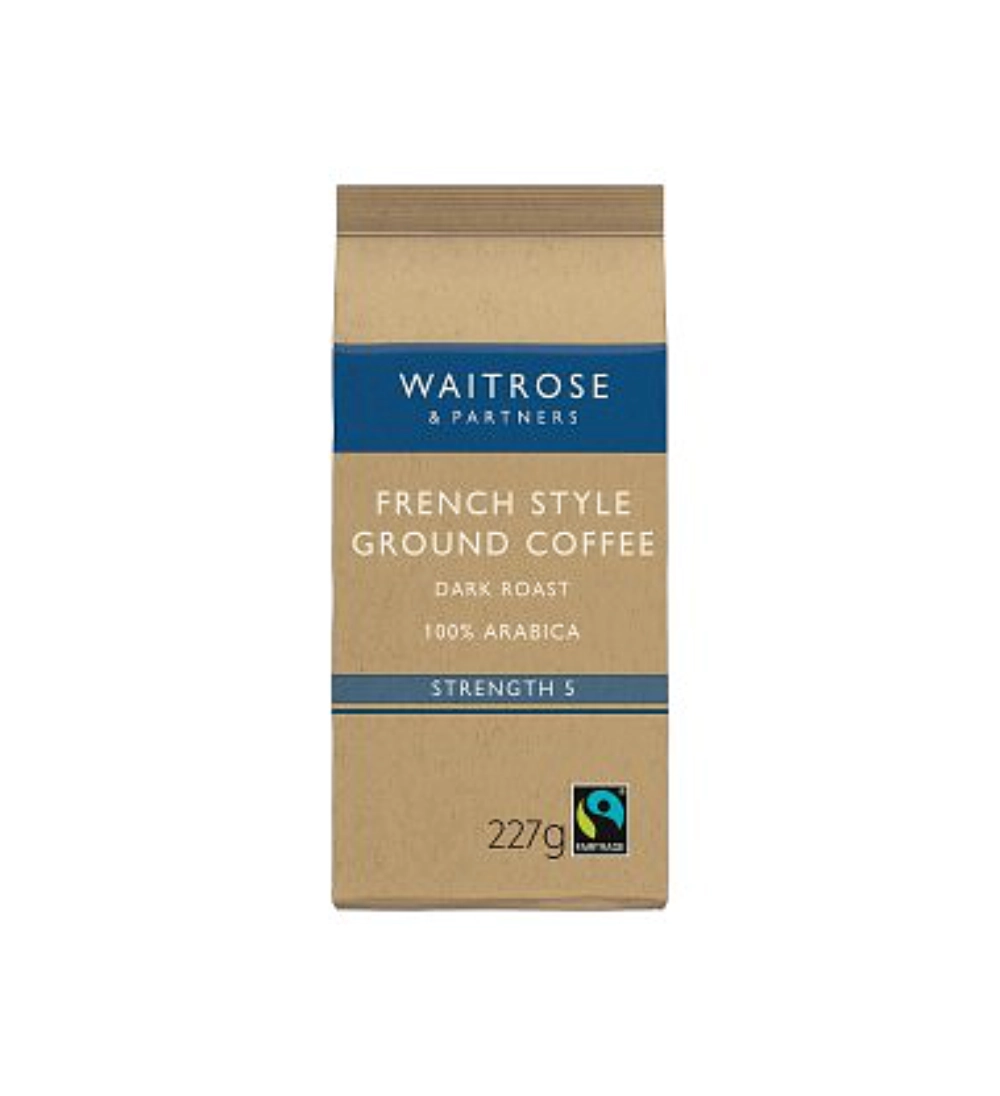
Fairtrade French Style Ground Coffee
Roast and ground coffee.Rich and full-bodied, with notes of caramel, chocolate and spice. 100% Arabica.
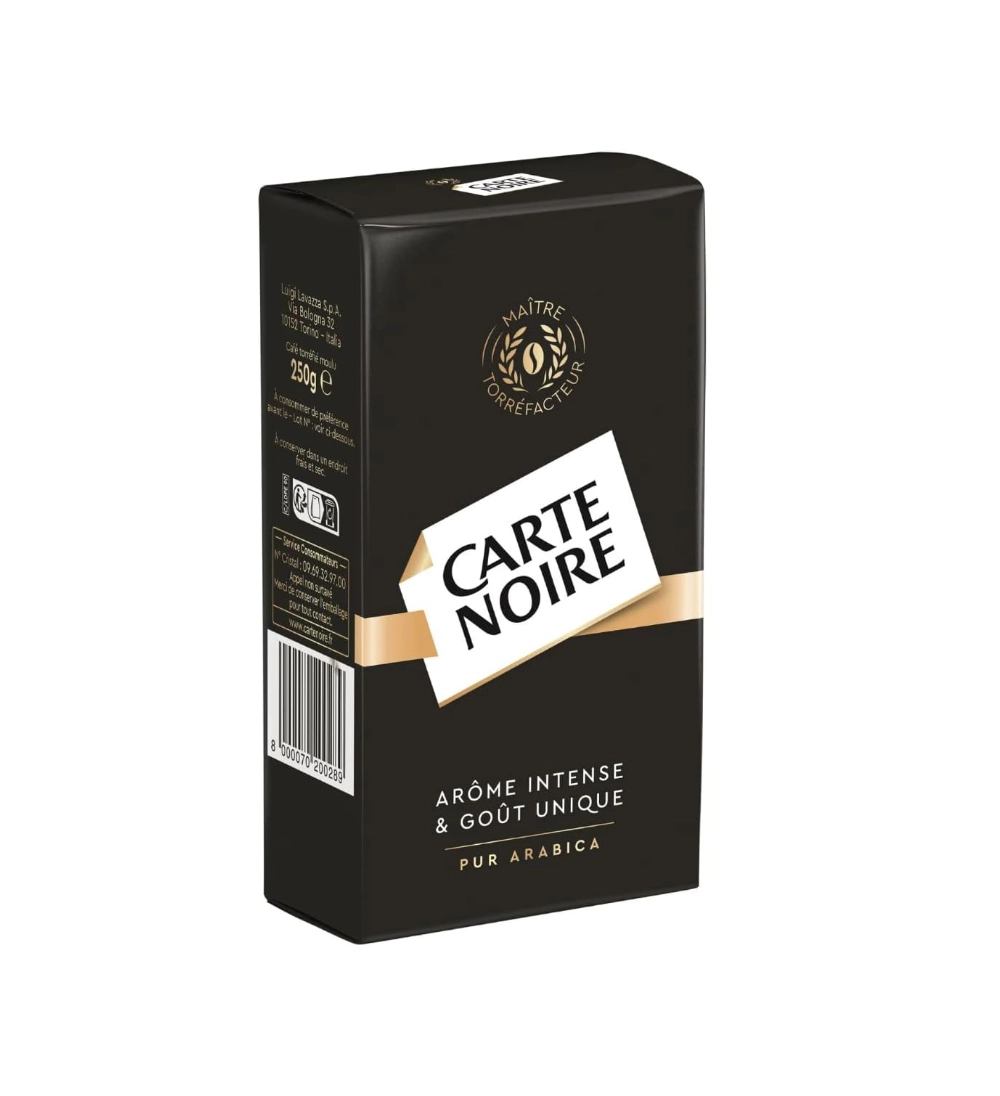
Carte Noire
Carte Noire is the brand that feels most like “home” to me. It’s been around since the late 1970s, created by a French coffee expert who wanted to put good Arabica back at the centre of everyday coffee. Their ambrée roast is slightly lighter than the traditional very dark French style, with notes of cereal and dried fruit. If you’ve ever stayed in a French family home, chances are you’ve already tasted it without noticing the name.
L’OR Espresso Onyx Coffee Beans
If you love espresso and want something with real punch, L’OR’s Onyx blend is made for that. It’s a dark roast mix of Arabica and Robusta, rated right at the intense end of their scale. Freshly ground and used in an espresso machine or moka pot, it gets you very close to the small, strong coffee you’d be handed at a bar in France.
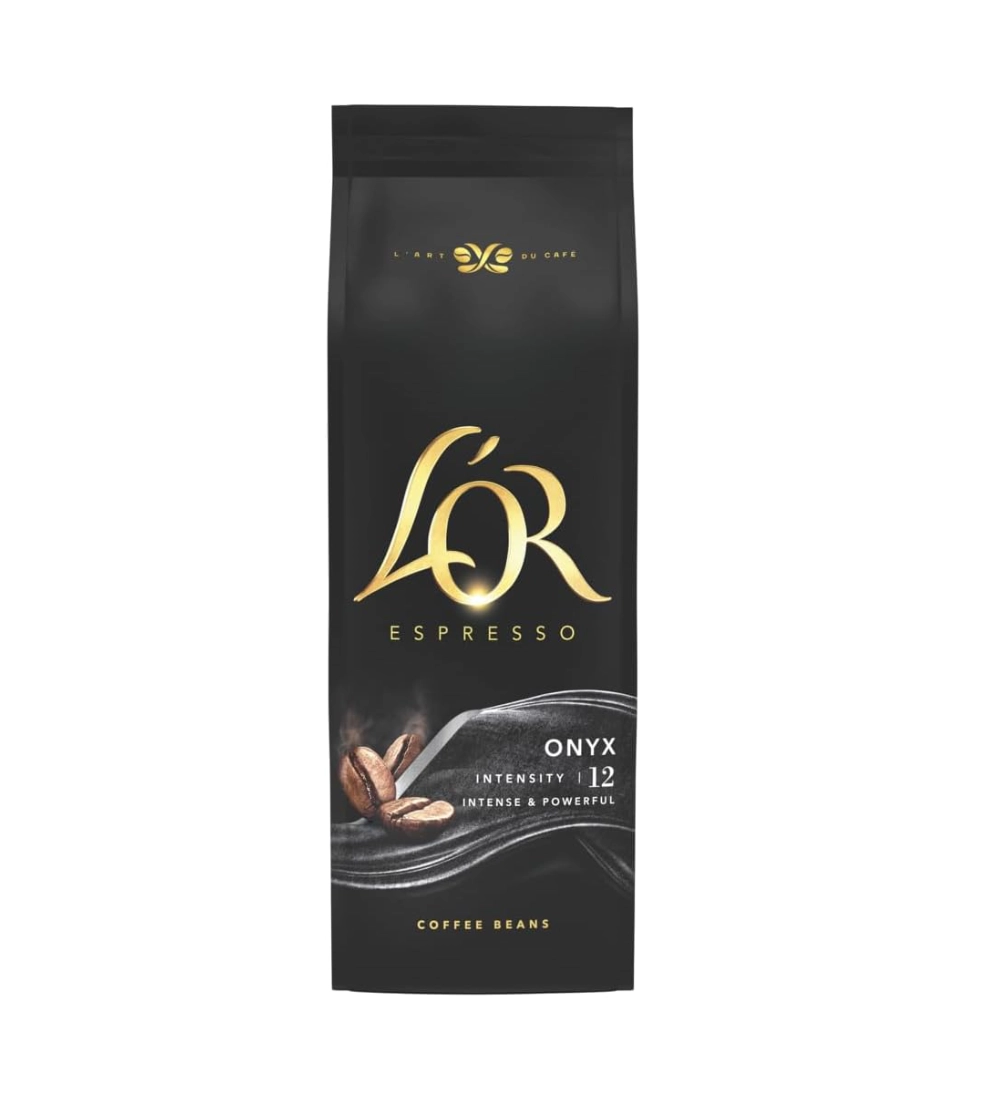
L’OR Espresso Onyx Coffee Beans
Premium blend of dark roasted Arabica and Robusta beans, intensity 12/13, delivering a pronounced spicy aroma and full-bodied espresso character.
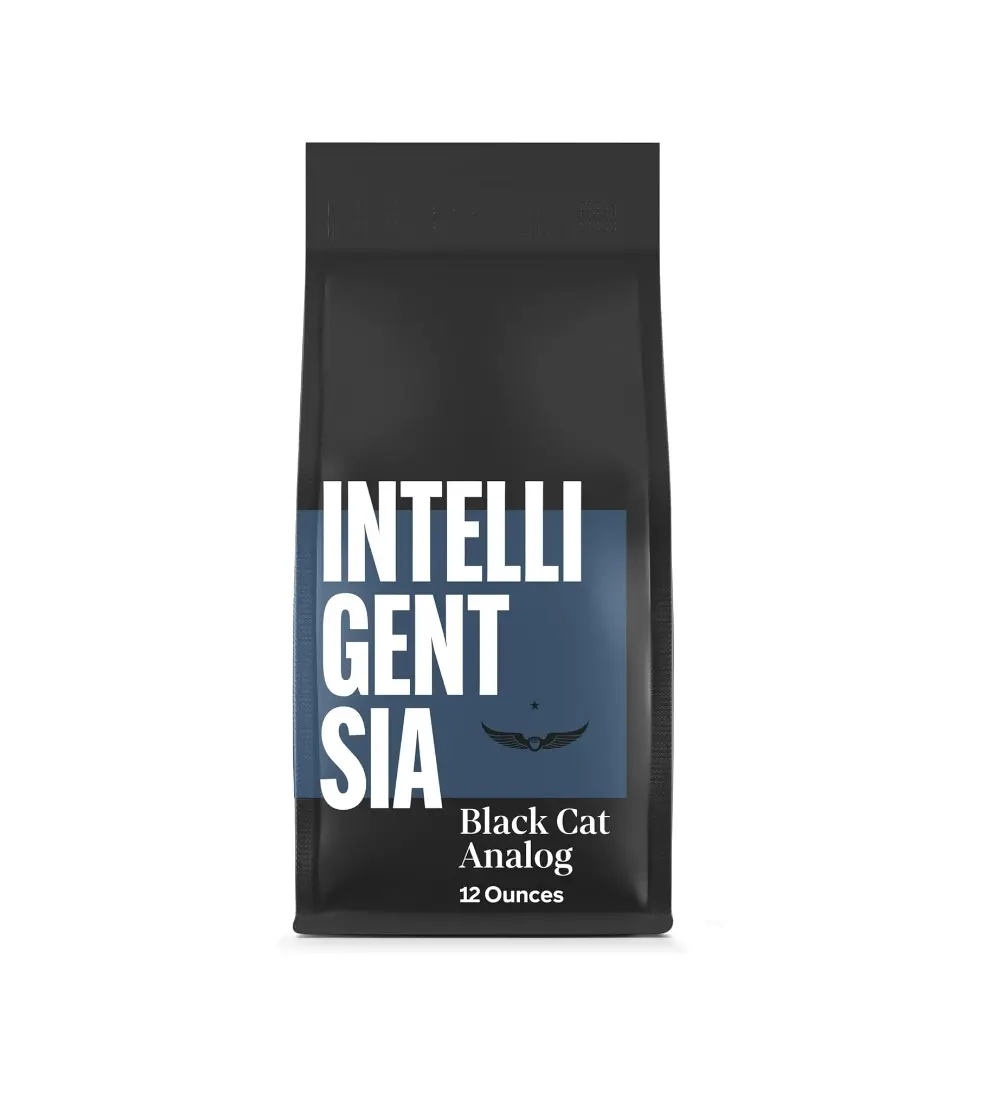
Intelligentsia Coffee Beans
This one isn’t “French” as such, but I include it because more and more French coffee drinkers are moving in this direction: medium roast, single‑origin, notes that sound like a dessert menu (dark chocolate, toasted marshmallow, that sort of thing). It’s lovely in a French press or pour‑over when you want to really taste what’s in the cup instead of just using it to wake up.
Conclusion
In the end, what I love most about French coffee culture is the taste and the pace that comes with it. A quick espresso at the bar is still a pause, however brief and a bowl of coffee at breakfast is a small ceremony. And please do order a “café gourmand” after dinner if you’re in France, it’s a way of stretching the pleasure of food just a bit further.
Now, I’d love to hear from you: What’s your go-to coffee style, and how do you like to enjoy it? Have you experienced French coffee culture firsthand, or are you inspired to try? Do you have a favourite café ritual or a brand you swear by? Share your thoughts and stories in the comments below.
This post may contain affiliate links. If you buy through them I earn a small commission at no extra cost to you, and it helps keep this blog running. Please read my disclosure policy for more information. I am grateful for your support.