 February 10, 2026
Disclosure: This post may contain affiliate links which provide us a small commission when used for purchase. Please read my disclosure policy for more information. I am grateful for your support!
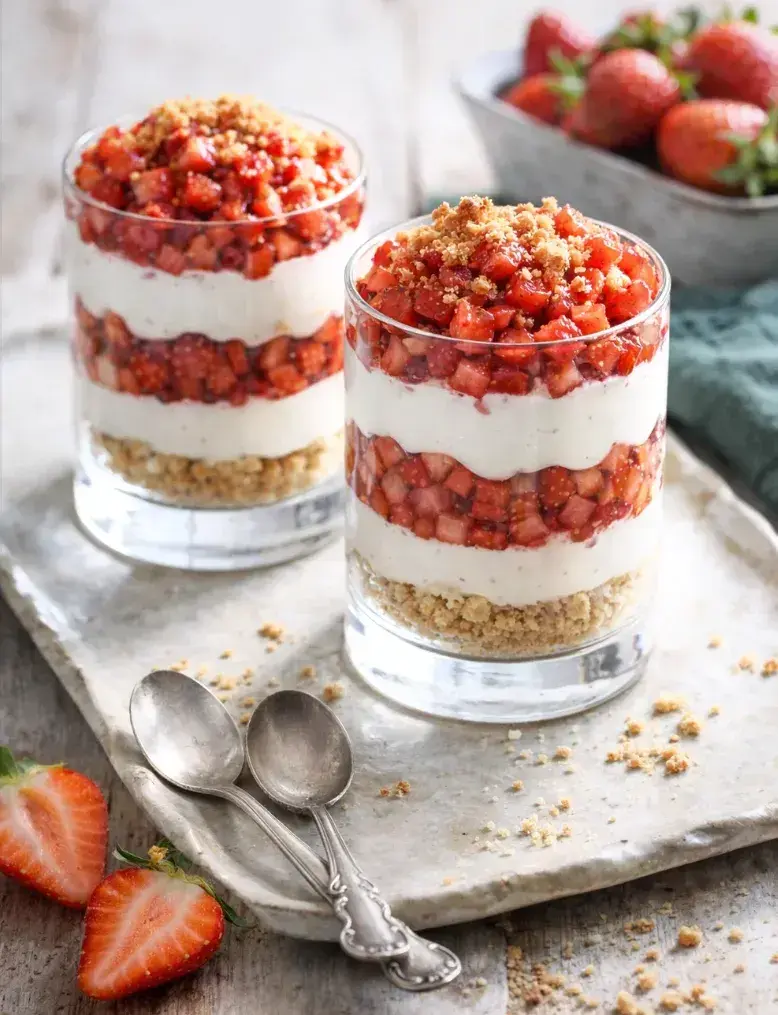
When summer knocks on the door, you have to make the most of every bit of it, the fresh fruit especially. I learned this layered strawberry dessert from a friend who had us over one evening, and, boy oh boy, every bite was a little explosion of textures and flavours. My taste buds were jumping happy!
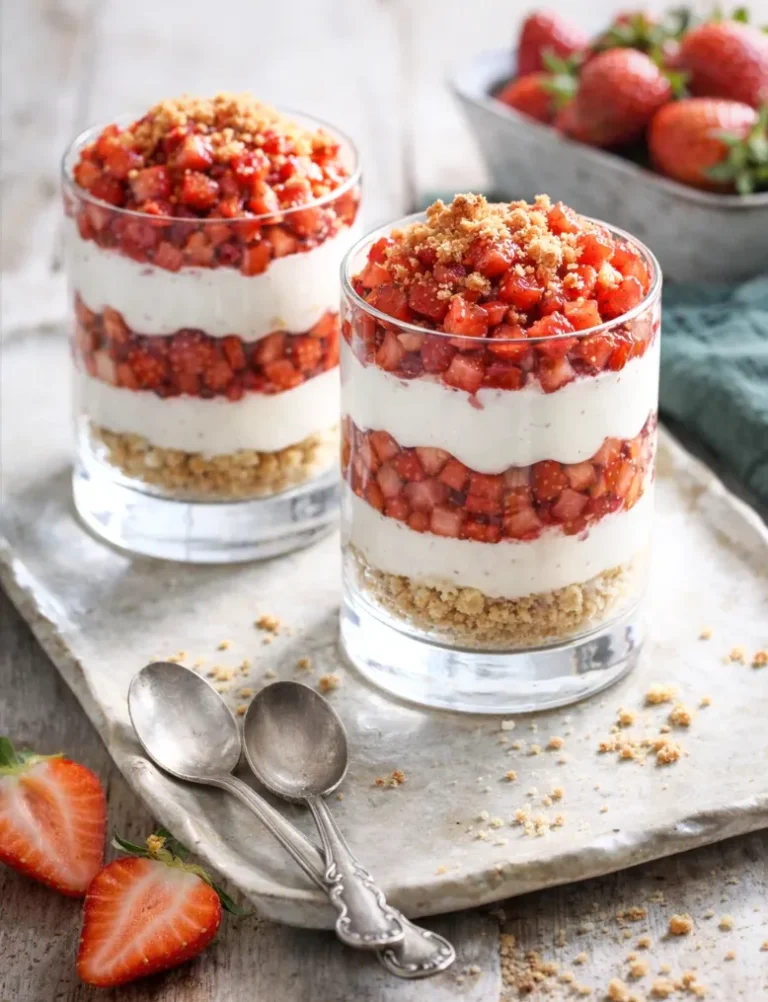
She served them in pretty little glass tumblers, or verrines, as we call them in French, which we use for appetisers and individual desserts like this. It looks sophisticated and grand, and because it’s layered and compact, your spoon gets a bit of everything in one go. Oh and, if you make this recipe, you’ll pick up a new way of French cutting too.
Table of Contents
A little cutting trick: the brunoise
Here’s the “new way of cutting” I mentioned. Instead of slicing the strawberries, dice them into a fine brunoise, tiny, even cubes about 3 to 4mm. It sounds fussy, but it’s quick once you get going, and it makes a real difference: small even cubes layer neatly, pack down without gaps, and mean every spoonful gets fruit, cream and biscuit together rather than a great slippery slice of strawberry sliding off the spoon. It also looks beautiful through the glass!
Ingredients
- Strawberries – Ripe, fragrant and in season. This dessert is only as good as the fruit, so summer strawberries, not pale winter ones.
- Mascarpone – The rich Italian cream cheese that gives the cream its body and holds it stable. Don’t substitute a low-fat soft cheese, it won’t set.
- Double cream – Whipped with the mascarpone for a light but stable cream. Very cold, so it whips well.
- Icing sugar – Just a little, to lightly sweeten the cream without graininess.
- Vanilla – A pod or good extract, to perfume the cream. It’s the classic partner to strawberries.
- Sablé breton (or butter shortbread) – Crushed, for the crisp base layer. Salted, buttery and substantial.
How to make layered strawberry dessert
1. Make the mascarpone cream
Whip the very cold double cream with the icing sugar and vanilla to stiff peaks, then fold in the mascarpone gently (in batches, on low speed or by hand) until smooth. Don’t overwork it once the mascarpone’s in, or you’ll knock the air out and it’ll turn grainy. You want it smooth, thick and holding its shape.
2. Prep the biscuits and strawberries
Crush the sablés bretons roughly, into a mix of crumbs and chunkier bits, not fine dust, so the base keeps some texture. Hull and dice the strawberries into that fine brunoise.
3. Layer up
Start with a layer of crushed biscuit in the bottom of each glass, pressed down gently, then a layer of mascarpone cream, then strawberries, and repeat, finishing however you like. Because the glasses show the layers, take a moment to keep them neat down the sides. Serve straight away for the crispest biscuit, or chill briefly if you prefer it cold and firm.
Tools for this recipe
Check out my favorite kitchen essentials and cookware!
- Use an electric mixer to whip the cream to stiff peaks quickly.
- Use straight-sided tumblers so the layers show clearly from the outside.
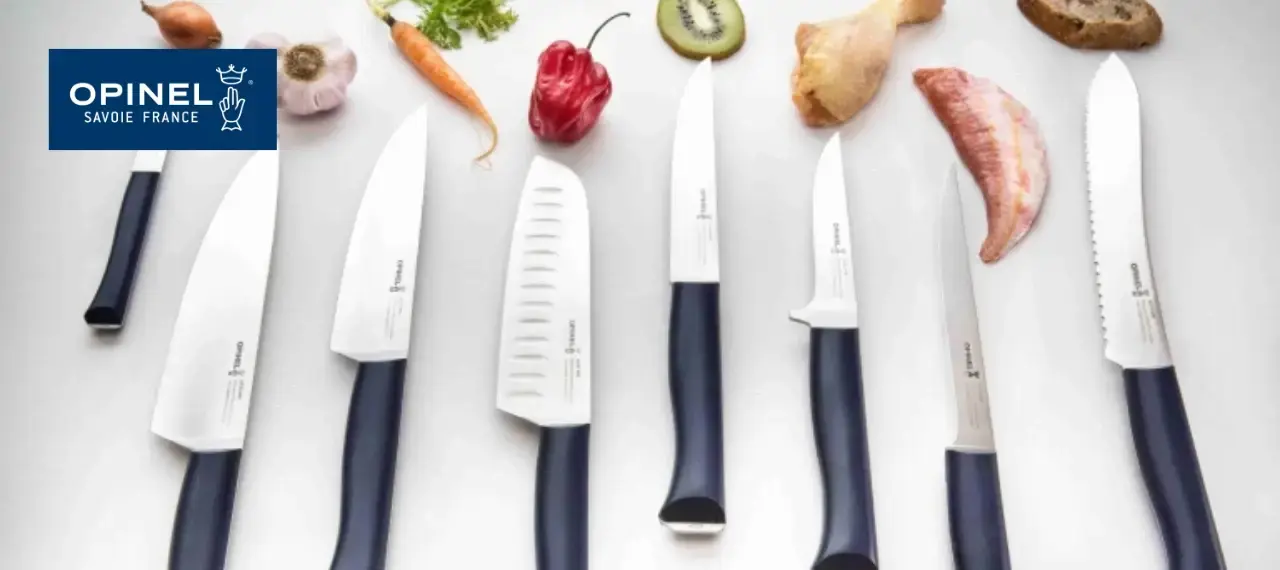
- Use a sharp knife to dice the strawberries into a fine, even brunoise.
- Use a food processor (or a bag and a rolling pin) to crush the biscuits.
Tips for success
- Use ripe, in-season strawberries. This dessert is only as good as the fruit, and no amount of cream will rescue pale, watery winter strawberries. Make it in summer when they’re fragrant and sweet.
- Don’t overwork the mascarpone cream. Fold the mascarpone into the whipped cream gently and stop as soon as it’s smooth. Overmixing knocks out the air and can make it grainy or split.
- Dice the strawberries small and even. The fine brunoise layers neatly, packs without gaps, and gets fruit into every spoonful. Big slices slide around and make the layers untidy.
- Keep the cream lightly sweet. Just enough sugar to balance the fruit, no more. The strawberries should lead; a too-sweet cream buries them.
- Assemble close to serving for crisp biscuits. The biscuit base softens as it sits, so serve within 30 minutes for crunch, or chill a few hours if you actually prefer a softer, cake-like base.
How to store it
- These are best assembled fairly close to serving, since the biscuit base softens the longer it sits in the cream. That said, they hold up better than most layered desserts thanks to the mascarpone.
- Assembled, they keep in the fridge for a few hours, the mascarpone keeps the cream stable, so it won’t weep. Just know the biscuit layer goes from crisp to cake-like over time, which some people actually prefer. If you want them crisp, assemble within 30 minutes of serving; if you don’t mind a softer base, a few hours ahead is fine.
- You can prep the components further ahead and keep them separate: the mascarpone cream keeps covered in the fridge for a day, the diced strawberries a few hours (they weep if left too long), and the crushed biscuits in an airtight container for days. Then layer up just before serving. Don’t freeze the assembled dessert, the fruit and cream don’t thaw well.
More fruit dessert recipes to try
Variations
- Less sugar. The cream is only lightly sweetened to begin with, so you can cut the icing sugar back further and let the ripe fruit carry it, macerating the strawberries in just a squeeze of lemon rather than sugar. With really good summer fruit, you barely need any sugar at all.
- Other soft fruit. Raspberries, blackberries, or diced peaches or nectarines all work beautifully. The brunoise suits any soft fruit that dices cleanly.
- Add a splash of liqueur. A tablespoon of Cointreau or Grand Marnier folded into the cream, or the diced strawberries macerated in a little orange liqueur for 10 minutes before layering, for a grown-up version.
- Add lemon or basil. A little lemon zest in the cream, or a few finely shredded basil leaves through the strawberries, both lovely with the fruit.
- Make it a trifle. Scale it up into one big glass bowl instead of individual verrines, layering the same way, for a sharing dessert.
- Chocolate base. Swap the sablé breton for crushed chocolate biscuits, since chocolate and strawberry is never a bad idea.
FAQ
What is a verrine?
A verrine is a small glass used to serve individual layered dishes, sweet or savoury, in French cooking. The word just means “small glass.” They became fashionable in French restaurants in the 1990s as a pretty way to show off layers, and they’re popular at home because they look impressive with very little effort.
Can I make this strawberry dessert ahead of time?
Partly. The mascarpone keeps the cream stable, so assembled verrines hold in the fridge for a few hours, but the biscuit base softens over time. For a crisp base, assemble within 30 minutes of serving; or prep the cream, fruit and crushed biscuits separately ahead and layer just before serving.
What can I use instead of sablé breton?
Any good buttery shortbread works, or even digestive-style or sugar biscuits. You want something rich, slightly salty and sturdy enough to hold up in the cream. Avoid very hard biscuits, which won’t soften pleasantly, or very soft ones, which turn to mush.
Why mascarpone instead of just cream?
Mascarpone gives the cream body, richness and stability, so it holds its shape in the layers and won’t weep for several hours. Whipped cream alone would be lighter but less stable and more likely to collapse. The mascarpone also adds a subtle richness that suits the strawberries.
Can I use frozen strawberries?
Fresh is much better here, since frozen strawberries go soft and watery when thawed and would make the layers weep. This dessert is really about showcasing ripe, fresh summer fruit. If you only have frozen, you’re better off making a different kind of dessert, like a compote or coulis.


 Prep Time 20 minutes
  Total Time 20 minutes
  Servings 6
Description
Ingredients
For the base
- 200 gr sablés bretons or other butter shortbread cookies
For the mascarpone cream
- 250 gr mascarpone
- 200 ml double cream very cold
- 30 gr icing sugar
- 1 vanilla pod or 1 tsp vanilla extract
For the strawberry layers
- 600 gr strawberries
Equipment


Instructions
1. Make the mascarpone cream
- Whip the very cold double cream with the icing sugar and vanilla on medium speed to stiff peaks, about 3 to 4 minutes. Fold in the mascarpone in three batches, gently (by hand or on low speed), until smooth. Don't overwork it. Set aside.
2. Prep the biscuits and strawberries
- Crush the sablés bretons roughly (in a bag with a rolling pin, or pulsed in a processor), leaving some chunky bits. Hull and dice the strawberries into a fine brunoise (tiny 3–4mm cubes).
3. Assemble
- Start with 2 to 3 tbsp crushed biscuit in each glass, pressed gently to settle. Add 2 tbsp mascarpone cream, then a layer of strawberries. Repeat, finishing however you like.
4. Serve
- Serve immediately for a crisp base, or chill 20 to 30 minutes for a colder, firmer set. At room temperature the cream is softer and more mousse-like; chilled, it firms up.
Notes
- If you can’t find sablés bretons, use any good buttery shortbread or sugar cookies. Avoid anything too hard or it won’t soften in the cream.
- The mascarpone helps the whipped cream hold its shape for several hours. If you do want to make these ahead, they’ll keep in the fridge for up to 2 hours without the biscuits getting soggy.
- Strawberry swap: Out of season, swap strawberries for raspberries, blackberries, or diced peaches in summer. The brunoise works with any soft fruit that dices cleanly.
- You can add a tablespoon of Cointreau or Grand Marnier in the cream to add depth. Or macerate the diced strawberries in a splash of orange liqueur for 10 minutes before layering.
- Anything clear as serving glasses works, wine glasses, tumblers or mason jars. The layers are the point, so make sure people can see them.
- If you want the biscuits to stay extra crispy, assemble and serve within 30 minutes. For softer, cake-like biscuit layers, let them sit for a few hours.
Share your feedback and spread the love!
If you try this recipe, I’d love to hear how it turns out! Leave a ★★★★★ rating and your thoughts in the comments, it helps fellow French foodies discover this recipe too. Snap a photo and tag @obviously.french on Instagram. Come talk about it in our Facebook group. And don’t forget to save this recipe to Pinterest so you’ll always have it handy for your next French-inspired meal!