Tarte au Citron
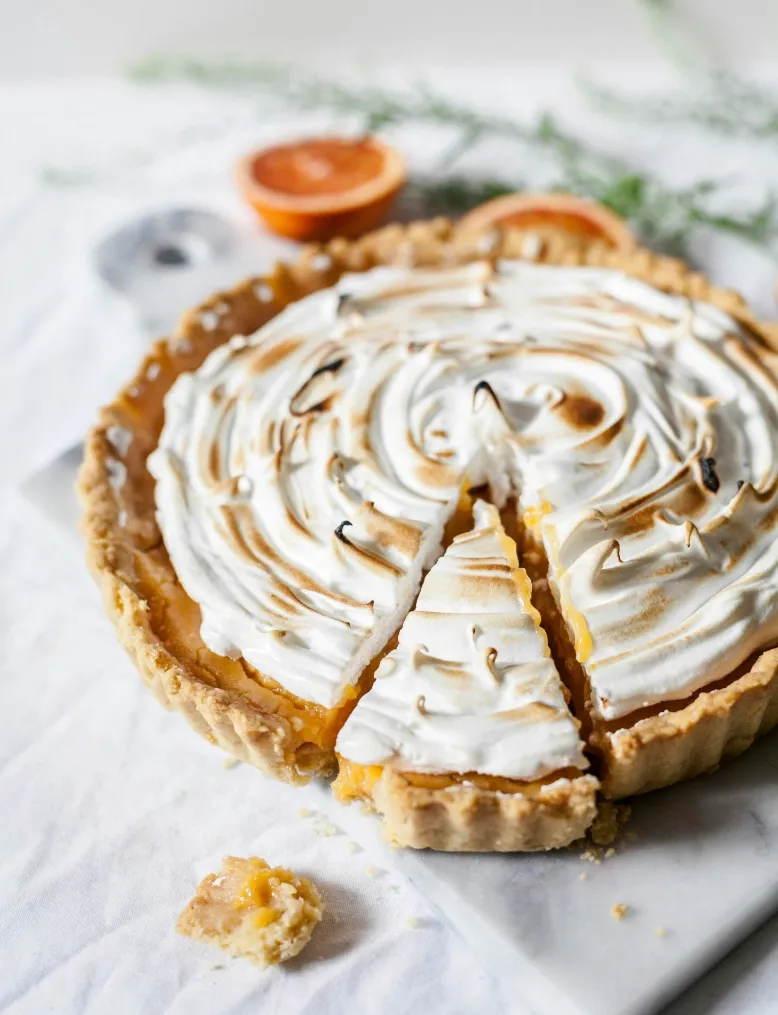
Buttery, crisp pâte sucrée that crumbles perfectly under your fork, filled with intensely sharp lemon curd that's silky smooth and makes your mouth pucker in the best way. The meringue on top is torched until the peaks turn golden and taste faintly of marshmallow and burnt sugar. It's sweet, it's sour, it's rich but somehow refreshing, and after one slice you'll immediately want another.
Ingredients
For the pâte sucrée (sweet pastry)
- 250 gr plain flour
- 125 gr unsalted butter cubed
- 100 gr icing sugar
- 1 egg
- 1 pinch salt
For the lemon curd filling
- 3 egg
- 100 gr caster sugar
- 120 ml lemon juice about 4-5 lemons
- 2 lemons for the zest
- 80 gr unsalted butter
- 15 gr corn starch
For the Swiss meringue
- 4 egg
- 200 gr caster sugar
- 1 pinch salt
Equipment
- food processor or mixing bowl
- baking beans or dried beans
- saucepan for bain-marie
- kitchen thermometer helpful but not essential
Instructions
1. Make the pastry
- Put the flour, butter, icing sugar, and salt in a food processor. Pulse until it looks like breadcrumbs. Add the egg (and vanilla if using) and pulse again until it just comes together. Don't overwork it.Turn it out, bring it together into a disc, wrap in cling film, and chill for at least an hour.
2. Roll and line the tin
- Roll the pastry out on a lightly floured surface to about 3mm thick. Line your fluted flan dish, pressing it gently into the corners without stretching. Trim the edges, prick the base with a fork, and chill for another 30 minutes.
3. Blind bake the pastry
- Heat your oven to 180°C (160°C fan). Line the pastry with baking paper, fill with baking beans, and bake for 20 minutes. Remove the beans and paper, then bake for another 8-10 minutes until pale golden and dry. Patch any cracks with leftover raw pastry while it's hot. Let it cool.
4. Make the lemon curd
- Whisk the eggs, sugar and corn starch together in a double boiler. Add the lemon juice and zest. Set the bowl over a pan of barely simmering water "au bain marie" (don't let the bowl touch the water).Stir constantly with a wooden spoon for 10-15 minutes until it thickens enough to coat the back of the spoon. You're looking for a custard-like consistency. Take it off the heat, add the butter cubes, and stir until melted and glossy.Pour the curd into the cooled pastry case while it's still warm. Smooth the top. Let it cool to room temperature, then chill for at least 2 hours until properly set.
5. Make the Swiss meringue
- Put the egg whites, sugar, and salt in a heatproof bowl. Set it over a pan of simmering water (au bain marie again) and whisk constantly until the sugar dissolves completely, about 3-5 minutes. You can test by rubbing a bit between your fingers; it shouldn't feel grainy. The mixture should reach about 70°C if you've got a thermometer.Take it off the heat and whisk with an electric mixer on high speed for 5-7 minutes until you've got stiff, glossy peaks and the bowl has cooled to room temperature. The meringue should be thick enough to hold its shape.
6. Top and torch
- Spoon or pipe the meringue over the chilled lemon filling. You can go rustic with peaks and swirls, or pipe it neatly if you're feeling fancy. Make sure the meringue touches the pastry edge all the way around, this stops it shrinking.Use a blowtorch to caramelise the meringue until golden brown in spots. Keep it moving so you don't burn it. No blowtorch? Stick it under a hot grill for 1-2 minutes, watching it like a hawk.Let it sit for 10 minutes before slicing. Use a sharp knife dipped in hot water between cuts for clean slices.
Notes
- Swiss meringue vs Italian vs French: Swiss is the most stable for this. Italian meringue (with hot sugar syrup) is fancier but fussier. French meringue (just whipped whites and sugar) weeps and doesn't hold as well.
- The curd needs to be properly set before you add the meringue, or it'll slide around when you try to spread it.
- Meringue weeping: If liquid pools under your meringue, the curd was too warm when you topped it, or the meringue wasn't cooked enough over the bain-marie.
- Make ahead: You can make the tart base and lemon curd a day ahead. Add the meringue a few hours before serving for the best texture.
- 485No blowtorch? The grill works, but watch it carefully. It can go from perfect to burnt in seconds.