Brillat-Savarin and 4 More French Triple Cream Cheeses
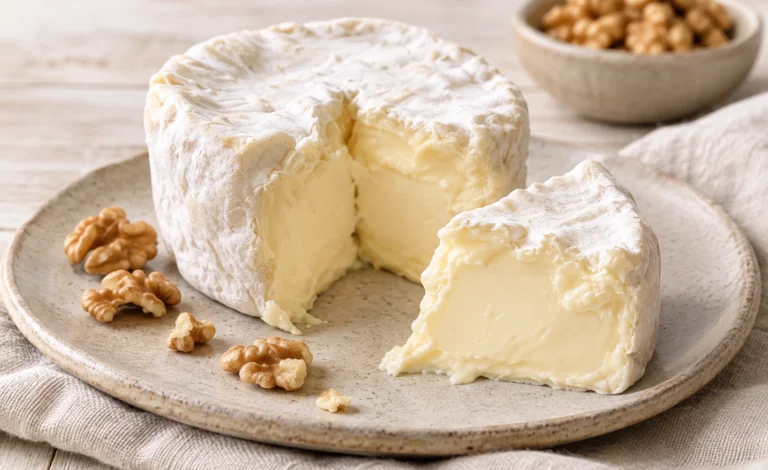
Brillat-Savarin is the triple crème most people have heard of, so it’s a good place to start. Triple crème is one of those phrases that sounds like marketing but actually has a legal definition in France. A double crème has between 60% and 75% fat in dry matter, and a triple crème has at least 75%. Those figures are measured in the dry matter, which is why the fat on the label looks lower than you might expect.
All five of these cheeses are soft, white and bloomy-rinded, ripened by the same mould that gives Camembert its coat. The difference is the cream. Each one has extra cream added to the milk before the curd forms, so the inside is thick and almost mousse-like. I’ve put them roughly in order from the gentlest to the most intense, though the order depends a lot on how ripe each one is.
The pillar guide to bloomy rind cheeses covers the basics of how the rind forms, so start there if you’re new to the family.
Table of Contents
Brillat-Savarin
Made in
Normandy and Burgundy, with most production in Burgundy and some in Normandy and Île-de-France
Milk
Cow’s milk, enriched with cream
Aged
1 to 2 weeks
AOP/PDO Status
No AOP. It holds a PGI (protected geographical indication) since 2017
Fat content
At least 72% in dry matter (around 40% overall)
Best Time
All year
Where it comes from
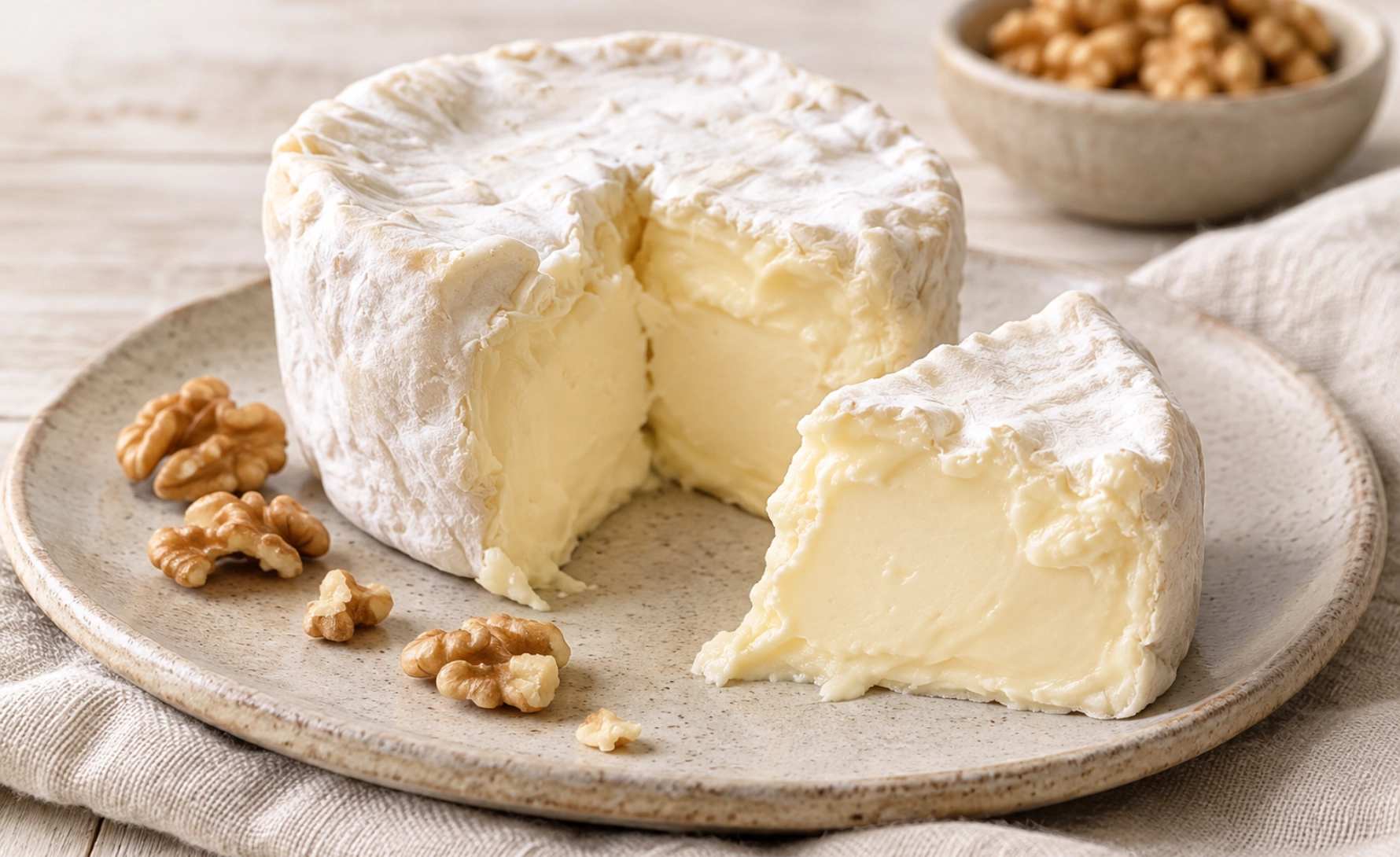
The cheese was first made around 1890 near Forges-les-Eaux in Normandy, under names like Excelsior and Délice des Gourmets. In the 1930s, the Androuët family renamed it after Jean Anthelme Brillat-Savarin, the 18th-century gastronome who wrote about food and pleasure at the table. The family history is well documented, but the early Normandy origin is the version most sources agree on, so treat the dates as approximate.
The rind is thin, white and downy. Inside, the paste is smooth and very pale.
What it tastes like
Young Brillat-Savarin is firm enough to slice, with a clean, milky richness and a light lemony tang. As it ripens over a week or two, the middle turns soft and spreadable, and the flavour becomes more buttery and mushroomy near the rind. It’s rich without being heavy, and that balance is what keeps people coming back to it.
How to eat it
Take it out of the fridge about 30 minutes before serving so the paste softens. It’s lovely with Champagne or a crémant, which cuts through the cream. Spread it on crusty bread or fruit bread with some fresh strawberries, or try it with a little fig jam. In the US and UK, it’s usually sold as a pasteurised cheese in cheese shops and supermarket cheese counters, so you won’t have to hunt for it.
Délice de Bourgogne
Made in
Burgundy, at Fromagerie Lincet
Milk
Pasteurised cow’s milk, with added cream
Aged
At least 7 days
AOP/PDO Status
No AOP. The name is a registered trademark of Fromagerie Lincet
Fat content
About 75% in dry matter
Best Time
All year
Where it comes from
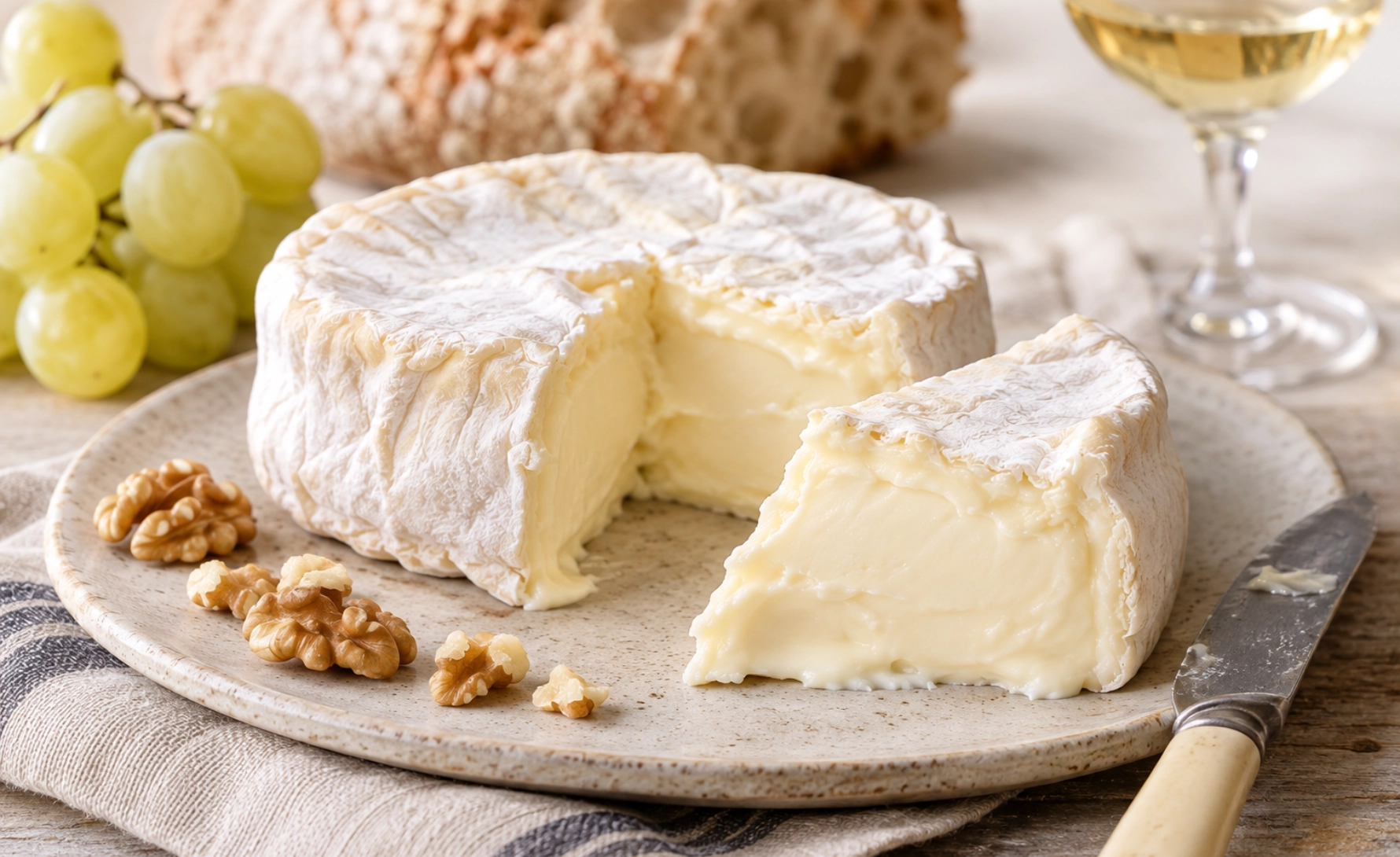
Jean Lincet developed Délice de Bourgogne in 1975, and it’s modelled on the older Brillat-Savarin style. Lincet describes it as a Burgundian triple crème, although it’s a recent creation next to Brillat-Savarin. Its rind is thicker and more pronounced than Brillat-Savarin’s, with a white, frothy bloom.
What it tastes like
Délice de Bourgogne is milky and sweet when it’s young, with a crème fraîche tang. Near the rind, it develops a gentle mushroomy earthiness. It’s one of the easiest triple crèmes to find in the US and UK, which is one reason it’s such a common starter.
How to eat it
Serve it at room temperature with a glass of Crémant de Bourgogne or a richer white from the Côte de Beaune. A spoonful of fig or apple preserve works well too. It spreads easily, so you don’t need to cut it like a wedge of Brie.
Saint-André
Made in
Coutances, in the Manche department of Normandy
Milk
Cow’s milk, enriched with cream
Aged
Not specified
AOP/PDO Status
No
Fat content
Triple crème, so at least 75% in dry matter
Best Time
All year
Where it comes from
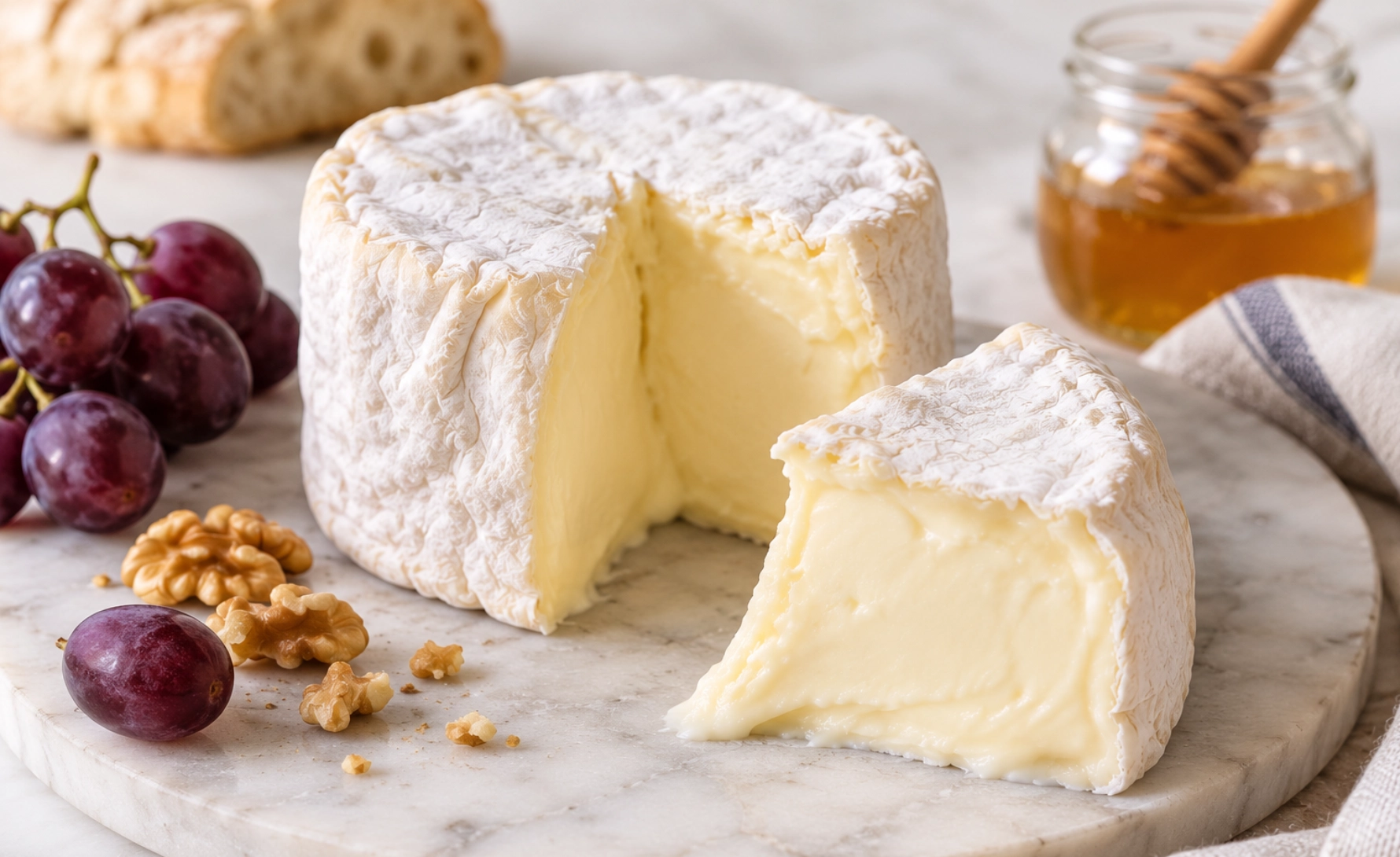
Saint-André is known as the “heavenly cheese” in many shops, which is a nickname rather than an official name. It comes from Coutances, in the same part of Normandy as the early triple crèmes. The rind is edible and bloomy, and under it the paste is dense and creamy, with a texture that sits between butter and mousse.
What it tastes like
It’s very rich and buttery, with a clean, slightly sweet milkiness. As it softens, the flavour gets more nutty and toasted near the rind. It’s a bit firmer than Brillat-Savarin when young, so it’s a good cheese for slicing as well as spreading.
How to eat it
Let it come to room temperature so the centre loosens. It’s good on a plain baguette, but it’s just as good with a bit of honey and some walnuts. In the US and UK, it’s easy to find in specialist shops and online, and it’s often sold in wedges.
Pierre Robert
Made in
Seine-et-Marne, in the Île-de-France region
Milk
Cow’s milk, with added cream
Aged
About 3 weeks
AOP/PDO Status
No
Fat content
Triple crème, so at least 75% in dry matter
Best Time
All year
Where it comes from
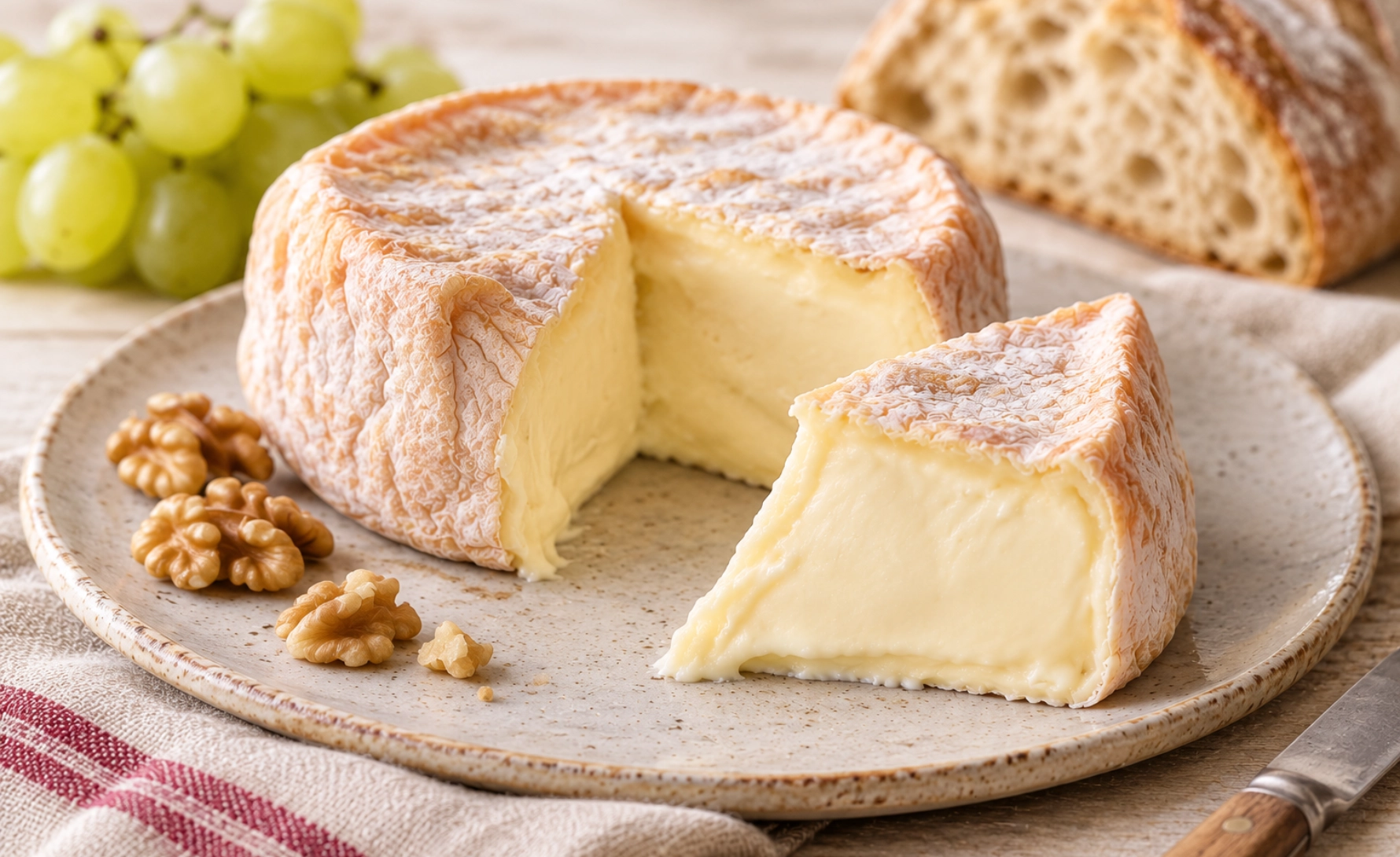
Pierre Robert is produced by the Rouzaire family, the same makers as Brillat-Savarin. According to a popular story, the Rouzaire family and a friend named Pierre wanted something richer than Brillat-Savarin, so they aged their own triple crème for longer. Whether the story is true is hard to confirm, so think of it as a family legend. The rind has a small bump on its surface, which is one way to tell it apart from similar cheeses.
What it tastes like
Pierre Robert has a snow-white rind and a paste that feels like a light mousse. The flavour is mild, rich and buttery. Because it includes crème fraîche as well as cream, it tends to feel a little tangier than Brillat-Savarin.
How to eat it
It’s delicious at room temperature with a simple green salad, or spread on warm toast. It’s also good with a sparkling wine or a dry cider. In the US and UK, it’s less common than Délice de Bourgogne, so specialist cheese shops and online retailers are your best bet.
Explorateur
Made in
Île-de-France region
Milk
Cow’s milk, with added cream
Aged
About 30 days
AOP/PDO Status
No
Fat content
Triple crème, around 75% in dry matter
Best Time
All year
Where it comes from
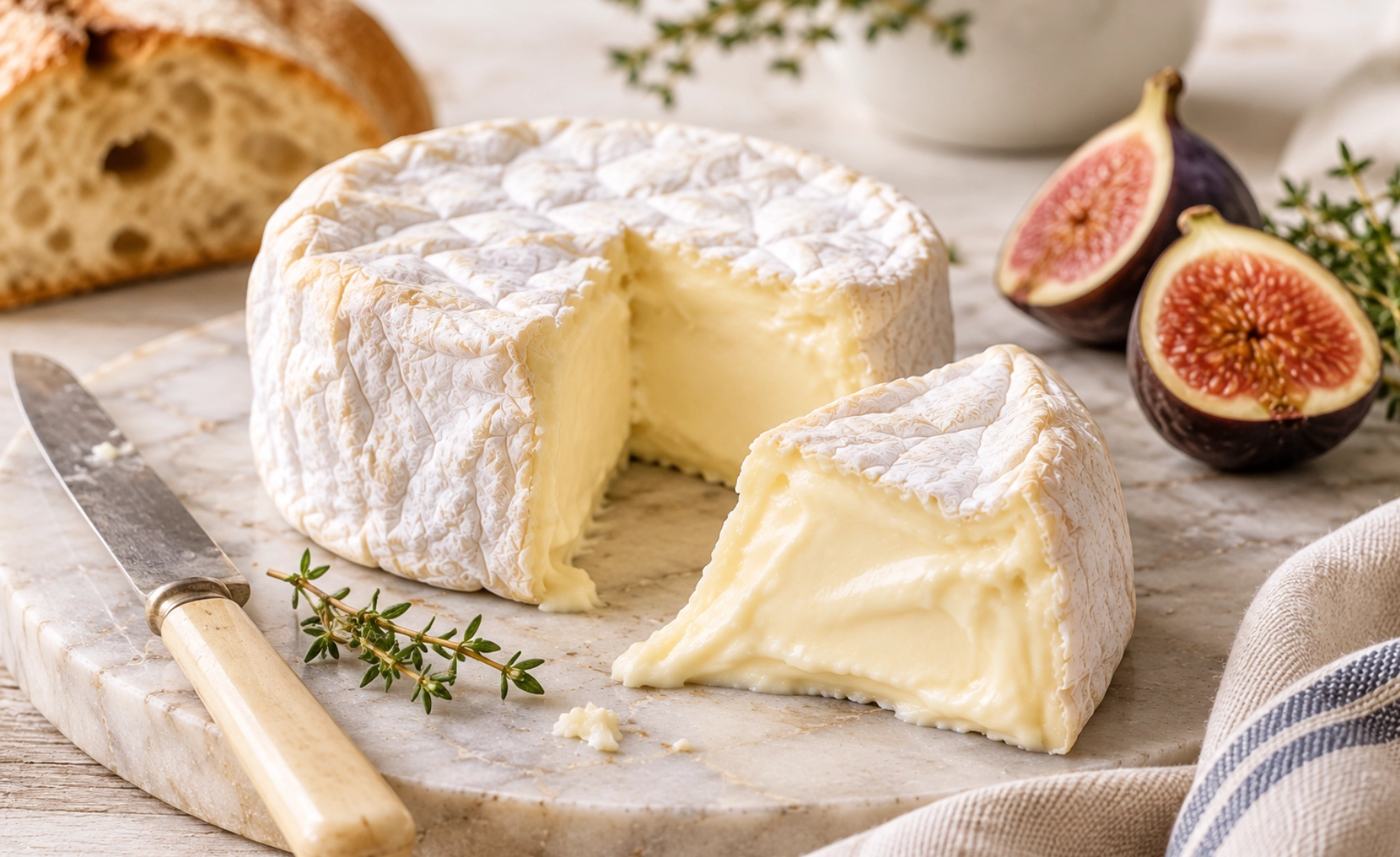
Explorateur was created in 1958, and the name is said to honour the American satellite Explorer. Its rind is thin and bloomy, and the paste is pale ivory and very creamy. It’s one of the most widely exported triple crèmes, which is why it turns up in so many cheese counters abroad.
What it tastes like
Explorateur is full-flavoured for a triple crème. It has a creamy, slightly sour tang and a long, buttery finish. When it’s ripe, the centre runs a little, so it’s best eaten with a spoon or a knife.
How to eat it
Spread it on crackers or bread, or serve it with grapes and walnuts. It also works well as a cheese course after dinner, especially with a light red from the Loire. In the US and UK, it’s widely available at specialist cheese counters.
Conclusion
Triple crème may sound like one style, but put these five side by side and you’ll see how much the cream changes things. There’s the milky, lemony Brillat-Savarin, the sweet and mushroomy Délice de Bourgogne, the rich and nutty Saint-André, the mild and tangy Pierre Robert, and the full-flavoured Explorateur with its long buttery finish. If you’re new to them, start with a Brillat-Savarin or a Délice de Bourgogne, since both are easy to find in the US and UK.
Whichever you choose, take it out of the fridge at least 30 minutes before eating, so the paste can loosen and the flavour can open up. Eat it with a slice of fresh bread and nothing else, at least the first time.
Which of these five have you tried, and is there another bloomy rind cheese you’d like to see in a future list? Tell me in the comments!

A Complete Hosting Guide
This complete guide takes the intimidation out of French cheese and wine hosting, so you can create an impressive, memorable evening that feels effortless.
Just so you know, a few links here earn us a commission. Doesn’t cost you anything extra, and we only link to things that are actually worth your time.