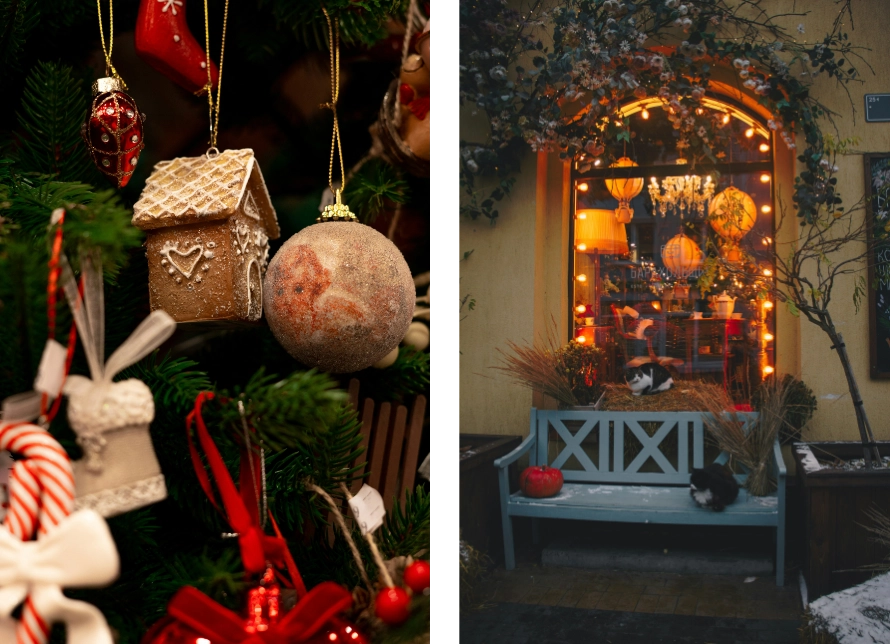
In Provence, Christmas Eve ends at the table with thirteen desserts. Not twelve, not fourteen. Thirteen, representing Christ and his twelve apostles at the Last Supper. They are arranged on three tablecloths with three candles, placed on the table on the 24th of December, and left there until Saint Stephen’s Day on the 27th. For three days, family members return to the table to graze, share stories, and eat a little more of whatever they have not tried yet.
It is one of the most distinctive and genuinely lovely christmas dessert traditions in France, and one that most people outside Provence have never encountered properly. Unlike the heavy cream-filled cakes and sugar-loaded confections that dominate festive tables elsewhere, the 13 french christmas desserts are built around nuts, dried fruits, honey, and natural sweetness. They are generous without being overwhelming, and they last.
Here is what goes on the table and why.
The history behind the tradition
The 13 desserts of Christmas are a Provençal tradition with roots that run deep. The term calenos, used to describe the desserts collectively, was first recorded in 1683 by a Marseille priest named François Marchetti, who described a variety of sweets and fruits served at the end of the Christmas celebration. The fixed number of thirteen became standard in the early 20th century, influenced by the Félibrige movement, which worked to preserve and celebrate Provençal language and culture.
The name calenos likely comes from the Provençal dialect, possibly related to the Latin calendae, which marked the start of the month and was associated with festivals. The tradition remains an essential part of Christmas in Provence, though exactly which thirteen desserts appear on the table varies by family and by village. There is no single official list. The categories are relatively consistent. The specific choices within them are yours to make.
So, what are the 13 French Christmas Desserts?
1. Pompe à l’huile: the olive oil flatbread
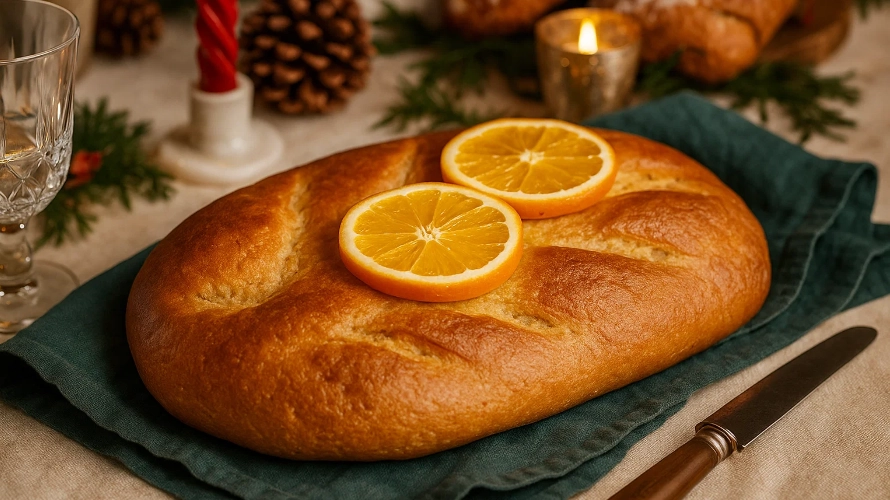
The pompe à l’huile sits at the centre of the table and at the heart of the tradition. It is a soft, slightly sweet flatbread made with Provençal olive oil and flavoured with orange blossom water. No yeast, no salt. It is traditionally torn by hand rather than sliced, a deliberate act of sharing that the whole ritual is built around.
The texture is moist and tender, with a subtle fruity note from the oil and a gentle floral aroma from the orange blossom. Breaking this bread together is the gesture that opens the celebration. If you make nothing else on this list, make the pompe à l’huile.
2. White nougat
Soft and chewy, made from honey, sugar, egg whites, almonds, and pistachios. The egg whites give it a lighter, airier texture than its darker counterpart. Honey-sweet and nutty, with floral undertones from the honey. Represents light and hope in the symbolic language of the tradition.
3. Black nougat
Dense, firm, and made almost entirely from honey and almonds without egg whites. Darker, crunchier, and more intensely sweet than the white nougat, with a robust, earthy honey flavour. Represents the hardships and challenges of life. Together, the white and black nougat are a philosophical pair on the christmas dessert table, acknowledging that the full range of experience is worth marking.
4. Calissons d’Aix
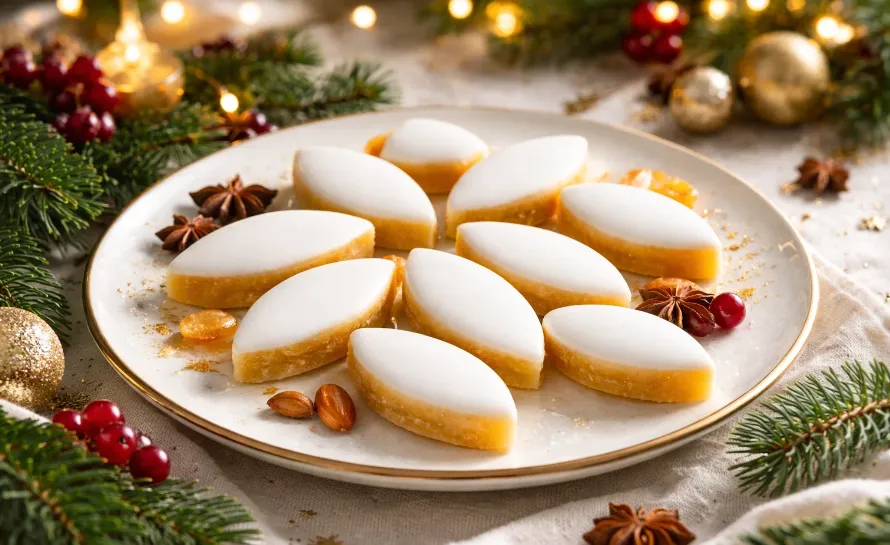
Provence’s most famous confection and one of the great traditional french christmas dessert choices. Made from finely ground sweet almonds, candied Provençal melon, and orange peel, spread over a thin wafer and topped with royal icing. The flavour is nutty and lightly citrusy, the texture soft and chewy against a crisp base. The recipe has remained essentially unchanged since the 15th century. If you can find genuine Calissons d’Aix rather than imitations, the difference is immediate.
6. Dates
Dates represent the connection to the Holy Land and the trade routes that brought exotic ingredients into Provençal cooking. Sticky, chewy, with a rich caramel-like sweetness. They also provide a reminder of how far-reaching the cultural influences on French food actually are, Provence’s position as a Mediterranean crossroads is visible in what ends up on the Christmas table.
5. Quince paste
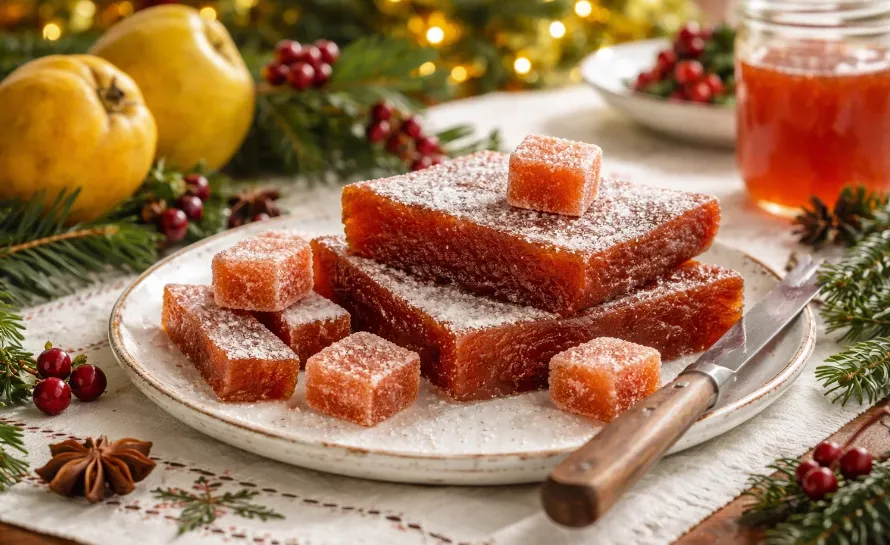
Quince paste (pâte de coing) is a firm jelly made from cooking down the quince fruit, typically harvested in autumn. The result is a deep amber block with a sweet, tangy flavour and a slightly grainy texture.
Quince paste celebrates the harvest and the tradition of preserving fruit for the colder months. Its tartness cuts through the sweetness of other desserts on the plate, offering a refreshing contrast and evoking the changing seasons.
7. Fresh winter fruit
Oranges, apples, pears, tangerines, and grapes. The fresh fruit brings colour and natural freshness to the spread, contrasting with the richer, sweeter elements. Oranges evoke the Mediterranean sun. Grapes tie the table to the region’s winemaking tradition. The fresh fruit is not an afterthought. It is the element that makes the whole spread feel alive rather than heavy.
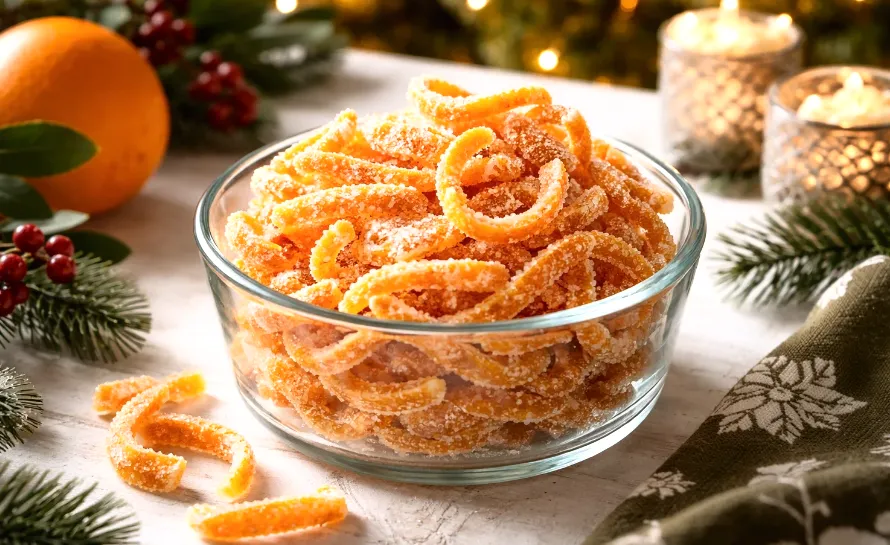
8. Candied fruits
Candied fruits, particularly those from Apt, the candied fruit capital of France, bring intense sweetness and jewel-like colour. Citron, melon, cherries. The slow candying process transforms summer fruits into glossy, concentrated morsels that taste of the season they came from, preserved and intensified. La Maison du Fruit Confit in Apt produces some of the finest examples if you want the genuine article.
The four beggars (les quatre mendiants)
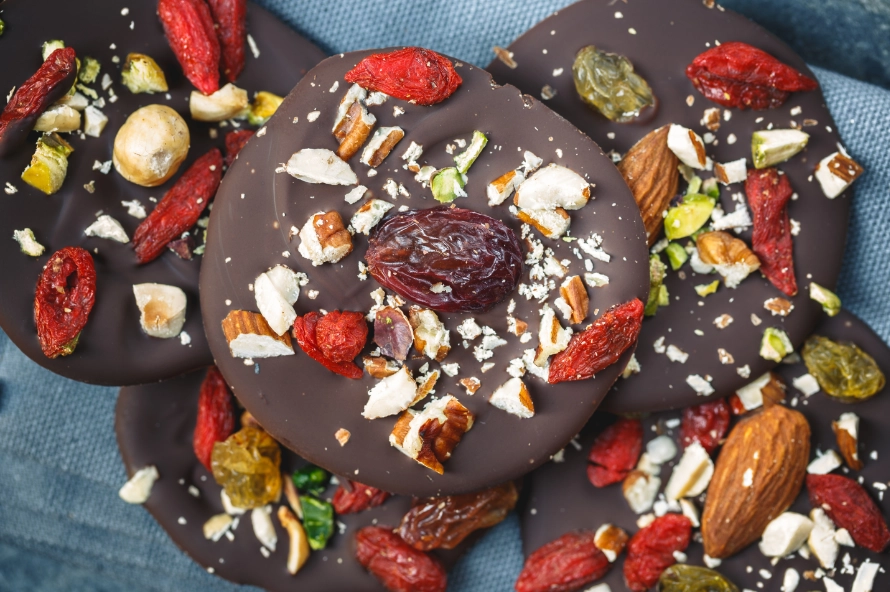
The four beggars are the nuts and dried fruits that represent four mendicant monastic orders. Their inclusion honours the monks’ vows of poverty and humility, and their simplicity is deliberate. These are not elaborate confections. They are ingredients, almost, placed on the table in recognition of what they represent.
Traditionally, the quatre mendiants appear as small discs of chocolate topped with the four ingredients, though they are also placed on the table individually.
9. Raisins
Representing the Dominican order. Dried, intensely sweet, chewy, with a concentrated grape flavour that carries the warmth of Provençal vineyards.
10. Dried figs
Representing the Franciscans. Soft, honeyed, with a depth and earthiness that dried figs develop in a way fresh ones never quite achieve.
11. Almonds
Representing the Carmelites. Crunchy, buttery, mildly sweet. Almonds have been cultivated in Provence for centuries and appear in more traditional french christmas dessert recipes than any other nut.
12. Walnuts or hazelnuts
Representing the Augustinians. Robust, earthy, firm. Their presence on the table is grounding, a counterweight to the sweeter elements surrounding them.
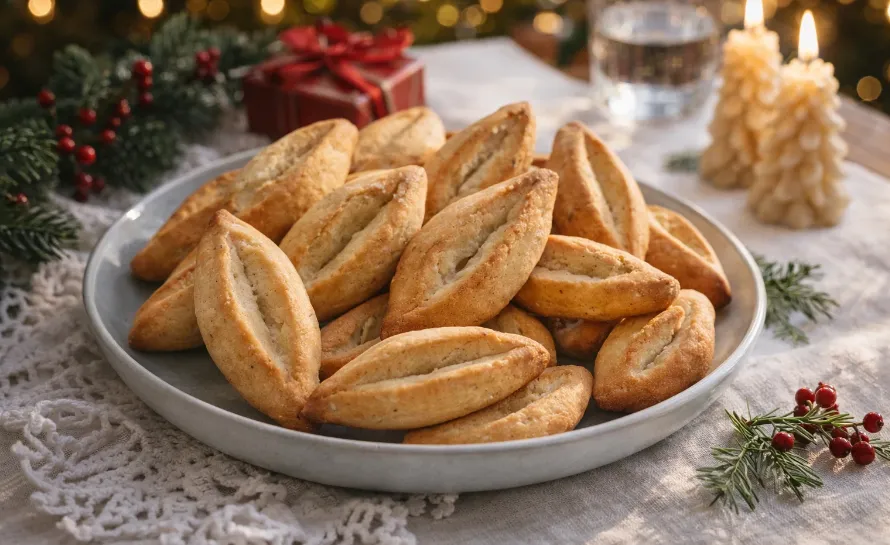
13. Navettes or muscat grapes
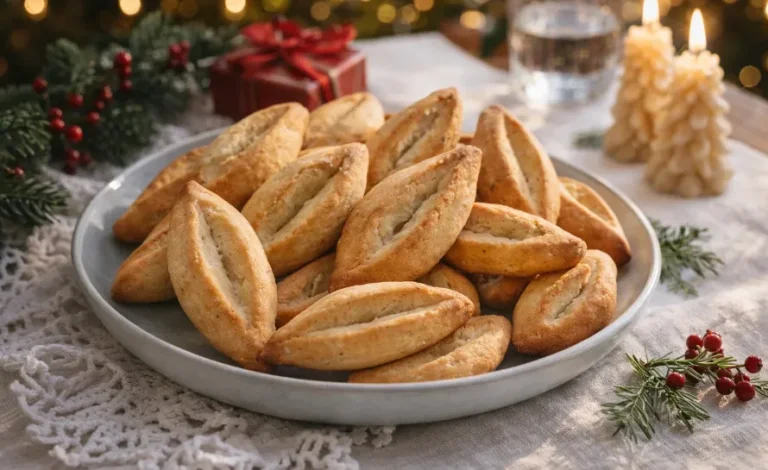
The thirteenth dessert varies more than the others. The navette is a small, boat-shaped biscuit flavoured with orange blossom water, said to represent the boat that brought Mary Magdalene to Provence. The connection between the biscuit and the legend is one of those pieces of French local lore that sits somewhere between history and storytelling, which is exactly where the best traditions live.
Alternatively, muscat grapes, prized for their natural sweetness and association with Provençal vineyards, complete the table. Some families substitute other festive sweets, chocolate-covered almonds, a local fruit tart. The spirit of the tradition matters more than strict adherence to any particular list.
How to bring this tradition to your table
The 13 desserts of Christmas are genuinely good christmas dessert ideas for anyone who finds the standard festive spread too heavy, too sweet, or too similar to every other year.
Most of the thirteen can be bought rather than made: good quality nougat, calissons, quince paste, candied fruits, and the four mendiants are all available from French épiceries, specialist food shops, and increasingly online. The pompe à l’huile is worth making yourself, if only for the act of breaking it at the table.
Set everything out on Christmas Eve. Leave it there for three days. Let people graze. The tradition is not about eating everything at once. It is about having something good always within reach during the days around Christmas, which turns out to be one of the better approaches to festive eating that anyone has come up with.
Final thoughts
Thirteen desserts, three days, one table. It is the most Provençal possible approach to Christmas, and once you have tried it, the idea of going back to a single heavy pudding on a single day feels like a significant step backwards.
Do you have a version of this tradition in your family? Tell me in the comments.
Disclosure: Just so you know, this post contains sponsored content and/or affiliate links, If you make a purchase through these links, I may receive a small commission. Doesn’t cost you anything extra. I only link to things that are actually worth your time. All opinions are my own!