I am not someone who craves sugar. Most of the time I would happily choose cheese over dessert. But there are a few French sweets I genuinely miss when I am away from France, mostly because you simply cannot find them anywhere else, and once you have tasted the real thing, nothing quite replaces them.
Every region in France has its own sweet, proper local specialities with centuries of history behind them, fierce pride, and recipes that are passed down like family secrets. I am not talking about mass-produced brand-name sweets you can grab in any supermarket. These are french candy tied to specific towns, often made by the same families who have been doing it the same way for generations.
Because this is France, a lot of these sweets now have some kind of protected status or heritage label, or they are still made by the original houses that started them over a hundred years ago. These are the ones worth knowing about and, when you get the chance, worth buying.
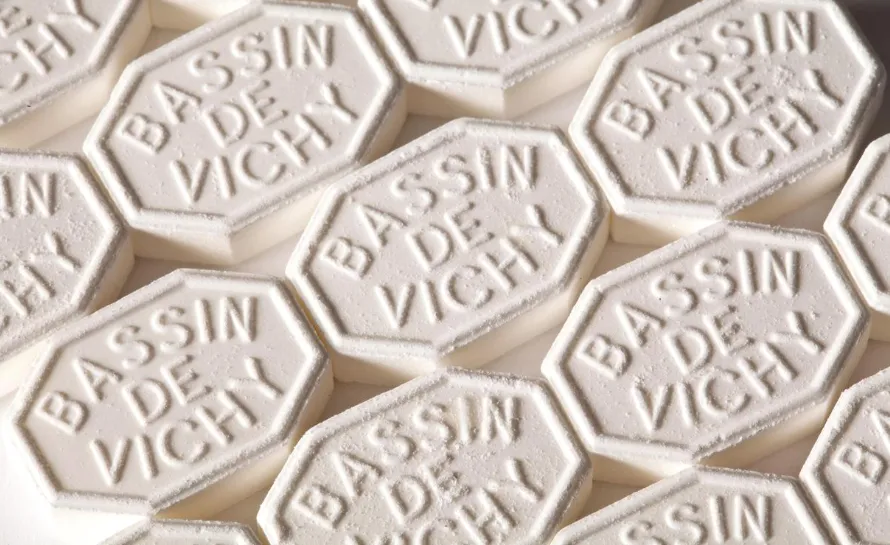
Pastilles Vichy
White, octagonal lozenges stamped with the word Vichy that taste of mint and minerals. They were created in 1825 using real water from the thermal springs in Vichy and started out as something sold mainly for digestion. Empress Eugénie who was married to Napoleon III was apparently a fan, which did not hurt their reputation.
They sit somewhere between medicine and sweet in a very French way. You still find them in pharmacies, next to actual medication. The taste is very particular: clean, a bit chalky, with a cool mint finish that hangs around. Some people love them straight away, others need time to get used to them. But after nearly two centuries and roughly 1,500 tonnes made every year, it is fair to say they lasted that long for a reason.
They are not really a children’s sweet. They are very much an adult thing, usually enjoyed slowly after a big meal by people who take their digestion seriously.
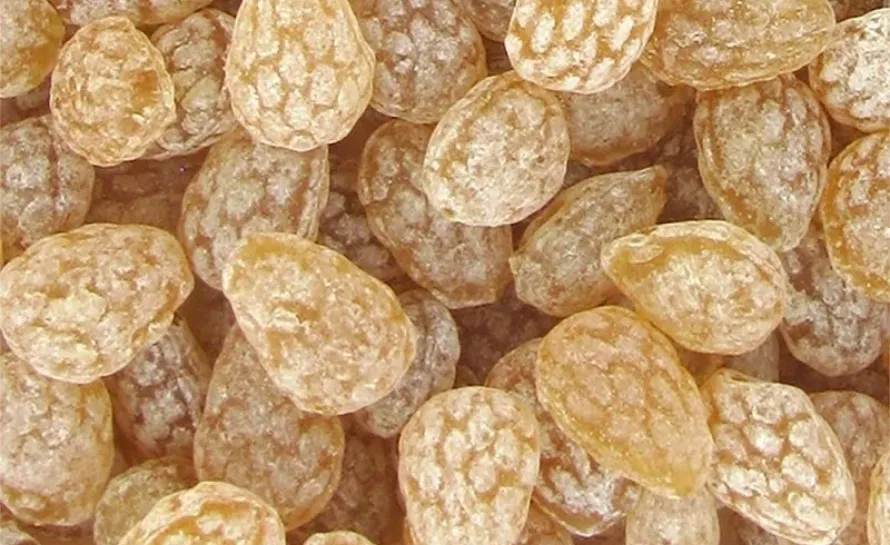
Bonbons de Pin des Vosges
These are the French sweets I miss the most because there is nothing else quite like them. If there is an equivalent, I have yet to find it.
In the Vosges, Jura, or Alps, you find sweets that taste like eating a forest. They are made with pine sap or fir buds, often with honey and menthol, and they are very much mountain-people sweets. They are still sold as something to clear the airways and help with breathing, which is why you will often find them as well in pharmacies alongside more conventional remedies.
The flavour is pure pine, it’s like walking through a sweet and mentholy conifer forest. Artisan makers in Gérardmer and other Vosges towns still cook them in copper cauldrons using traditional methods that have barely changed in generations.
You either fall in love with them or find them completely strange. There is not much in between. But if you have ever had a cold they are just brilliant to free your airways. Although I eat them purely for pleasure when I’m perfectly healthy.
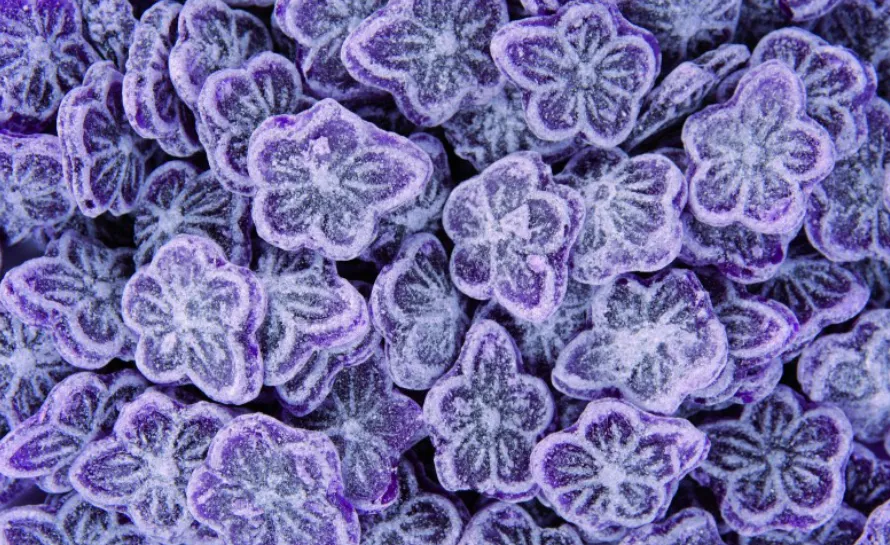
Violettes de Toulouse
Small purple sweets shaped like violets that taste like violets. These are hard-boiled candies made with violet extract, sugar, and natural colouring, and the taste is very floral and perfumed. They have been made in Toulouse since the early 1900s, back when the city was genuinely known for its violet fields.
From the 1850s onwards, violets were a serious trade in Toulouse. Around 600 families lived from growing and selling them in winter, and the flowers were shipped all over Europe. When that industry declined, the sweets kept the violet tradition alive. The name Violette de Toulouse is now protected, and several confectioners still produce violet-flavoured things: sweets, liqueur, perfume, even mustard.
This flavour is also one of those love-it-or-hate-it things. Some people say it tastes like soap. I happen to love floral flavours, so I find them delicious. They are a bit old-fashioned now, but some violet addicts like me still occasionally buy them for secret flower moments.
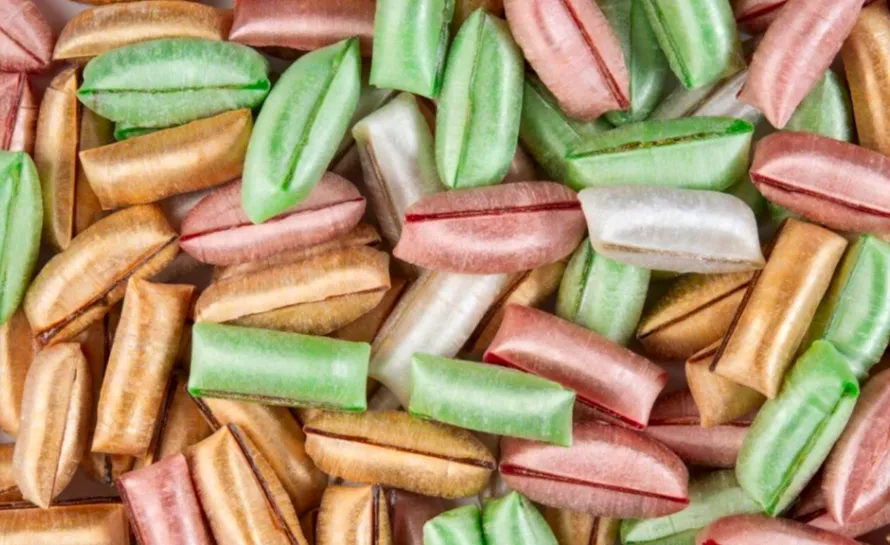
La Forestine de Bourges
La Forestine is often described as the world’s first filled sugar sweet, created in 1879 by Georges Forest. Inside there is a smooth praline of almonds, hazelnuts, and chocolate, wrapped in a satiny sugar shell that comes in soft, pearly colours. The sugar coating is still beaten by hand to get that distinctive satin finish, then the pieces are cut and separated one by one using techniques that are over 140 years old. The Tavernier family, now in their fourth generation, still makes them in Bourges.
La Forestine is listed in France’s national gastronomic heritage inventory and even won a Slow Food prize for tradition in 2012. They are not cheap, but this is real artisan French confectionery, not something churned out by the tonne. If you ever pass through Bourges, they make a brilliant gift.
Berlingots
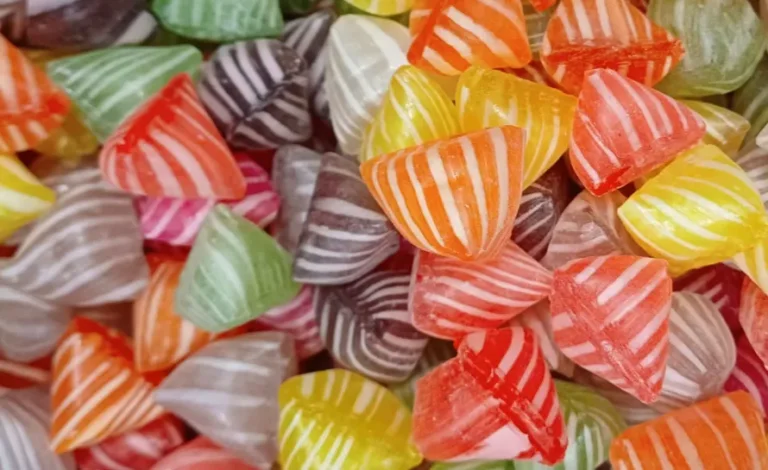
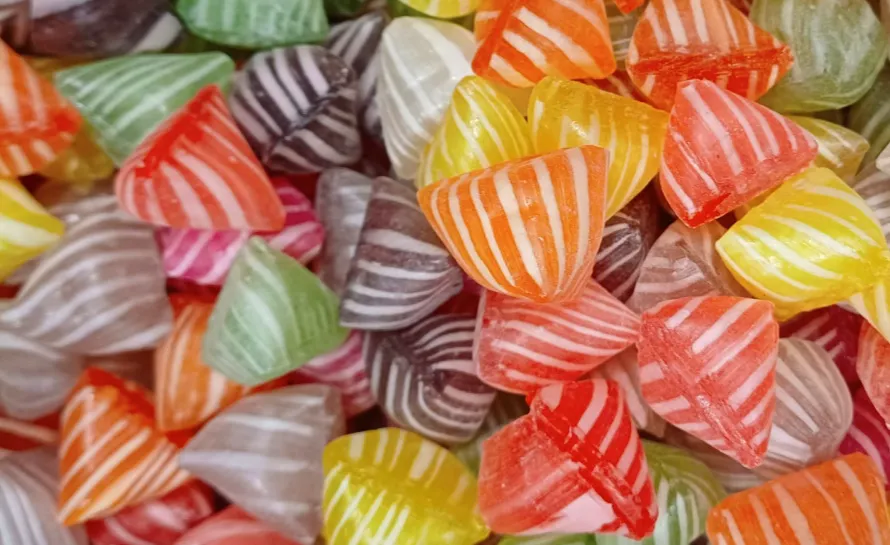
Berlingots are small, pyramid-shaped hard sweets, and two towns claim them: Carpentras and Nantes. The two versions look and taste quite different.
Berlingots de Carpentras are translucent with white stripes and made from candied fruit syrup. They were the ones I knew growing up. They appeared around 1844 when a pastry-maker decided to use up leftover syrup from making candied fruits. The white stripes come from beaten sugar worked into coloured sugar paste. Flavours run from mint and anise to lemon, orange, and lavender.
Berlingots nantais are smaller, opaque, and dusted with sugar rather than striped. They came along at the end of the 19th century, when Nantes had a booming sweet industry thanks to its sugar cane imports through the port. Flavours include orange, lemon, blackcurrant, strawberry, anise, caramel, and mint.
By the 1950s, berlingots from Carpentras were hugely popular, with more than 2,000 tonnes made each year. Both styles are still lovely examples of regional French bonbons with real stories behind them.
Bêtises de Cambrai
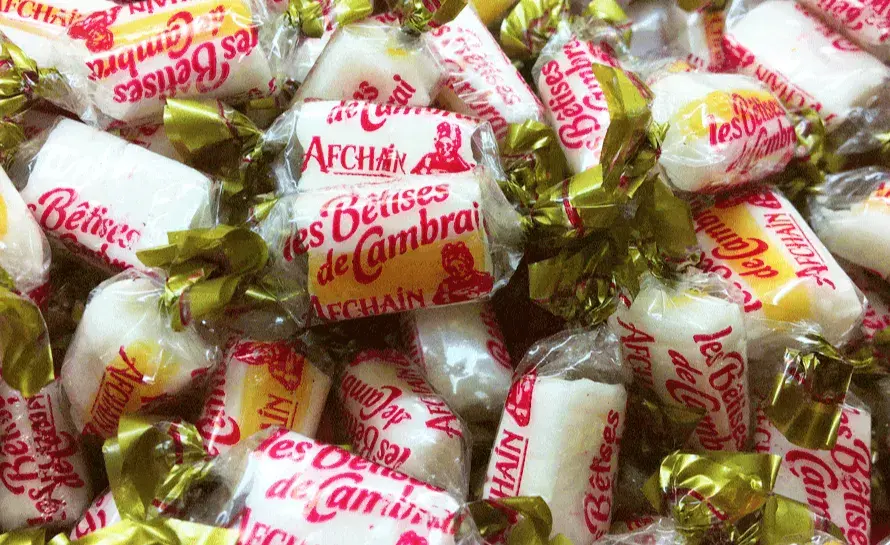
Bêtises de Cambrai are small rectangular mint sweets with caramel stripes, born from a mistake in 1850. Bêtise means “stupid mistake” in French. An apprentice in a Cambrai confectionery messed up a batch, his mother called them bêtises, and customers ended up loving them.
They are made from boiled sugar flavoured with mint, with thin caramel stripes added to soften the mintiness. Two houses still claim to be the original makers, Afchain and Despinoy, and both continue to produce them today. Around 400 tonnes are made each year. Over time new flavours have appeared, orange, lemon, raspberry, violet, chocolate, but the original mint version is still the favourite. They are refreshing, said to aid digestion, and usually sold in pretty tins decorated with scenes of Cambrai’s streets.
Bergamotes de Nancy
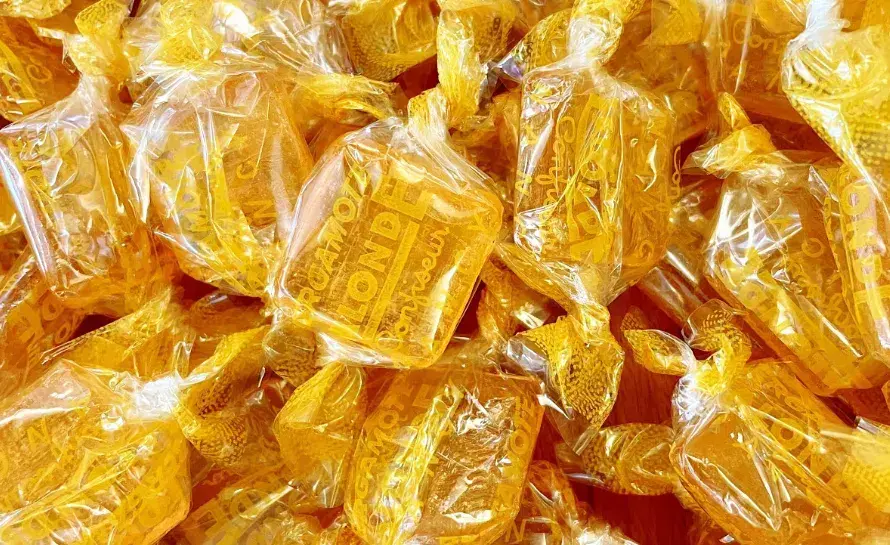
Bergamotes de Nancy are amber-coloured hard sweets made with sugar and bergamot essential oil. They were created in 1857 when a Nancy confectioner tried adding bergamot essence to sugar on the suggestion of a perfumer. Bergamot itself is a small citrus fruit, mainly grown in Calabria, and its essential oil is also what perfumes Earl Grey tea, which gives you an idea of the aroma.
The sweets are translucent, very fragrant, and recognisable by their flat, square shape. The sugar is heated over an open flame, the bergamot essence is added, then the mixture is poured onto marble to cool and hand-cut. They have had Protected Geographical Indication status since 1996, which makes them one of the more officially protected French bonbons. Confiserie Stanislas is the most famous maker in Nancy. The taste is perfumed and citrusy, more sophisticated than straightforward fruit sweets, and perfect if you like a bit of complexity in your candy.
Anis de Flavigny
Anis de Flavigny have been made in the Benedictine Abbey at Flavigny-sur-Ozerain in Burgundy since 1591, which probably makes them the oldest branded sweet still produced in France, and certainly one of the most distinctive.
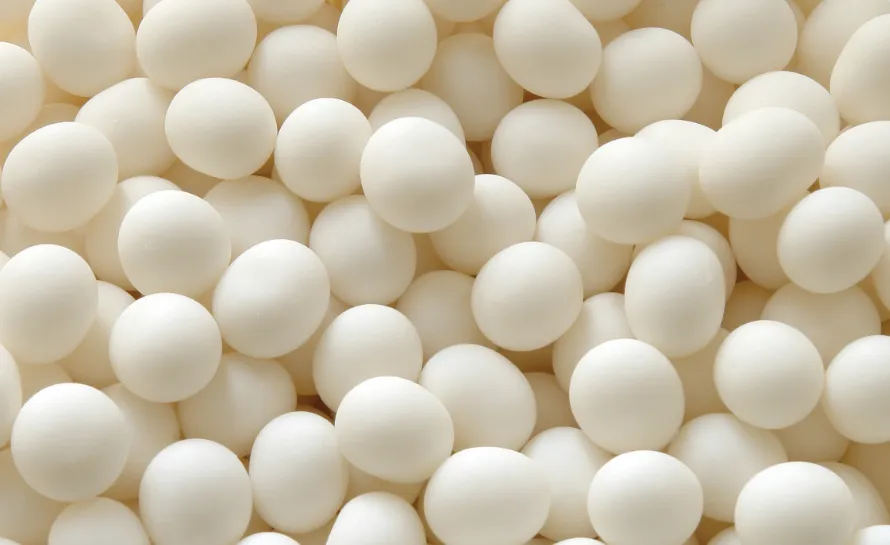
Each sweet has a single anise seed at its centre, coated in thin layers of sugar syrup in large copper pans over the course of about 15 days. The result is a small, perfectly round sweet with a hard shell and an anise heart that slowly releases its flavour as the layers dissolve.
The original flavour is anise, that liquorice-like taste many French people grow up with. There are also rose, violet, mint, orange blossom, lemon, and other varieties, all flavoured with plant extracts obtained through steam or alcohol distillation. The Troubat family has run the production since 1923. The sweets come in oval metal tins with old-fashioned pastoral illustrations, the kind you keep long after they are empty. Louis XIV is said to have carried a box with him everywhere, and Anis de Flavigny now holds Living Heritage Company status and is recognised as a Remarkable Taste Site, with exports to more than 35 countries.
If you ever find yourself in Burgundy, the abbey is open to visitors and you can actually watch them being made.
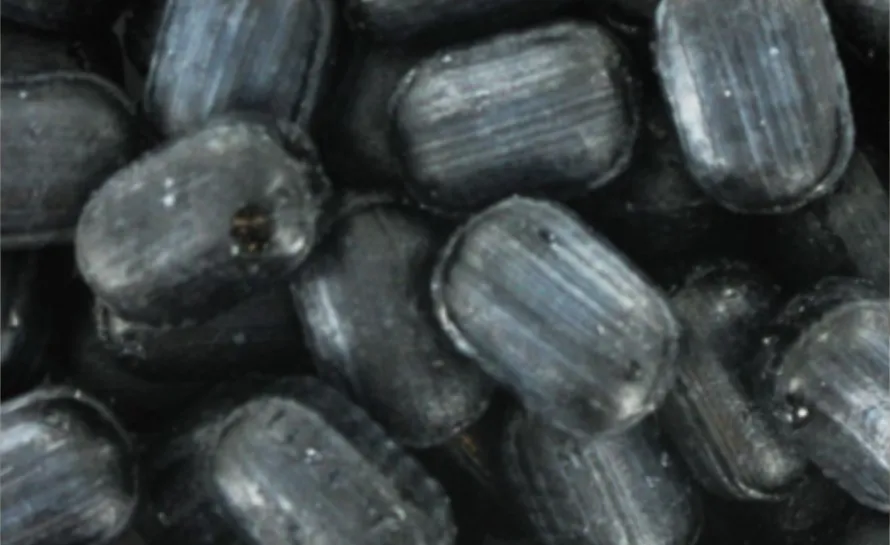
Pastille du Mineur
Small black liquorice pastilles from the mining regions of northern France, especially around Lens and the old Nord–Pas-de-Calais, were originally made for coal miners, but not for the reason you might think. They were designed to keep miners from wanting a cigarette while working underground in gas-filled shafts, where a single lit cigarette could cause an explosion. The flavour had to be strong enough to quiet a craving over long shifts, so they are intense: real liquorice with menthol and eucalyptus, the kind of mint-adjacent sweet that can make your eyes water if you are not prepared for it.
They had a bonus effect too, soothing throats irritated by coal dust. The mines have been closed for decades now, but the pastilles are still made and still loved locally. They come in old-fashioned tins and packets decorated with images of miners, so the region’s industrial history lives on in something you can actually eat. If you like Fisherman’s Friend, you will get on with these.
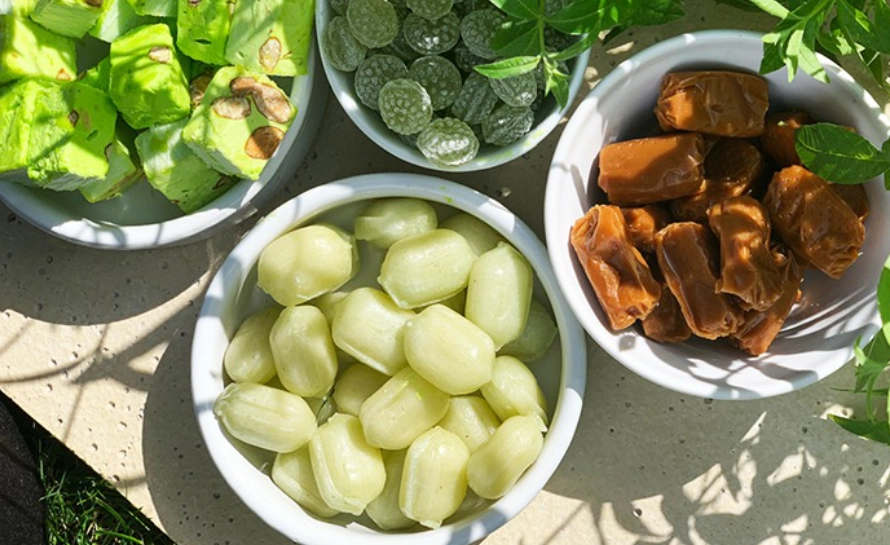
Bonbons à la Feuille de Verveine
And at last, there are the hard-boiled sweets flavoured with verveine, lemon verbena, which is a herb that grows all over the south of France and especially in the Velay area around Le Puy-en-Velay. These green or amber sweets have been around since the 19th century, when verveine liqueur was at its height. The taste is herbal and lemony, fresh and aromatic. The real verveine bonbons are made with infusions or distillations of the actual plant, not artificial flavours, and you can tell. There is a depth and slight bitterness that keeps the sugar in check in a way fake versions never manage.
Velay is particularly famous for them. Verveine has been grown there since Benedictine monks introduced it centuries ago, and you will find the sweets in confiseries all over the Haute-Loire and Auvergne, often sold next to bottles of verveine liqueur and other local specialities.
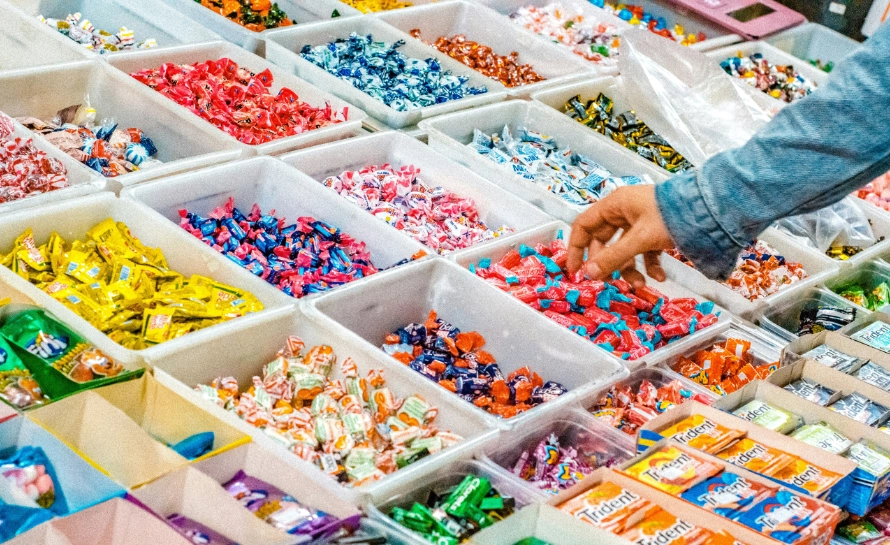
Do you have a sweet tooth for French sweets?
Do you have a soft spot for French sweets? There are said to be more than 600 traditional varieties across the country, so this list barely scratches the surface. If you want an easy place to start, Anis de Flavigny are probably the most accessible way into regional bonbons: easy to find, beautifully packaged, and gentle enough for people who are not sure about anise. Bergamotes de Nancy are what to choose if you want something more grown-up and complex. Bonbons de pin are the most distinctive of all, and the ones you will simply not find anywhere else.
And if your French grandmother always had a particular tin in her handbag that has not come up here, I would love to hear about it. I am always looking for new ones to try.
Disclosure: Just so you know, this post contains sponsored content and/or affiliate links, If you make a purchase through these links, I may receive a small commission. Doesn’t cost you anything extra. I only link to things that are actually worth your time. All opinions are my own!