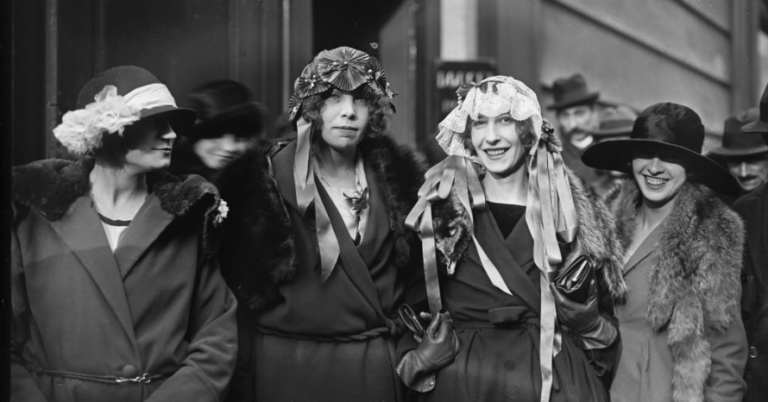
Every year on the 25th of November, France marks one of its more specific traditions: the Fête de la Sainte-Catherine. It is a day set aside for the Catherinettes, the young women who have reached the age of 25 without marrying. If that sounds oddly specific, it is. But behind the hats and the history sits a tradition that has been part of French life for centuries, one that has meant very different things at different moments, and continues to evolve today.
Who was Saint Catherine?
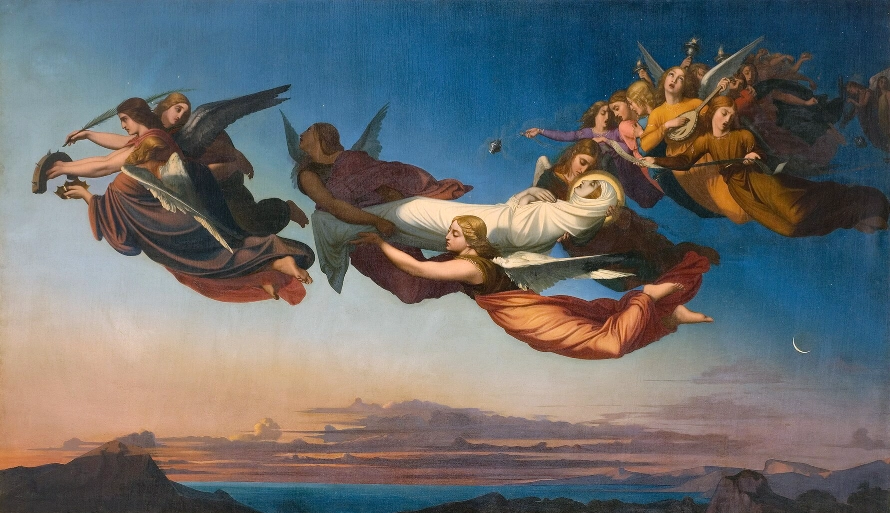
The fête de la sainte catherine begins with Catherine of Alexandria, a young woman from the 4th century whose story is equal parts remarkable and tragic. By the accounts that survived, she was highly educated, deeply committed to her Christian faith, and entirely unwilling to compromise either for the sake of social convenience.
When the Roman emperor Maxentius proposed marriage, she declined. That refusal led to her imprisonment and eventual martyrdom on the 25th of November, around the year 307 AD. Saint catherine france adopted as a patron saint for several groups: scholars, students, milliners, and young unmarried women. That combination of intellectual life, craft, and female independence laid the foundation for a celebration that would take on many different forms over the following centuries.
The st catherine tradition carries her name forward not as a tragedy but as a celebration of exactly the qualities she embodied: conviction, independence, and a refusal to let others define her choices.
From religious feast to social ritual
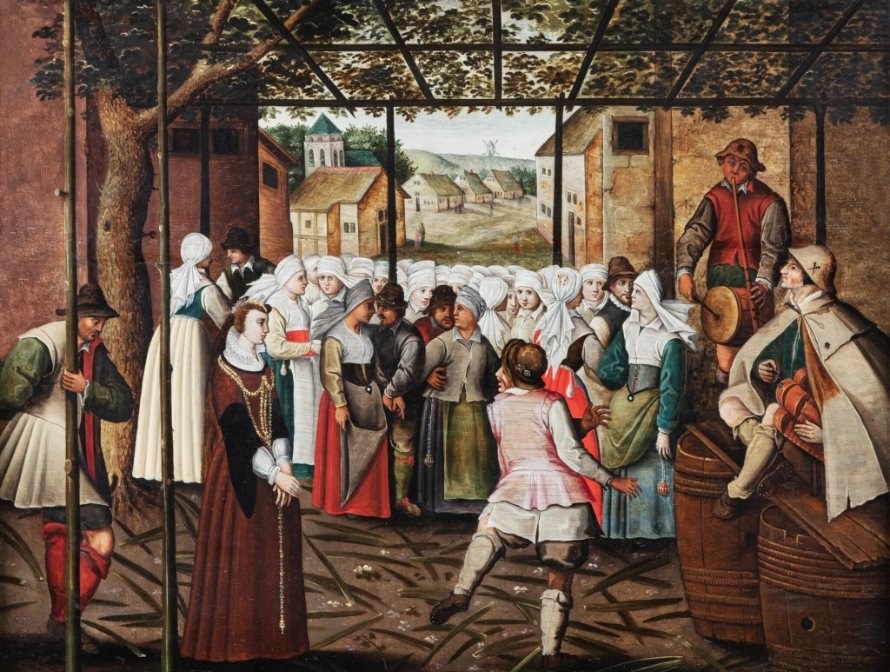
In medieval France, reaching the age of 25 unmarried was socially awkward for a woman. Marriage was expected early, and those who had not married by their mid-twenties could face unwanted commentary from the people around them. The Fête de la Sainte-Catherine gave those women a different frame for their situation.
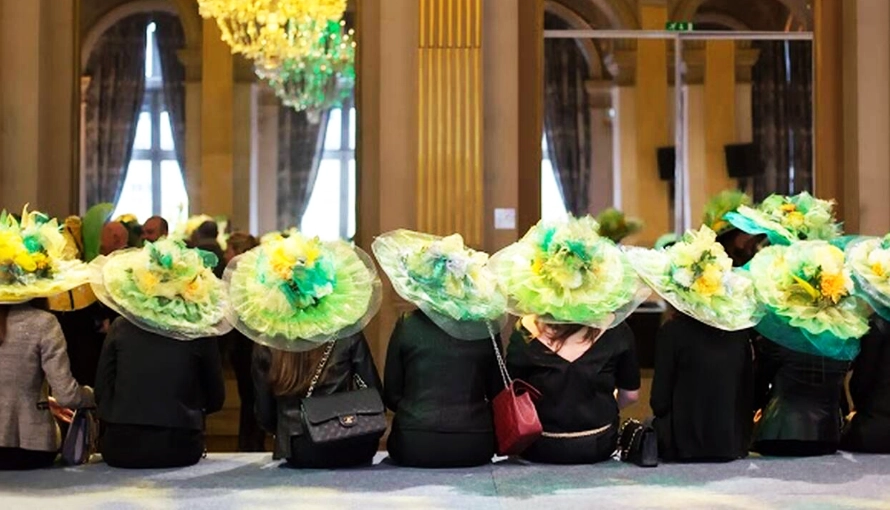
The Catherinettes marked the day by making and wearing extravagant hats, placing similar creations on statues of Saint Catherine, and celebrating together rather than treating singlehood as something to be apologised for. The colours of those hats were deliberately chosen: green for hope, yellow for faith and wisdom. Together they signalled something positive about the women wearing them rather than reducing them to their unmarried status.
It was a social manoeuvre as much as a celebration: taking a moment that society treated as a failure and transforming it into a public display of spirit and resilience.
The wars and what changed
The First World War altered the tradition significantly. With so many men lost to the conflict, single women became far more common across France. The fête de la sainte catherine lost some of its sharper social edges as singlehood stopped being remarkable and started being simply normal for many women.
The Second World War brought a different kind of distortion. The Vichy regime used the tradition to promote conservative ideas about women’s roles, which drained some of the joy and independence that had characterised it in earlier decades.
After the war, as women gained more access to education, work, and choices that did not centre on marriage, the Fête de la Sainte-Catherine gradually shifted from a commentary on marital status to something more straightforwardly celebratory. The stigma faded. The hats remained.
The golden era: Paris in the 1920s and 1930s
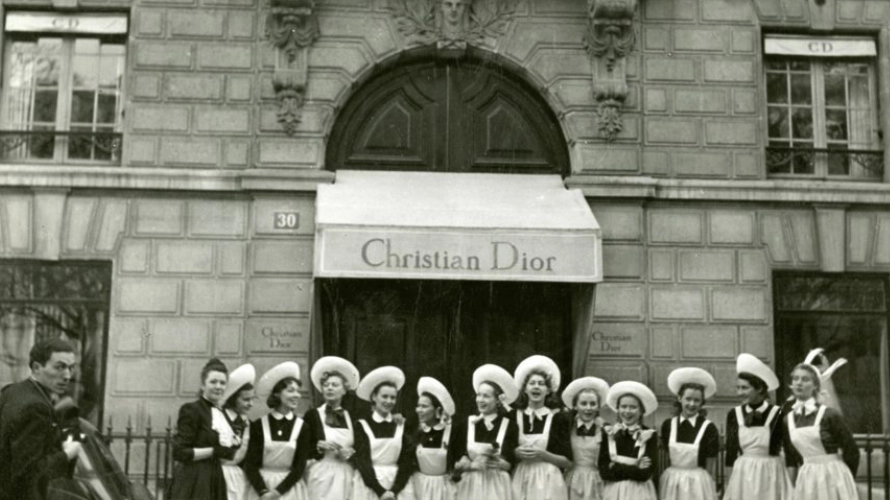
The most spectacular period in the history of the catherinettes was the interwar years in Paris. The fête became a major cultural event, and the fashion industry got deeply involved.
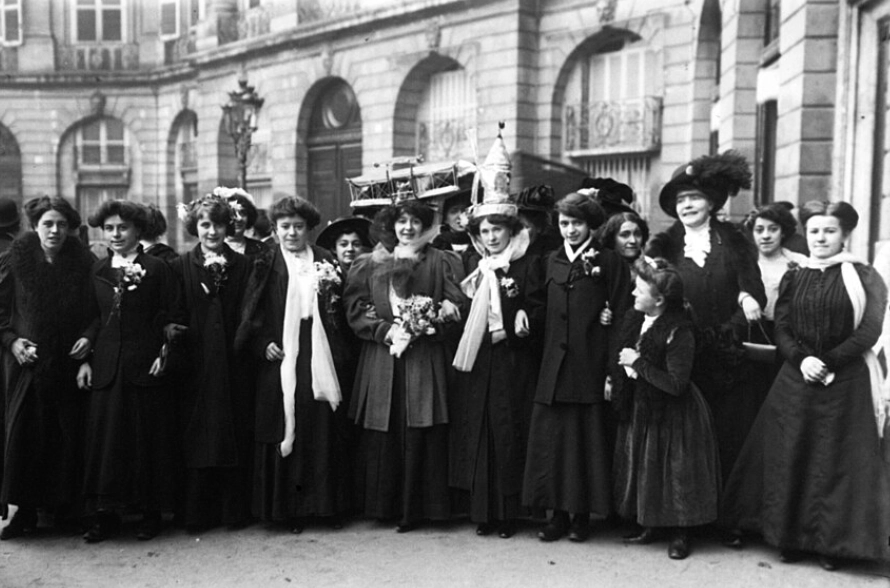
Couture houses including Dior, Balmain, and Givenchy created elaborate hats for their unmarried female workers, and the results were extraordinary. Hats topped with aeroplanes, miniature Moulin Rouges, elaborate constructions that took the tradition’s basic premise and transformed it into high theatre. The Catherinettes paraded through Paris streets to jazz music, turning the sombre November day into something genuinely festive.
This period reframed what the saint catherine celebration meant. It was no longer about waiting for marriage. It was about independence, creativity, and the particular pleasure of doing something deliberately, magnificently excessive in the middle of winter. The couture houses understood that perfectly, and the women who wore those hats understood it even better.
Regional twists and current celebrations
While Paris gave the fête de la sainte catherine its most famous expressions, the tradition has roots and echoes across France.
In Vesoul, the Sainte-Catherine is tied to an agricultural fair dating back to 1295. The festivities there included a Catherinette contest and, in earlier years, a pig race, which gives you a sense of how differently the same day could be interpreted in different parts of the country.
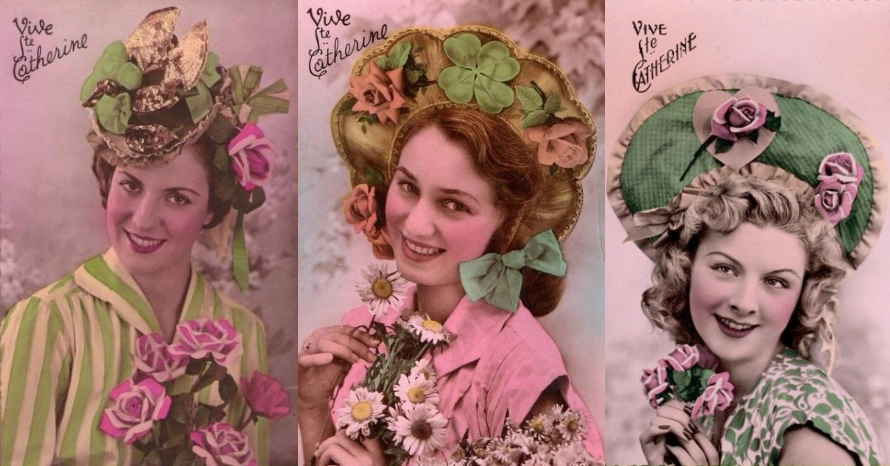
In schools, young girls traditionally exchanged cards. In some workplaces, single women were given small gifts or gestures of solidarity. The common thread was the recognition of a specific category of women and the decision to mark that recognition with celebration rather than pity.
The tradition today
The Fête de la Sainte-Catherine is quieter now than it was in its interwar peak. The elaborate Parisian parades are largely gone. The hats still appear in some workplaces and smaller towns, but the tradition no longer has the same cultural visibility it once did.
Part of the reason is demographic. The entire premise of the st catherine celebration was built around 25 being a notable age at which to still be unmarried. In contemporary France, the average age of first marriage has risen steadily for decades. According to INSEE data, over 90% of French women at 25 are now unmarried, compared to nearly 80% who were married at that age in the 1960s. The category the tradition was designed to celebrate has effectively become the default.
A 2018 survey by France 3 Franche-Comté found mixed feelings: 40% of respondents felt the saint catherine france tradition was worth preserving as heritage, while others treated it as light-hearted folklore with no particular contemporary meaning.
Feminist perspectives on the fête de la sainte catherine vary. Some see it as an outdated frame that reduces women to their marital status. Others argue that the tradition, at its best, was always more about solidarity and defiance than about waiting for marriage, and that reclaiming that original spirit is worthwhile. The elaborate hats, on this reading, were never about desperation. They were about refusing to be defined by someone else’s expectations.
Why it still matters
Traditions like the Fête de la Sainte-Catherine are interesting precisely because they carry the sediment of different eras. The same date has meant religious commemoration, social pressure, wartime propaganda, couture spectacle, and quiet workplace celebration at different points in French history. Following that journey tells you something real about how French society has thought about women, marriage, and independence across the centuries.
The Catherinettes themselves, at every stage of that history, found ways to take a moment that could have been uncomfortable and make it something else. The green and yellow hats were never really about sadness. They were about arriving at 25 with your spirit intact and your sense of humour working, and making sure everyone around you could see it.
That is a tradition worth understanding, even if the specific form it takes continues to change.
When and how it is celebrated
The Fête de la Sainte-Catherine falls on the 25th of November every year. In workplaces where the tradition is still observed, unmarried women at 25 are presented with hats, often made by colleagues, and the occasion is marked with some kind of gathering or celebration.
In towns that maintain the tradition publicly, there may be parades or communal events. Paris no longer has the spectacular public displays of the 1920s and 1930s, but smaller versions persist in various neighbourhoods and industries.
If you have a friend or colleague reaching 25 in November, making them a hat, however modest, is a good way to bring a genuinely French tradition into your own life. The green and yellow colour scheme is traditional. The level of extravagance is entirely up to you.
Do you know someone celebrating their 25th this November? Tell me in the comments.
Disclosure: Just so you know, this post contains sponsored content and/or affiliate links, If you make a purchase through these links, I may receive a small commission. Doesn’t cost you anything extra. I only link to things that are actually worth your time. All opinions are my own!